

The OTC Antihistamines — Overview
Drowsy · Less Drowsy · Local Relief

Start Here
First choose the symptom. Then choose the route. Last, plan for sleepiness.
What needs relief?
Sneeze + Runny Nose
An oral antihistamine may help. A less-drowsy choice is often a good first step.
Itchy, Watery Eyes
An antihistamine eye drop can treat the eye with less drug in the rest of the body.
NOSE ROUTEItchy Nose + Congestion
A nasal antihistamine may help. A steroid nasal spray may control swelling better.
SKIN ROUTESmall Itchy Skin Area
A skin product may help a small area. Do not use it on large or broken skin.
Hives
A less-drowsy oral drug is often easier to use by day. Get urgent help for throat or breathing signs.
Sleep
An OTC sleep aid may be an antihistamine. It is not the same as routine allergy care.
- Do I need to drive, work, or avoid falls?
- Is this for the whole body or one body site?
- Am I taking this same drug in another product?
Generations & Drowsiness
Generation is clinical shorthand. FDA labels control the use, route, dose, and warning.
First Generation
These older drugs cross into the brain more. Sleepiness and drying effects are common. [1,6–9]
Second Generation
These newer allergy drugs tend to cause less sleepiness and last longer. [2–5]
Loratadine + Fexofenadine
Need to stay alert? These two may fit. [4,5]
Cetirizine + Levocetirizine
These newer drugs may make you sleepy. Plan the first dose with care. [2,3]
Local Products
Nasal, eye, and skin drugs are best sorted by route and label, not by a pill ranking.
No Absolute Promise
A less-drowsy label does not prove how your own body will react.
Take the first dose when you can watch for sleepiness. Do not drive until you know your response.
Second-Generation Oral Menu
These are the four main OTC choices on today’s allergy shelf.
Fexofenadine
A less-drowsy choice. Take it with water. Fruit juice can lower how much drug your body gets. [5]
LOW SEDATION EDGE · CLARITINLoratadine
A less-drowsy once-daily option for nose and eye allergy symptoms. [4]
MIDDLE ALERTCetirizine
It can work well for allergy symptoms and hives. Sleepiness may occur. [2]
MIDDLE ALERTLevocetirizine
It is related to cetirizine. Sleepiness may occur, so plan the first dose with care. [3]
Kidney or Liver Disease
Some labels require a doctor to choose the dose or decide if the drug is right. [2–5]
Pregnancy or Nursing
Ask your care team. Product labels do not give one answer for every person. [2–5]
Older Adult
Age can change the dose, fall risk, urine flow, and how long the drug stays in the body.
Alcohol or Sedatives
Alcohol or sleep drugs can make this effect worse. [2,3,6–10]
Need to stay alert? Start at the lower-sedation edge, but still test your own response.
Open the Second-Generation Landing Page →First-Generation Oral Menu
These drugs are more likely to cause sleepiness and drying effects.
Diphenhydramine
Common in allergy, cold, and sleep products. Marked sleepiness may occur. [1,6–9]
DROWSYChlorpheniramine
A short-acting allergy drug. Sleepiness and dry mouth may occur. [1,6–9]
DROWSYBrompheniramine
This drug can hide in cold mixes. Check each drug name. [1,6–9]
DROWSYClemastine
This older drug can make you very sleepy. [1,6–9]
DROWSYDoxylamine
Common as a sleep aid and in night cold products. It is very sedating. [1,6–9]
DROWSYTriprolidine
Often paired with a decongestant in cold products. [1,6–9]
Brompheniramine · chlorcyclizine · chlorpheniramine · dexbrompheniramine · dexchlorpheniramine · diphenhydramine citrate · diphenhydramine HCl · doxylamine · phenindamine · pheniramine · pyrilamine · thonzylamine · triprolidine
Some monograph ingredients are rare on today’s shelf. A monograph listing does not mean a product is easy to find.
Open the First-Generation Landing Page →Nasal Antihistamines — Overview
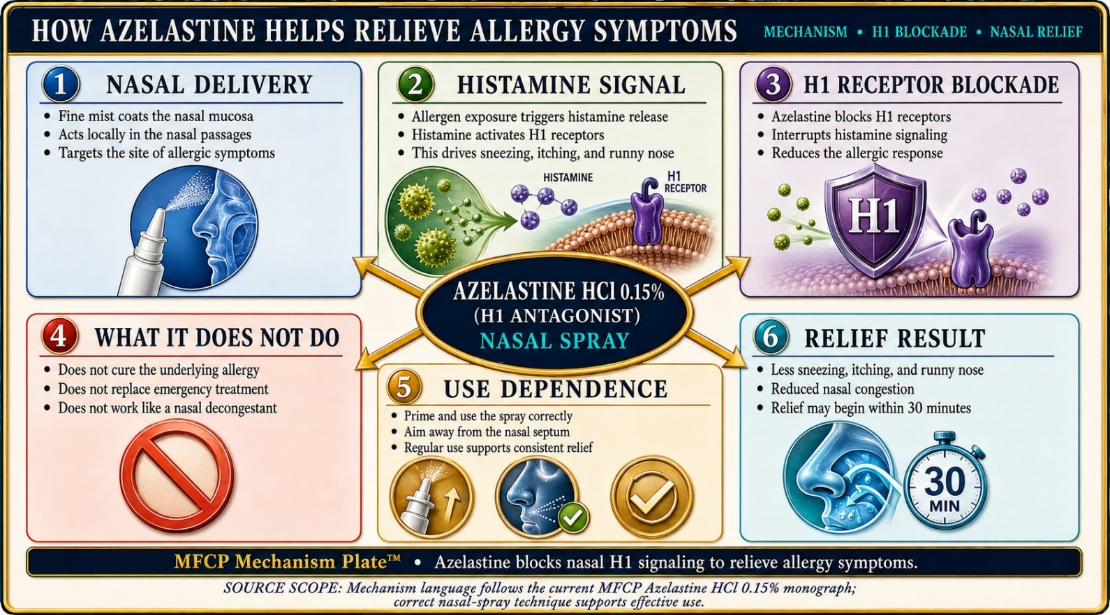
Use a nose product for nose symptoms. Good spray skill can improve the result.
What It Treats
It can relieve runny nose, sneezing, nose itch, and stuffiness from allergies. [10]
Drowsiness
Sleepiness may occur. Alcohol and sedating drugs can make it worse. [10]
Bitter Taste
Keep your head tipped down. Use a soft sniff so less drug runs into the throat. [10]
Age
The current Astepro Allergy label permits use at ages six and older. Children under six: do not use. [10]
- Blow your nose with care.
- Keep your head a bit forward.
- Point the tip away from the center wall.
- Use a soft sniff. Do not snort.
- Wipe the tip. Do not share the bottle.
A nasal steroid is not an antihistamine. It may be the stronger daily base for allergy swelling.
Open the Azelastine MonographOphthalmic Antihistamines — Overview
Match the drop to allergy itch. Eye pain or vision change needs care.
Ketotifen
It treats allergy eye itch. Many labels allow use from age three and dose twice a day. [11]
Olopatadine
It treats allergy eye itch. Strengths and dose times vary, so read the exact label. [12]
Pheniramine + Naphazoline
This pair treats itch and redness. Overuse may cause more eye redness. [13]
Contact Lenses
Remove lenses before use. Wait the label time before you put them back in. [11–13]
Eye Pain
Stop the drop and get care for eye pain or a change in sight. [11–13]
Lasts Over 72 Hours
Get care if itch or redness gets worse or lasts more than three days. [11–13]
Dirty Tip
Do not touch the dropper tip to your eye, hand, or counter.
Red Eye from Contacts
Do not use an allergy drop to treat contact lens irritation. [11,12]
When the problem is only in the eyes, an eye drop may avoid more drug in the rest of the body.
Skin & Topical Menu
Use a skin antihistamine only on the skin and only for the label use.
Diphenhydramine Skin
Cream, gel, or spray may ease small itchy areas from bites or minor skin irritation. [14]
Tripelennamine Skin
This less common cream is labeled for minor itch and skin irritation. [15]
Do Not Double
Do not use a skin dose and a mouth dose of the same drug. [6,14]
Small Area Only
Do not cover a large area or use it on broken or blistered skin unless the label allows it. [14,15]
Hydrocortisone
This is a mild steroid for inflammation and itch. It is not an antihistamine.
Pramoxine
This is a numbing itch reliever. It is not an antihistamine.
Calamine
This skin protectant can soothe weeping or itchy skin. It is not an antihistamine.
Get Care
Get care for spreading hives, face swelling, infection signs, or a severe rash.
A skin product treats a small site. Widespread hives may need an oral plan and a cause check.
Cold, Sleep & Combination Check
The same antihistamine can hide in more than one aisle.
Night Cold Product
A night cold mix may have more than one drug that makes you sleepy.
Sleep Aid
Many OTC sleep aids use diphenhydramine or doxylamine. Do not add an allergy dose. [6,8]
Allergy + Decongestant
The letter D often signals a decongestant. Check blood pressure and sleep risks.
Pain + Cold Product
It may also contain acetaminophen or ibuprofen. Do not take the same pain drug twice.
- Find the Active ingredients box.
- Circle each drug name and dose.
- Match each drug to a symptom you have.
- Cross out drugs you do not need.
- Check all other products for the same drug.
One well-matched drug is often safer than a product that treats six symptoms you do not have.
Ask First
Your health, age, work, and other drugs may change the best choice.
Driving or Safety Work
Avoid a drowsy drug. Even a less-drowsy drug should be tested before driving. [2–15]
Age 65 or Older
Older drugs can raise fall, confusion, dry mouth, and urine risks. [2–15]
Glaucoma
Ask before an older oral drug or a redness-relief eye drop. [2–15]
Enlarged Prostate
Drying drugs may make it harder to pass urine. [2–15]
Lung Disease
Some older drug labels say to ask first for chronic breathing disease. [2–15]
Kidney or Liver Disease
The drug or dose may need to change. [2–15]
Pregnancy or Nursing
Ask your care team before use. [2–15]
Alcohol or Sedatives
The mix can cause more sleepiness and poor judgment. [2–15]
Use the Age Label
Age limits differ by drug, strength, route, and dose form.
Do Not Sedate a Child
Do not give an allergy drug just to make a child sleep. [6]
Bring your drug list to the shelf. A pharmacist can check repeats, drowsiness, and dose limits.
All OTC Antihistamines — Route Index
This index covers FDA lists, shelf drugs, and each body route.
| Route / Group | Active Ingredients | Key Signal |
|---|---|---|
| Oral — Second Generation | Cetirizine · levocetirizine · loratadine · fexofenadine | Less drowsy to middle alert |
| Oral — M012 First Generation | Brompheniramine · chlorcyclizine · chlorpheniramine · dexbrompheniramine · dexchlorpheniramine · diphenhydramine citrate · diphenhydramine HCl · doxylamine · phenindamine · pheniramine · pyrilamine · thonzylamine · triprolidine | Drowsy / drying |
| Nose | Azelastine | Local; drowsiness may occur |
| Eye | Ketotifen · olopatadine · pheniramine with naphazoline | Local eye relief |
| Skin | Diphenhydramine · tripelennamine | Small-area topical use |
Shelf stock changes. Some FDA monograph ingredients are rarely marketed. The current package label controls the exact age, strength, dose form, and use.
Generation noteFDA does not place a generation number on the Drug Facts label. The generation map is a clinical way to compare sleepiness and drying effects.
Research Framework & Sources
Each choice is checked for symptom fit, route, benefit, sleepiness, and label limits.
Symptom Does this drug treat the symptom you have?
Route Can local treatment do the job with less body exposure?
Alertness What is the drowsiness and driving risk?
Safety Do age, health, pregnancy, or other drugs change the choice?
Label Does the current Drug Facts box support this use?
Primary sources
- FDA OTC Monograph M012: antihistamine ingredients and labeling
- DailyMed: cetirizine tablet
- DailyMed: levocetirizine tablet
- DailyMed: loratadine tablet
- DailyMed: fexofenadine tablet
- DailyMed: diphenhydramine oral capsule
- DailyMed: chlorpheniramine tablet
- DailyMed: doxylamine sleep-aid tablet
- DailyMed: clemastine tablet
- DailyMed: Astepro Allergy azelastine nasal spray
- DailyMed: ketotifen eye drops
- DailyMed: olopatadine eye drops
- DailyMed: pheniramine/naphazoline eye drops
- DailyMed: diphenhydramine/zinc acetate cream
- DailyMed: tripelennamine cream
Version 1.0 · Evidence checked August 23, 2026 · Public-facing educational guide
Health Literacy & Readability
The guide closes with a visible control for plain language, usable directions, and necessary clinical terms.
Grade Level Target: Grade 8 or lower
Necessary drug names and label terms are retained.
One Decision at a Time
Choose the symptom, route, alertness need, and safety screen in a consistent order.
Short, Direct Instructions
Headings name the task. Sentences emphasize what to do, what to avoid, and when to ask for help.
Clinical Terms Explained
Route, drowsiness, duplicate ingredients, and label controls are paired with practical meaning.
Readability supports understanding; it does not replace the current Drug Facts label or professional judgment.