
First-generation oral antihistamine · Controlled monograph
Diphenhydramine HYDROCHLORIDE · ORAL DOSAGE-FORM CONTROL
Short-acting allergy relief with marked drowsiness and drying-effect controls.

Part of the guide: Top 20 OTC Medicines for Ear and Balance Self-Care →
 02
At-a-Glance and Bottom Line
Diphenhydramine Hydrochloride
Monograph at a Glance · allergy relief · multiple dosage forms · alertness control
Older allergy medicine
Diphenhydramine is a first-generation antihistamine used for sudden allergy symptoms, hives, itching, occasional sleeplessness, and motion sickness.
The sleepiness is the drug
Newer allergy tablets barely enter the brain. Diphenhydramine enters freely, so drowsiness and slowed thinking are expected effects.
A strong short-term medicine for the right person. For daily allergy control—and for almost anyone age 65 or older—a newer tablet is usually the better answer.
 03
Who It Suits
May fit
- A sudden reaction, hives, or a night of severe itching
- Motion sickness when taken before travel
- Short-term use when drowsiness will not create a safety risk
Choose another path
- Daily allergy control
- Age 65 or older
- Driving, machinery, or safety-sensitive work
 04
Dosage Forms & Label Check
Read the active ingredient
Look for diphenhydramine hydrochloride. Common OTC forms include 12.5 mg / 5 mL liquid, 12.5 mg chewables, and 25 mg oral units. Follow the current Drug Facts label.
Match the dosage form
Oral liquids use the supplied dosing device. Chewables are chewed. Tablets, capsules, and liquid-filled capsules are swallowed as directed.
Check before using
Confirm the strength, age directions, dose, warnings, and active ingredients. Do not combine products that both contain diphenhydramine.
 05
How to Use It
| Use | Adult and teen age 12+ | Ceiling |
|---|---|---|
| Allergy | 25–50 mg every 4–6 hours as needed | 300 mg in 24 hours |
| Sleep aid | 50 mg hydrochloride at bedtime | One bedtime dose |
| Motion sickness | Take before travel according to the selected product | Follow its Drug Facts |
A bedtime dose may still slow someone the next morning. If allergy treatment is needed every day, reconsider the drug.
 06
Children
| Age | Oral hydrochloride dose | Ceiling |
|---|---|---|
| Under 2 | Do not use | Not recommended |
| 2 to under 6 | 6.25 mg every 4–6 hours only when the label or clinician directs | 37.5 mg |
| 6 to under 12 | 12.5–25 mg every 4–6 hours | 150 mg |
| 12+ | Adult dosing | 300 mg |
Too much may cause restlessness, agitation, and confusion instead of sleepiness.
 07
Do Not Stack Drying Medicines
| With | Why it matters | Action |
|---|---|---|
| Alcohol, opioids, sleep or anxiety medicines | Deeper drowsiness and slower breathing | Avoid the mix |
| Other drying medicines | Drying effects stack | Check for repeats |
| Dimenhydrinate or any PM product | The same drug may be hidden | Use one source at a time |
The brand name is not the formula. Read every Active ingredients panel.
 08
Who Must Not Use It
- Adults age 65 and older should generally avoid this drug class under the AGS Beers Criteria.
- Avoid or obtain clinician approval with enlarged prostate, difficulty urinating, or narrow-angle glaucoma.
- Use caution with asthma, COPD, or another lung disease.
- Do not use in children under age 2.
 09
When to Seek Care
Stop and seek care
- Face swelling with trouble breathing
- Confusion, hallucinations, or seizure
- Inability to pass urine or irregular heartbeat
- Hot, dry, flushed skin, wide pupils, and racing heart
Make an appointment
- Sleep trouble over two weeks
- Allergy symptoms requiring daily use
- Next-morning fog that does not settle
Call 911 for collapse, seizure, chest pain, or no response. Otherwise call Poison Control.
 10
The Molecule

| Attribute | Diphenhydramine | Meaning |
|---|---|---|
| Formula and mass | C17H21NO · 255.36 g/mol | Small and lipophilic |
| Hydrochloride salt | 291.82 g/mol | Citrate also exists |
| Polar surface area | 12.5 | Low; readily enters the brain |
| Half-life | About 9 hours | Can reach into morning |
 11
How It Works
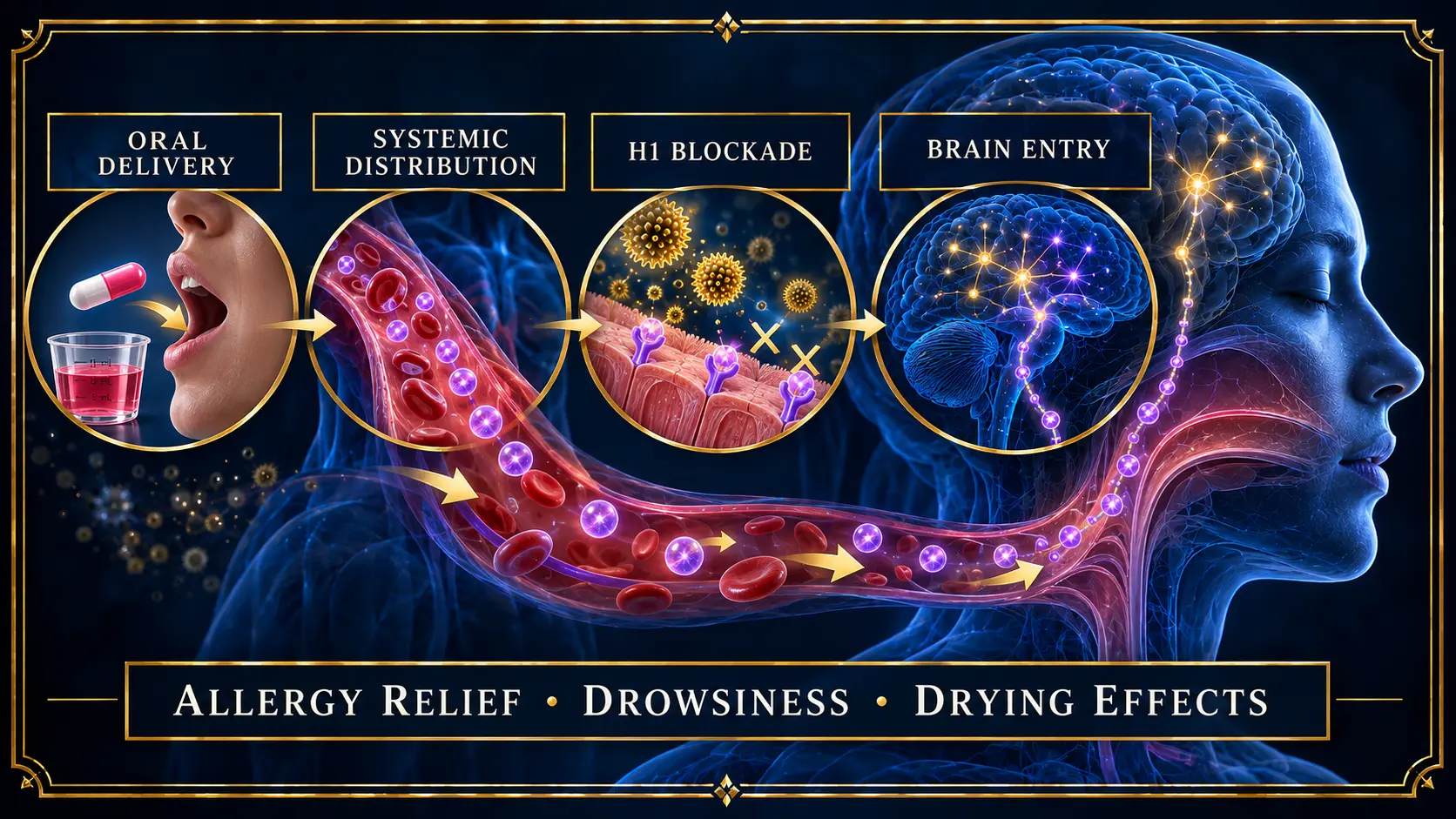
H1 blockade
Reduces allergy symptoms.
Brain entry
Causes sleepiness.
Drying action
May cause dry mouth, blurred vision, urinary difficulty, and confusion.
Sodium channels
Overdose can disturb electrical signaling and heart rhythm.
 12
Why the Sleepiness Is the Drug
The sleepiness is built in—not a rare reaction. Tolerance to sedation may develop within days while drying effects remain.
A dose at 10 p.m. may still be active at 7 a.m. Do not drive or operate machinery until the individual response is known.
 13
Older Adults and the Beers Criteria
Older adults clear diphenhydramine more slowly. Confusion, falls, dry mouth, constipation, and urinary retention become more important risks.
For an older adult selecting a PM sleep or allergy product, consider a newer antihistamine or a non-drug sleep approach.
 14
What the Evidence Actually Shows
| Indication | Evidence signal | MFCP confidence |
|---|---|---|
| Allergies, hives, itching | FDA-labeled; useful for sudden symptoms | High |
| Occasional sleeplessness | FDA-labeled, but tolerance develops | Low to moderate |
| Motion sickness | Labeled; use before travel | Moderate |
| Daily allergy or long-term sleep | Tolerance and next-day impairment | Not recommended |
 15
Against Other Antihistamines
| Medicine | Type | Best use | MFCP note |
|---|---|---|---|
| Diphenhydramine | Older · sedating | Short, one-time relief | Avoid routine use and older adults |
| Loratadine | Newer · low sedation | Daily allergies | Daytime default |
| Cetirizine | Newer · mildly sedating | Daily allergies | Fast onset |
| Fexofenadine | Newer · least sedating | Work and driving days | Avoid fruit juice |
 16
Counseling Algorithm
- Confirm the goal. Allergy relief, occasional sleep, or motion sickness—and every product already used.
- Decide whether it fits. For daily allergy or age 65+, choose another path.
- State the limits. Maximum dose, stop date, nine-hour warning, no-driving warning, and emergency signs.
A good drug for a bad night can be a poor drug for an entire season.
 17
MFCP Buying Standard
Green flags
- One clearly named active ingredient and strength
- Readable form, age, and daily limit
- Visible lot, expiration, and sealed pack
- Salt clearly named
Red flags
- PM or multi-symptom products hiding another drug
- Nightly or high-dose sleep marketing
- Use to sedate a child
- An older adult without review
The best product is the smallest dose that works in a clearly labeled, single-purpose form.
 18
Evidence and References
Evidence & Source Control
Allergy, pediatric-liquid, sleep-aid, geriatric-safety, and lactation sources remain explicitly separated
- DailyMed: diphenhydramine hydrochloride 25 mg allergy tablet.
- DailyMed: children’s diphenhydramine hydrochloride 12.5 mg per 5 mL liquid.
- DailyMed: diphenhydramine hydrochloride 50 mg sleep-aid capsule.
- American Geriatrics Society 2023 Beers Criteria® Update.
- NIH Drugs and Lactation Database (LactMed): Diphenhydramine.
- Sicari V, Zabbo CP. Diphenhydramine. StatPearls.
- MFCP Diphenhydramine dossier, July 2026.
- MFCP Diphenhydramine Monograph, August 2026.
19Health Literacy and Readability