

Fexofenadine HCl 180 mg Allegra® Allergy 24 Hour
Less-drowsy relief. Take it with water.

Part of the guide: Top 20 OTC Medicines for Ear and Balance Self-Care →
Pharmacist Bottom Line™
Less drowsy allergy relief—but water matters.
Allegra Allergy (fexofenadine hydrochloride) 180 mg temporarily relieves runny nose, sneezing, itchy or watery eyes, and itching of the nose or throat.
Say: fex-oh-FEN-uh-deen.
Take one tablet with water once a day. Fruit juice and some antacids can lower absorption.
Best fit
Daytime allergy relief when less drowsiness is important.
Hard stop
Children under 12 years: DO NOT USE this 180 mg product.
Key skill
Take it with water. Do not take it with fruit juice.
Contents
Rapid Clinical Navigation™
MAG™ · Monograph at a Glance™
Fexofenadine HCl 180 mg
Single-ingredient, second-generation oral H₁ antihistamine.
Oral · 12+
This 180 mg tablet is for adults and children 12 years and older.
One tablet daily
Take one tablet with water. Do not exceed one tablet in 24 hours.
Lower-sedation profile
“Second generation” does not mean every person will respond identically.
Use water
Do not take with fruit juice or at the same time as aluminum- or magnesium-containing antacids.
Kidney disease · age 65+
Ask a doctor before use. Do not use this strength for children under 12.
Where It Fits
Therapeutic Domain Indicator™
Where This Monograph Belongs
The current Drug Facts label—not visual proximity—controls each assignment.
Respiratory · Allergy · Sinus Relief
Hay-fever symptoms: sneezing, runny nose, and itching of the nose or throat.
ASSIGNEDEye · Ear · Nose · Throat
Itchy, watery eyes are included on the current 180 mg label.
ASSIGNEDDermatology · Skin · Hair
Hives uses require their own current label and are not transferred here.
VERIFY SEPARATELYDigestive · Nausea · Diarrhea
No symptom fit under this monograph.
Pain · Fever · Inflammation
No symptom fit under this monograph.
Sleep · Stress · Mood
Fexofenadine is not a sleep medicine.
Drug Identity and Chemistry
Active ingredient
Fexofenadine hydrochloride.
Strength
180 mg in each tablet.
Class
Second-generation oral H1 antihistamine.
This medicine is the active carboxylic-acid metabolite of terfenadine. It acts mainly outside the brain.
Mechanism of Action
From Oral Dose to Peripheral H₁ Blockade
Six controlled steps explain the benefit—and the limits.
Take by mouth with water
The tablet dissolves and fexofenadine enters the bloodstream.
Histamine activates H₁ receptors
The signal contributes to sneezing, itching, runny nose, and watery eyes.
Peripheral H₁ signaling is blocked
Fexofenadine limits histamine signaling mainly outside the brain.
Brain entry is limited—not absolute
The class has a lower-sedation profile, but individual response still matters.
Water preserves the intended route
Fruit juice and aluminum- or magnesium-containing antacids can interfere.
Allergy symptoms may improve
Benefit begins after dosing and is designed to extend across the labeled interval.
Use It Right
What It Treats
Runny nose
Temporary relief.
Sneezing
Temporary relief.
Itchy, watery eyes
Temporary relief.
Nose or throat itch
Temporary relief.
What It Does Not Treat
Not a decongestant
Allegra Allergy does not contain pseudoephedrine. It is not a primary treatment for blocked nasal blood vessels.
Not emergency care
It does not treat anaphylaxis, throat swelling, or breathing trouble. Get emergency help.
Dosage Forms
This monograph controls the current single-ingredient 180 mg tablet. Other Allegra products have different strengths, dose forms, ages, and directions.
Current OTC Dose
| Who | Current 180 mg directions |
|---|---|
| Adults and children 12 years and older | Take one 180 mg tablet with water once a day. Do not take more than one tablet in 24 hours. |
| Children under 12 years | DO NOT USE. |
| Adults 65 years and older | Ask a doctor. |
| People with kidney disease | Ask a doctor. |
How to Take It
- Read the active ingredient and strength.
- Use the 180 mg tablet only if the age directions fit.
- Take one tablet with water.
- Do not take it with fruit juice.
- Do not take more than one tablet in 24 hours.
- Keep the package away from children.
Onset and Duration
Onset
Clinical sources describe relief beginning in about one to two hours. Individual response varies.
Duration
The 180 mg product is labeled for once-daily use. Do not take more than one tablet in 24 hours.
Stay Safe
Fruit Juice Interaction
WATER ONLY
Do not take Allegra Allergy with fruit juices. Apple, orange, and grapefruit juice can reduce how much medicine the body absorbs.
Practical rule
Use plain water for the dose. Follow the current package directions.
Antacid Interaction
Do not take Allegra Allergy at the same time as an antacid that contains aluminum or magnesium. These ingredients can reduce absorption.
Common Effects
The current Drug Facts label focuses on safe use and does not promise that any antihistamine will feel the same for every person. Headache, nausea, or dizziness have been reported in clinical use.
Warnings and Hard Stops
Do not use
Do not use if you have ever had an allergic reaction to this product or any ingredient.
Do not exceed
Do not take more than directed.
Stop and get help
Stop use if an allergic reaction occurs. Seek medical help right away.
Overdose
Get medical help or contact Poison Control right away.
Kidney Disease
Ask a doctor before use if you have kidney disease. A doctor should decide whether you need a different dose.
Pregnancy and Breastfeeding
If pregnant or breastfeeding, ask a health professional before use. Do not replace this instruction with a blanket statement that the product is safe.
Older Adults
Adults 65 years and older must ask a doctor before using the current 180 mg product. Kidney function and other medicines may change the best dose or product.
Children and Families
Children under 12 years must not use this 180 mg product. Other Allegra products for children have their own strengths and age directions.
Buy the Right Bottle
Allegra vs. Allegra-D
| Product | Active ingredients | Access and purpose |
|---|---|---|
| Allegra Allergy | Fexofenadine only | Open-shelf antihistamine for labeled allergy symptoms. |
| Allegra-D | Fexofenadine plus pseudoephedrine | Behind-the-counter combination with different warnings and directions. |
MFCP Buying Standard™
1 · Ingredient
Fexofenadine HCl.
2 · Strength
180 mg for this monograph.
3 · Product type
Single ingredient—not Allegra-D.
Confirm the age, dose, warnings, seal, and expiration date on the package. Store at 20° to 25°C (68° to 77°F) and protect from excess moisture.
Ask and Verify
Counseling and Triage
Ask before selection
- Is the person at least 12?
- Is the person 65 or older?
- Is there kidney disease?
- Is there pregnancy or breastfeeding?
- Are fruit juice or aluminum/magnesium antacids part of the routine?
Get urgent help
- Breathing trouble
- Throat, tongue, or face swelling
- Fainting or a severe reaction
- Suspected overdose
Glossary
Evidence & Source Control
Controls the ingredient, symptoms, 12+ directions, kidney/65+ screen, water instruction, and product warnings.
Kept separate so its interval and directions are not transferred to this 180 mg monograph.
Controls pediatric liquid labeling; it does not authorize this 180 mg tablet for children under 12.
The current label controls the water-only administration and separation warnings.
Supporting professional source for breastfeeding context; it does not replace the package label or individualized judgment.
Readability and literacy
Health Literacy and Readability Control
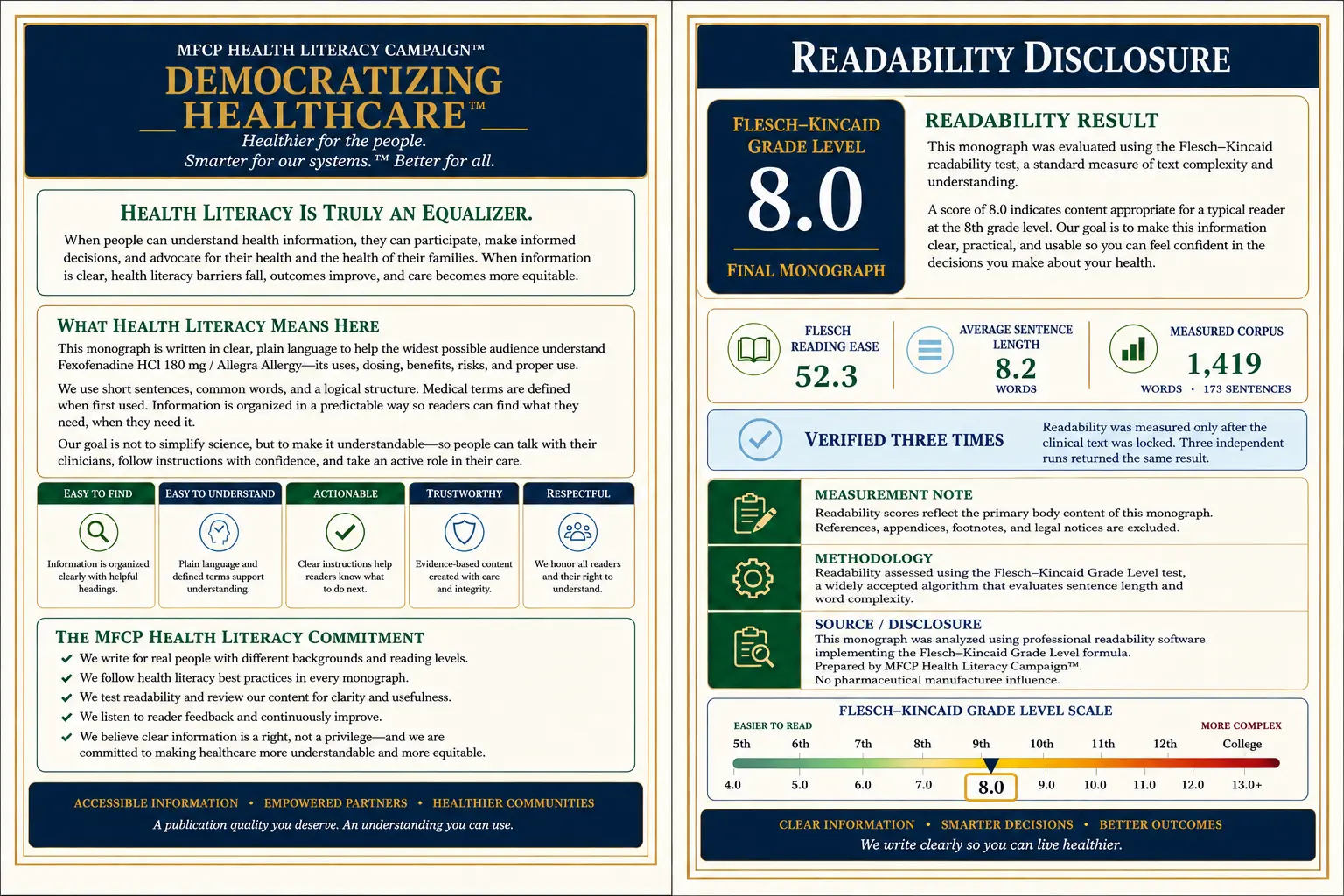
GRADE LEVEL 8.0 VERIFIED × 3
READABILITY RESULT
The complete patient-facing clinical corpus measures at Flesch–Kincaid Grade Level 8.0. It meets the NIH / MFCP target of Grade 8 or lower. Three independent runs returned the same result.
Flesch–Kincaid
8.0
Grade level
Reading Ease
52.3
Measured score
Average Sentence
8.2 words
Measured Corpus
1,419 words
173 sentences
readability-measurement-scope, from “Pharmacist Bottom Line” through “Evidence and References.” It includes all 26 clinical modules. Navigation, toolbar labels, masthead text, return links, image alt text, hidden text, and this disclosure are outside the corpus.Health literacy is truly an equalizer. Accessible information supports safer questions, safer choices, and accountable care.