Skip to content
MFCP mortar and pestle emblemMichael’s FormularyCLINICAL PERSPECTIVE™

Clinical library / Respiratory & allergy

On this page
100%01 / 20
MICHAEL’S FORMULARY & CLINICAL PERSPECTIVE™ · HYPERTONIC SALINE

MICHAEL’S FORMULARY™AND CLINICAL PERSPECTIVE

HYPERTONIC
SALINE

3% SODIUM CHLORIDEDRUG-FREE INTRANASAL MOISTURIZERHypertonic saline fine-mist spray and nasal applicationCONTROLLED MONOGRAPH
PROFESSIONAL JUDGMENT. DELIVERED.™

MICHAEL’S FORMULARY & CLINICAL PERSPECTIVE™ · DOMAIN 3 · ENTRY 7

Michael's Formulary Trust and Reliability Nexus

NON-DRUG LOCAL NASAL CARE · CONTROLLED MONOGRAPH

HYPERTONIC SALINE 3% Intranasal

SODIUM CHLORIDE · DRUG-FREE OSMOTIC NASAL MOISTURIZER
CONCENTRATION3% sodium chloride
ROUTEIntranasal
PRIMARY CONTROLMatch concentration to the task
DEVICE CONTROLFine mist and rinse are not interchangeable
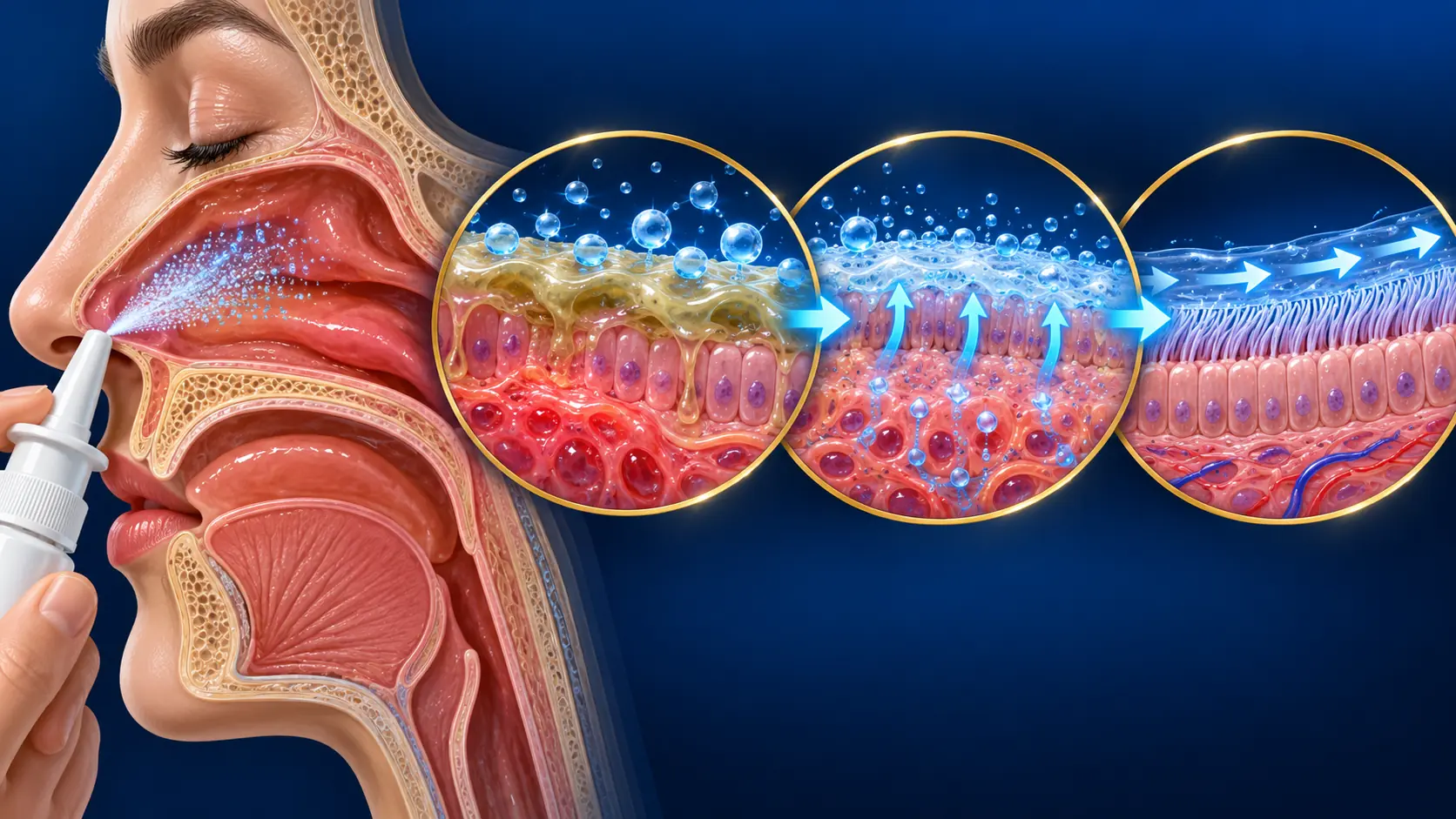
Hypertonic saline delivered into the nose with water moving toward the mucosal surface, mucus hydration, ciliary clearance, and drainage
OSMOTIC MOISTURE AND DRAINAGESurface hydration · thinner mucus · supported clearance
MFCP™ · AMERICA’S OTC PHARMACY™ · CLINICAL EDUCATION · PROFESSIONAL JUDGMENT. DELIVERED.™

Part of the guide: Top 20 OTC Medicines for Ear and Balance Self-Care →

01
Clinical meaning · decisive action

Pharmacist Bottom Line™

MATCH THE DEVICE

Fine-mist spray and high-volume irrigation do different jobs. Use the directions for the exact device.

EXPECT STINGING

A higher salt concentration can cause temporary burning or stinging. Stop if it is severe or does not settle.

CONTROL THE WATER

For a prepared nasal rinse, use distilled, sterile, or previously boiled and cooled water. Never use plain tap water.

RETURN TO CONTENTS ↑
02
One controlled route · select a destination

Contents

03
Choose the clinical destination

Rapid Clinical Navigation™

RETURN TO CONTENTS ↑
03
Complete single-view clinical overview

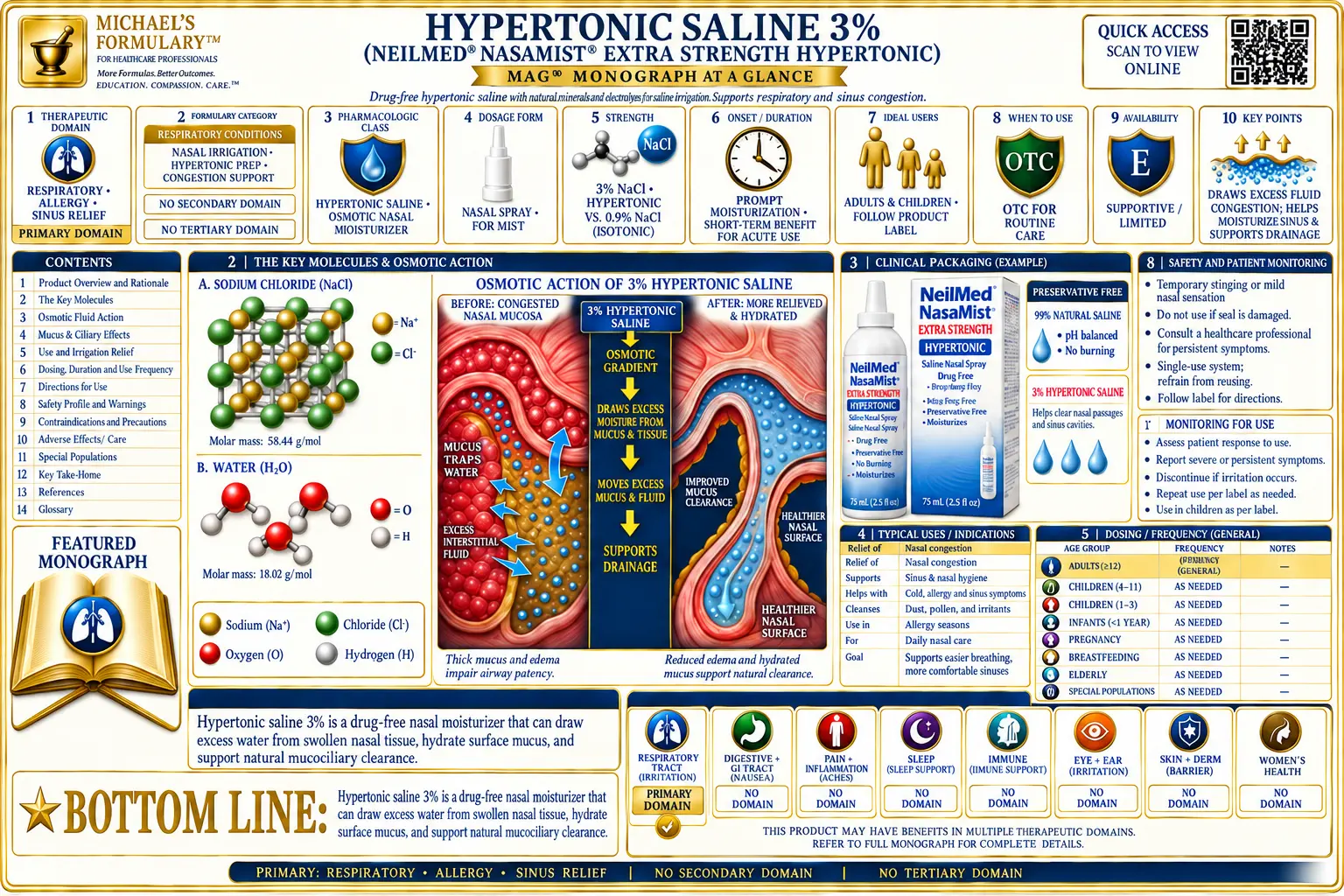
MAG™ · Monograph at a Glance™

MFCP Hypertonic Saline 3 percent Monograph at a Glance quick-reference clinical plate
MFCP MAG™ · Monograph at a Glance™ · high-resolution controlled plate based on supplied image 5.
HYPERTONIC SALINE 3%SODIUM CHLORIDE · INTRANASAL · DRUG-FREE LOCAL CARE

DOMAIN

RESPIRATORY · NASAL & SINUSPRIMARY DOMAIN

ROUTE

INTRANASALFINE MIST OR LABELED RINSE

ACTION

MOISTENS · SUPPORTS DRAINAGEOSMOTIC LOCAL EFFECT

ONSET

DURING / SOON AFTER USESUPPORTIVE EFFECT

AGE

PRODUCT-SPECIFICVERIFY THE CURRENT LABEL

CONTROL

3% SODIUM CHLORIDEDO NOT CONFUSE WITH 0.9%
PropertyControlled valueWhy it matters
Active / solutionSodium chloride 3% in waterConfirms hypertonic concentration
PurposeMoisten nasal passages; support mucus clearance and drainageSupportive care, not systemic drug therapy
DeliveryFine mist or a separately labeled irrigation systemTechnique and water rules differ
Core warningRead the exact label before useProducts and devices are not interchangeable
RETURN TO CONTENTS ↑
04
MFCP READING STOP

Where It Fits

05
Primary domain · intended use · exclusions visible

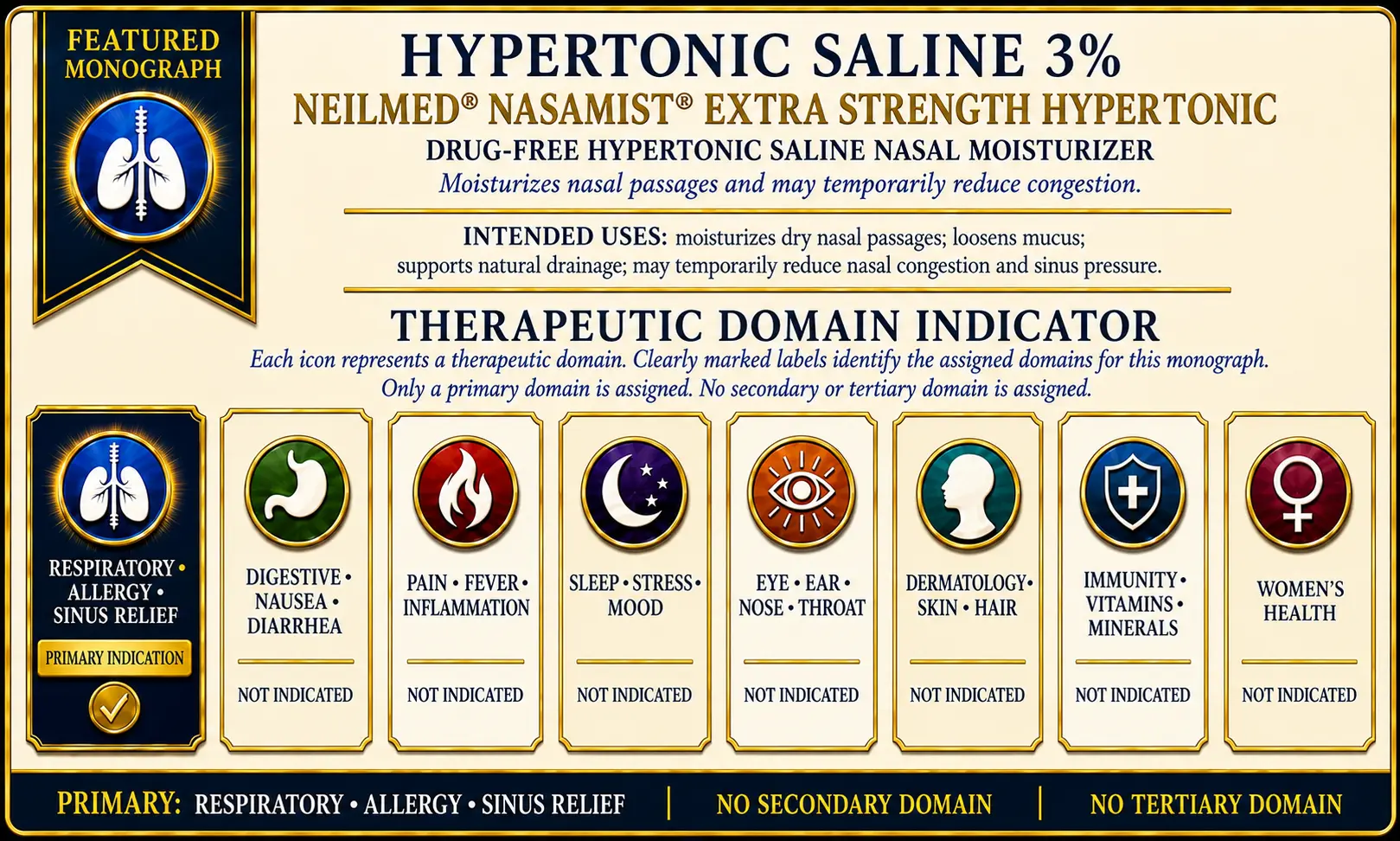
Therapeutic Domain Indicator™

MFCP Hypertonic Saline 3 percent therapeutic domain indicator with respiratory and sinus relief as the primary domain
MFCP Therapeutic Domain Indicator™ · user-supplied controlled artwork.
DomainStatusControl
Respiratory · allergy · sinus reliefPrimaryMoisture, mucus clearance, and drainage support
Digestive, pain, sleep, eye, skin, immune, women’s healthNot indicatedNo secondary or tertiary domain is assigned
Bacterial infectionNot an antibioticFever, severe pain, or worsening symptoms require assessment
Medicated decongestionNot a drug decongestantNo vasoconstrictor is present
RETURN TO CONTENTS ↑
07
Osmosis · mucus hydration · drainage

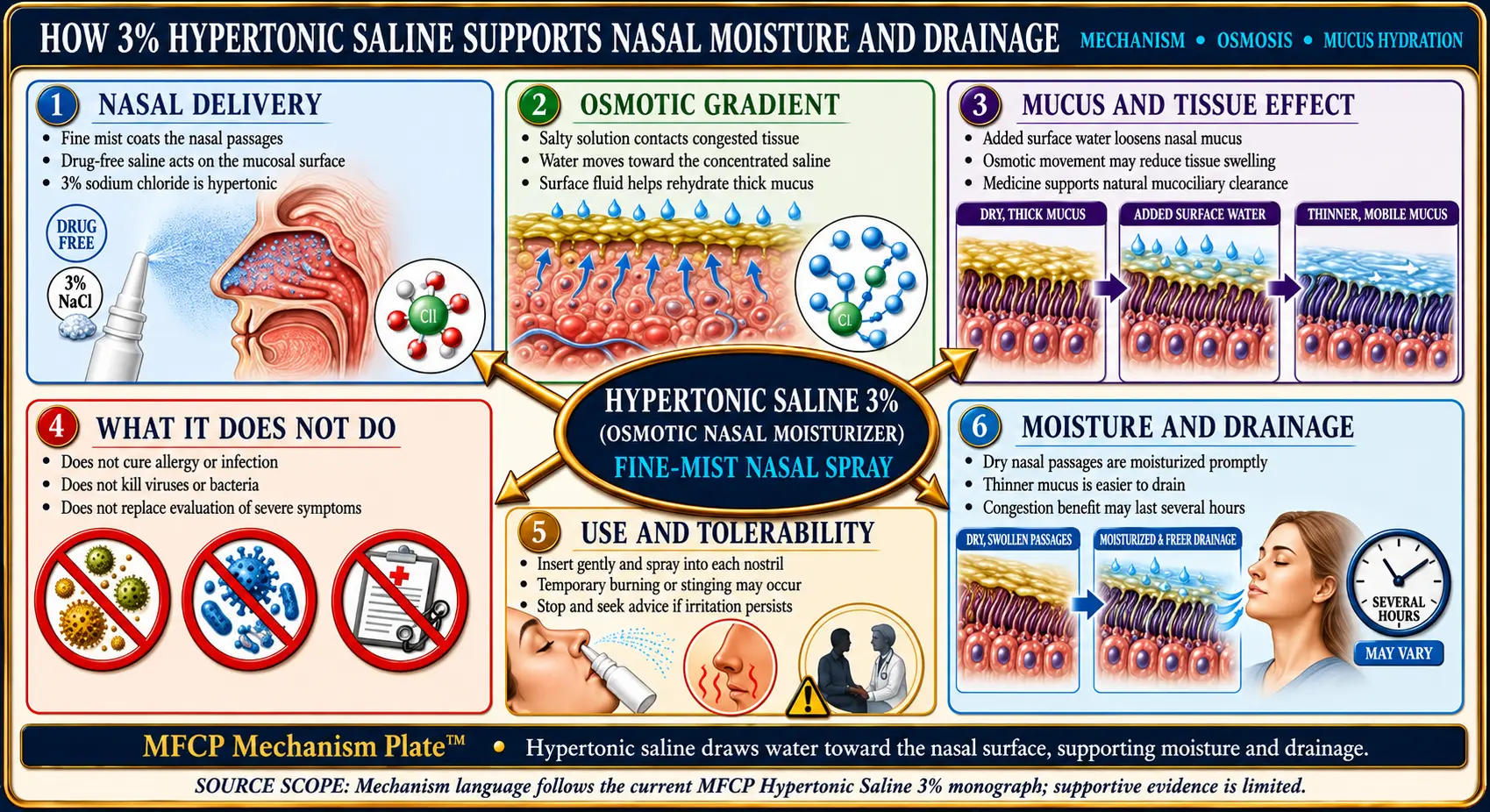
Mechanism of Action

MFCP mechanism plate showing nasal delivery, osmotic gradient, mucus and tissue effects, limits, use and tolerability, and moisture and drainage
MFCP Mechanism Plate™ · user-supplied controlled artwork.

1 · DELIVERY

Saline contacts the nasal surface. A fine mist adds moisture; a rinse moves a larger liquid volume.

2 · OSMOSIS

The higher salt concentration draws water toward the solution and away from swollen tissue.

3 · CLEARANCE

Moisture can loosen thick mucus and support normal mucus movement and drainage.

RETURN TO CONTENTS ↑
06
Concentration · tonicity · route · formulation

Product Identity and Solution Characteristics

SOLUTION IDENTITY

Generic name
Sodium chloride nasal solution
Concentration
3% w/v when the current label states 3%
Tonicity
Hypertonic relative to body fluids
Route
Intranasal only

WHAT 3% MEANS

A 3% solution contains more salt than isotonic 0.9% saline. That concentration difference is clinically relevant: hypertonic saline can sting more and should not be substituted without checking the label.

RETURN TO CONTENTS ↑
05
MFCP READING STOP

Use It Right

08
Fine mist · prepared rinse · hygiene

Administration—Critical Instructions

READY-TO-USE FINE MIST

  1. Read the label. Confirm 3% hypertonic saline and a fine-mist device.
  2. Wash hands. Keep the nozzle clean.
  3. Insert only as directed. Do not push past a safety flange.
  4. Press gently. Spray until the passage is moist.
  5. Repeat. Use the other nostril as directed.
  6. Cap and store. Do not share the device.

PREPARED OR HIGH-VOLUME RINSE

  1. Use safe water. Distilled, sterile, or previously boiled and cooled.
  2. Use the exact packet and volume. Do not guess.
  3. Keep the mouth open. Let solution drain without force.
  4. Do not fully block the passage. Avoid pressure in the nose or ears.
  5. Wash the device. Follow the manufacturer’s cleaning directions.
  6. Air-dry completely. Store clean and dry.
RETURN TO CONTENTS ↑
09
Symptom match · limits · decision points

Indication Fit

SituationFitAction
Dry nasal passagesReasonable supportive useChoose a labeled moisturizing spray
Thick mucus or post-nasal drainageMay help loosen and move mucusChoose device by task and tolerance
Allergy or cold congestionAdjunctive symptom careDoes not treat the underlying allergy or infection
Completely blocked nostril or severe ear pressurePoor self-care fitAsk a clinician before forced irrigation
Fever, marked facial swelling, severe headache, breathing troubleNot routine saline self-careSeek prompt medical assessment
RETURN TO CONTENTS ↑
10
Fine mist · drops · irrigation are not equivalent

Dosage Forms and Delivery Systems

Delivery systemTypical jobKey control
Fine-mist sprayMoisturize and lightly wet nasal passagesReady-to-use label and nozzle hygiene
DropsGentle localized moistureAge-appropriate tip and caregiver technique
Squeeze-bottle or gravity irrigationFlush mucus and allergens with higher volumeSafe water, exact mixing, pressure control, device cleaning
Powered irrigationDevice-specific rinse deliveryUse only the manufacturer’s instructions
RETURN TO CONTENTS ↑
11
The current label controls frequency and age

Use by Product and Age

Population / productControlled directionLimit
Ready-to-use NasaMist® Extra Strength HypertonicInsert the actuator tip and press gently until the passages are moist; repeat in the other nostrilUse only as directed on the current label
Adults and childrenThe manufacturer lists adult and child use for the fine-mist productA caregiver must control nozzle depth and technique
Babies younger than 6 monthsManufacturer directs consultation before useDo not assume an adult product is suitable
Prepared or high-volume rinseFollow its own age, volume, frequency, and cleaning directionsFine-mist directions do not transfer
RETURN TO CONTENTS ↑
15
Supportive care within the nasal pathway

Where This Product Fits

OptionPrimary actionBest fitMain limitation
Hypertonic saline 3%Moistens; osmotic support; mucus clearanceDryness, congestion support, thicker mucusMay sting; does not treat allergy mediators
Isotonic saline 0.9%Gentle moisture and rinseRoutine moisture or lower-sting preferenceLess concentrated
Intranasal antihistamineBlocks histamine signalingRapid allergy symptom controlMedicated; label and age limits
Intranasal corticosteroidReduces nasal inflammationPersistent allergic rhinitisTechnique and regular use matter
Topical decongestantConstricts nasal vesselsShort-term rescueStrict duration control; rebound risk
RETURN TO CONTENTS ↑
06
MFCP READING STOP

Stay Safe

12
Expected local effects · practical response

Common Effects and Management

EffectLikely meaningWhat to do
Brief burning or stingingHypertonic concentration contacting sensitive tissuePause; verify concentration and technique
Persistent burningPoor tolerance or irritated tissueStop and consider isotonic saline after professional advice
Drainage into the throatSolution or loosened mucus moving backwardAdjust head position and reduce force
Ear pressureToo much pressure or blocked drainageStop; do not force the device
Nosebleed or severe irritationLocal injury, dryness, or diseaseStop and seek advice if significant or recurrent
RETURN TO CONTENTS ↑
13
Contamination · pressure · persistent symptoms

Serious Safety and Referral

TriggerAction
Shared nozzle or bottleStop sharing; replace or clean only as the label permits
Damaged, punctured, overheated, frozen, expired, or unlabeled containerDo not use
Immunocompromised person considering irrigationAsk a health professional first
Symptoms worsen or persistAsk a doctor or pharmacist
Headache, fever, confusion, or vomiting after nasal rinsingSeek medical attention immediately
Trouble breathing, facial swelling, or severe reactionSeek urgent care
RETURN TO CONTENTS ↑
14
Label-specific use · individualized judgment

Pregnancy, Children, and Older Adults

PREGNANCY / BREAST-FEEDING

Saline acts locally and contains no medicated decongestant, but the exact product, symptoms, and clinical situation still matter. Ask a health professional when uncertain.

CHILDREN

Use an age-appropriate device with caregiver supervision. Do not insert the nozzle beyond the flange. Ask a physician before use in babies younger than 6 months for the cited fine-mist product.

OLDER ADULTS

Assess dexterity, balance, nasal bleeding, immune status, and the ability to clean a rinse device. Choose the simplest safe delivery system.

RETURN TO CONTENTS ↑
07
MFCP READING STOP

Buy the Right Bottle

16
Buy the concentration · device · integrity

MFCP Buying Standard™

CheckMFCP standard
Generic identitySodium chloride nasal solution
Concentration3% hypertonic—not 0.9% isotonic
DeviceFine mist, drops, squeeze rinse, or other clearly labeled system
PreparationReady-to-use versus packet-mixed; never assume
DirectionsAge, frequency, water, cleaning, and storage visible on the current package
IntegritySealed, readable, in date, undamaged, and not exposed to prohibited heat or freezing
RETURN TO CONTENTS ↑
17
Verify before you buy · verify before you use

Product Identifier™ and Package Control

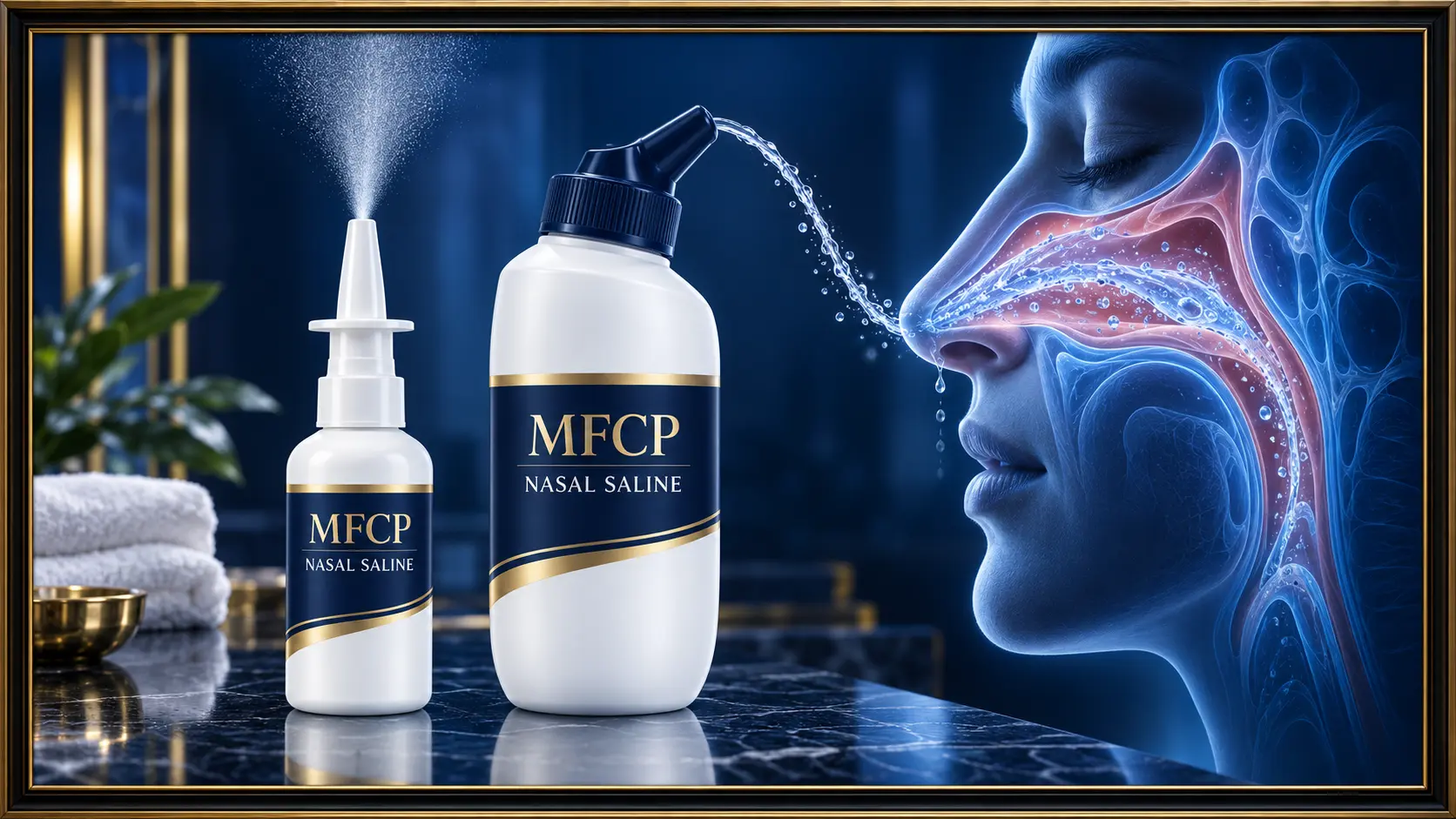
MFCP generic nasal saline fine-mist and rinse devices

CONTROLLED IDENTIFIER FIELDS

  1. MFCP generic artwork is educational—not retail packaging.
  2. Generic name: sodium chloride nasal solution.
  3. Concentration: 3% hypertonic.
  4. Route: intranasal only.
  5. Delivery system: identify fine mist or rinse.
  6. Preparation: ready-to-use or label-directed mixing.
  7. Verify the current label before use.
RETURN TO CONTENTS ↑
08
MFCP READING STOP

Ask and Verify

19
Plain-language clinical definitions and authorities

Glossary · Evidence and References

HypertonicSaltier than body fluids; 3% saline is hypertonic.
IsotonicAbout the same salt concentration as body fluids; commonly 0.9%.
IntranasalUsed inside the nose.
OsmosisWater movement across tissue toward a more concentrated solution.
Fine mistA small-volume spray that moistens nasal passages.
IrrigationA larger-volume flow used to rinse the nasal passages.
Sterile waterWater processed and labeled to be free of living microorganisms.
Distilled waterWater purified by distillation and labeled as distilled.
Previously boiled waterTap water boiled as directed, then cooled before rinsing.
Mucociliary clearanceNormal movement of mucus by tiny hair-like structures.
Nozzle flangeA stop that limits how far a spray tip enters.
Supportive careCare that helps symptoms without treating every underlying cause.
  1. NeilMed. NasaMist® Extra Strength Hypertonic product directions and warnings.
  2. CDC. How to Safely Rinse Sinuses. Updated July 16, 2025.
  3. FDA. Is Rinsing Your Sinuses With Neti Pots Safe?
  4. MFCP Hypertonic Saline 3% Therapeutic Domain Indicator™ · controlling artwork supplied by the publisher.
  5. MFCP Hypertonic Saline 3% Mechanism Plate™ · controlling artwork supplied by the publisher.
RETURN TO CONTENTS ↑
Readability and literacy
RETURN TO CONTENTS ↑
20
▣

HEALTH LITERACY AND READABILITY

MFCP
Michael's Formulary logoMICHAEL’S FORMULARY™— AND CLINICAL PERSPECTIVE —

NASAL SALINE MONOGRAPH

MFCP Health Literacy Campaign

MFCP
HEALTH LITERACY CAMPAIGN

Patient-first by design.
EXACT MEASUREMENT SCOPE

PATIENT ACTION lines in Sections 1–4.

METHODS & CONTROLS

Readability tested with validated formulas and editorial review.

MEETS NIH / MFCP TARGET

The measured patient-action text meets the NIH / MFCP Grade 8-or-lower target.

NIH / MFCP TARGETGRADE 8 OR LOWER
WHAT THIS MEANS FOR YOU

Short action lines support quick reading.

Common words and short sentences reduce barriers.

Technical and legal text is measured separately.

Each action line tells the reader what to do.

EVERY WORD SHOULD EMPOWER
UNDERSTANDING AND INFORM DECISIONS.
MFCP readability disclosure

READABILITY DISCLOSURE

How we measure. What we measured.
FLESCH–KINCAID
GRADE LEVEL
6.0VERIFIED
SMOG
GRADE LEVEL
8.4POLYSYLLABIC-WORD CHECK
MEASURED
CORPUS
176WORDS
AVERAGE
SENTENCE LENGTH
10.4ABCWORDS
READABILITY SCALE (GRADE LEVEL)
Where lower scores are easier to read.
0681018+6.0
VERIFIED
MEETS NIH / MFCP TARGET

The measured patient-action text meets the NIH / MFCP Grade 8-or-lower target.

EXACT MEASUREMENT SCOPE

PATIENT ACTION lines in Sections 1–4.

TECHNICAL CLINICAL / LEGAL LAYER

Ingredient names, concentrations, device terms, and cautions are retained for accuracy and separately disclosed.

HEALTH LITERACY STANDARD

Clinical accuracy, plain language, clear navigation, generous spacing, and actionable next steps.

Patient-First
by Design
Plain
Language
Clear
Navigation
Actionable
Next Steps
Clinical
Accuracy
Trust &
Transparency
Professional Judgment. Delivered.™
RETURN TO CONTENTS ↑
18
When self-care stops · when assessment begins

Red Flags and Referral

STOP THE DEVICE

  • Severe or persistent burning
  • Significant nosebleed
  • Ear pain or pressure
  • Solution will not drain

CONTACT A CLINICIAN

  • Symptoms persist or worsen
  • Recurrent sinus symptoms
  • Recent surgery or injury
  • Immune suppression

URGENT ASSESSMENT

  • Trouble breathing
  • Marked facial swelling
  • Severe headache or confusion
  • Fever or vomiting after rinsing
RETURN TO CONTENTS ↑
MFCP™ · AMERICA’S OTC PHARMACY™ · CLINICAL EDUCATION · VERIFY CURRENT PRODUCT LABEL