Skip to content
MFCP mortar and pestle emblemMichael’s FormularyCLINICAL PERSPECTIVE™

Clinical library / Digestive health

On this page
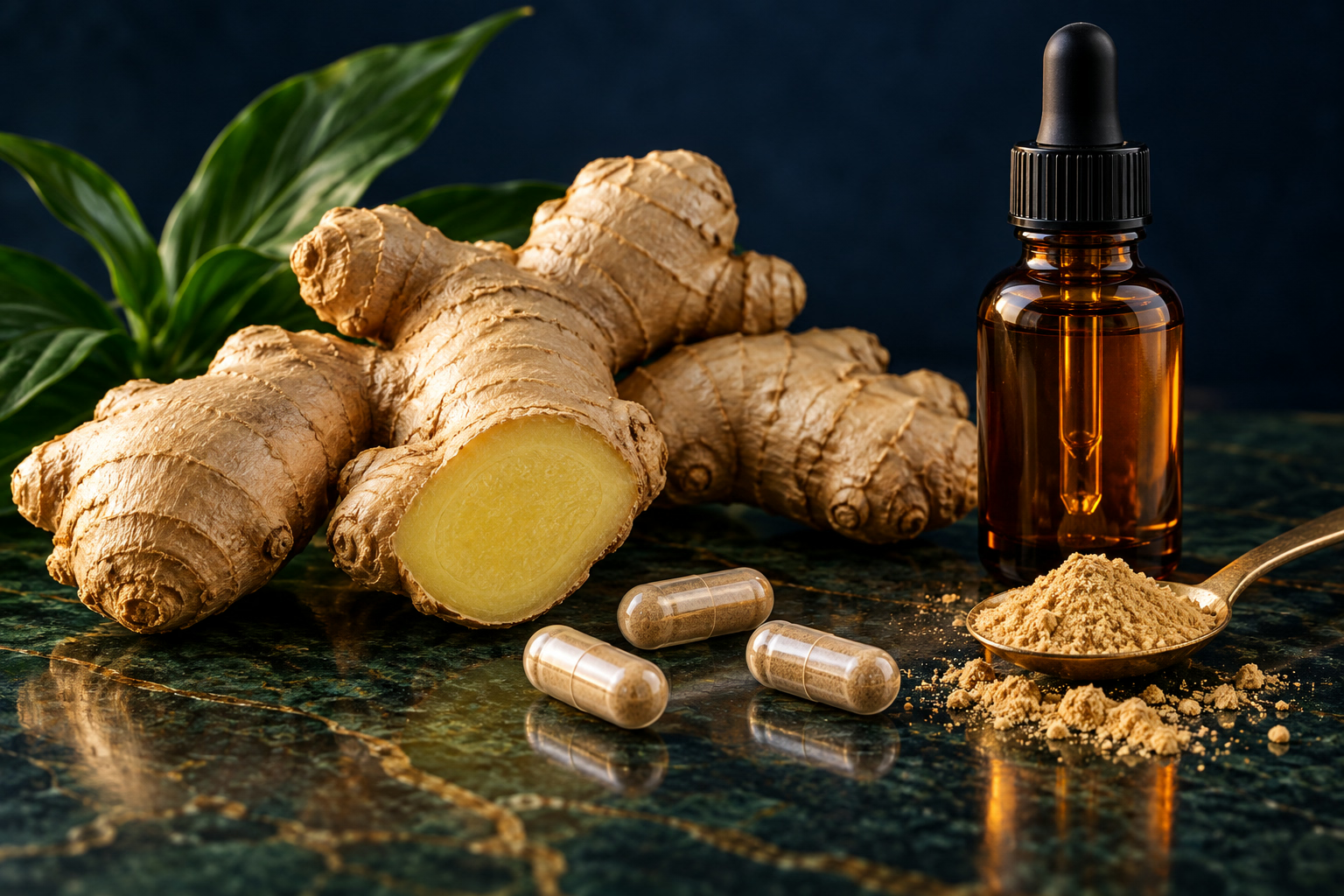
Fresh ginger rhizomes with a pale cut face beside unbranded capsules, powder and plain amber dropper
Natural Products hallmark

GINGER

Zingiber officinale

Powder · extract · capsule · chew · liquid

Natural Products · Item 25 · Controlled Monograph

Ginger

The word “ginger” does not establish a therapeutic dose. Rhizome powder, standardized extract, chews, candies, teas, and liquids are not automatically equivalent.
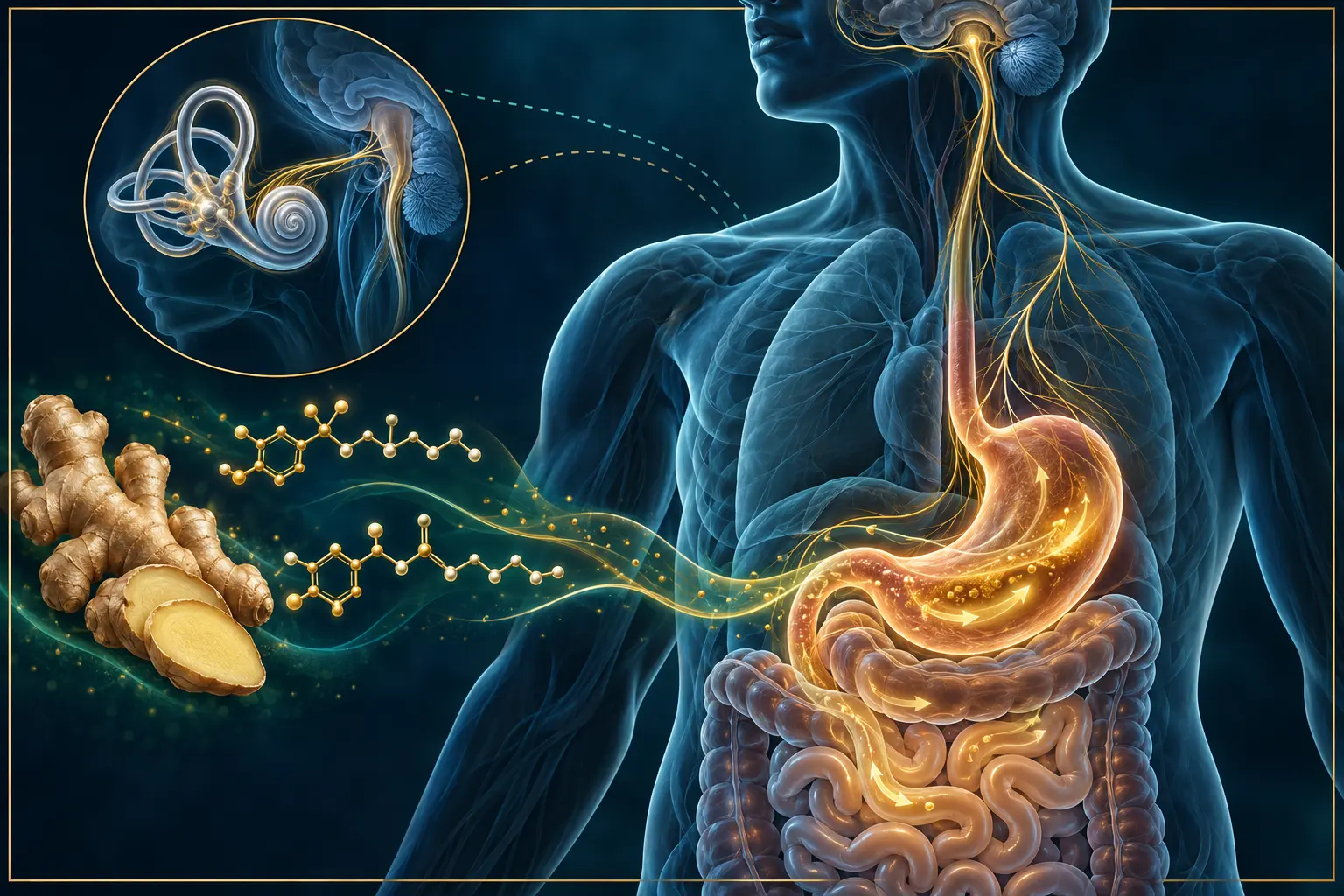
Clinical illustration of the stomach, intestine, vagal pathway, vestibular system, and ginger constituents
Proposed gastrointestinal signaling and motility effectsMotion-sickness benefit remains uncertain
Evidence fitResearch suggests possible benefit for nausea and vomiting associated with pregnancy
Evidence restraintMost motion-sickness studies have not shown ginger to be helpful
Buying controlVerify botanical identity, plant part, powder versus extract, serving size, and quality testing
01

Plain Talk · What Ginger Can and Cannot Promise

Possible fit

Pregnancy-related nausea

Research suggests ginger may help nausea and vomiting associated with pregnancy. Selection still belongs inside prenatal medication review.

Evidence boundary

Motion sickness is not established

Most studies evaluated by NIH have not shown ginger to be helpful for motion sickness. It should not be presented as equivalent to an approved motion-sickness drug.

Product reality

Food, candy, and supplements differ

Fresh ginger, tea, powder, extract, chew, gummy, and liquid may deliver very different constituents and amounts.

Triage first

Nausea is a symptom—not a diagnosis

Persistent vomiting, dehydration, severe pain, bleeding, jaundice, fever, pregnancy complications, or neurologic symptoms require clinical assessment.

★ BOTTOM LINE: ginger is a formulation-dependent dietary supplement with limited, indication-specific evidence—not a universal non-sedating antiemetic.
02

Botanical Identity & Formulation Families

Botanical name

Zingiber officinale

The rhizome is the relevant plant part. A credible label identifies ginger root or rhizome rather than relying only on a front-panel image.

Raw material

Powdered rhizome

A milligram amount of dried powder describes mass; it does not guarantee a particular gingerol or shogaol concentration.

Concentrated material

Extracts require a translation key

An extract should disclose its amount, extraction ratio or equivalent, and any declared constituent standardization.

FormWhat the number may meanKey limitationMFCP control
Food or teaRecipe amount or no measured doseHighly variable extraction and intakeTreat as food exposure, not a standardized supplement dose
Rhizome powder capsuleMass of dried plant materialConstituent concentration may be undeclaredVerify plant part and milligrams per serving
Standardized extractMass of concentrated extractNot milligram-for-milligram equivalent to powderRead ratio, equivalent, and declared marker compounds
Chew, candy, or gummyServing count or proprietary blendGinger amount may be unclear; sugar and choking matterDo not infer dose from pungency or package imagery
Liquid or tinctureMilliliters, drops, or extract ratioSolvent and concentration varyUse the supplied measure and exact label
03

Constituents & Proposed Gastrointestinal Mechanisms

Three-dimensional 6-gingerol conformer rendered from PubChem atomic coordinates; oxygen red, carbon gray, hydrogen pale

6-Gingerol · C₁₇H₂₆O₄

One constituent of ginger, not a stand-in for the entire rhizome or a clinical-effect map.

PubChem CID 442793 · computed 3D conformer

Inspect the molecular record ↗

1Rhizome supplies gingerols and related compounds
2Drying and heat alter the constituent profile
3Laboratory work suggests serotonin-pathway modulation
4Human studies examine gastric motility and nausea signaling
5Clinical benefit remains indication-specific
Gingerols and shogaols

Processing changes chemistry

Fresh and dried ginger do not have identical constituent profiles. “Same plant” does not mean identical exposure.

Mechanism restraint

A proposed pathway is not a guaranteed outcome

Peripheral gastrointestinal and serotonin-related effects are biologically plausible, but mechanism diagrams cannot substitute for clinical evidence.

Clinical translation: ginger does not create the central H1-antihistamine or anticholinergic profile of meclizine or dimenhydrinate. That distinction does not prove equal motion-sickness efficacy.
04

Evidence by Indication

IndicationCurrent evidence positionMFCP interpretation
Nausea and vomiting associated with pregnancyResearch suggests ginger may be helpfulPossible adjunct after prenatal review; product and total intake still matter
Motion sicknessMost studies have not shown benefitDo not promise prevention or present ginger as equivalent to an OTC antihistamine
Chemotherapy-related nausea and vomitingUncertain as an addition to standard treatmentOncology-directed adjunct only; never replace prescribed antiemetics
Postoperative nausea and vomitingUncertainPerioperative team controls; supplements must be disclosed before surgery
Dyspepsia or digestive discomfortSome mechanistic and small-study signalsDo not let symptom relief conceal persistent pain, bleeding, weight loss, or vomiting
Evidence grade is indication-specific: evidence supporting one nausea setting cannot be transferred automatically to travel, chemotherapy, surgery, vertigo, or unexplained vomiting.
05

Form, Dose Translation & Administration Discipline

No universal dose

Follow the exact Supplement Facts panel

Powder mass, extract mass, fresh-rhizome equivalent, and constituent standardization are different measurement systems.

Serving arithmetic

Count units and servings

Confirm milligrams per capsule or chew, units per serving, servings per day, and every other ginger-containing product.

Technique

Water and tolerance matter

Capsules should be swallowed as labeled. Pungent products may worsen heartburn or irritate the mouth and throat.

Children

Do not invent a pediatric conversion

Age, swallowing ability, sugar, alcohol-containing extracts, and the cause of nausea require product-specific and pediatric review.

Label statementWhat it tells youWhat it does not tell you
“Ginger root 500 mg”Declared rhizome powder mass per listed unit or servingA fixed gingerol concentration or equivalence to an extract
“Extract 100 mg”Mass of the extractRaw-herb equivalent without a ratio or equivalent statement
“Standardized”A marker target may be controlledClinical efficacy, purity, or independent verification by itself
“Proprietary blend”Total blend massThe amount of ginger unless separately disclosed
06

Safety Gate, Special Populations & Interactions

Common adverse effects

GI and oral irritation

Oral ginger can cause abdominal discomfort, heartburn, diarrhea, and mouth or throat irritation.

Pregnancy

Coordinate the total plan

Possible benefit does not remove the need to review vomiting severity, hydration, prenatal therapy, supplement quality, and total exposure.

Breast-feeding

Evidence is limited

NIH notes that little is known about safety during breast-feeding. Discuss supplemental use with a health professional.

SituationWhy it mattersControlled action
Prescription medicinesHerb–medicine interactions can occur and evidence may be incompleteReview the full medication list with a pharmacist or clinician
Anticoagulants, antiplatelets, bleeding disorder, or upcoming surgeryBleeding concerns are often cited; product dose and clinical context matterDo not self-escalate concentrated extracts; disclose use before procedures
Diabetes or blood-pressure therapyConcentrated supplements may complicate monitoring or symptom interpretationMonitor with the treating clinician rather than assuming food-level exposure
Severe reflux or swallowing difficultyPungency or capsules may worsen irritationStop self-selection and evaluate persistent or progressive symptoms
Urgent triage: inability to keep fluids down, dehydration, vomiting blood, black stool, severe chest or abdominal pain, jaundice, high fever, confusion, fainting, new neurologic deficits, or dizziness unrelated to motion belongs outside supplement self-care.
07

MFCP Natural Products Buying Standard™

1 · Identity

Confirm species and plant part

Look for Zingiber officinale and root or rhizome on the label. Avoid products that rely only on pictures or vague “ginger complex” language.

2 · Formulation

Powder and extract are separate

Capture the exact milligrams, ratio, equivalent, declared marker compounds, serving size, and suggested-use directions.

3 · Quality

Look beyond “natural”

Prefer transparent manufacturers, lot and expiration information, intact tamper evidence, and credible independent quality certification when available.

4 · Excipient screen

Chews and liquids carry more than ginger

Review sugar, sweeteners, alcohol, allergens, dyes, and combination ingredients—especially for children, diabetes, pregnancy, and polypharmacy.

Marketing phraseControlled interpretationRequired verification
“Natural nausea relief”Structure or marketing language—not proof across all causesIndication-specific evidence and red-flag screen
“Extra strength”No universal technical definition across supplementsActual serving amount and concentration
“Clinically studied”The cited study may use a different extract or doseMatch the tested formulation to the purchased product
“Third-party tested”Useful only when the program and scope are identifiableNamed certifier and verifiable mark
08

Evidence Map, Regulatory Context & Readability

Primary public-health source

NIH NCCIH Ginger

Current evidence and safety summary ↗

Controls the public-facing distinctions for pregnancy nausea, motion sickness, uncertain indications, adverse effects, and medicine review.

Regulatory framework

FDA Dietary Supplements

Dietary supplement oversight ↗

Explains the U.S. regulatory framework and why supplement labels do not function like approved-drug monographs.

Source dossier

MFCP development record

07.24.2026 MFCP Model Ginger Deep Dive Monograph Development Dossier.

Used as the structural source; claims were narrowed where current public-health evidence required restraint.

Label control

The purchased product governs

Verify Supplement Facts, serving directions, other ingredients, lot, expiration, and quality claims immediately before use.

Evidence hierarchy: current evidence and the exact product label outrank tradition, pungency, brand familiarity, front-panel claims, and ingredient-family assumptions.
Readability control: patient-facing decisions use plain language and short scanning units. Botanical, constituent, regulatory, and interaction terms remain only where precision requires them.
Michael's Formulary & Clinical Perspective™ · Natural Products · Evidence translated. Safety made visible.
Contents
  1. Plain Talk · What Ginger Can and Cannot Promise
  2. Botanical Identity & Formulation Families
  3. Constituents & Proposed Gastrointestinal Mechanisms
  4. Evidence by Indication
  5. Form, Dose Translation & Administration Discipline
  6. Safety Gate, Special Populations & Interactions
  7. MFCP Natural Products Buying Standard™
  8. Evidence Map, Regulatory Context & Readability
  9. Source links

Source links

Links already cited on this page.