Skip to content
MFCP mortar and pestle emblemMichael’s FormularyCLINICAL PERSPECTIVE™

Clinical library / Vitamins & minerals

On this page
THE MFCP NATURAL-PRODUCT ATLAS™

Natural Products &
Botanicals Atlas™

Pharmacist-curated, source-linked guidance for evidence, safety, preparation, label verification, and real-world natural-product decisions.

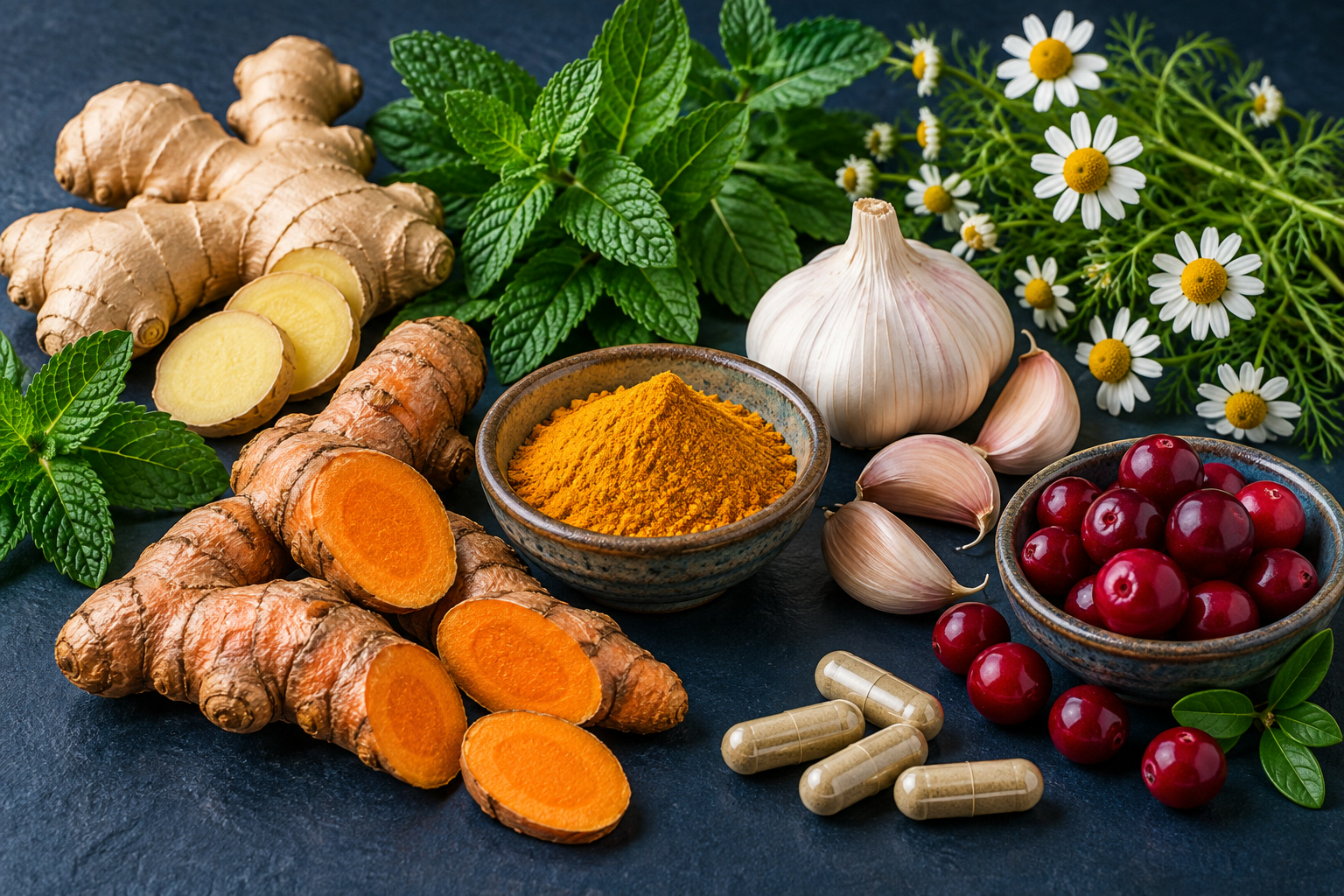
Illustrative botanical still life with turmeric, ginger, mint, chamomile, garlic, cranberries, powder and capsules
CLINICAL PERSPECTIVE™

Guidance for real decisions

Move from choosing a natural product to checking its label and safety. The guide follows the same MFCP decision architecture used elsewhere on the site.

01
Choose the pathwayStart with the health concern, then review the controlled profile.
02
Check safetyInteractions, contraindications, pregnancy, lactation, pediatrics, and product-specific cautions.
03
Verify the labelConfirm identity, preparation, ingredients, quality, and manufacturing claims.
04
Review the evidenceClinical evidence, source links, professional references, and publication controls.
THE CONTROLLED ATLAS

Browse all 40 controlled profiles

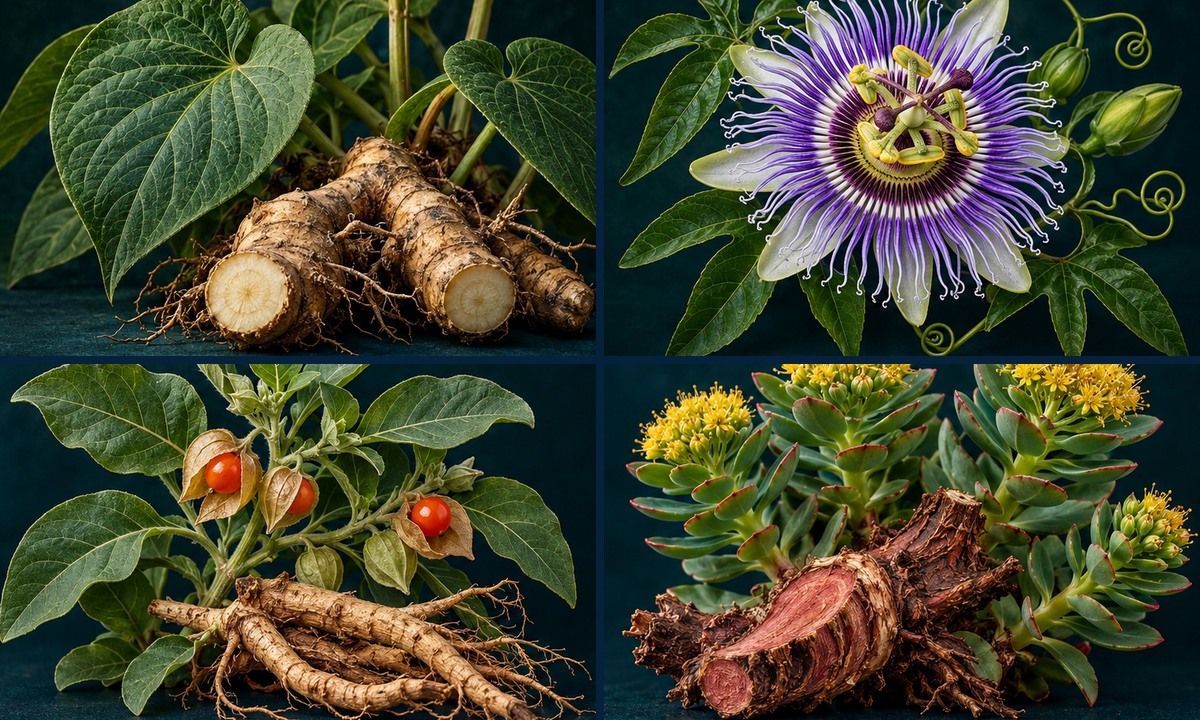
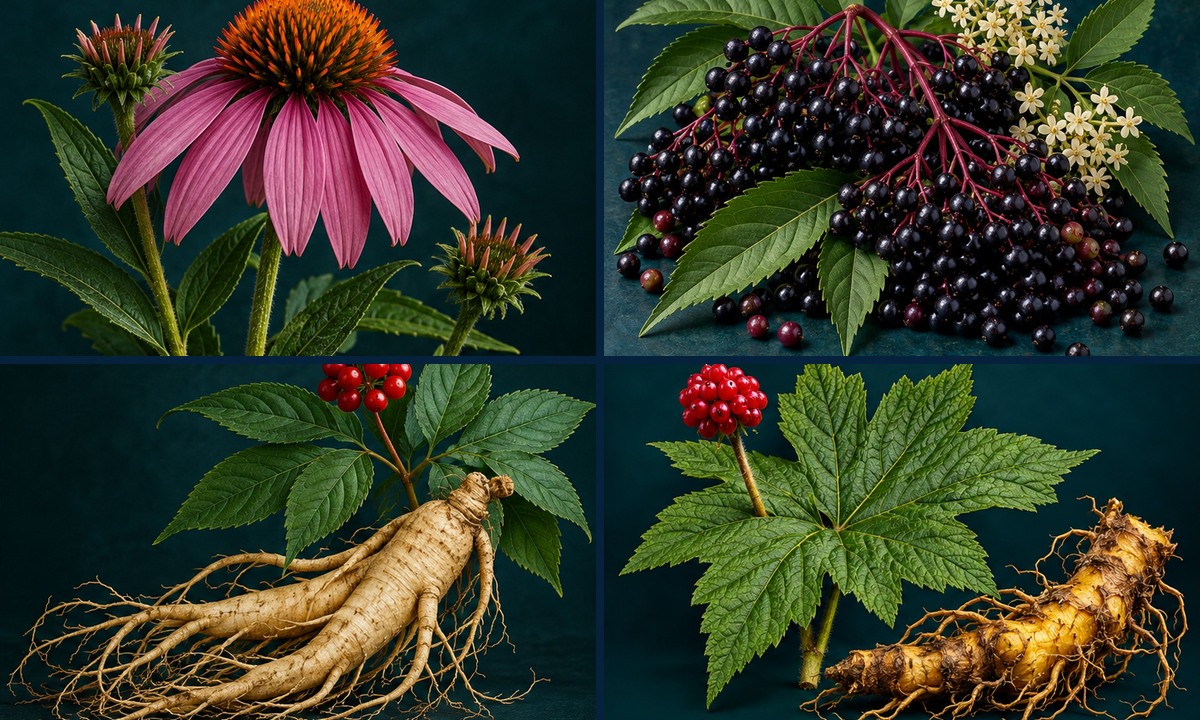
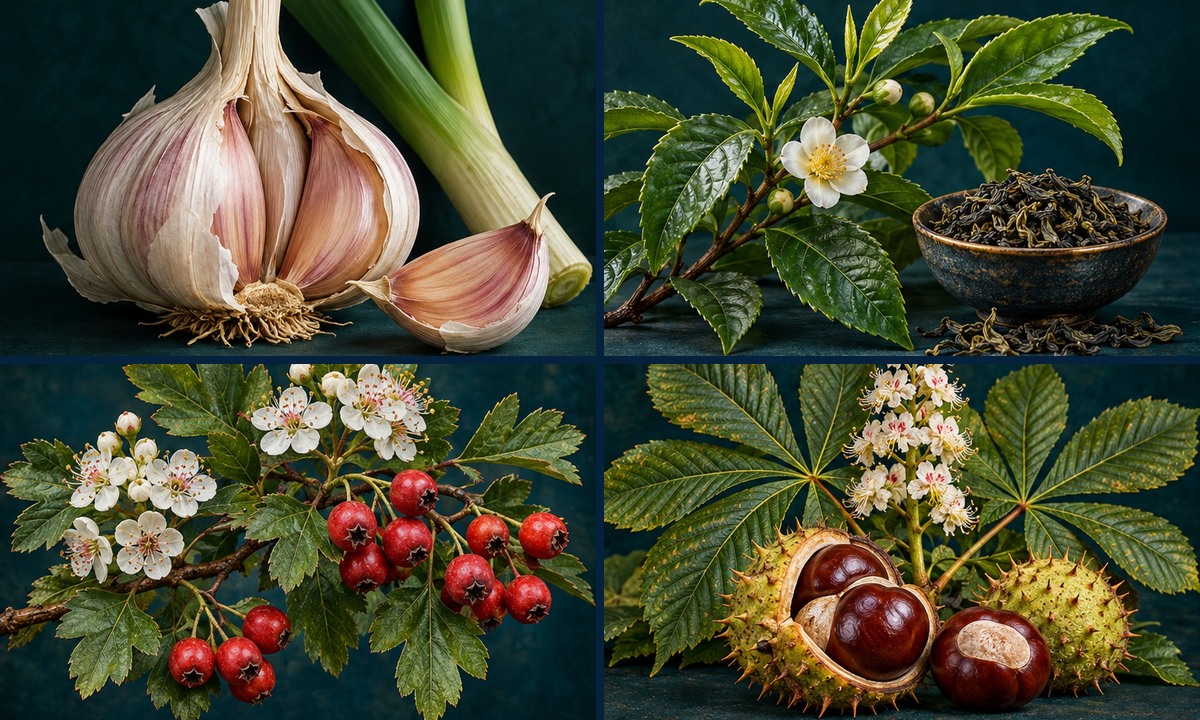
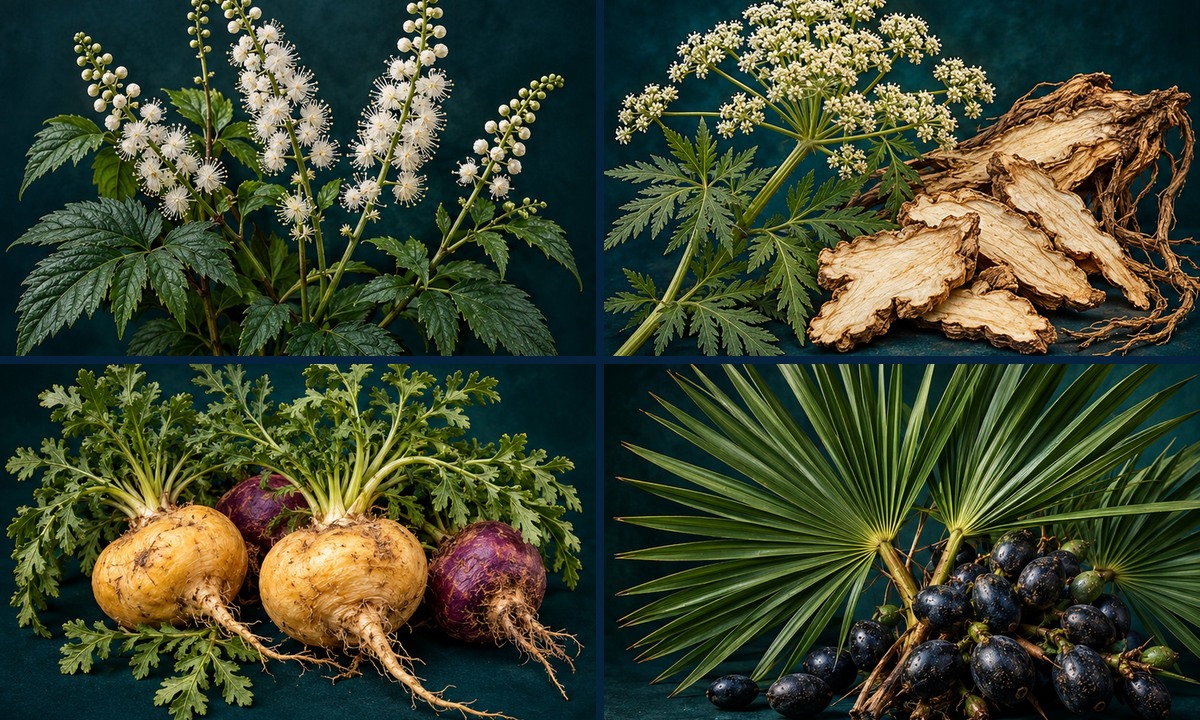
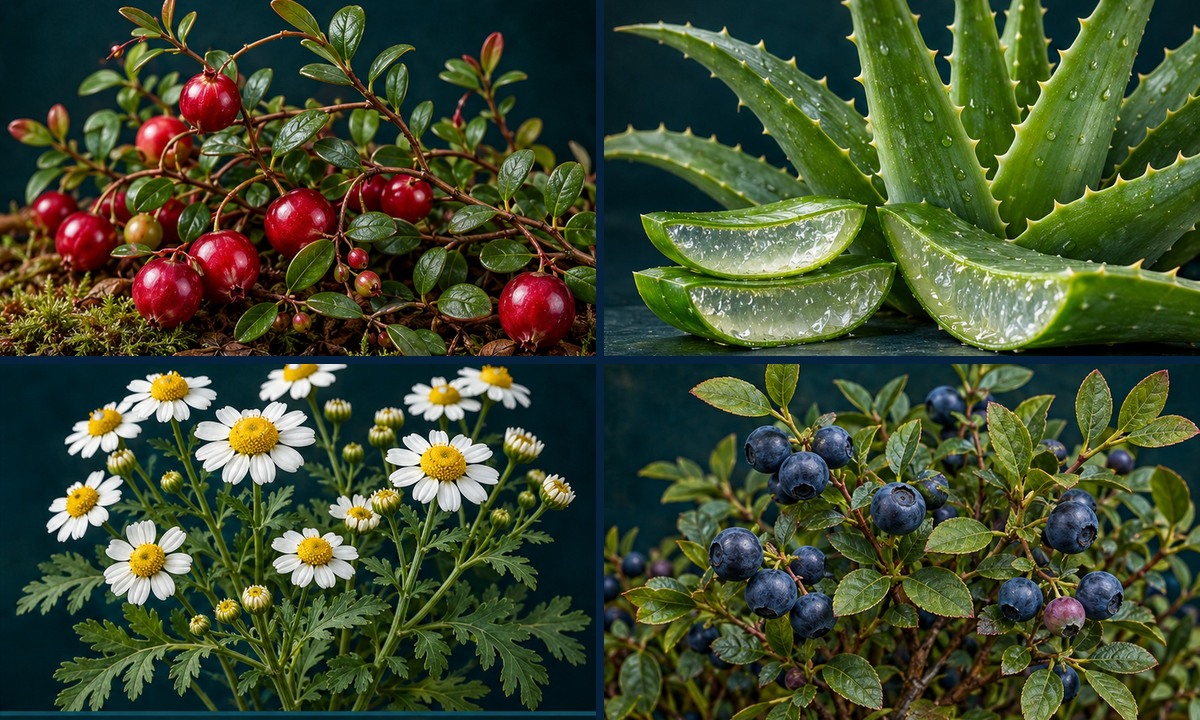
Each profile opens inside this same publication. Botanical specimen artwork supports rapid visual recognition; evidence, safety, label verification, and source links remain attached to the individual product.

Open profiles at:

Choose a botanical below to open its overview.

01
Inflammation & PainControlled profiles · evidence · safety · label verification
02
Digestive & BowelControlled profiles · evidence · safety · label verification
03
Sleep, Stress & MoodControlled profiles · evidence · safety · label verification
04
Immune & RespiratoryControlled profiles · evidence · safety · label verification
05
Cardiometabolic & CirculatoryControlled profiles · evidence · safety · label verification
06
Women’s & Hormonal HealthControlled profiles · evidence · safety · label verification
07
Urinary, Skin & TopicalControlled profiles · evidence · safety · label verification
08
Stimulants & SpecialtyControlled profiles · evidence · safety · label verification
← Back to Natural Products & Botanicals
Michael's Formulary & Clinical Perspective (MFCP) Natural-Product Profile 01 of 40

Turmeric

Curcuma longa L.
Zingiberaceae (ginger family)

Control-chart classification: anti-inflammatory and antioxidant nutraceutical.

Identify the preparation first. Then match evidence, safety, and labeling to the product actually being used.

Best-supported useKnee osteoarthritis: promising short-term symptom data; important uncertainty remains
BioavailabilityNative curcumin: very low. Formulation decides exposure.
Safety alerts
Liver injuryGallbladderBleedingTacrolimusIron
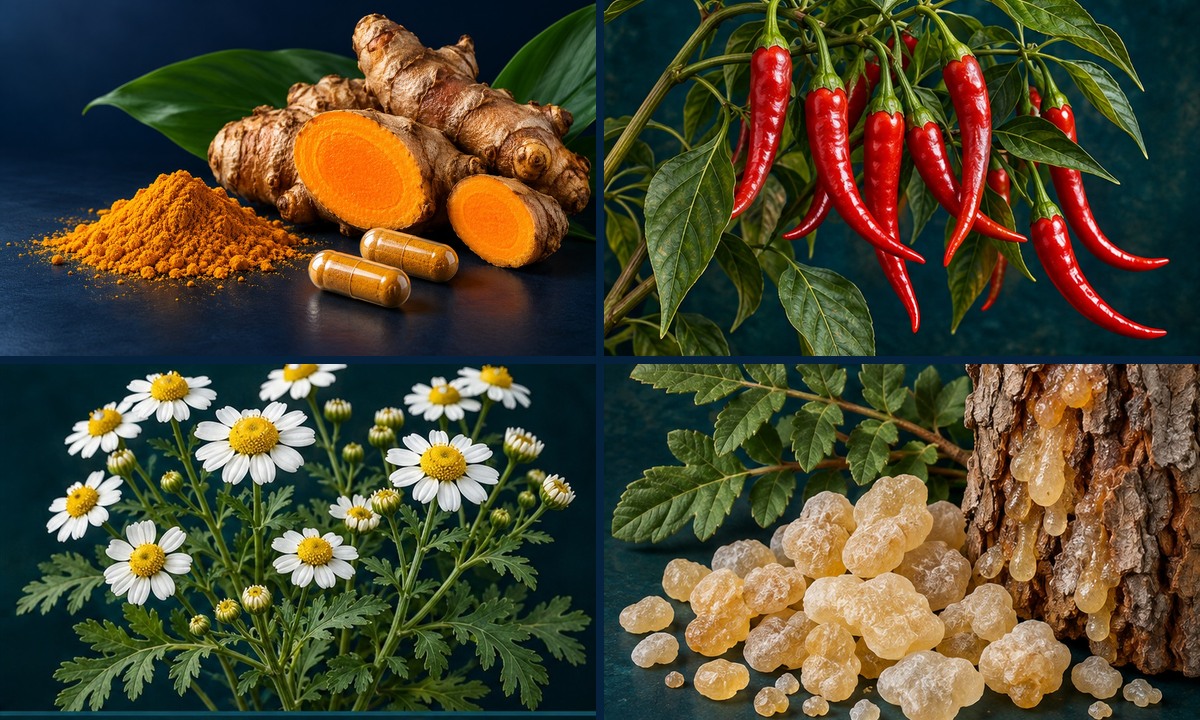
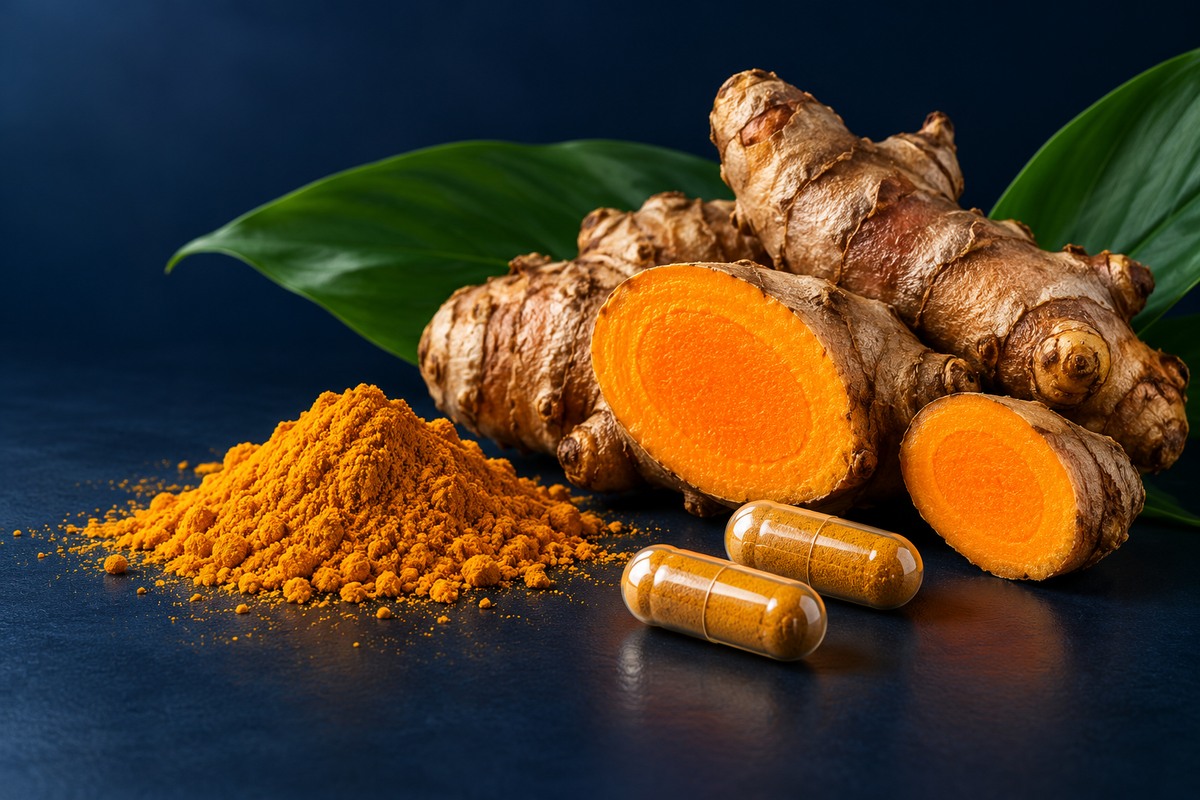
Turmeric rhizomes, ground turmeric powder, and softgel capsules
01

Identify the product Confirm plant, preparation, and constituent before interpreting any evidence.

Botanical and product identity

Identity & preparation

BotanicalCurcuma longa L.
FamilyZingiberaceae
Plant partRhizome (underground stem)
Marker constituentCurcumin (diferuloylmethane)
Native rangeSouth and Southeast Asia
Use contextCulinary spice and dietary supplement

Tayyem et al. (2006) measured an average of 3.14% curcumin in the turmeric powders they tested. That is not a guaranteed amount for another product. Extracts labeled 95% curcuminoids measure a mixture, not curcumin alone; use the exact label and serving amount. Analysis

Whole rhizome, culinary powder, tea, tincture, standardized extract, purified curcumin, and combination products are not assumed to deliver the same exposure.

Three fractions, three different products

What is actually in the bottle

FractionWhat it containsClinical meaning
Rhizome powderWhole ground rhizome; curcumin content varies. One powder analysis averaged 3.14% (Tayyem et al., 2006)Exposure depends on the amount used; supplement doses are not automatically equivalent to culinary use
Standardized extractCurcuminoids concentrated to about 95%Many trials used defined extracts; study findings apply to the tested preparation Analysis
Volatile oilTurmerones and other aromatic terpenesDifferent chemistry; trial data on curcuminoids do not transfer Analysis

The curcuminoid trio: curcumin, demethoxycurcumin, and bisdemethoxycurcumin; curcumin is the major component of commercial curcuminoid mixtures (Nelson et al., 2017).

02
Preparation & dose recordResearch regimens describe specific products. OTC directions belong to the cited label.
Product distinctions

Match the preparation

Whole rhizome or culinary powderFood use and milligrams of a curcumin extract are different exposures.
Conventional curcuminoid extractRecord curcuminoid content, extraction, and daily extract mass.
Enhanced absorption formulationPiperine, phospholipid complexes, micelles, and other carriers require their own evidence; increased exposure also changes safety assessment.

Source record: [1]

Dose status

Studied exposure or labeled directions

No single therapeutic dose applies across turmeric products. The guide’s formulation table gives study-specific exposures; a 500 mg enhanced formulation cannot be assumed equivalent to 500 mg conventional extract or ground rhizome.

Source record: [1]

03

Know the formulation Exposure depends on the delivery system, not the milligram count.

Bioavailability and formulation matrix

Same molecule, very different exposure

Oral curcumin is poorly absorbed, rapidly conjugated, and quickly eliminated, so native curcumin reaches very low systemic concentrations (Anand et al., 2007).

FormulationHow it worksReported exposure gainInteraction burden
Native turmeric or curcuminNo absorption aid; systemic exposure is generally low AnalysisBaseline (very low) (Anand et al., 2007)Review the dose, preparation and patient medicines; low absorption does not establish low risk
Curcumin plus piperine (black pepper alkaloid)Piperine inhibits glucuronidation (Atal et al., 1985) and separately inhibits cytochrome P450 3A4 (CYP3A4) and P-glycoprotein (P-gp) (Bhardwaj et al., 2002)A 1998 study reported a 2,000% bioavailability increase with 2 g curcumin plus 20 mg piperine. This is a study-specific result, not a promise for every product (Shoba et al., 1998)Piperine inhibits CYP3A4 and P-gp in laboratory models. Clinical interaction size depends on the drug, dose and preparation Analysis
Phytosome (phosphatidylcholine complex)Lecithin complex improves passage across the intestinal liningAbout 29-fold higher total curcuminoid absorption in one study; only conjugated metabolites were detected (Cuomo et al., 2011)Product-specific; comparative clinical interaction data are limited Analysis
Colloidal submicron dispersionVery small particles dispersed for absorption without an enzyme-inhibiting adjuvantSubstantially higher plasma levels than powder (Sasaki et al., 2011)Product-specific; comparative clinical interaction data are limited Analysis
Pharmacist's read: an absorption enhancer changes the exposure question and may change the interaction question. Check for piperine and review the complete medicine list; more absorption does not automatically mean more benefit. Analysis
04

Read the mechanism critically A laboratory signal is not a patient outcome.

Constituent and mechanism

Chemistry & mechanism

Chemical class: diarylheptanoid (curcuminoid).

Reported targets: nuclear factor kappa B (NF-κB), cyclooxygenase-2 (COX-2), signal transducer and activator of transcription 3 (STAT3), and nuclear factor erythroid 2-related factor 2 (Nrf2). Curcumin has no single confirmed receptor (Nelson et al., 2017).

Assay reality

Why laboratory data overpromise

Curcumin behaves like a pan-assay interference compound (PAINS), a class of molecules that produce false-positive hits across many unrelated laboratory tests (Baell & Walters, 2014).

  • Unstable: it degrades quickly at physiological pH, and its degradation products, including bicyclopentadione, may carry activity of their own (Nelson et al., 2017).
  • Reactive: it can bind proteins covalently and chelate metals, which reads as broad "activity" in an assay (Nelson et al., 2017).
  • Interfering: its color, fluorescence, and tendency to aggregate can distort assay readouts (Nelson et al., 2017).
The translation gap: Nelson et al. (2017) highlighted major assay-interference and translation problems. Some clinical trials have reported benefits, including symptom findings in knee osteoarthritis, but these results do not validate every proposed laboratory target or marketed formulation. Cell-culture data do not establish patient benefit. Analysis
STRUCTURE RECORD

Molecular identity plates

Examine the selected constituent, then check the preparation and clinical evidence.

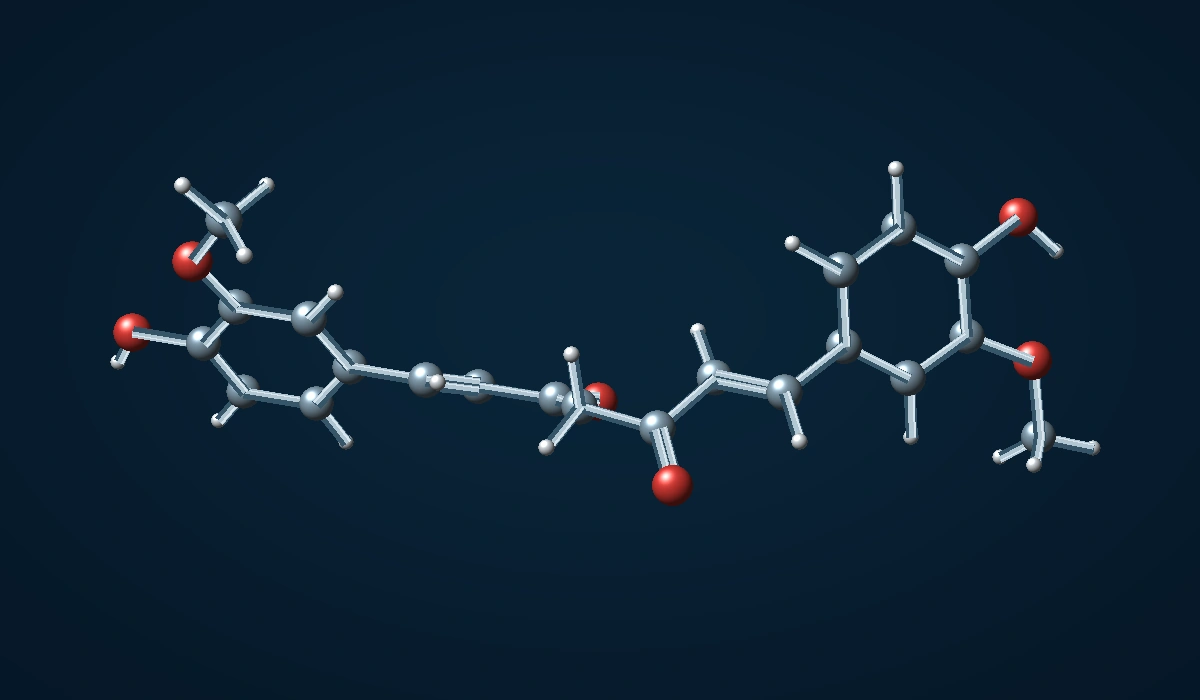
MOLECULAR IDENTITY · 01

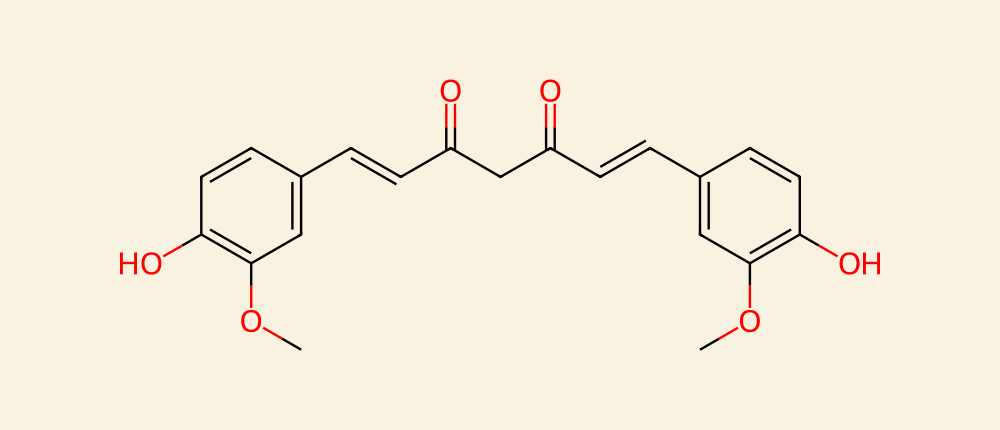
Curcumin

PubChem CID 969516 ↗

Representative curcuminoid; not the whole rhizome or extract.

Formula
C21H20O6
Molar mass
368.39 g/mol
Exact mass
368.1260 Da
Charge / rings
+0 / 2
Atom stereocenters
0 defined
Computed three-dimensional ball-and-stick conformer of Curcumin
Computed conformer · Carbon: silver · Oxygen: red · Nitrogen: blue · Hydrogen: white · Sulfur: yellow
Descriptors apply to the molecule shown. RDKit drawings use the verified PubChem structure. The 3D view is a computed conformer, not an experimentally determined biological pose; some carbon-bound hydrogens are hidden on larger molecules for clarity.
05

Weigh the evidence Match the study to the exact preparation, dose, population, and outcome.

Clinical efficacy ledger

What human trials show, by indication

IndicationEvidence summary*What was studiedBottom line
Knee osteoarthritis (pain and function)Promising, uncertainA specific extract at 1,500 mg/day met noninferiority criteria against ibuprofen 1,200 mg/day for pain and function over 4 weeks; the stiffness result did not meet that criterion (Kuptniratsaikul et al., 2014). Trials and pooled analyses suggest short-term symptom benefit, but products and study quality vary (Daily et al., 2016; NCCIH, 2025).Discuss as a possible adjunct after a formulation and safety review. Short trials do not show disease modification or prove equivalence of retail products Analysis
Blood lipids (cardiovascular risk patients)LimitedA meta-analysis found reductions in low-density lipoprotein cholesterol and triglycerides (Qin et al., 2017).Modest marker effect; no proof of fewer heart attacks or strokes Analysis
Depression (add-on to antidepressants)LimitedA meta-analysis of small, short trials found a signal (Ng et al., 2017).Add-on only; never a substitute for treatment Analysis
Memory and dementiaUncertainA 24-week Alzheimer's disease trial was negative (Ringman et al., 2012). One 18-month trial of a bioavailable form reported memory and positron emission tomography (PET) changes in adults without dementia (Small et al., 2018).Marketing outruns the data; one unreplicated positive trial Analysis

*These are descriptive MFCP evidence summaries, not formal GRADE ratings. NCCIH describes the osteoarthritis signal as initially positive and calls for better-quality research before definitive conclusions.

Dose interpretation: milligrams of turmeric extract, total curcuminoids, and purified curcumin are different measures. The JECFA food-additive acceptable daily intake is not a supplement treatment dose or a direct threshold for an extract. Trial amounts describe research exposure; they are not a general dosing recommendation.

06

Check safety Food use and concentrated supplements require different risk assessments.

Safety gates

Toxicology

Liver injury

Italian phytovigilance data documented a cluster of acute liver injury cases after turmeric supplement use (Lombardi et al., 2021).

The United States Drug-Induced Liver Injury Network (DILIN) linked turmeric liver injury to the human leukocyte antigen (HLA) allele HLA-B*35:01 (Halegoua-DeMarzio et al., 2023).

Australia's Therapeutic Goods Administration (TGA) issued a liver-injury safety advisory for turmeric and curcumin medicines (Therapeutic Goods Administration, 2023).

Counsel: stop and seek care for dark urine, yellow skin or eyes, or upper-right abdominal pain. Analysis

Gallbladder and bile ducts

Curcumin causes the gallbladder to contract (Rasyid & Lelo, 1999). The German Commission E lists obstruction of the bile passages as a contraindication and advises physician consultation with gallstones (Blumenthal, 1998).

Iron status

Curcumin chelates iron in animal models (Jiao et al., 2009), and a case report describes iron deficiency anemia with high-dose turmeric (Smith & Ashar, 2019). Use caution in patients with iron deficiency. Analysis

Pregnancy and surgery

Turmeric supplements may be unsafe during pregnancy; safety above food amounts during breastfeeding is uncertain. Before surgery, disclose the product and follow the treating team’s instructions about stopping it. Analysis

Drug interactions

Interaction screen

Drug groupConcernAction
Warfarin, direct oral anticoagulants (DOACs), aspirin, clopidogrelCurcumin inhibits platelet aggregation in experimental models (Srivastava et al., 1985); additive bleeding risk is theoretical AnalysisObtain prescriber/pharmacist review before concentrated supplements; monitor as appropriate to the medicine Analysis
Tacrolimus; review other transplant medicines individuallyA case report described a probable turmeric–tacrolimus interaction with kidney toxicity. It does not establish the frequency or a safe intake threshold (Nayeri et al., 2017)Do not start a concentrated turmeric product without the transplant team’s approval; never adjust tacrolimus yourself Analysis
Narrow-therapeutic-index CYP3A4 or P-gp substrates (for example, digoxin)Piperine inhibits CYP3A4 and P-gp (Bhardwaj et al., 2002)Review piperine and the specific medicine; use drug-level monitoring only where clinically appropriate Analysis
Iron supplementsPossible chelation in the gut (Jiao et al., 2009)Review iron deficiency and iron therapy with the clinician; a proven protective separation interval has not been established Analysis

Interaction risk scales with formulation: a piperine-enhanced extract is a different interaction profile from culinary turmeric. Analysis

Medication review

Formulation-specific review

Treat anticoagulant or antiplatelet use, transplant drugs, and other narrow therapeutic index medicines as review triggers. Interaction evidence varies: case reports and laboratory mechanisms are not universal dose-adjustment rules. Piperine-containing products deserve a separate medication review.

Source record: [1] · [2]

07

Decode the label Match the exact marketed product to the evidence before counseling.

Behind the counter

Retail red flags

"Turmeric Root Powder 500 mg" with no extract ratio

A “500 mg root powder” label does not state the curcumin amount. For illustration only, 500 mg × 3.14% = 15.7 mg curcumin; the published powder average cannot be used to assign that amount to an untested bottle. Analysis

Inconsistent content and quality

Retail turmeric supplements vary widely in curcuminoid content, and some contain contaminants (Skiba et al., 2018).

Hidden ingredients

Look past the front panel for black pepper extract (piperine), soybean oil, and polysorbate 80 in softgels. Analysis

Label verification

MFCP label check

  • Exact common and scientific name
  • Plant part or source material
  • Amount per serving and serving size
  • Extract ratio or standardization (for example, 95% curcuminoids)
  • Curcuminoid amount per serving
  • Delivery system: piperine, phytosome, or colloidal dispersion
  • Added ingredients and combination products
  • Warnings, directions, lot, and expiration
  • Independent quality verification when available

MFCP rule: omit rather than invent. Do not infer an unstated standardization, constituent amount, plant part, or dosage form.

★ BOTTOM LINE: Turmeric is a preparation-specific clinical product, not a generic "natural" category. Formulation changes exposure, while clinical benefit remains uncertain. Knee osteoarthritis has promising short-term symptom findings, but these are not a guarantee for a retail product. Screen for liver, gallbladder, bleeding, and transplant-drug risk before recommending any concentrated product.
08
Counseling & follow-upHow to use the label, track symptoms, and know when to seek care.
Your plan

What to do

Take a photo of the label and the product name. Bring it to your care team. Tell them about each herb and drug you take. Some forms are made to help your body take in more of the extract. These forms may harm the liver. Stop and call your care team if your skin turns yellow or your urine turns dark. Do not raise the dose just because the product is natural.

Source record: [1]

Check your progress

What to track

Track joint pain, how well you move, and any stomach upset. Set a date to check how you feel. Write down each dose and any side effects. Keep a list of all drugs and herbs you use. Bring the label to your next visit. If it does not help, ask what to do next. A dose used in a study may not suit your product.

Source record: [1]

09

Open the source record Federal references and peer-reviewed literature behind this profile.

Federal references

National Center for Complementary and Integrative Health. (n.d.). Turmeric. National Institutes of Health. https://www.nccih.nih.gov/health/turmeric

National Institute of Diabetes and Digestive and Kidney Diseases. (n.d.). LiverTox: Clinical and research information on drug-induced liver injury. https://www.ncbi.nlm.nih.gov/books/NBK548561/

References (APA 7)

Anand, P., Kunnumakkara, A. B., Newman, R. A., & Aggarwal, B. B. (2007). Bioavailability of curcumin: Problems and promises. Molecular Pharmaceutics, 4(6), 807–818.

Atal, C. K., Dubey, R. K., & Singh, J. (1985). Biochemical basis of enhanced drug bioavailability by piperine: Evidence that piperine is a potent inhibitor of drug metabolism. Journal of Pharmacology and Experimental Therapeutics, 232(1), 258–262.

Baell, J., & Walters, M. A. (2014). Chemistry: Chemical con artists foil drug discovery. Nature, 513(7519), 481–483.

Bhardwaj, R. K., Glaeser, H., Becquemont, L., Klotz, U., Gupta, S. K., & Fromm, M. F. (2002). Piperine, a major constituent of black pepper, inhibits human P-glycoprotein and CYP3A4. Journal of Pharmacology and Experimental Therapeutics, 302(2), 645–650.

Blumenthal, M. (Ed.). (1998). The complete German Commission E monographs: Therapeutic guide to herbal medicines. American Botanical Council.

Cuomo, J., Appendino, G., Dern, A. S., Schneider, E., McKinnon, T. P., Brown, M. J., Togni, S., & Dixon, B. M. (2011). Comparative absorption of a standardized curcuminoid mixture and its lecithin formulation. Journal of Natural Products, 74(4), 664–669.

Daily, J. W., Yang, M., & Park, S. (2016). Efficacy of turmeric extracts and curcumin for alleviating the symptoms of joint arthritis: A systematic review and meta-analysis of randomized clinical trials. Journal of Medicinal Food, 19(8), 717–729.

Halegoua-DeMarzio, D., Navarro, V., Ahmad, J., Avula, B., Barnhart, H., Barritt, A. S., Bonkovsky, H. L., Fontana, R. J., Ghabril, M. S., Hoofnagle, J. H., Khan, I. A., Kleiner, D. E., Phillips, E., Stolz, A., & Vuppalanchi, R. (2023). Liver injury associated with turmeric: A growing problem: Ten cases from the Drug-Induced Liver Injury Network [DILIN]. American Journal of Medicine, 136(2), 200–206.

Jiao, Y., Wilkinson, J., 4th, Di, X., Wang, W., Hatcher, H., Kock, N. D., D'Agostino, R., Jr., Knovich, M. A., Torti, F. M., & Torti, S. V. (2009). Curcumin, a cancer chemopreventive and chemotherapeutic agent, is a biologically active iron chelator. Blood, 113(2), 462–469.

Joint FAO/WHO Expert Committee on Food Additives. (2004). Evaluation of certain food additives (WHO Technical Report Series No. 922). World Health Organization.

Kuptniratsaikul, V., Dajpratham, P., Taechaarpornkul, W., Buntragulpoontawee, M., Lukkanapichonchut, P., Chootip, C., Saengsuwan, J., Tantayakom, K., & Laongpech, S. (2014). Efficacy and safety of Curcuma domestica extracts compared with ibuprofen in patients with knee osteoarthritis: A multicenter study. Clinical Interventions in Aging, 9, 451–458.

Lombardi, N., Crescioli, G., Maggini, V., Ippoliti, I., Menniti-Ippolito, F., Gallo, E., Brilli, V., Lanzi, C., Mannaioni, G., Firenzuoli, F., & Vannacci, A. (2021). Acute liver injury following turmeric use in Tuscany: An analysis of the Italian Phytovigilance database and systematic review of case reports. British Journal of Clinical Pharmacology, 87(3), 741–753.

Nayeri, A., Wu, S., Adams, E., Tanner, C., Meshman, J., Saini, I., & Reid, W. (2017). Acute calcineurin inhibitor nephrotoxicity secondary to turmeric intake: A case report. Transplantation Proceedings, 49(1), 198–200.

Nelson, K. M., Dahlin, J. L., Bisson, J., Graham, J., Pauli, G. F., & Walters, M. A. (2017). The essential medicinal chemistry of curcumin. Journal of Medicinal Chemistry, 60(5), 1620–1637.

Ng, Q. X., Koh, S. S. H., Chan, H. W., & Ho, C. Y. X. (2017). Clinical use of curcumin in depression: A meta-analysis. Journal of the American Medical Directors Association, 18(6), 503–508.

Qin, S., Huang, L., Gong, J., Shen, S., Huang, J., Ren, H., & Hu, H. (2017). Efficacy and safety of turmeric and curcumin in lowering blood lipid levels in patients with cardiovascular risk factors: A meta-analysis of randomized controlled trials. Nutrition Journal, 16(1), 68.

Rasyid, A., & Lelo, A. (1999). The effect of curcumin and placebo on human gall-bladder function: An ultrasound study. Alimentary Pharmacology & Therapeutics, 13(2), 245–249.

Ringman, J. M., Frautschy, S. A., Teng, E., Begum, A. N., Bardens, J., Beigi, M., Gylys, K. H., Badmaev, V., Heath, D. D., Apostolova, L. G., Porter, V., Vanek, Z., Marshall, G. A., Hellemann, G., Sugar, C., Masterman, D. L., Montine, T. J., Cummings, J. L., & Cole, G. M. (2012). Oral curcumin for Alzheimer's disease: Tolerability and efficacy in a 24-week randomized, double blind, placebo-controlled study. Alzheimer's Research & Therapy, 4(5), 43.

Sasaki, H., Sunagawa, Y., Takahashi, K., Imaizumi, A., Fukuda, H., Hashimoto, T., Wada, H., Katanasaka, Y., Kakeya, H., Fujita, M., Hasegawa, K., & Morimoto, T. (2011). Innovative preparation of curcumin for improved oral bioavailability. Biological & Pharmaceutical Bulletin, 34(5), 660–665.

Shoba, G., Joy, D., Joseph, T., Majeed, M., Rajendran, R., & Srinivas, P. S. (1998). Influence of piperine on the pharmacokinetics of curcumin in animals and human volunteers. Planta Medica, 64(4), 353–356.

Skiba, M. B., Luis, P. B., Alfafara, C., Billheimer, D., Schneider, C., & Funk, J. L. (2018). Curcuminoid content and safety-related markers of quality of turmeric dietary supplements sold in an urban retail marketplace in the United States. Molecular Nutrition & Food Research, 62(14), e1800143.

Small, G. W., Siddarth, P., Li, Z., Miller, K. J., Ercoli, L., Emerson, N. D., Martinez, J., Wong, K. P., Liu, J., Merrill, D. A., Chen, S. T., Henning, S. M., Satyamurthy, N., Huang, S. C., Heber, D., & Barrio, J. R. (2018). Memory and brain amyloid and tau effects of a bioavailable form of curcumin in non-demented adults: A double-blind, placebo-controlled 18-month trial. American Journal of Geriatric Psychiatry, 26(3), 266–277.

Smith, T. J., & Ashar, B. H. (2019). Iron deficiency anemia due to high-dose turmeric. Cureus, 11(1), e3858.

Srivastava, R., Dikshit, M., Srimal, R. C., & Dhawan, B. N. (1985). Anti-thrombotic effect of curcumin. Thrombosis Research, 40(3), 413–417.

Tayyem, R. F., Heath, D. D., Al-Delaimy, W. K., & Rock, C. L. (2006). Curcumin content of turmeric and curry powders. Nutrition and Cancer, 55(2), 126–131.

Therapeutic Goods Administration. (2023). Medicines containing turmeric or curcumin: Risk of liver injury [Safety advisory]. Australian Government.

This profile is educational and does not replace individual clinical advice.

Clinical source record

Linked references

Clinical summary reviewed October 1, 2026. Study doses describe the cited preparation; they are not interchangeable product recommendations. Counseling steps are MFCP clinical interpretation.

[1] National Center for Complementary and Integrative Health. Turmeric: Usefulness and Safety. Open source ↗

[2] National Center for Complementary and Integrative Health. Herb–Drug Interactions. Open source ↗

← Back to Natural Products & Botanicals
MFCP natural-product profile 28 of 40

Boswellia

Boswellia serrata Roxb. ex Colebr.
Burseraceae

Control-chart classification: Anti-inflammatory (OA / IBD)

In a 90-day knee osteoarthritis trial, 5-Loxin improved pain and function compared with placebo. This is evidence for a particular enriched extract, not proof that all frankincense products work or that joint damage is reversed.

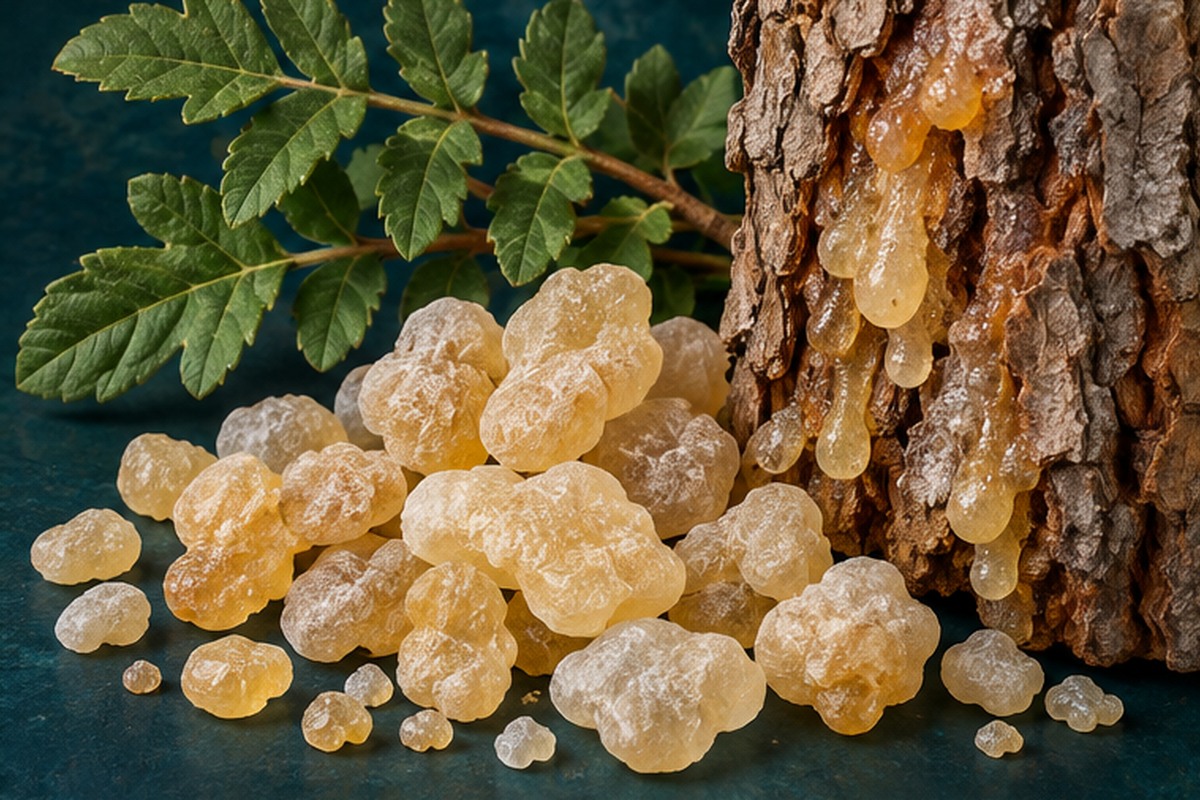
Boswellia botanical specimen artwork
01
Identify the productConfirm identity, preparation, and constituent language before interpreting evidence.
Botanical / product identity

Identity & preparation

Botanical / product
Boswellia serrata Roxb. ex Colebr.
Family
Burseraceae
Preparation cue
Gum resin / standardized boswellic-acid extract
Marker constituent
Acetyl-11-keto-beta-boswellic acid (AKBA)

Whole plant, tea, powder, tincture, oil, standardized extract, purified constituent, and combination products are not assumed to deliver the same exposure.

Constituent and mechanism

Chemistry & mechanism

Chemical class: Pentacyclic triterpene acid

Mechanistic context (laboratory or constituent data): 5-Lipoxygenase (5-LOX) inhibition

Mechanism language does not substitute for clinical outcome evidence.

These proposed targets are mechanistic context. Their demonstration for a constituent does not establish the clinical effectiveness of a whole extract; use the evidence panel for patient outcomes.

02
Preparation & dose recordResearch regimens describe specific products. OTC directions belong to the cited label.
Product distinctions

Match the preparation

Gum resinWhole resin mass does not specify boswellic-acid exposure.
Standardized extractAKBA content, extraction, and branded formulation must match the study.
Combination productBenefits cannot be assigned to boswellia alone when other active ingredients are present.

Source record: [1]

Dose status

Studied exposure or labeled directions

Research regimen: 5-Loxin, an extract standardized to 30% AKBA, 100 or 250 mg/day for 90 days in 75 participants. These amounts describe that trial and are not interchangeable with unstandardized resin capsules.

Source record: [2]

STRUCTURE RECORD

Molecular identity plates

Examine the selected constituent, then check the preparation and clinical evidence.

MOLECULAR IDENTITY · 01

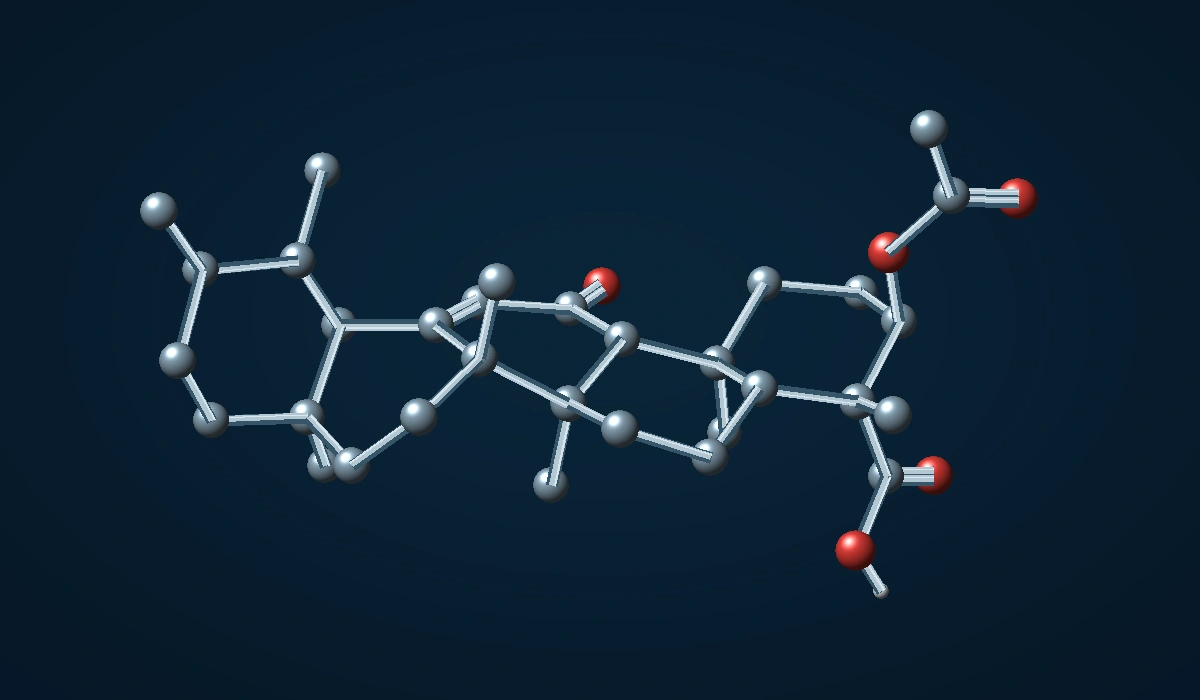
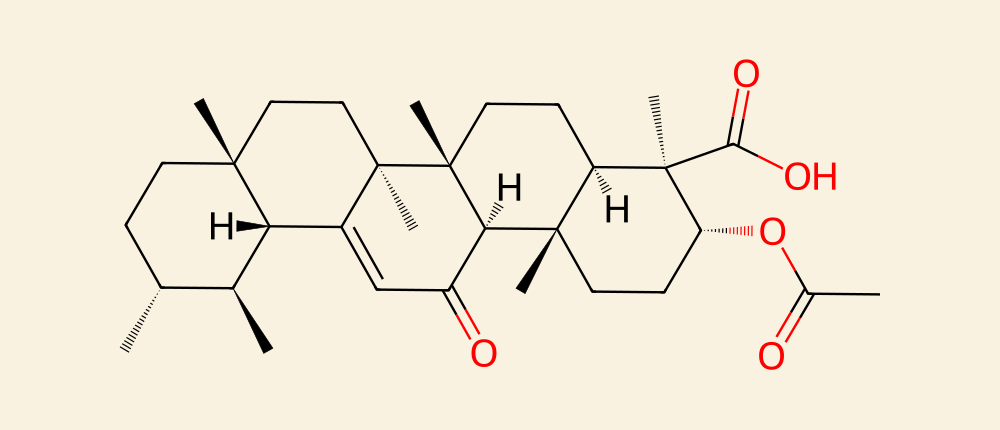
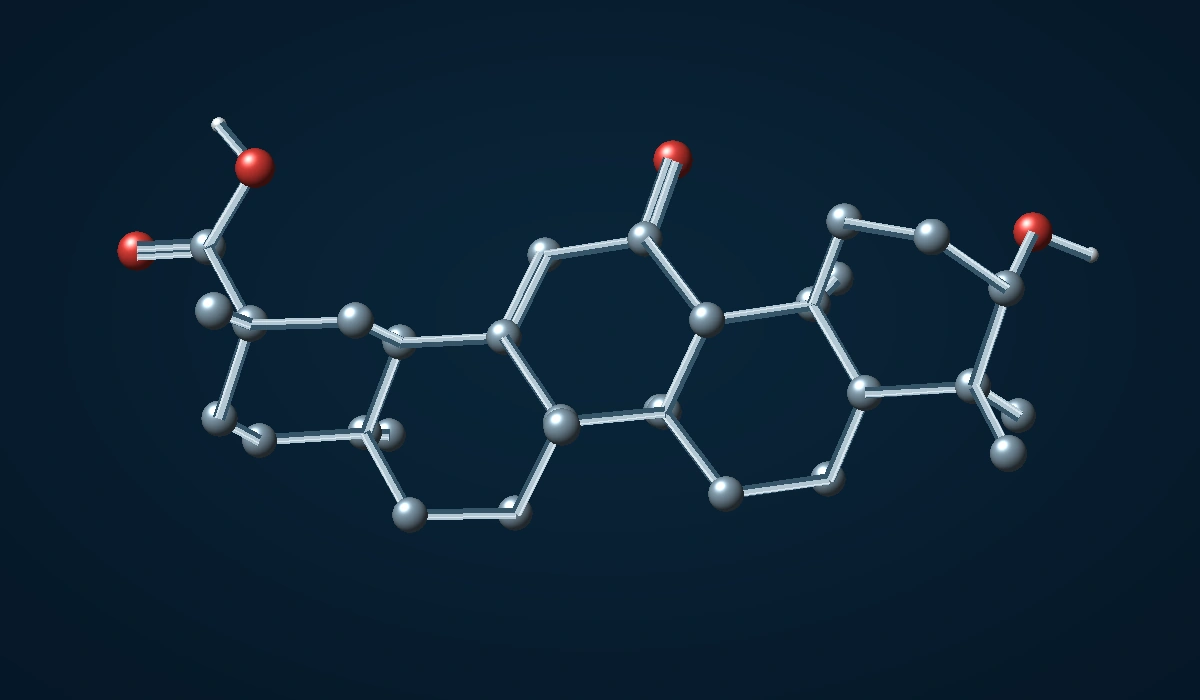
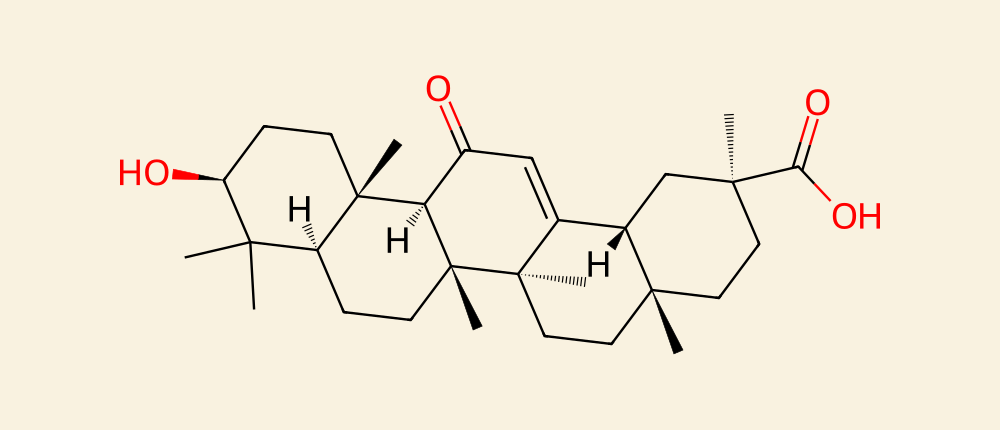
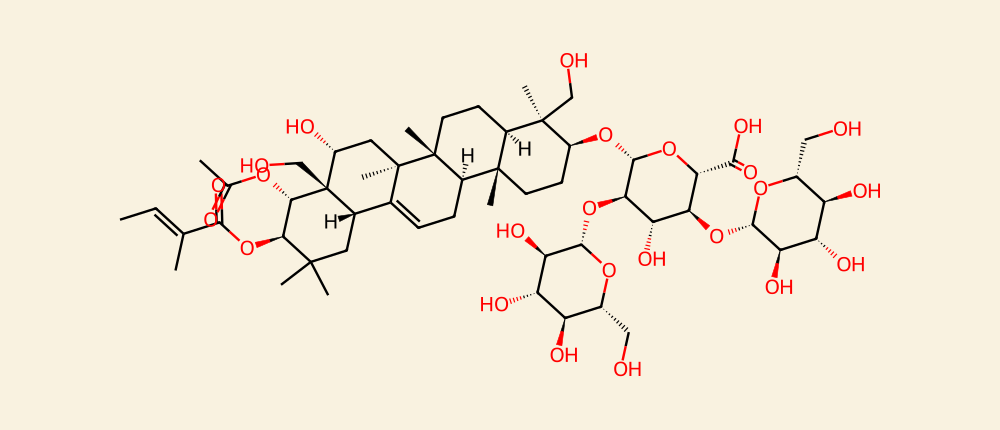
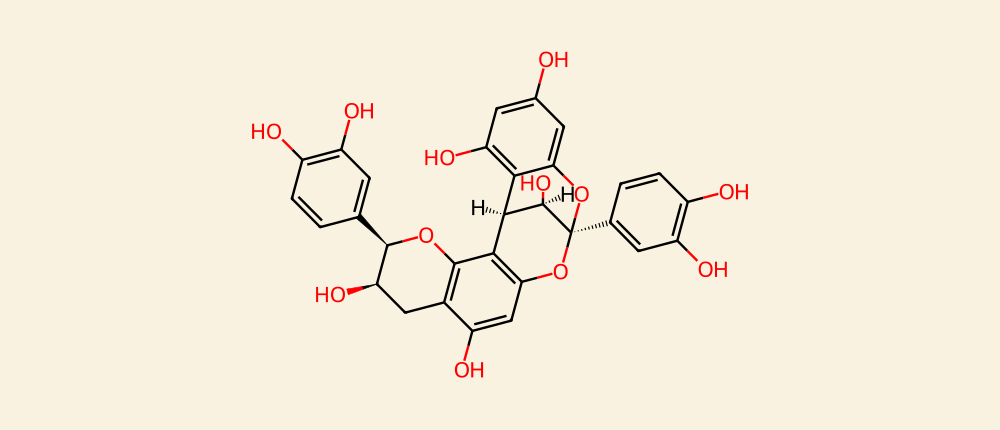
Acetyl-11-keto-beta-boswellic acid

PubChem CID 11168203 ↗

AKBA: one boswellic acid in a chemically variable resin.

Formula
C32H48O5
Molar mass
512.73 g/mol
Exact mass
512.3502 Da
Charge / rings
+0 / 5
Atom stereocenters
11 defined
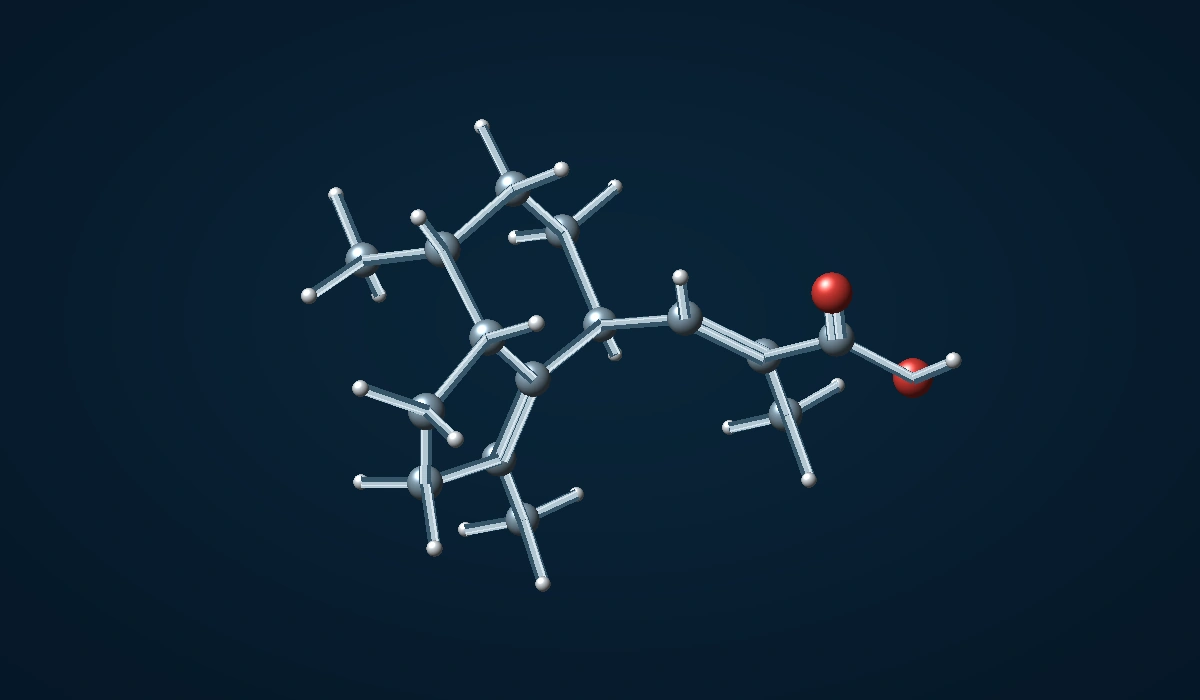
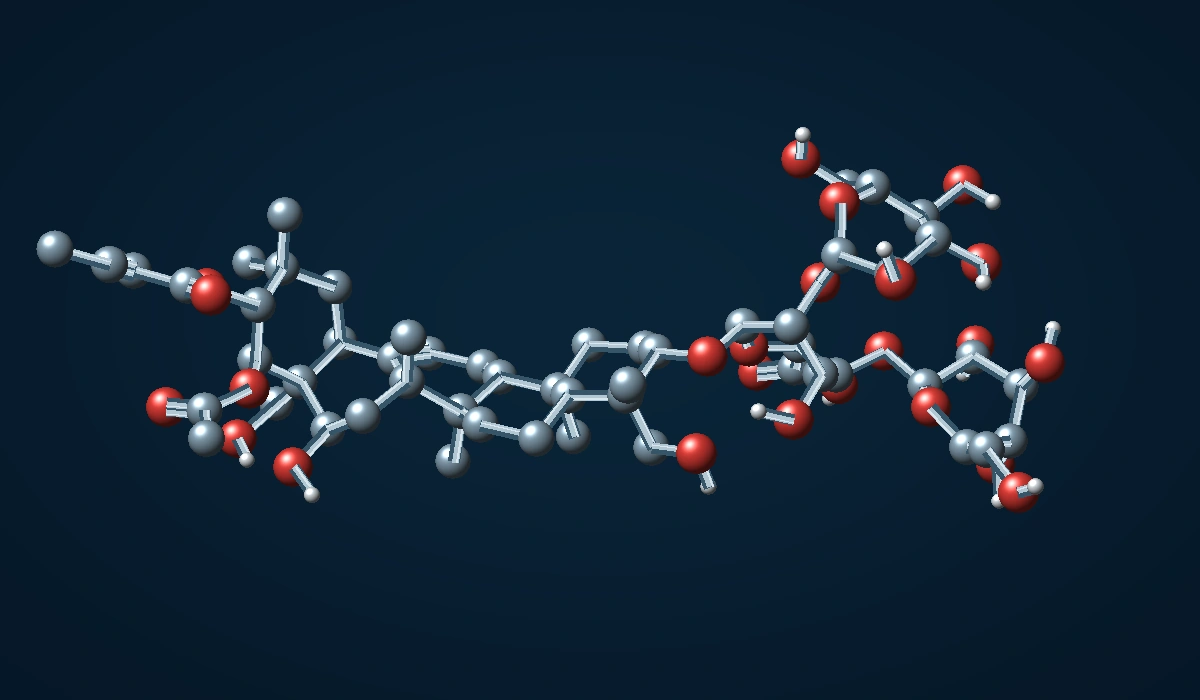
Computed three-dimensional ball-and-stick conformer of Acetyl-11-keto-beta-boswellic acid
Computed conformer · Carbon: silver · Oxygen: red · Nitrogen: blue · Hydrogen: white · Sulfur: yellow
Descriptors apply to the molecule shown. RDKit drawings use the verified PubChem structure. The 3D view is a computed conformer, not an experimentally determined biological pose; some carbon-bound hydrogens are hidden on larger molecules for clarity.
03
Interpret the evidenceMatch the study to the exact preparation, dose, population, and outcome.
Clinical findings

Benefit, uncertainty, and negative findings

In a 90-day knee osteoarthritis trial, 5-Loxin improved pain and function compared with placebo. This is evidence for a particular enriched extract, not proof that all frankincense products work or that joint damage is reversed.

Source record: [1] · [2]

Primary evidence

Study record

75 adults with knee osteoarthritis; 90 days5-Loxin 100 or 250 mg/day versus placeboPain and function improved in both active groups. A synovial biomarker change does not establish preservation of cartilage or long-term disease modification.

Source record: [1] · [2]

04
Check safetyReview contraindications, interactions, and preparation-specific risk.
Safety assessment

Avoid, stop, or seek care

Gastrointestinal discomfort and allergy are practical concerns. Pregnancy and breastfeeding safety at medicinal exposures is uncertain. New severe joint swelling, fever, or inability to bear weight needs assessment rather than supplement escalation.

Source record: [1]

Medication review

Interactions and evidence limits

Clinical interaction data are sparse. Review anticoagulants and complex medication regimens individually; theoretical enzyme or platelet effects should not be presented as proven interactions or used to invent dose adjustments.

Source record: [1] · [3]

05
Verify the labelMatch the exact marketed product to the evidence before counseling.
Label verification

MFCP label check

  • Exact common and scientific name
  • Plant part or source material when stated
  • Amount per serving and serving size
  • Extract ratio / standardization when stated
  • Marker-constituent amount when stated
  • Added ingredients and combination products
  • Warnings, directions, lot and expiration
  • Independent quality verification when available

MFCP rule: omit rather than invent. Do not infer an unstated standardization, constituent amount, plant part, or dosage form.

Evidence fit

Apply the evidence correctly

Evidence must match the actual preparation, dose, population, and outcome. A mechanism, traditional use, or constituent identity is not by itself proof of clinical benefit.

Clinical perspective Compare the label with the trial’s extract and AKBA specification.
06
Counseling & follow-upHow to use the label, track symptoms, and know when to seek care.
Your plan

What to do

Ask if the product is the same type used in the study. Plant extracts can differ. Track pain, how far you can walk, and how often you need pain drugs. Keep up your exercise and joint-care plan. Stop and ask for help if stomach upset lasts or the product does not help. A hot, swollen joint or a fever needs care.

Source record: [1]

Check your progress

What to track

Track joint pain and daily tasks. Set a date to check how you feel. Write down each dose and any side effects. Keep a list of all drugs and herbs you use. Bring the label to your next visit. If it does not help, ask what to do next. A dose used in a study may not suit your product.

Source record: [1]

07
Open the source recordFederal references and literature links behind this profile.
Clinical source record

Linked references

Clinical summary reviewed October 1, 2026. Study doses describe the cited preparation; they are not interchangeable product recommendations. Counseling steps are MFCP clinical interpretation.

[1] National Center for Complementary and Integrative Health. Boswellia: Usefulness and Safety. Open source ↗

[2] Sengupta K, Alluri KV, Satish AR, Mishra S, Golakoti T, Sarma KV, Dey D, Raychaudhuri SP. (2008). A double blind, randomized, placebo controlled study of the efficacy and safety of 5-Loxin for treatment of osteoarthritis of the knee. Arthritis research & therapy Open source ↗

[3] National Center for Complementary and Integrative Health. Herb–Drug Interactions. Open source ↗

← Back to Natural Products & Botanicals
MFCP natural-product profile 21 of 40

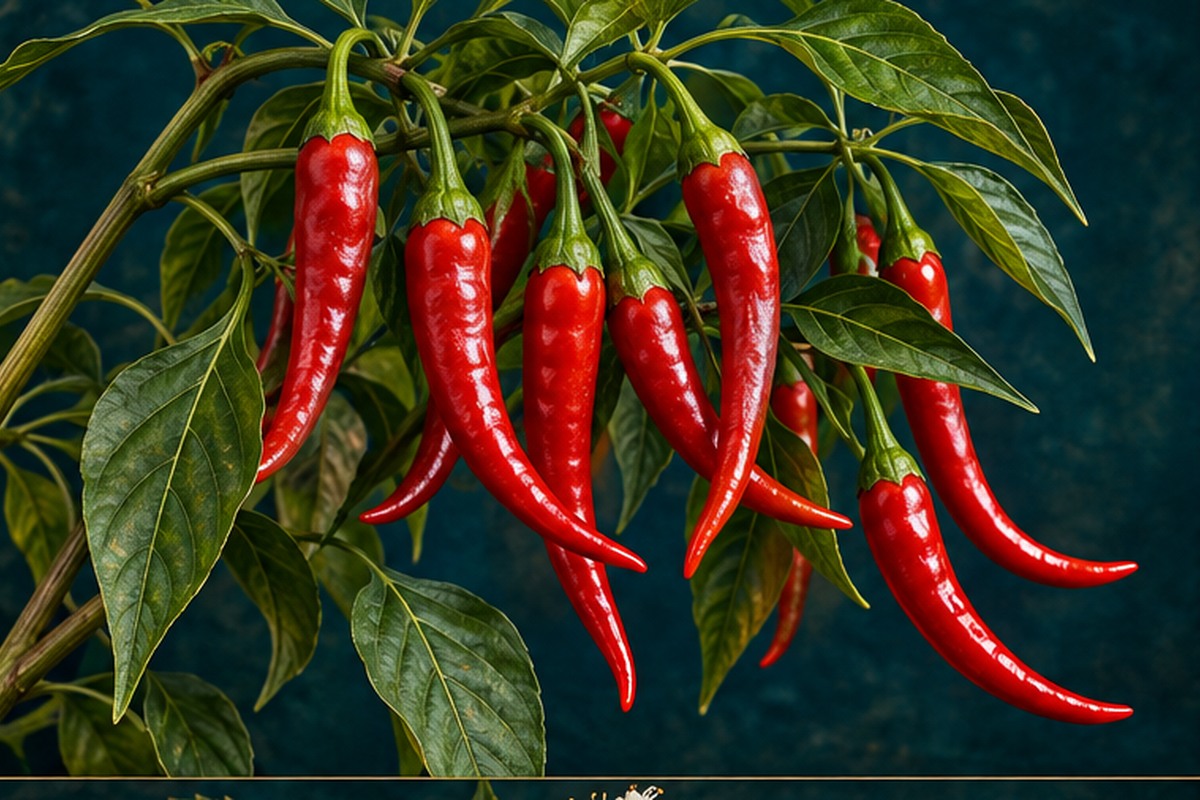
Cayenne

Capsicum annuum L.
Solanaceae

Control-chart classification: Topical analgesic (OTC)

Topical capsaicin is used for temporary relief of specified minor muscular and joint pain. The Drug Facts indication belongs to the labeled topical product. Oral cayenne supplements do not inherit this indication or the evidence for prescription neuropathic-pain patches.

Cayenne botanical specimen artwork
01
Identify the productConfirm identity, preparation, and constituent language before interpreting evidence.
Botanical / product identity

Identity & preparation

Botanical / product
Capsicum annuum L.
Family
Solanaceae
Preparation cue
Fruit-derived capsaicin in topical cream/patch
Marker constituent
Capsaicin

Whole plant, tea, powder, tincture, oil, standardized extract, purified constituent, and combination products are not assumed to deliver the same exposure.

Constituent and mechanism

Chemistry & mechanism

Chemical class: Capsaicinoid (vanilloid amide)

Mechanistic context (laboratory or constituent data): TRPV1 agonist -> nociceptor defunctionalization / analgesia

Mechanism language does not substitute for clinical outcome evidence.

These proposed targets are mechanistic context. Their demonstration for a constituent does not establish the clinical effectiveness of a whole extract; use the evidence panel for patient outcomes.

02
Preparation & dose recordResearch regimens describe specific products. OTC directions belong to the cited label.
Product distinctions

Match the preparation

Food cayenneCulinary pepper is not a standardized analgesic dose.
Topical capsaicin creamStrength is a percentage of capsaicin, not a pepper-powder equivalent.
Prescription 8% patchA distinct clinician-administered product; OTC cream instructions do not apply.

Source record: [1]

Dose status

Studied exposure or labeled directions

OTC label example: Rugby capsaicin 0.025% cream directs adults age 18 and older to apply a thin film 3–4 times daily. For anyone under 18, ask a doctor. This is topical label guidance, not an oral dose; other products may have different instructions.

Source record: [1]

STRUCTURE RECORD

Molecular identity plates

Examine the selected constituent, then check the preparation and clinical evidence.

MOLECULAR IDENTITY · 01

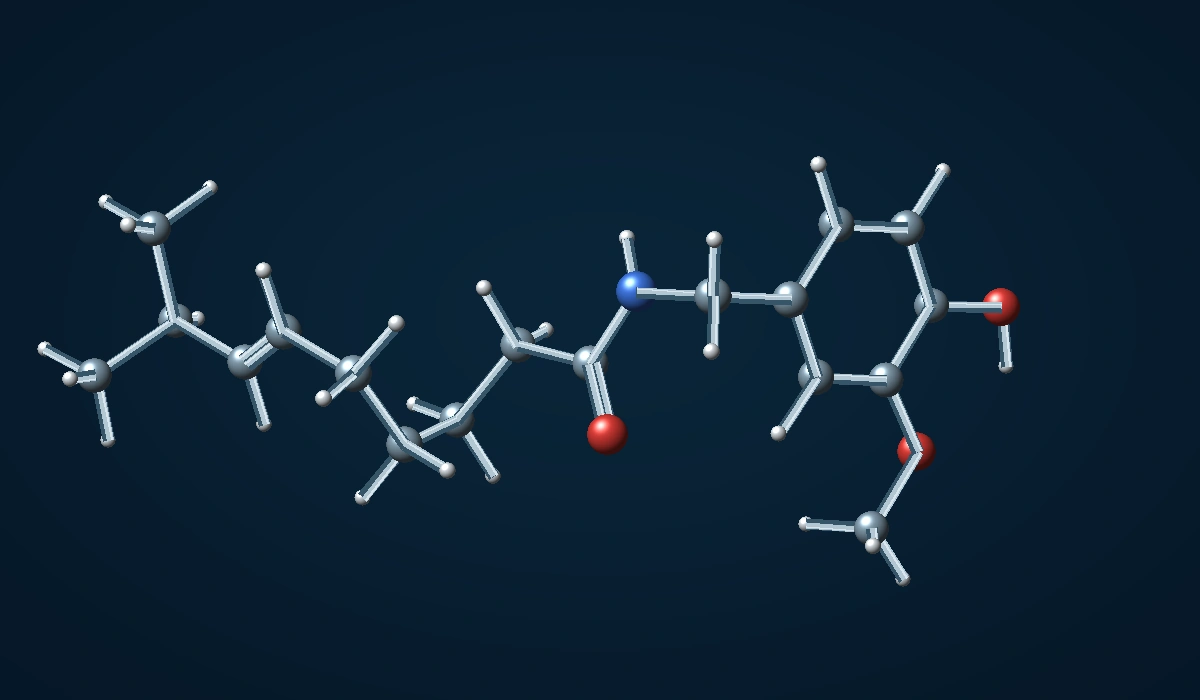
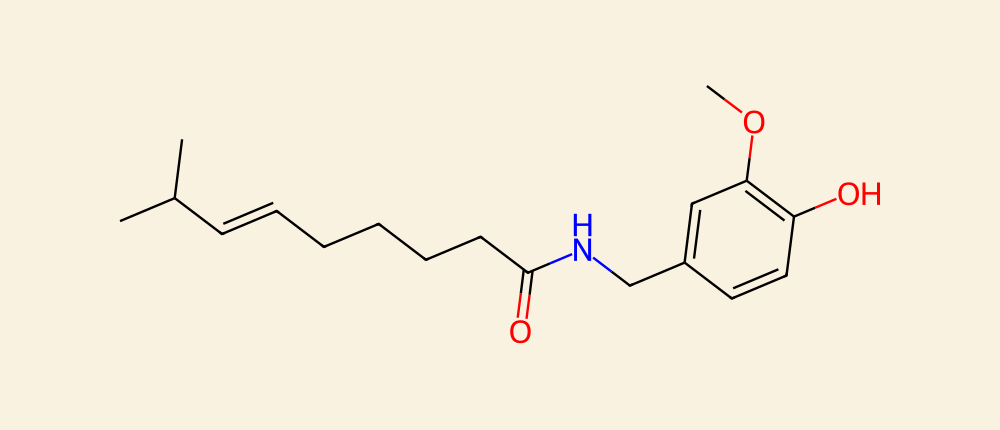
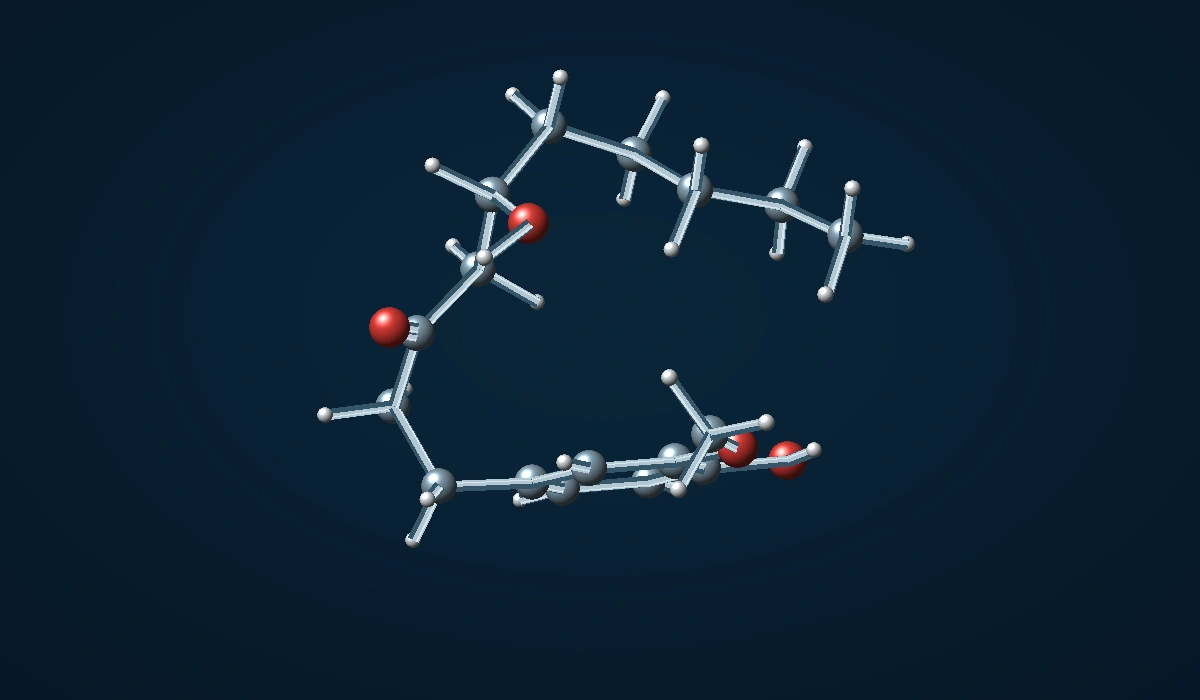
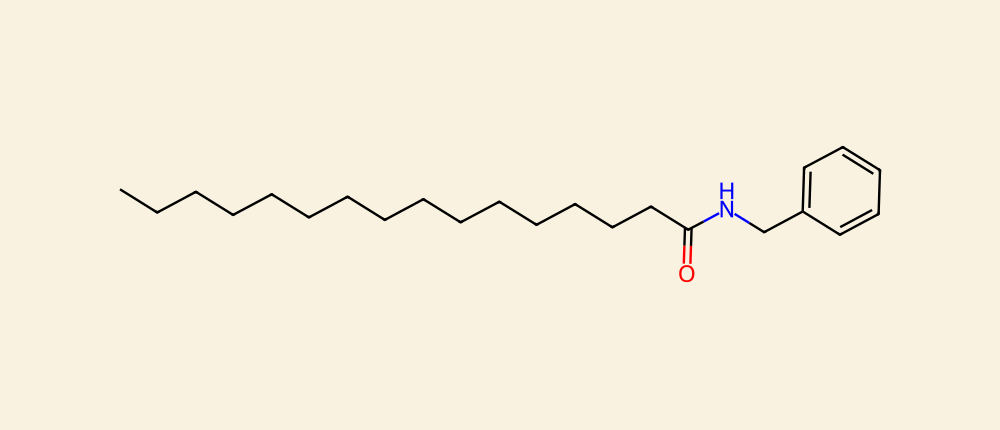
Capsaicin

PubChem CID 1548943 ↗

Representative capsaicinoid; preparation and concentration remain product-specific.

Formula
C18H27NO3
Molar mass
305.42 g/mol
Exact mass
305.1991 Da
Charge / rings
+0 / 1
Atom stereocenters
0 defined
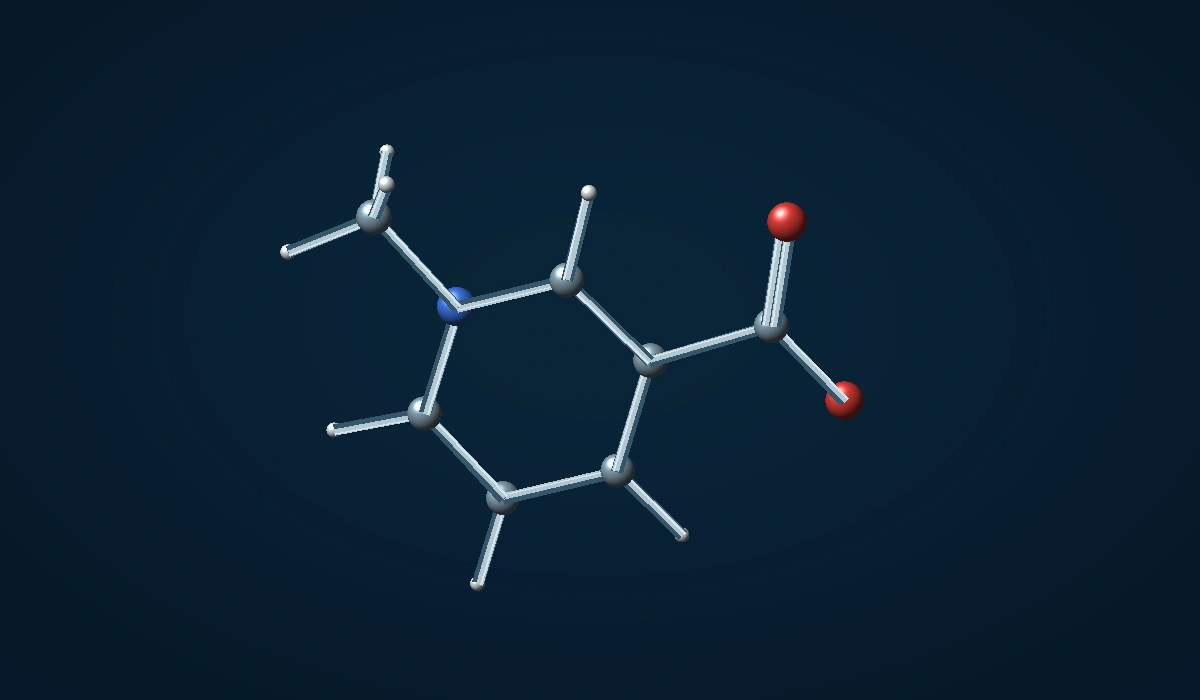
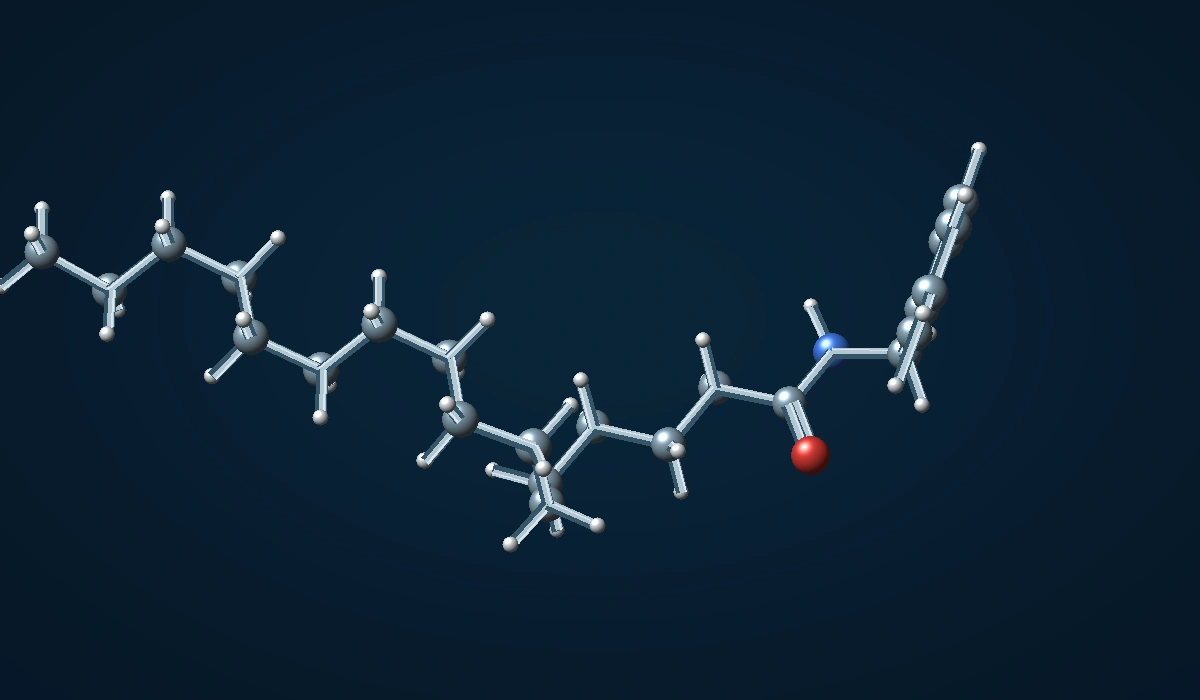
Computed three-dimensional ball-and-stick conformer of Capsaicin
Computed conformer · Carbon: silver · Oxygen: red · Nitrogen: blue · Hydrogen: white · Sulfur: yellow
Descriptors apply to the molecule shown. RDKit drawings use the verified PubChem structure. The 3D view is a computed conformer, not an experimentally determined biological pose; some carbon-bound hydrogens are hidden on larger molecules for clarity.
03
Interpret the evidenceMatch the study to the exact preparation, dose, population, and outcome.
Clinical findings

Benefit, uncertainty, and negative findings

Topical capsaicin is used for temporary relief of specified minor muscular and joint pain. The Drug Facts indication belongs to the labeled topical product. Oral cayenne supplements do not inherit this indication or the evidence for prescription neuropathic-pain patches.

Source record: [1]

Clinical interpretation

What this evidence does not establish

Concentration, vehicle, site, frequency, and duration matter. Do not improvise a cream with kitchen cayenne or substitute an 8% patch. Burning is common; more intense burning is not evidence of stronger therapeutic benefit.

Source record: [1]

04
Check safetyReview contraindications, interactions, and preparation-specific risk.
Safety assessment

Avoid, stop, or seek care

Keep away from eyes and mucous membranes, broken skin, and external heat. Do not combine with a heating pad or tight bandage. Wash hands after application unless treating the hands and the label specifies otherwise. Severe burning or blistering warrants stopping and assessment.

Source record: [1]

Medication review

Interactions and evidence limits

The main practical hazards are local exposure and concurrent heat or irritant topical products. An oral supplement needs a separate gastrointestinal and medication review; topical label evidence does not establish oral safety.

Source record: [1] · [2]

05
Verify the labelMatch the exact marketed product to the evidence before counseling.
Label verification

MFCP label check

  • Exact common and scientific name
  • Plant part or source material when stated
  • Amount per serving and serving size
  • Extract ratio / standardization when stated
  • Marker-constituent amount when stated
  • Added ingredients and combination products
  • Warnings, directions, lot and expiration
  • Independent quality verification when available

MFCP rule: omit rather than invent. Do not infer an unstated standardization, constituent amount, plant part, or dosage form.

Evidence fit

Apply the evidence correctly

Evidence must match the actual preparation, dose, population, and outcome. A mechanism, traditional use, or constituent identity is not by itself proof of clinical benefit.

Clinical perspective Read the Drug Facts strength and route before each use.
06
Counseling & follow-upHow to use the label, track symptoms, and know when to seek care.
Your plan

What to do

This pain cream is for skin use. Read the strength and directions each time. Keep it out of your eyes and off broken skin. Do not use a heat pad or tight bandage on it. Wash your hands as the label says. Keep it away from children. Stop for severe burning or blisters. Get care if pain lasts or gets worse.

Source record: [1]

Check your progress

What to track

Track pain and skin changes. Set a date to check how you feel. Write down each dose and any side effects. Keep a list of all drugs and herbs you use. Bring the label to your next visit. If it does not help, ask what to do next. A dose used in a study may not suit your product.

Source record: [1]

07
Open the source recordFederal references and literature links behind this profile.
Clinical source record

Linked references

Clinical summary reviewed October 1, 2026. Study doses describe the cited preparation; they are not interchangeable product recommendations. Counseling steps are MFCP clinical interpretation.

[1] DailyMed. Capsaicin 0.025% cream: Drug Facts. Open source ↗

[2] National Center for Complementary and Integrative Health. Herb–Drug Interactions. Open source ↗

← Back to Natural Products & Botanicals
MFCP natural-product profile 18 of 40

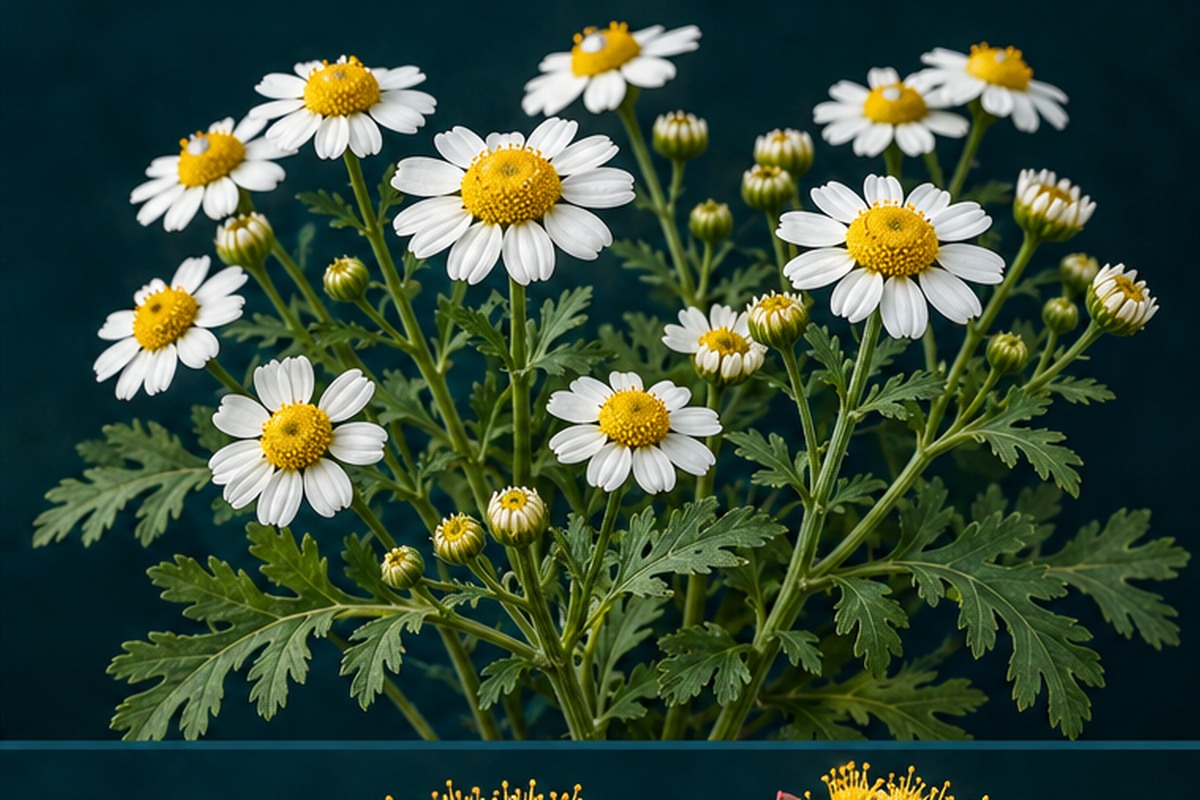
Feverfew

Tanacetum parthenium (L.) Sch.Bip.
Asteraceae

Control-chart classification: Migraine prophylaxis

A MIG-99 trial found a modest reduction in migraine frequency compared with placebo. Evidence across feverfew studies is mixed. Feverfew has been studied for prevention, not rapid termination of an established migraine or exclusion of dangerous causes of headache.

Feverfew botanical specimen artwork
01
Identify the productConfirm identity, preparation, and constituent language before interpreting evidence.
Botanical / product identity

Identity & preparation

Botanical / product
Tanacetum parthenium (L.) Sch.Bip.
Family
Asteraceae
Preparation cue
Leaf / standardized extract
Marker constituent
Parthenolide

Whole plant, tea, powder, tincture, oil, standardized extract, purified constituent, and combination products are not assumed to deliver the same exposure.

Constituent and mechanism

Chemistry & mechanism

Chemical class: Germacranolide sesquiterpene lactone

Mechanistic context (laboratory or constituent data): NF-kB inhibition; inhibits serotonin release from platelets

Mechanism language does not substitute for clinical outcome evidence.

These proposed targets are mechanistic context. Their demonstration for a constituent does not establish the clinical effectiveness of a whole extract; use the evidence panel for patient outcomes.

02
Preparation & dose recordResearch regimens describe specific products. OTC directions belong to the cited label.
Product distinctions

Match the preparation

Dried leafParthenolide content varies with plant material and processing.
MIG-99 carbon dioxide extractA specifically studied extract, distinct from loose leaf or tea.
Fresh leafChewing can cause mouth sores and is not a substitute for a characterized formulation.

Source record: [1]

Dose status

Studied exposure or labeled directions

Research regimen: MIG-99 6.25 mg three times daily for 16 weeks. This small extract mass cannot be converted directly into milligrams of dried feverfew leaf without matching the preparation.

Source record: [2]

STRUCTURE RECORD

Molecular identity plates

Examine the selected constituent, then check the preparation and clinical evidence.

MOLECULAR IDENTITY · 01

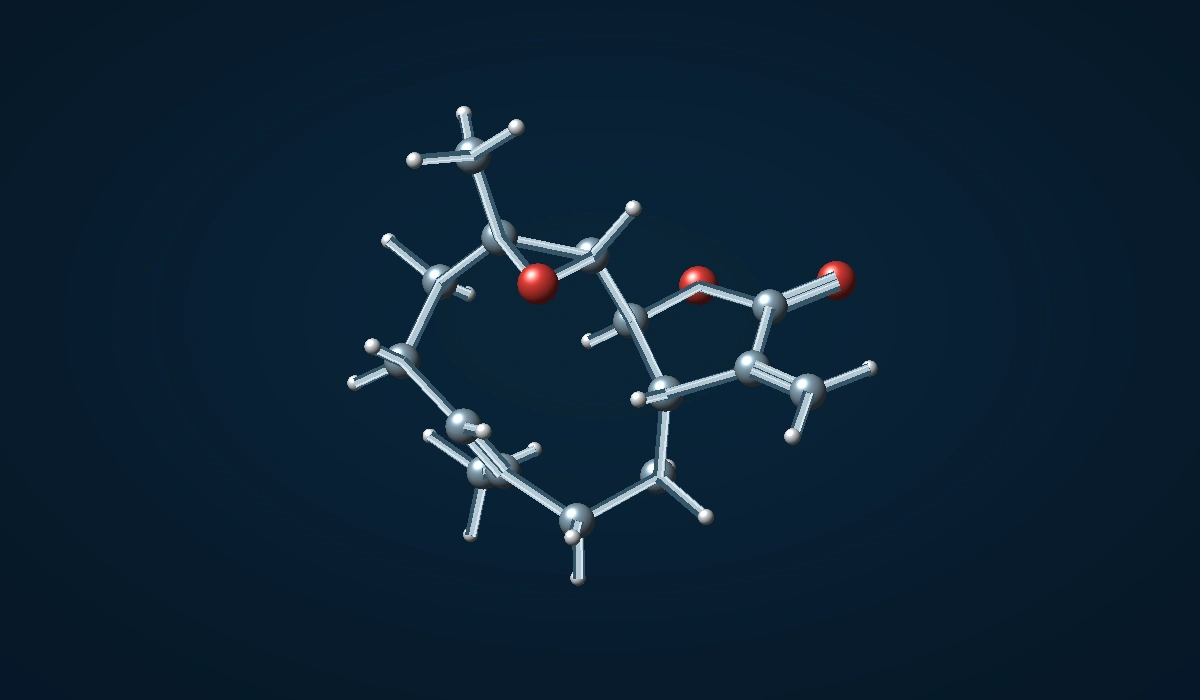
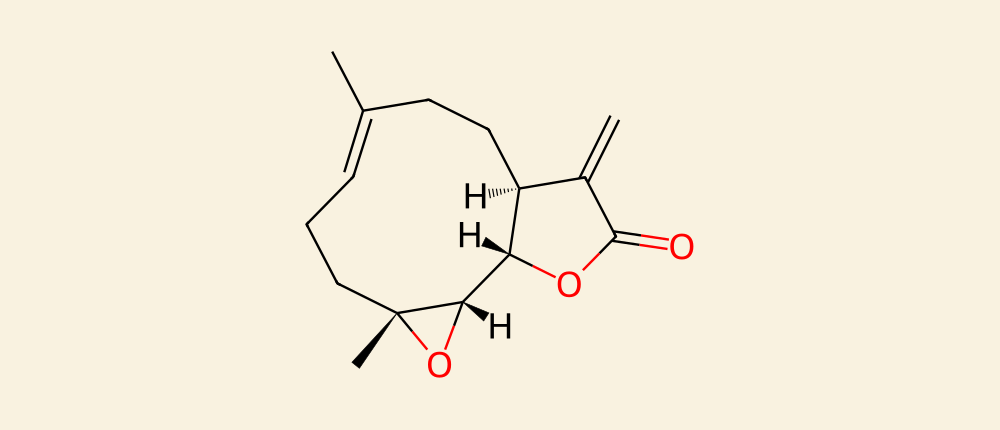
Parthenolide

PubChem CID 6473881 ↗

Representative sesquiterpene lactone; whole-plant content varies.

Formula
C15H20O3
Molar mass
248.32 g/mol
Exact mass
248.1412 Da
Charge / rings
+0 / 3
Atom stereocenters
4 defined
Computed three-dimensional ball-and-stick conformer of Parthenolide
Computed conformer · Carbon: silver · Oxygen: red · Nitrogen: blue · Hydrogen: white · Sulfur: yellow
Descriptors apply to the molecule shown. RDKit drawings use the verified PubChem structure. The 3D view is a computed conformer, not an experimentally determined biological pose; some carbon-bound hydrogens are hidden on larger molecules for clarity.
03
Interpret the evidenceMatch the study to the exact preparation, dose, population, and outcome.
Clinical findings

Benefit, uncertainty, and negative findings

A MIG-99 trial found a modest reduction in migraine frequency compared with placebo. Evidence across feverfew studies is mixed. Feverfew has been studied for prevention, not rapid termination of an established migraine or exclusion of dangerous causes of headache.

Source record: [1] · [2]

Primary evidence

Study record

170 participants in the intention-to-treat analysis; 16 weeksMIG-99 6.25 mg three times daily versus placeboMonthly migraine attacks fell by 1.9 with extract versus 1.3 with placebo; between-group P = .0456. The modest difference is preparation-specific.

Source record: [1] · [2]

04
Check safetyReview contraindications, interactions, and preparation-specific risk.
Safety assessment

Avoid, stop, or seek care

Mouth irritation, gastrointestinal effects, and allergy to related Asteraceae plants can occur. Avoid medicinal use in pregnancy. Bleeding concerns warrant review, and NCCIH advises stopping feverfew at least two weeks before scheduled surgery.

Source record: [1]

Medication review

Interactions and evidence limits

Review anticoagulants, antiplatelets, and planned procedures. A possible bleeding effect is a precaution, not a quantified interaction magnitude. Do not promise that parthenolide standardization removes all safety risks.

Source record: [1] · [3]

05
Verify the labelMatch the exact marketed product to the evidence before counseling.
Label verification

MFCP label check

  • Exact common and scientific name
  • Plant part or source material when stated
  • Amount per serving and serving size
  • Extract ratio / standardization when stated
  • Marker-constituent amount when stated
  • Added ingredients and combination products
  • Warnings, directions, lot and expiration
  • Independent quality verification when available

MFCP rule: omit rather than invent. Do not infer an unstated standardization, constituent amount, plant part, or dosage form.

Evidence fit

Apply the evidence correctly

Evidence must match the actual preparation, dose, population, and outcome. A mechanism, traditional use, or constituent identity is not by itself proof of clinical benefit.

Clinical perspective Use a headache diary with monthly migraine days, acute medication days, and disability.
06
Counseling & follow-upHow to use the label, track symptoms, and know when to seek care.
Your plan

What to do

Keep a headache diary. Count headache days and days you use pain drugs. Write down how headaches affect your day. Check the exact extract on the label. Tell your care team about mouth sores, a rash, or bleeding. Do not use it while pregnant. Tell the team before surgery. Ask for help if the headache pattern changes.

Source record: [1]

Check your progress

What to track

Track headache days and how well you can work or rest. Set a date to check how you feel. Write down each dose and any side effects. Keep a list of all drugs and herbs you use. Bring the label to your next visit. If it does not help, ask what to do next. A dose used in a study may not suit your product.

Source record: [1]

07
Open the source recordFederal references and literature links behind this profile.
Clinical source record

Linked references

Clinical summary reviewed October 1, 2026. Study doses describe the cited preparation; they are not interchangeable product recommendations. Counseling steps are MFCP clinical interpretation.

[1] National Center for Complementary and Integrative Health. Feverfew: Usefulness and Safety. Open source ↗

[2] Diener HC, Pfaffenrath V, Schnitker J, Friede M, Henneicke-von Zepelin HH. (2005). Efficacy and safety of 6.25 mg t.i.d. feverfew CO2-extract (MIG-99) in migraine prevention--a randomized, double-blind, multicentre, placebo-controlled study. Cephalalgia : an international journal of headache Open source ↗

[3] National Center for Complementary and Integrative Health. Herb–Drug Interactions. Open source ↗

← Back to Natural Products & Botanicals
MFCP natural-product profile 02 of 40

Ginger

Zingiber officinale Roscoe
Zingiberaceae

Control-chart classification: Antiemetic / carminative

A randomized pregnancy-nausea trial found benefit from ginger powder over a short course. NCCIH notes that ginger may help pregnancy-related nausea and vomiting, while most motion-sickness studies have not shown benefit. Results do not establish a universal antiemetic effect.

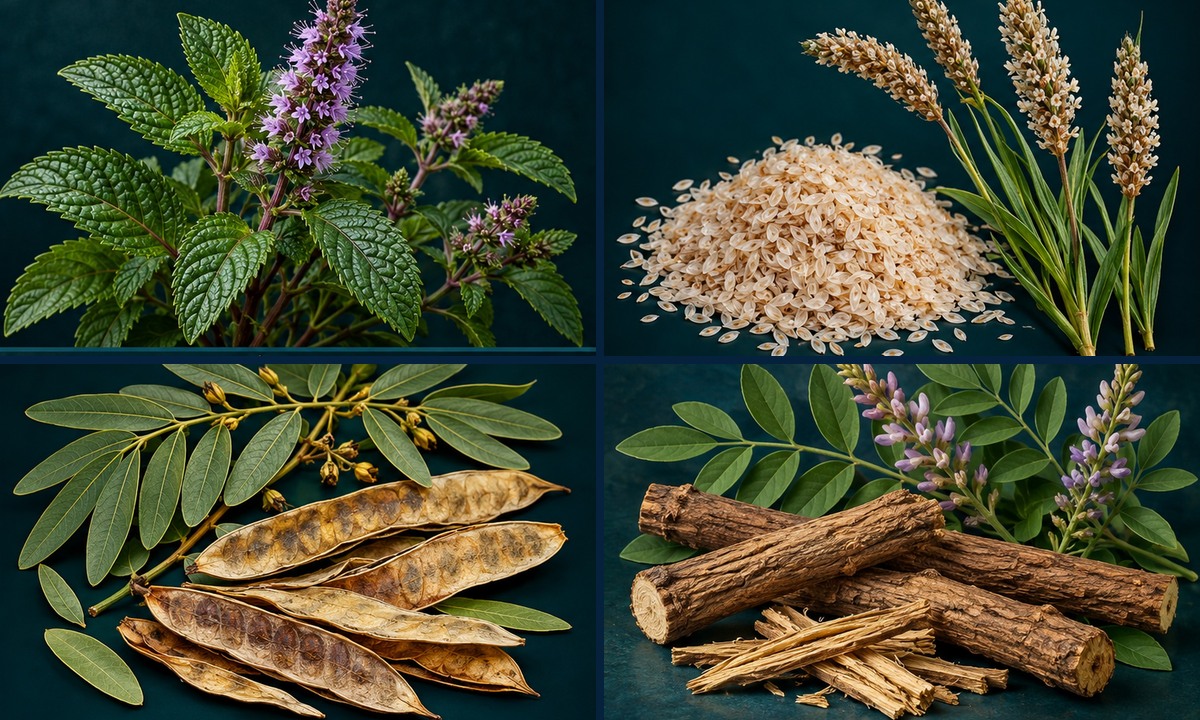
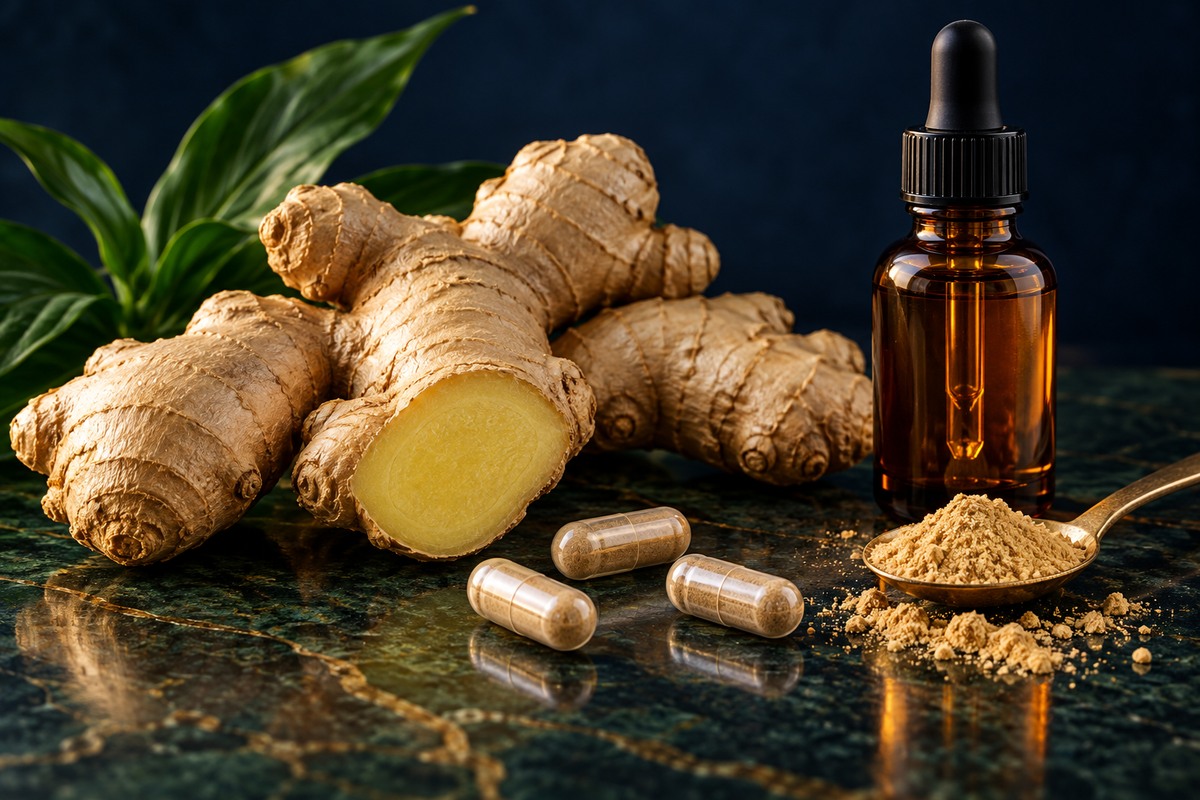
Ginger botanical specimen artwork
01
Identify the productConfirm identity, preparation, and constituent language before interpreting evidence.
Botanical / product identity

Identity & preparation

Botanical / product
Zingiber officinale Roscoe
Family
Zingiberaceae
Preparation cue
Rhizome / powder / extract
Marker constituent
6-Gingerol

Whole plant, tea, powder, tincture, oil, standardized extract, purified constituent, and combination products are not assumed to deliver the same exposure.

Constituent and mechanism

Chemistry & mechanism

Chemical class: Phenylalkanone (gingerol)

Mechanistic context (laboratory or constituent data): TRPV1 agonism; 5-HT3 antagonism (antiemetic); COX/LOX inhibition

Mechanism language does not substitute for clinical outcome evidence.

These proposed targets are mechanistic context. Their demonstration for a constituent does not establish the clinical effectiveness of a whole extract; use the evidence panel for patient outcomes.

02
Preparation & dose recordResearch regimens describe specific products. OTC directions belong to the cited label.
Product distinctions

Match the preparation

Fresh or dried rhizomeFood use, dried powder, and liquid extracts differ.
Powder capsulesResearch exposures are often expressed as dried ginger mass.
Concentrated extractExtract ratio and gingerol or shogaol content are needed before comparing with powder.

Source record: [1]

Dose status

Studied exposure or labeled directions

Research regimen: ginger powder 1 g/day for four days in a trial of nausea and vomiting during pregnancy. This describes the study, not a standing pregnancy prescription or a dose for chemotherapy-related nausea.

Source record: [2]

STRUCTURE RECORD

Molecular identity plates

Examine the selected constituent, then check the preparation and clinical evidence.

MOLECULAR IDENTITY · 01

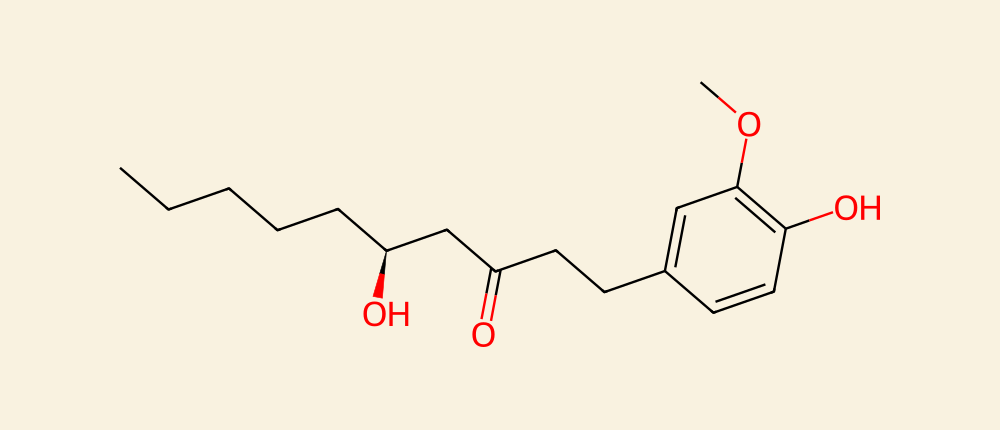
6-Gingerol

PubChem CID 442793 ↗

One ginger constituent; heating and drying change the gingerol/shogaol mixture.

Formula
C17H26O4
Molar mass
294.39 g/mol
Exact mass
294.1831 Da
Charge / rings
+0 / 1
Atom stereocenters
1 defined
Computed three-dimensional ball-and-stick conformer of 6-Gingerol
Computed conformer · Carbon: silver · Oxygen: red · Nitrogen: blue · Hydrogen: white · Sulfur: yellow
Descriptors apply to the molecule shown. RDKit drawings use the verified PubChem structure. The 3D view is a computed conformer, not an experimentally determined biological pose; some carbon-bound hydrogens are hidden on larger molecules for clarity.
03
Interpret the evidenceMatch the study to the exact preparation, dose, population, and outcome.
Clinical findings

Benefit, uncertainty, and negative findings

A randomized pregnancy-nausea trial found benefit from ginger powder over a short course. NCCIH notes that ginger may help pregnancy-related nausea and vomiting, while most motion-sickness studies have not shown benefit. Results do not establish a universal antiemetic effect.

Source record: [1] · [2]

Primary evidence

Study record

70 pregnant participants, at or before 17 weeks; four daysGinger 1 g/day versus placeboNausea scores and vomiting episodes improved more with ginger. The small, brief study cannot establish safety for all pregnancy exposures or causes of vomiting.

Source record: [1] · [2]

04
Check safetyReview contraindications, interactions, and preparation-specific risk.
Safety assessment

Avoid, stop, or seek care

Heartburn, abdominal discomfort, diarrhea, and mouth or throat irritation can occur. Pregnancy use should be discussed with the maternity clinician; breastfeeding safety data are limited. Reflux may make ginger a poor fit despite its nausea indication.

Source record: [1]

Medication review

Interactions and evidence limits

Review anticoagulants and antiplatelets when considering concentrated supplements, but do not describe clinically important bleeding as inevitable. Evidence and exposure differ from ordinary culinary consumption. Concurrent antiemetic treatment should remain coordinated with the treating team.

Source record: [1] · [3]

05
Verify the labelMatch the exact marketed product to the evidence before counseling.
Label verification

MFCP label check

  • Exact common and scientific name
  • Plant part or source material when stated
  • Amount per serving and serving size
  • Extract ratio / standardization when stated
  • Marker-constituent amount when stated
  • Added ingredients and combination products
  • Warnings, directions, lot and expiration
  • Independent quality verification when available

MFCP rule: omit rather than invent. Do not infer an unstated standardization, constituent amount, plant part, or dosage form.

Evidence fit

Apply the evidence correctly

Evidence must match the actual preparation, dose, population, and outcome. A mechanism, traditional use, or constituent identity is not by itself proof of clinical benefit.

Clinical perspective Record the preparation and actual daily dried-herb or extract amount.
06
Counseling & follow-upHow to use the label, track symptoms, and know when to seek care.
Your plan

What to do

Write down the type and amount you take each day. Track nausea, how often you vomit, and how much you drink. Stop if heartburn or stomach upset gets worse. Seek care if you cannot keep fluids down, see blood in vomit, or have severe symptoms that last. Ask your care team before use in pregnancy.

Source record: [1]

Check your progress

What to track

Track nausea, vomiting, fluid intake, and heartburn. Set a date to check how you feel. Write down each dose and any side effects. Keep a list of all drugs and herbs you use. Bring the label to your next visit. If it does not help, ask what to do next. A dose used in a study may not suit your product.

Source record: [1]

07
Open the source recordFederal references and literature links behind this profile.
Clinical source record

Linked references

Clinical summary reviewed October 1, 2026. Study doses describe the cited preparation; they are not interchangeable product recommendations. Counseling steps are MFCP clinical interpretation.

[1] National Center for Complementary and Integrative Health. Ginger: Usefulness and Safety. Open source ↗

[2] Vutyavanich T, Kraisarin T, Ruangsri R. (2001). Ginger for nausea and vomiting in pregnancy: randomized, double-masked, placebo-controlled trial. Obstetrics and gynecology Open source ↗

[3] National Center for Complementary and Integrative Health. Herb–Drug Interactions. Open source ↗

← Back to Natural Products & Botanicals
MFCP natural-product profile 17 of 40

Peppermint

Mentha × piperita L.
Lamiaceae

Control-chart classification: GI antispasmodic (IBS) / topical

Enteric-coated peppermint oil may improve IBS symptoms in the short term. Peppermint leaf alone has much less clinical evidence. Symptom improvement does not diagnose IBS or rule out inflammatory disease, gastrointestinal bleeding, or other structural causes.

Peppermint botanical specimen artwork
01
Identify the productConfirm identity, preparation, and constituent language before interpreting evidence.
Botanical / product identity

Identity & preparation

Botanical / product
Mentha × piperita L.
Family
Lamiaceae
Preparation cue
Leaf / enteric-coated peppermint oil / topical oil
Marker constituent
(-)-Menthol

Whole plant, tea, powder, tincture, oil, standardized extract, purified constituent, and combination products are not assumed to deliver the same exposure.

Constituent and mechanism

Chemistry & mechanism

Chemical class: Monoterpene alcohol

Mechanistic context (laboratory or constituent data): TRPM8 agonist (cooling); smooth-muscle Ca-channel relaxation

Mechanism language does not substitute for clinical outcome evidence.

These proposed targets are mechanistic context. Their demonstration for a constituent does not establish the clinical effectiveness of a whole extract; use the evidence panel for patient outcomes.

02
Preparation & dose recordResearch regimens describe specific products. OTC directions belong to the cited label.
Product distinctions

Match the preparation

Enteric-coated peppermint oilThe principal oral preparation studied for irritable bowel syndrome.
Peppermint leaf teaCannot be assumed to provide the same exposure or benefit.
Topical oil or mentholSeparate routes and age restrictions; never substitute for an oral capsule.

Source record: [1]

Dose status

Studied exposure or labeled directions

No single dose covers all peppermint products. Follow the exact licensed product’s directions; studies and the EMA record use characterized enteric-coated oil capsules. This guide does not convert tea leaves or essential-oil drops into an IBS dose.

Source record: [2]

STRUCTURE RECORD

Molecular identity plates

Examine the selected constituent, then check the preparation and clinical evidence.

MOLECULAR IDENTITY · 01

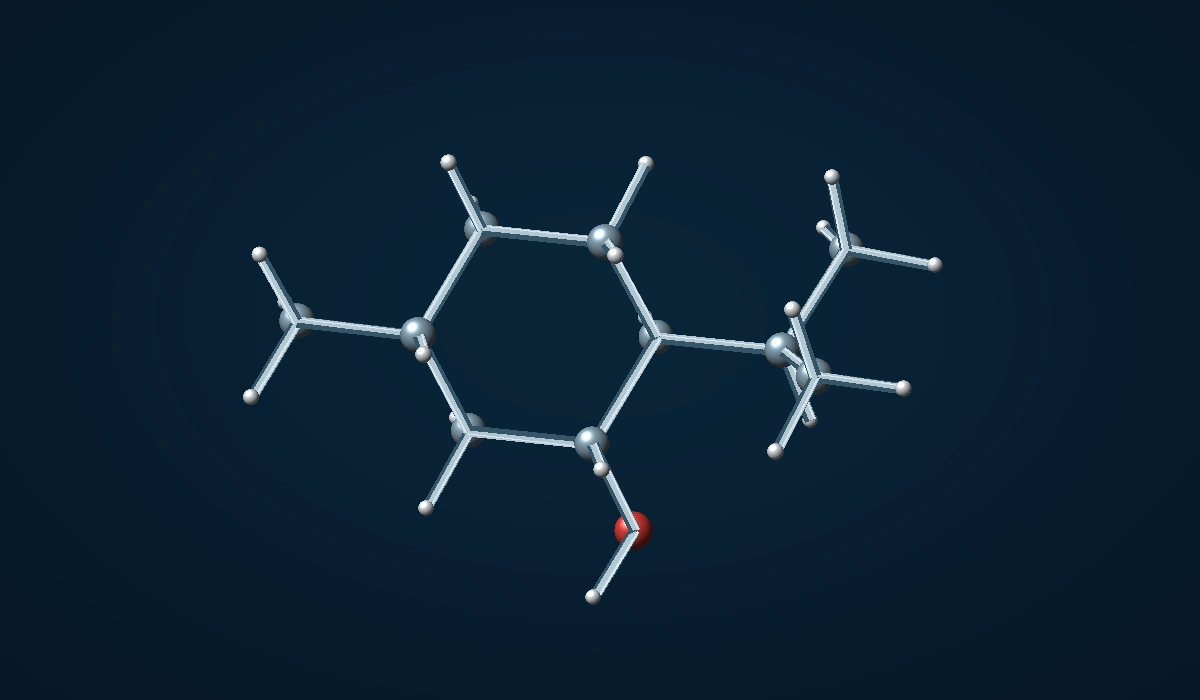
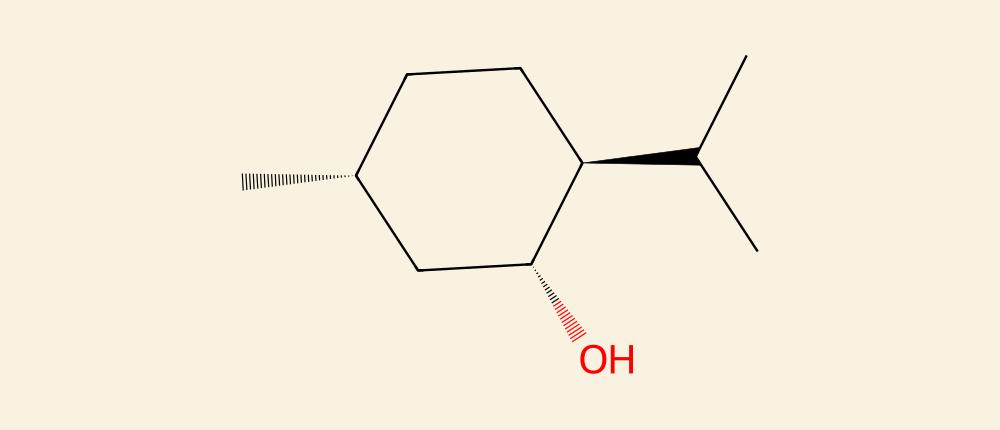
(-)-Menthol

PubChem CID 16666 ↗

One constituent of peppermint oil, not the full oil mixture.

Formula
C10H20O
Molar mass
156.27 g/mol
Exact mass
156.1514 Da
Charge / rings
+0 / 1
Atom stereocenters
3 defined
Computed three-dimensional ball-and-stick conformer of (-)-Menthol
Computed conformer · Carbon: silver · Oxygen: red · Nitrogen: blue · Hydrogen: white · Sulfur: yellow
Descriptors apply to the molecule shown. RDKit drawings use the verified PubChem structure. The 3D view is a computed conformer, not an experimentally determined biological pose; some carbon-bound hydrogens are hidden on larger molecules for clarity.
03
Interpret the evidenceMatch the study to the exact preparation, dose, population, and outcome.
Clinical findings

Benefit, uncertainty, and negative findings

Enteric-coated peppermint oil may improve IBS symptoms in the short term. Peppermint leaf alone has much less clinical evidence. Symptom improvement does not diagnose IBS or rule out inflammatory disease, gastrointestinal bleeding, or other structural causes.

Source record: [1] · [2]

Clinical interpretation

What this evidence does not establish

Enteric coating, oil content per capsule, release characteristics, and trial duration are essential. The EMA monograph is a preparation-specific medicinal reference, not permission to ingest arbitrary essential oils.

Source record: [1] · [2]

04
Check safetyReview contraindications, interactions, and preparation-specific risk.
Safety assessment

Avoid, stop, or seek care

Heartburn and reflux are common limiting effects. Medicinal pregnancy and breastfeeding safety are uncertain. Do not apply menthol-containing preparations to the face of infants or young children because of breathing risks. Avoid self-dosing undiluted essential oil.

Source record: [1]

Medication review

Interactions and evidence limits

Check the capsule label for instructions concerning antacids and other medicines that alter gastric conditions. Premature release and product-specific directions matter more than an assumed universal spacing rule. Sedation is not the intended IBS mechanism.

Source record: [1] · [3]

05
Verify the labelMatch the exact marketed product to the evidence before counseling.
Label verification

MFCP label check

  • Exact common and scientific name
  • Plant part or source material when stated
  • Amount per serving and serving size
  • Extract ratio / standardization when stated
  • Marker-constituent amount when stated
  • Added ingredients and combination products
  • Warnings, directions, lot and expiration
  • Independent quality verification when available

MFCP rule: omit rather than invent. Do not infer an unstated standardization, constituent amount, plant part, or dosage form.

Evidence fit

Apply the evidence correctly

Evidence must match the actual preparation, dose, population, and outcome. A mechanism, traditional use, or constituent identity is not by itself proof of clinical benefit.

Clinical perspective Confirm an IBS diagnosis and screen for alarm symptoms.
06
Counseling & follow-upHow to use the label, track symptoms, and know when to seek care.
Your plan

What to do

Ask your care team if your symptoms are due to IBS. IBS can cause gut pain and changes in stools. Swallow coated capsules whole if the label says to do so. Track pain, bloating, stools, and heartburn. Stop if heartburn gets worse. Do not drink pure essential oil. Get care for blood in stools or weight loss you cannot explain.

Source record: [1]

Check your progress

What to track

Track gut pain, bloating, stool changes, and heartburn. Set a date to check how you feel. Write down each dose and any side effects. Keep a list of all drugs and herbs you use. Bring the label to your next visit. If it does not help, ask what to do next. A dose used in a study may not suit your product.

Source record: [1]

07
Open the source recordFederal references and literature links behind this profile.
Clinical source record

Linked references

Clinical summary reviewed October 1, 2026. Study doses describe the cited preparation; they are not interchangeable product recommendations. Counseling steps are MFCP clinical interpretation.

[1] National Center for Complementary and Integrative Health. Peppermint Oil: Usefulness and Safety. Open source ↗

[2] European Medicines Agency. Menthae piperitae aetheroleum: herbal medicinal product record. Open source ↗

[3] National Center for Complementary and Integrative Health. Herb–Drug Interactions. Open source ↗

← Back to Natural Products & Botanicals
MFCP natural-product profile 36 of 40

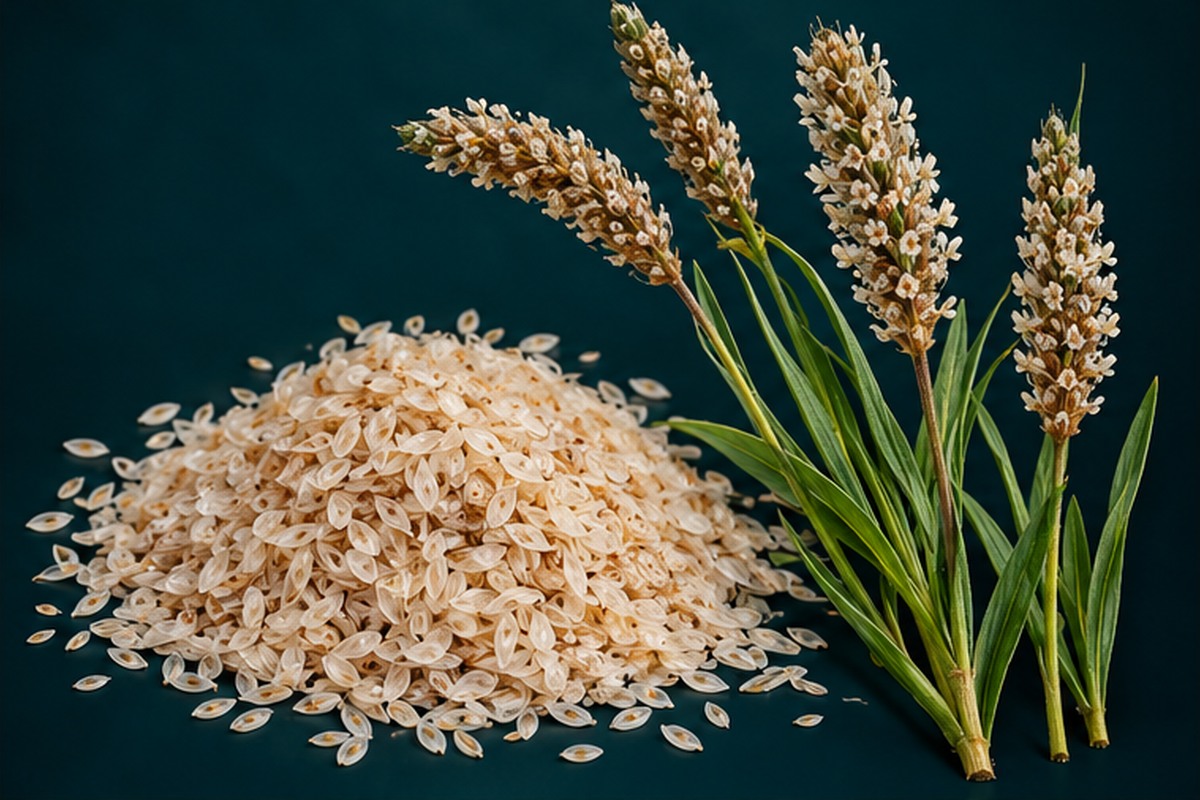
Psyllium

Plantago ovata Forssk.
Plantaginaceae

Control-chart classification: Bulk laxative / lipid-glycemic

A 12-week primary-care IBS trial found that psyllium improved adequate symptom relief, especially early in treatment. OTC psyllium is also labeled as a bulk-forming laxative. Benefits depend on adequate fluid and tolerability, not simply adding more powder.

Psyllium botanical specimen artwork
01
Identify the productConfirm identity, preparation, and constituent language before interpreting evidence.
Botanical / product identity

Identity & preparation

Botanical / product
Plantago ovata Forssk.
Family
Plantaginaceae
Preparation cue
Husk / powder / granules
Marker constituent
Arabinoxylan mucilage (husk)

Whole plant, tea, powder, tincture, oil, standardized extract, purified constituent, and combination products are not assumed to deliver the same exposure.

Constituent and mechanism

Chemistry & mechanism

Chemical class: Soluble polysaccharide fiber

Mechanistic context (laboratory or constituent data): Bulk-forming + viscous fiber (LDL and glycemic effects)

Mechanism language does not substitute for clinical outcome evidence.

These proposed targets are mechanistic context. Their demonstration for a constituent does not establish the clinical effectiveness of a whole extract; use the evidence panel for patient outcomes.

02
Preparation & dose recordResearch regimens describe specific products. OTC directions belong to the cited label.
Product distinctions

Match the preparation

Husk powderSoluble fiber measured as active psyllium husk, not total flavored-powder weight.
CapsulesNumber of capsules may be large for a gram-level fiber dose.
IBS study preparationA soluble-fiber intervention; results do not apply to insoluble bran.

Source record: [1]

Dose status

Studied exposure or labeled directions

OTC label example: one Metamucil packet contains 3.4 g psyllium husk; adults and children 12 years and older may use one packet up to three times daily with at least 8 ounces of liquid per dose. New users start once daily. The IBS trial used 10 g/day.

Source record: [1] · [2]

STRUCTURE RECORD

Molecular identity plates

Examine the selected constituent, then check the preparation and clinical evidence.

MOLECULAR IDENTITY · 01

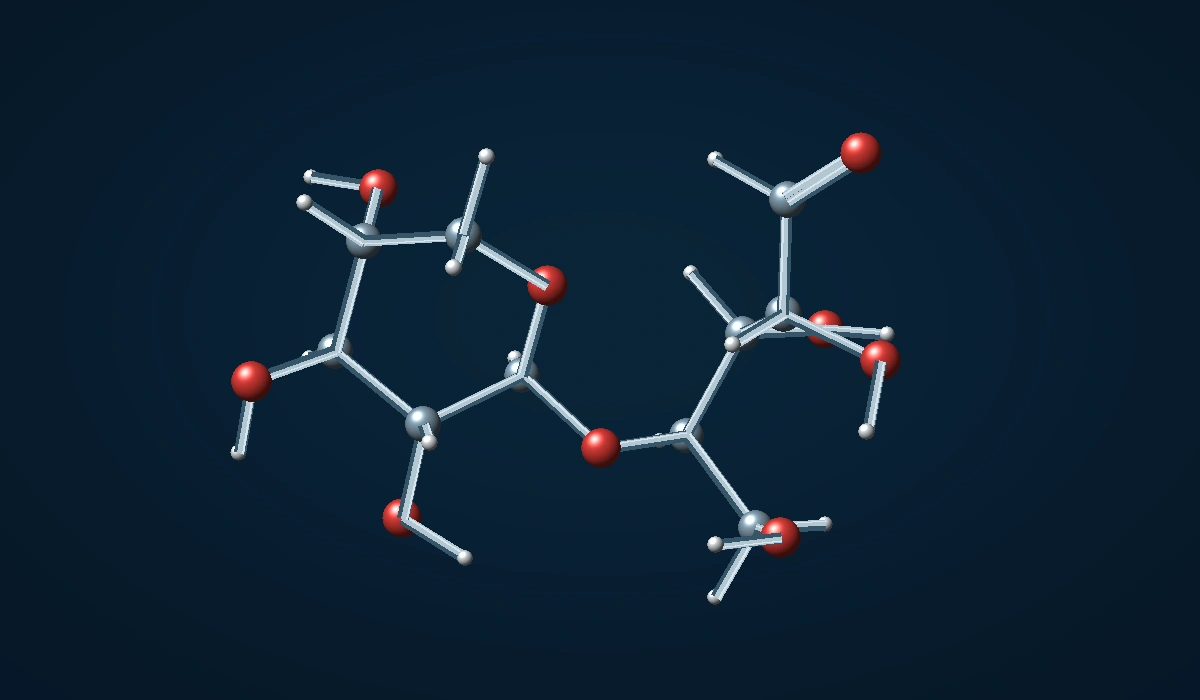
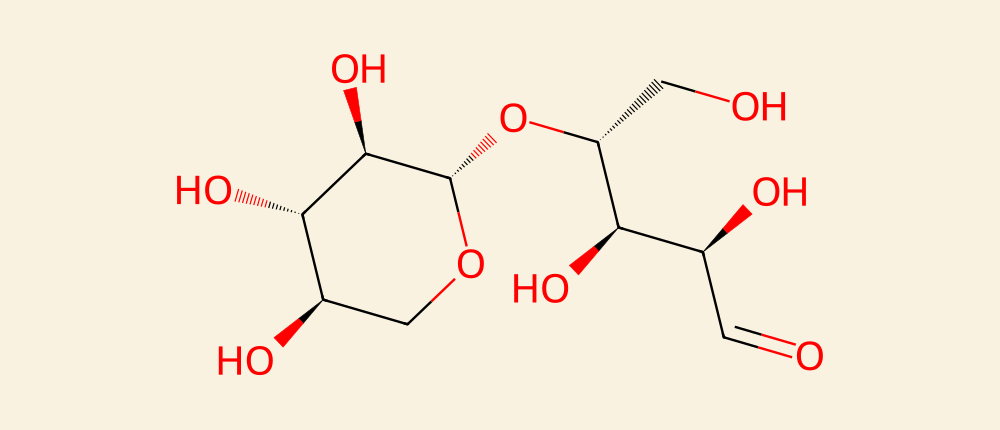
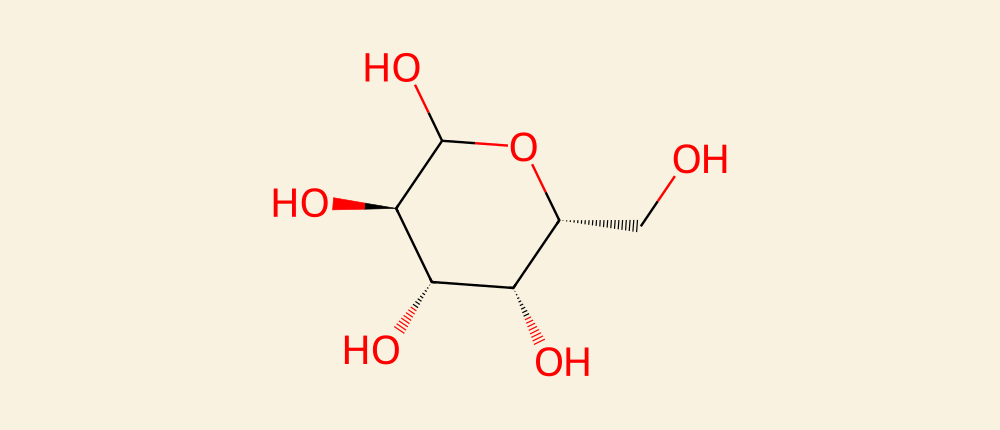
Xylobiose

PubChem CID 160873 ↗

A defined xylose disaccharide illustrating a xylan building block. Psyllium arabinoxylan is a branched, variable polymer; this is not the complete fiber molecule.

Formula
C10H18O9
Molar mass
282.25 g/mol
Exact mass
282.0951 Da
Charge / rings
+0 / 1
Atom stereocenters
7 defined
Computed three-dimensional ball-and-stick conformer of Xylobiose
Computed conformer · Carbon: silver · Oxygen: red · Nitrogen: blue · Hydrogen: white · Sulfur: yellow
Descriptors apply to the molecule shown. RDKit drawings use the verified PubChem structure. The 3D view is a computed conformer, not an experimentally determined biological pose; some carbon-bound hydrogens are hidden on larger molecules for clarity.
03
Interpret the evidenceMatch the study to the exact preparation, dose, population, and outcome.
Clinical findings

Benefit, uncertainty, and negative findings

A 12-week primary-care IBS trial found that psyllium improved adequate symptom relief, especially early in treatment. OTC psyllium is also labeled as a bulk-forming laxative. Benefits depend on adequate fluid and tolerability, not simply adding more powder.

Source record: [1] · [2]

Primary evidence

Study record

275 adults with IBS in primary care; 12 weeksPsyllium 10 g/day, bran 10 g/day, or rice-flour placeboAdequate relief in month one was 57% with psyllium versus 35% with placebo. Month-two relief also favored psyllium; no significant quality-of-life difference was found.

Source record: [1] · [2]

04
Check safetyReview contraindications, interactions, and preparation-specific risk.
Safety assessment

Avoid, stop, or seek care

Never swallow dry. Avoid use with difficulty swallowing unless specifically assessed. Chest pain, vomiting, or trouble swallowing or breathing after a dose requires immediate medical attention. Bloating and gas can occur; insufficient fluid increases choking risk.

Source record: [1]

Medication review

Interactions and evidence limits

The cited product label directs use at least two hours before or after other drugs. Check each medicine’s own instructions because some require additional management. Medication separation does not remove the need for sufficient fluid.

Source record: [1] · [3]

05
Verify the labelMatch the exact marketed product to the evidence before counseling.
Label verification

MFCP label check

  • Exact common and scientific name
  • Plant part or source material when stated
  • Amount per serving and serving size
  • Extract ratio / standardization when stated
  • Marker-constituent amount when stated
  • Added ingredients and combination products
  • Warnings, directions, lot and expiration
  • Independent quality verification when available

MFCP rule: omit rather than invent. Do not infer an unstated standardization, constituent amount, plant part, or dosage form.

Evidence fit

Apply the evidence correctly

Evidence must match the actual preparation, dose, population, and outcome. A mechanism, traditional use, or constituent identity is not by itself proof of clinical benefit.

Clinical perspective Measure the active husk amount, mix with the required liquid, and drink promptly.
06
Counseling & follow-upHow to use the label, track symptoms, and know when to seek care.
Your plan

What to do

Never swallow this powder dry. Measure the dose. Mix it with the full amount of liquid on the label and drink it right away. Ask before use if you have trouble swallowing. Follow your fluid limits if your care team has set them. Check the label for spacing from other drugs. Get help at once for chest pain, vomiting, or trouble swallowing or breathing after a dose.

Source record: [1] [2]

Check your progress

What to track

Track how often you pass stools and how hard they are. Set a date to check how you feel. Write down each dose and any side effects. Keep a list of all drugs and herbs you use. Bring the label to your next visit. If it does not help, ask what to do next. A dose used in a study may not suit your product.

Source record: [1] [2]

07
Open the source recordFederal references and literature links behind this profile.
Clinical source record

Linked references

Clinical summary reviewed October 1, 2026. Study doses describe the cited preparation; they are not interchangeable product recommendations. Counseling steps are MFCP clinical interpretation.

[1] Bijkerk CJ, de Wit NJ, Muris JW, Whorwell PJ, Knottnerus JA, Hoes AW. (2009). Soluble or insoluble fibre in irritable bowel syndrome in primary care? Randomised placebo controlled trial. BMJ (Clinical research ed.) Open source ↗

[2] DailyMed. Metamucil Therapy for Regularity: psyllium husk powder. Open source ↗

[3] National Center for Complementary and Integrative Health. Herb–Drug Interactions. Open source ↗

← Back to Natural Products & Botanicals
MFCP natural-product profile 35 of 40

Senna

Senna alexandrina Mill.
Fabaceae

Control-chart classification: Stimulant laxative (OTC)

Senna is a stimulant laxative for occasional constipation. The OTC indication is constipation relief, not weight loss, toxin removal, or treatment of persistent unexplained abdominal symptoms. Product labeling provides a defined short-term regimen.

Senna botanical specimen artwork
01
Identify the productConfirm identity, preparation, and constituent language before interpreting evidence.
Botanical / product identity

Identity & preparation

Botanical / product
Senna alexandrina Mill.
Family
Fabaceae
Preparation cue
Leaf/pod standardized to sennosides
Marker constituent
Sennosides A & B -> rhein-anthrone

Whole plant, tea, powder, tincture, oil, standardized extract, purified constituent, and combination products are not assumed to deliver the same exposure.

Constituent and mechanism

Chemistry & mechanism

Chemical class: Dianthrone glycosides (anthranoid)

Mechanistic context (laboratory or constituent data): Colonic motility + secretion via rhein-anthrone

Mechanism language does not substitute for clinical outcome evidence.

These proposed targets are mechanistic context. Their demonstration for a constituent does not establish the clinical effectiveness of a whole extract; use the evidence panel for patient outcomes.

02
Preparation & dose recordResearch regimens describe specific products. OTC directions belong to the cited label.
Product distinctions

Match the preparation

Sennoside tabletStandardized active sennoside amount is the relevant dose.
Leaf tea or herbal blendStrength may be variable and should not be equated with tablet milligrams.
Combination laxativeCount all stimulant ingredients to prevent duplicate exposure.

Source record: [1]

Dose status

Studied exposure or labeled directions

OTC label example: 8.6 mg sennosides per tablet; adults and children 12 years and older start with two tablets once daily, preferably at bedtime. This starting dose is 17.2 mg. The cited label reports an expected bowel movement in 6–12 hours.

Source record: [1]

STRUCTURE RECORD

Molecular identity plates

Examine the selected constituent, then check the preparation and clinical evidence.

MOLECULAR IDENTITY · 01

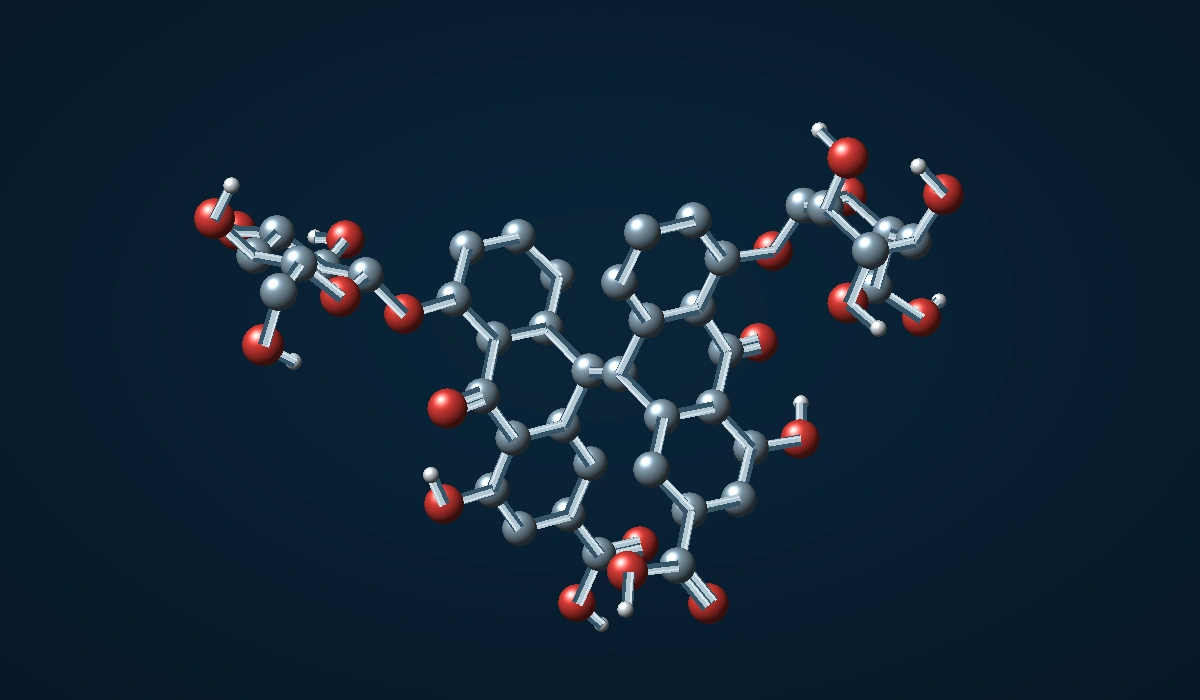
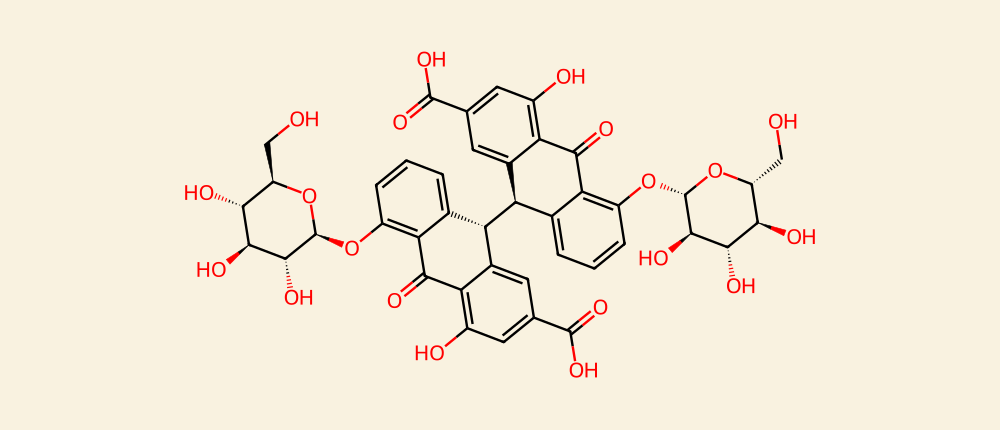
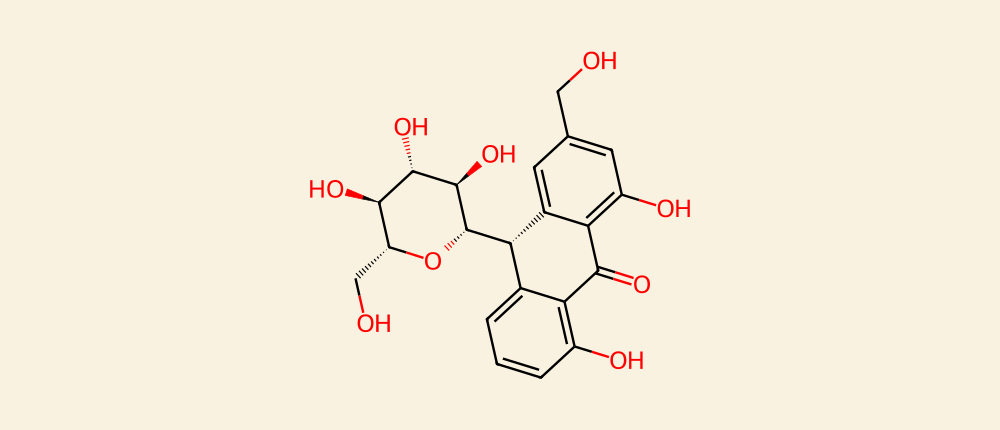
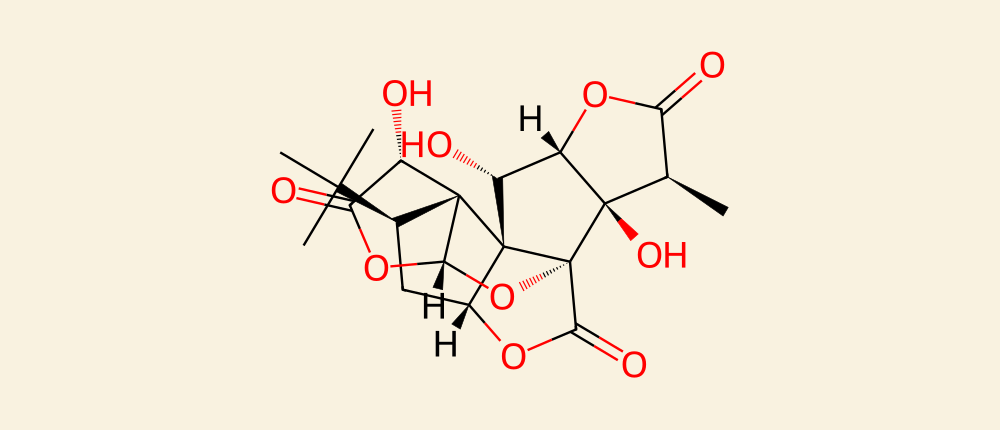
Sennoside A

PubChem CID 73111 ↗

A defined dianthrone glycoside; shown separately from its stereoisomer.

Formula
C42H38O20
Molar mass
862.75 g/mol
Exact mass
862.1956 Da
Charge / rings
+0 / 8
Atom stereocenters
12 defined
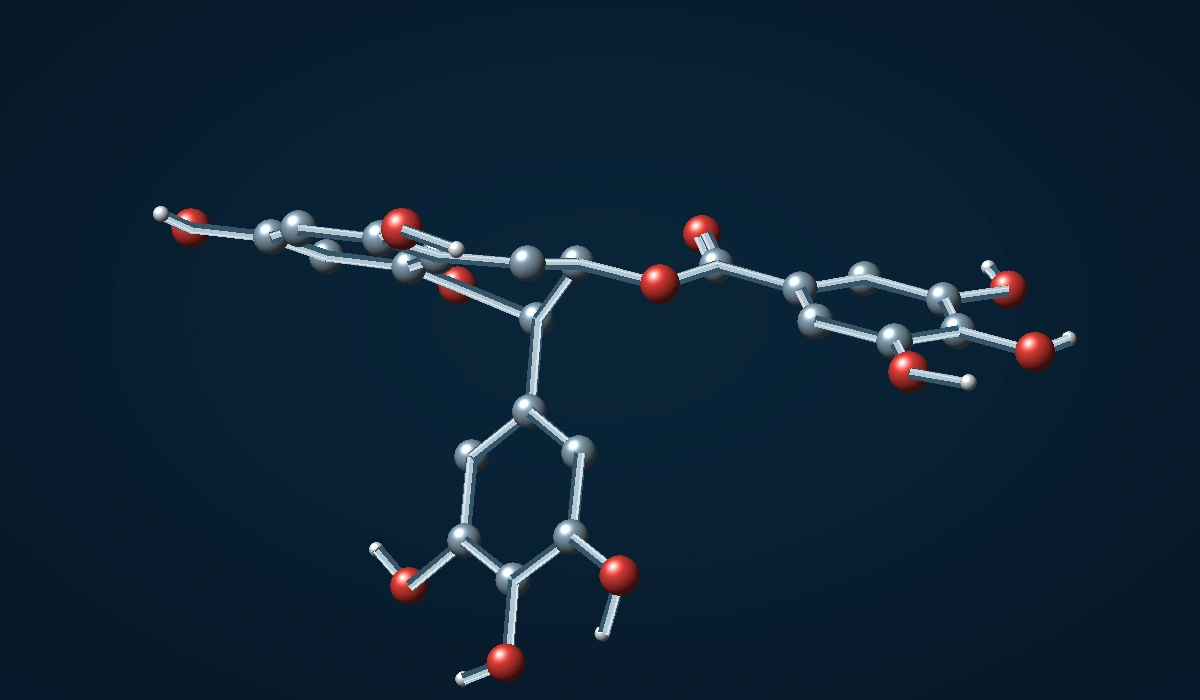
Computed three-dimensional ball-and-stick conformer of Sennoside A
Computed conformer · Carbon: silver · Oxygen: red · Nitrogen: blue · Hydrogen: white · Sulfur: yellow
Descriptors apply to the molecule shown. RDKit drawings use the verified PubChem structure. The 3D view is a computed conformer, not an experimentally determined biological pose; some carbon-bound hydrogens are hidden on larger molecules for clarity.
MOLECULAR IDENTITY · 02

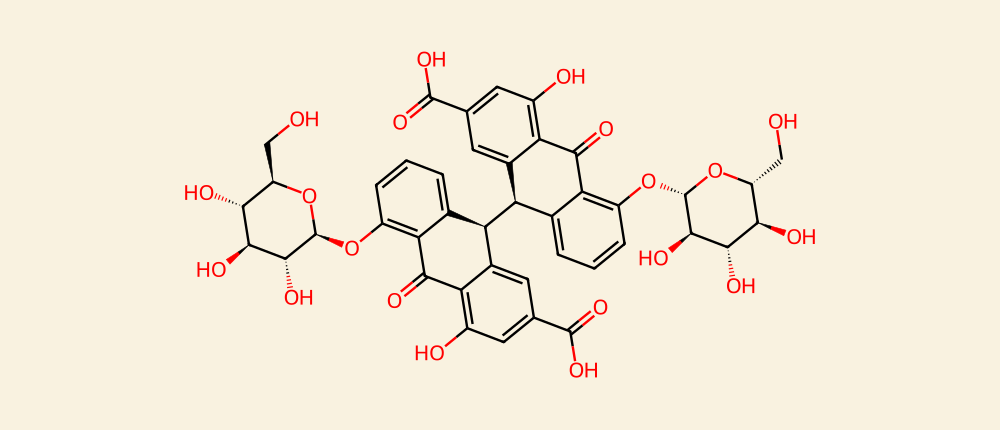
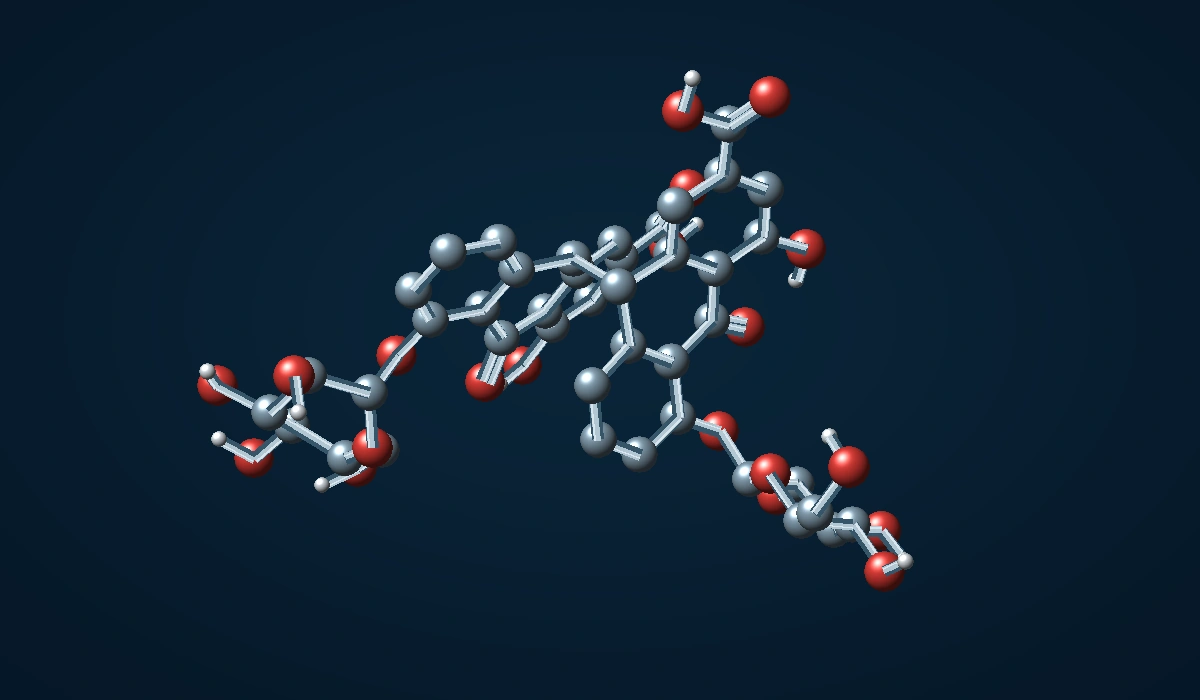
Sennoside B

PubChem CID 91440 ↗

A defined dianthrone glycoside; not interchangeable with the entire senna preparation.

Formula
C42H38O20
Molar mass
862.75 g/mol
Exact mass
862.1956 Da
Charge / rings
+0 / 8
Atom stereocenters
12 defined
Computed three-dimensional ball-and-stick conformer of Sennoside B
Computed conformer · Carbon: silver · Oxygen: red · Nitrogen: blue · Hydrogen: white · Sulfur: yellow
Descriptors apply to the molecule shown. RDKit drawings use the verified PubChem structure. The 3D view is a computed conformer, not an experimentally determined biological pose; some carbon-bound hydrogens are hidden on larger molecules for clarity.
03
Interpret the evidenceMatch the study to the exact preparation, dose, population, and outcome.
Clinical findings

Benefit, uncertainty, and negative findings

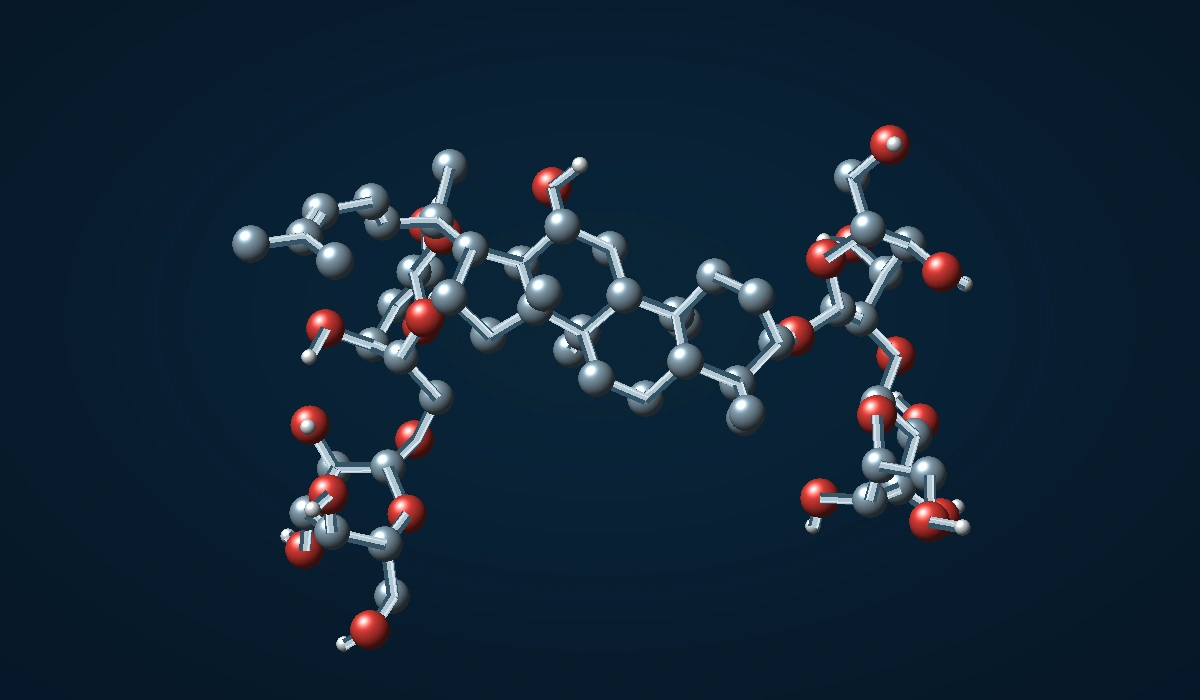
Senna is a stimulant laxative for occasional constipation. The OTC indication is constipation relief, not weight loss, toxin removal, or treatment of persistent unexplained abdominal symptoms. Product labeling provides a defined short-term regimen.

Source record: [1]

Clinical interpretation

What this evidence does not establish

Follow the exact package; do not generalize its maximum dose to every preparation. Do not use for longer than one week unless directed by a clinician. A pediatric dose requires the child’s own label and clinical context.

Source record: [1]

04
Check safetyReview contraindications, interactions, and preparation-specific risk.
Safety assessment

Avoid, stop, or seek care

Cramping and diarrhea can occur. Do not self-treat with a laxative when abdominal pain, nausea, or vomiting suggests an undiagnosed problem. Rectal bleeding or failure to have a bowel movement after use needs assessment. Excessive use can disturb fluids and electrolytes.

Source record: [1]

Medication review

Interactions and evidence limits

Diarrhea and electrolyte depletion can complicate diuretic or digoxin therapy and other potassium-sensitive treatment. This is a consequence of excessive laxation, not proof that every appropriate short course causes an interaction.

Source record: [1] · [2]

05
Verify the labelMatch the exact marketed product to the evidence before counseling.
Label verification

MFCP label check

  • Exact common and scientific name
  • Plant part or source material when stated
  • Amount per serving and serving size
  • Extract ratio / standardization when stated
  • Marker-constituent amount when stated
  • Added ingredients and combination products
  • Warnings, directions, lot and expiration
  • Independent quality verification when available

MFCP rule: omit rather than invent. Do not infer an unstated standardization, constituent amount, plant part, or dosage form.

Evidence fit

Apply the evidence correctly

Evidence must match the actual preparation, dose, population, and outcome. A mechanism, traditional use, or constituent identity is not by itself proof of clinical benefit.

Clinical perspective Clarify the duration and cause of constipation before recommending repeated courses.
06
Counseling & follow-upHow to use the label, track symptoms, and know when to seek care.
Your plan

What to do

Ask what is causing the constipation if it lasts. Count doses from teas and tablets together. Do not keep taking more without advice. Stop for marked cramps or loose stools. Get care for rectal bleeding or if you do not pass a stool after use. Ask for a plan that suits the cause.
Source record: [1]

Check your progress

What to track

Track bowel movements, cramps, and loose stools. Set a date to check how you feel. Write down each dose and any side effects. Keep a list of all drugs and herbs you use. Bring the label to your next visit. If it does not help, ask what to do next. A dose used in a study may not suit your product.

Source record: [1]

07
Open the source recordFederal references and literature links behind this profile.
Clinical source record

Linked references

Clinical summary reviewed October 1, 2026. Study doses describe the cited preparation; they are not interchangeable product recommendations. Counseling steps are MFCP clinical interpretation.

[1] DailyMed. Senna: sennosides 8.6 mg tablets. Open source ↗

[2] National Center for Complementary and Integrative Health. Herb–Drug Interactions. Open source ↗

← Back to Natural Products & Botanicals
MFCP natural-product profile 33 of 40

Slippery Elm

Ulmus rubra Muhl.
Ulmaceae

Control-chart classification: Demulcent (throat / GI)

Slippery elm has traditional demulcent use, but robust clinical evidence establishing treatment benefit or a reliable therapeutic dose is lacking. Studies of another species, such as Ulmus macrocarpa, do not validate Ulmus rubra.

Slippery Elm botanical specimen artwork
01
Identify the productConfirm identity, preparation, and constituent language before interpreting evidence.
Botanical / product identity

Identity & preparation

Botanical / product
Ulmus rubra Muhl.
Family
Ulmaceae
Preparation cue
Inner bark / powder / lozenge
Marker constituent
Mucilage (arabinogalactan / rhamnogalacturonan)

Whole plant, tea, powder, tincture, oil, standardized extract, purified constituent, and combination products are not assumed to deliver the same exposure.

Constituent and mechanism

Chemistry & mechanism

Chemical class: Polysaccharide mucilage

Mechanistic context (laboratory or constituent data): Physical mucosal coating (demulcent) — no receptor target

Mechanism language does not substitute for clinical outcome evidence.

These proposed targets are mechanistic context. Their demonstration for a constituent does not establish the clinical effectiveness of a whole extract; use the evidence panel for patient outcomes.

02
Preparation & dose recordResearch regimens describe specific products. OTC directions belong to the cited label.
Product distinctions

Match the preparation

Ulmus rubra inner barkCorrect species and plant part are essential.
Lozenge or mucilage powderLocal soothing claims are different from proven disease treatment.
Multi-herb gastrointestinal productAn effect cannot be attributed to slippery elm alone.

Source record: [1]

Dose status

Studied exposure or labeled directions

No established evidence-based therapeutic dose is provided. Commercial capsule or powder directions describe a marketed product and should not be represented as a clinically proven regimen for reflux, inflammatory bowel disease, or ulcer healing.

Source record: [1]

STRUCTURE RECORD

Molecular identity plates

Examine the selected constituent, then check the preparation and clinical evidence.

MOLECULAR IDENTITY · 01

D-Galactose

PubChem CID 6036 ↗

Illustrative sugar building block of mucilage; not the complete slippery-elm polymer.

Formula
C6H12O6
Molar mass
180.16 g/mol
Exact mass
180.0634 Da
Charge / rings
+0 / 1
Atom stereocenters
4 defined / 1 unspecified
Computed three-dimensional ball-and-stick conformer of D-Galactose
Computed conformer · Carbon: silver · Oxygen: red · Nitrogen: blue · Hydrogen: white · Sulfur: yellow
Descriptors apply to the molecule shown. RDKit drawings use the verified PubChem structure. The 3D view is a computed conformer, not an experimentally determined biological pose; some carbon-bound hydrogens are hidden on larger molecules for clarity.
MOLECULAR IDENTITY · 02

L-Arabinose

PubChem CID 439195 ↗

Illustrative sugar building block; mucilage composition and chain length vary.

Formula
C5H10O5
Molar mass
150.13 g/mol
Exact mass
150.0528 Da
Charge / rings
+0 / 1
Atom stereocenters
3 defined / 1 unspecified
Computed three-dimensional ball-and-stick conformer of L-Arabinose
Computed conformer · Carbon: silver · Oxygen: red · Nitrogen: blue · Hydrogen: white · Sulfur: yellow
Descriptors apply to the molecule shown. RDKit drawings use the verified PubChem structure. The 3D view is a computed conformer, not an experimentally determined biological pose; some carbon-bound hydrogens are hidden on larger molecules for clarity.
03
Interpret the evidenceMatch the study to the exact preparation, dose, population, and outcome.
Clinical findings

Benefit, uncertainty, and negative findings

Slippery elm has traditional demulcent use, but robust clinical evidence establishing treatment benefit or a reliable therapeutic dose is lacking. Studies of another species, such as Ulmus macrocarpa, do not validate Ulmus rubra.

Source record: [1]

Clinical interpretation

What this evidence does not establish

LiverTox describes the preparation and the absence of a recognized liver-injury signal; this is not proof of comprehensive safety or efficacy. Lack of published harm reports cannot replace exposure data in pregnancy, children, or complex illness.

Source record: [1]

04
Check safetyReview contraindications, interactions, and preparation-specific risk.
Safety assessment

Avoid, stop, or seek care

Allergy or gastrointestinal intolerance is possible. Pregnancy and breastfeeding data are insufficient for a confident medicinal recommendation. Persistent dysphagia, painful swallowing, gastrointestinal bleeding, or unexplained weight loss requires assessment rather than a soothing supplement.

Source record: [1]

Medication review

Interactions and evidence limits

Mucilage may theoretically affect absorption of oral medicines, but a validated universal separation interval has not been established here. Ask a pharmacist to review critical medicines and the product’s directions rather than inventing a precise spacing rule.

Source record: [1] · [2]

05
Verify the labelMatch the exact marketed product to the evidence before counseling.
Label verification

MFCP label check

  • Exact common and scientific name
  • Plant part or source material when stated
  • Amount per serving and serving size
  • Extract ratio / standardization when stated
  • Marker-constituent amount when stated
  • Added ingredients and combination products
  • Warnings, directions, lot and expiration
  • Independent quality verification when available

MFCP rule: omit rather than invent. Do not infer an unstated standardization, constituent amount, plant part, or dosage form.

Evidence fit

Apply the evidence correctly

Evidence must match the actual preparation, dose, population, and outcome. A mechanism, traditional use, or constituent identity is not by itself proof of clinical benefit.

Clinical perspective Check for inner bark, correct species, and other ingredients.
06
Counseling & follow-upHow to use the label, track symptoms, and know when to seek care.
Your plan

What to do

Check that the label lists inner bark and the right plant. Check each added ingredient. Tell your care team which symptom you want to treat. Keep your usual care in place. Traditional use does not prove that a dose works. Get care for painful swallowing, blood in stools, or weight loss you cannot explain.

Source record: [1]

Check your progress

What to track

Track the symptom you want to treat and any side effects. Set a date to check how you feel. Write down each dose and any side effects. Keep a list of all drugs and herbs you use. Bring the label to your next visit. If it does not help, ask what to do next. A dose used in a study may not suit your product.

Source record: [1]

07
Open the source recordFederal references and literature links behind this profile.
Clinical source record

Linked references

Clinical summary reviewed October 1, 2026. Study doses describe the cited preparation; they are not interchangeable product recommendations. Counseling steps are MFCP clinical interpretation.

[1] National Institute of Diabetes and Digestive and Kidney Diseases. Slippery Elm. LiverTox. Open source ↗

[2] National Center for Complementary and Integrative Health. Herb–Drug Interactions. Open source ↗

← Back to Natural Products & Botanicals
MFCP natural-product profile 26 of 40

Licorice

Glycyrrhiza glabra L.
Fabaceae

Control-chart classification: Demulcent / GI / expectorant

Evidence is insufficient to establish licorice as a reliable treatment for digestive or respiratory disease. Glycyrrhizin-related adverse effects are clinically important. DGL and whole-root products require separate assessment; removing glycyrrhizin does not itself prove benefit.

Licorice botanical specimen artwork
01
Identify the productConfirm identity, preparation, and constituent language before interpreting evidence.
Botanical / product identity

Identity & preparation

Botanical / product
Glycyrrhiza glabra L.
Family
Fabaceae
Preparation cue
Root / extract; glycyrrhizin-containing vs DGL products differ
Marker constituent
Glycyrrhizin / glycyrrhetinic acid

Whole plant, tea, powder, tincture, oil, standardized extract, purified constituent, and combination products are not assumed to deliver the same exposure.

Constituent and mechanism

Chemistry & mechanism

Chemical class: Oleanane triterpenoid saponin

Mechanistic context (laboratory or constituent data): 11beta-HSD2 inhibition -> cortisol-mediated mineralocorticoid excess (pseudoaldosteronism)

Mechanism language does not substitute for clinical outcome evidence.

These proposed targets are mechanistic context. Their demonstration for a constituent does not establish the clinical effectiveness of a whole extract; use the evidence panel for patient outcomes.

02
Preparation & dose recordResearch regimens describe specific products. OTC directions belong to the cited label.
Product distinctions

Match the preparation

Glycyrrhizin-containing rootMay produce mineralocorticoid-like toxicity.
Deglycyrrhizinated licorice, or DGLReduced glycyrrhizin exposure; verify the actual specification.
Licorice-flavored confectioneryMay contain anise rather than licorice; ingredients determine exposure.

Source record: [1]

Dose status

Studied exposure or labeled directions

No broadly safe therapeutic dose is endorsed. Glycyrrhizin content and cumulative exposure from tea, supplements, and foods vary. People with hypertension, heart disease, kidney disease, or high salt intake may be harmed even at relatively low exposures.

Source record: [2]

STRUCTURE RECORD

Molecular identity plates

Examine the selected constituent, then check the preparation and clinical evidence.

MOLECULAR IDENTITY · 01

Glycyrrhizin

PubChem CID 14982 ↗

Glycoside constituent; distinct from its aglycone and from deglycyrrhizinated licorice.
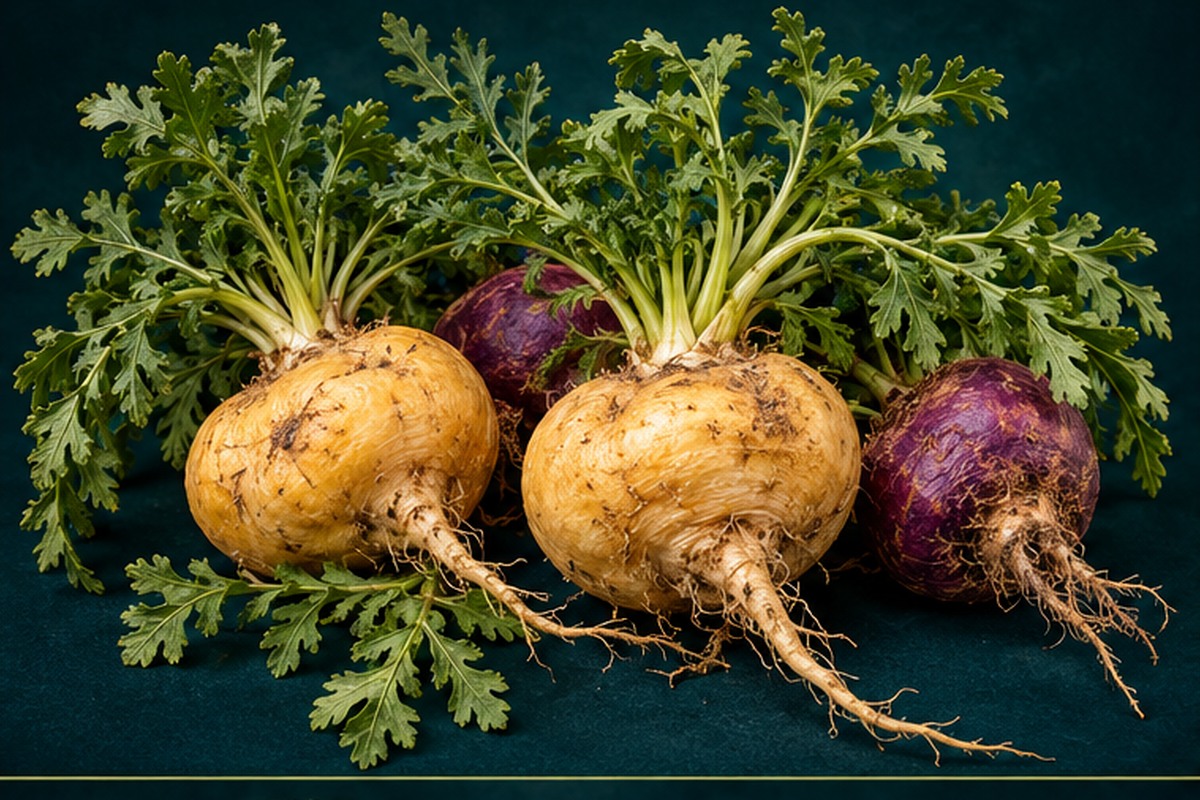
Formula
C42H62O16
Molar mass
822.94 g/mol
Exact mass
822.4038 Da
Charge / rings
+0 / 7
Atom stereocenters
19 defined
Computed three-dimensional ball-and-stick conformer of Glycyrrhizin
Computed conformer · Carbon: silver · Oxygen: red · Nitrogen: blue · Hydrogen: white · Sulfur: yellow
Descriptors apply to the molecule shown. RDKit drawings use the verified PubChem structure. The 3D view is a computed conformer, not an experimentally determined biological pose; some carbon-bound hydrogens are hidden on larger molecules for clarity.
MOLECULAR IDENTITY · 02

Glycyrrhetinic acid

PubChem CID 10114 ↗

Aglycone associated with licorice metabolism; not the whole licorice product.

Formula
C30H46O4
Molar mass
470.69 g/mol
Exact mass
470.3396 Da
Charge / rings
+0 / 5
Atom stereocenters
9 defined
Computed three-dimensional ball-and-stick conformer of Glycyrrhetinic acid
Computed conformer · Carbon: silver · Oxygen: red · Nitrogen: blue · Hydrogen: white · Sulfur: yellow
Descriptors apply to the molecule shown. RDKit drawings use the verified PubChem structure. The 3D view is a computed conformer, not an experimentally determined biological pose; some carbon-bound hydrogens are hidden on larger molecules for clarity.
03
Interpret the evidenceMatch the study to the exact preparation, dose, population, and outcome.
Clinical findings

Benefit, uncertainty, and negative findings

Evidence is insufficient to establish licorice as a reliable treatment for digestive or respiratory disease. Glycyrrhizin-related adverse effects are clinically important. DGL and whole-root products require separate assessment; removing glycyrrhizin does not itself prove benefit.

Source record: [1] · [2]

Clinical interpretation

What this evidence does not establish

Product mass does not indicate glycyrrhizin intake. Do not use a proposed threshold as a guarantee of safety. DGL labels should specify the preparation; the evidence for a gastrointestinal purpose still needs to match that product.

Source record: [1] · [2]

04
Check safetyReview contraindications, interactions, and preparation-specific risk.
Safety assessment

Avoid, stop, or seek care

Glycyrrhizin can cause hypertension, low potassium, fluid retention, and dangerous cardiac rhythm problems. Avoid medicinal use in pregnancy. New edema, weakness, palpitations, or increased blood pressure warrants stopping and clinical review.

Source record: [1]

Medication review

Interactions and evidence limits

Potassium-depleting diuretics and digoxin deserve particular review because low potassium increases risk. Interactions with corticosteroids have been reported. Do not try to counteract licorice toxicity by independently adjusting prescription medicines or taking potassium.

Source record: [1] · [3]

05
Verify the labelMatch the exact marketed product to the evidence before counseling.
Label verification

MFCP label check

  • Exact common and scientific name
  • Plant part or source material when stated
  • Amount per serving and serving size
  • Extract ratio / standardization when stated
  • Marker-constituent amount when stated
  • Added ingredients and combination products
  • Warnings, directions, lot and expiration
  • Independent quality verification when available

MFCP rule: omit rather than invent. Do not infer an unstated standardization, constituent amount, plant part, or dosage form.

Evidence fit

Apply the evidence correctly

Evidence must match the actual preparation, dose, population, and outcome. A mechanism, traditional use, or constituent identity is not by itself proof of clinical benefit.

Clinical perspective Ask about licorice tea and confectionery as well as capsules.
06
Counseling & follow-upHow to use the label, track symptoms, and know when to seek care.
Your plan

What to do

Count licorice in tea and sweets as well as pills. It can raise blood pressure and lower potassium, a salt your body needs. Tell your care team about each source. Do not use it to treat symptoms on your own if you are at risk. Stop and call for swelling, weakness, a racing heart, or high blood pressure. Do not change your drugs to offset these effects.
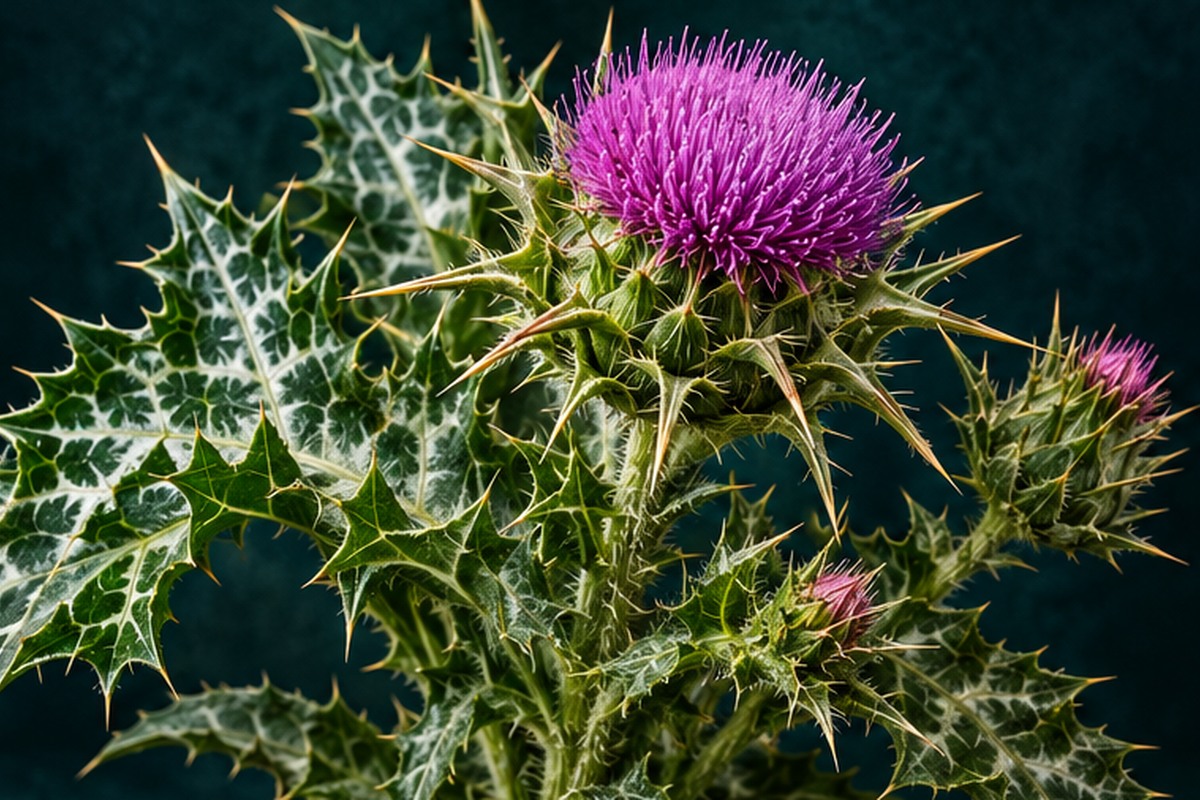
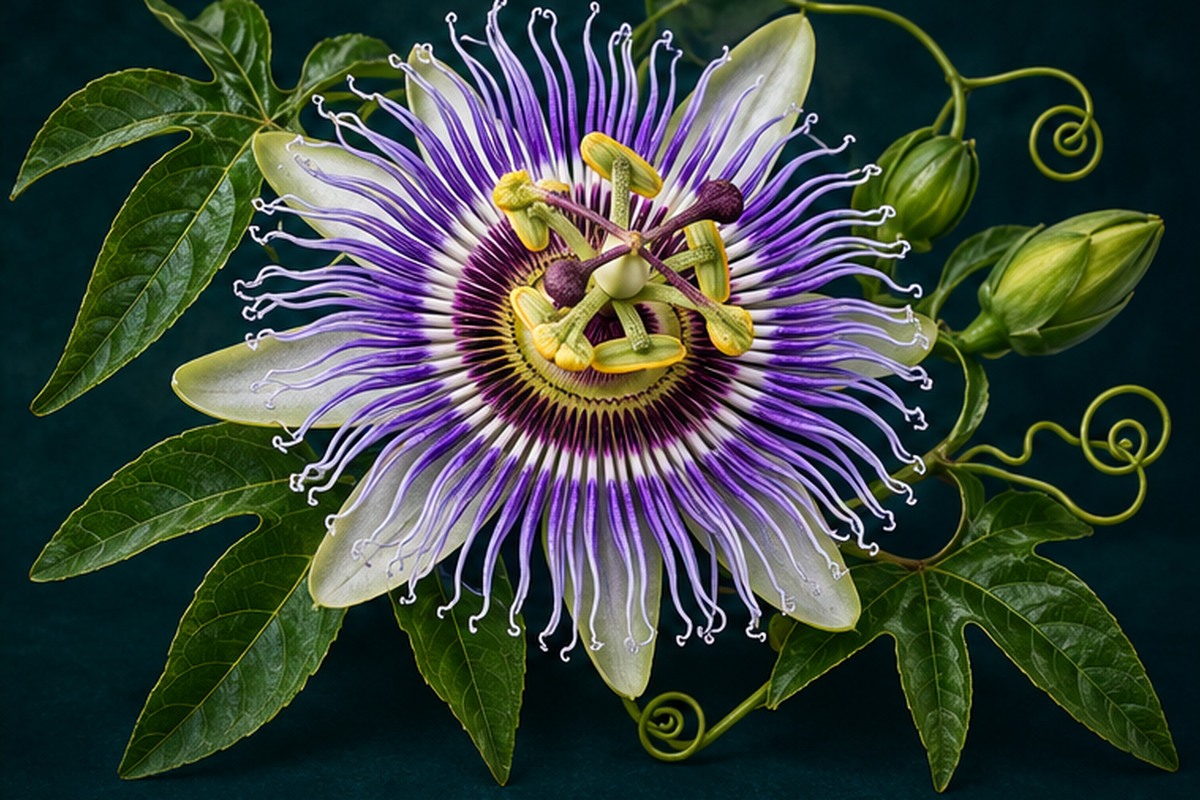
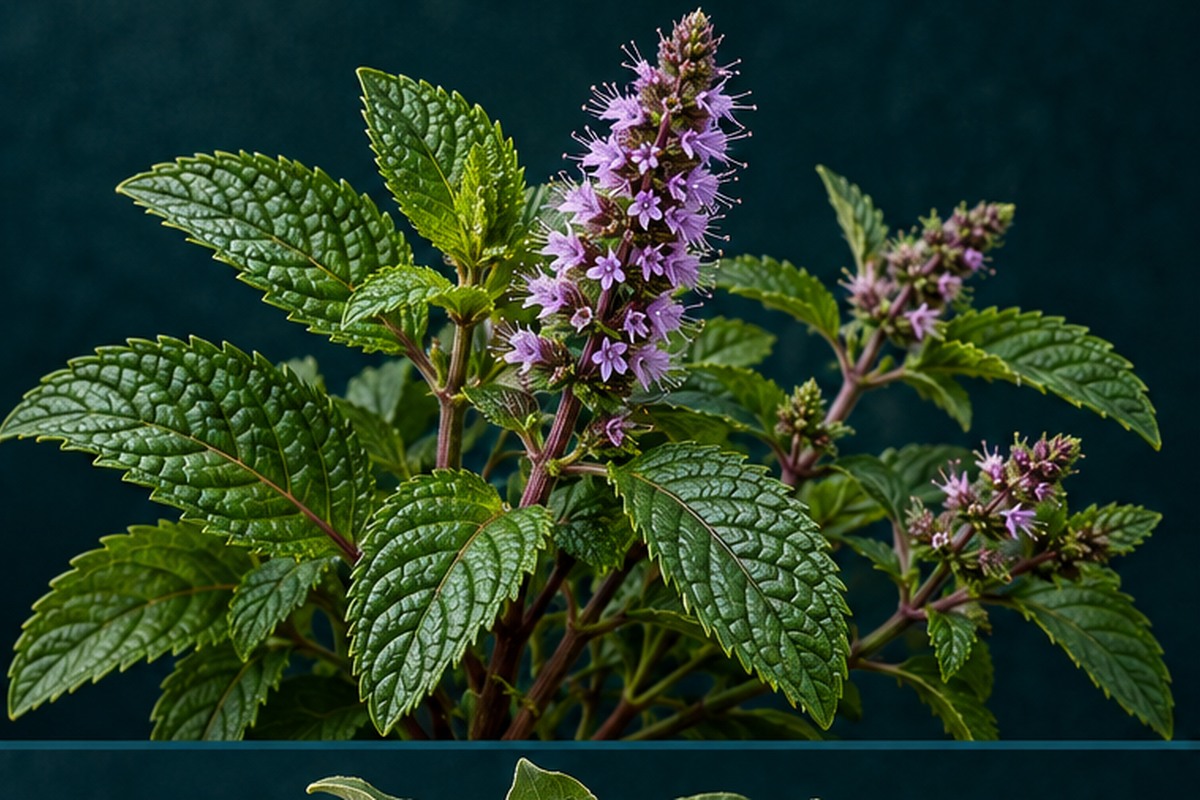
Source record: [1]

Check your progress

What to track

Track blood pressure and any swelling or weakness. Set a date to check how you feel. Write down each dose and any side effects. Keep a list of all drugs and herbs you use. Bring the label to your next visit. If it does not help, ask what to do next. A dose used in a study may not suit your product.

Source record: [1]

07
Open the source recordFederal references and literature links behind this profile.
Clinical source record

Linked references

Clinical summary reviewed October 1, 2026. Study doses describe the cited preparation; they are not interchangeable product recommendations. Counseling steps are MFCP clinical interpretation.

[1] National Center for Complementary and Integrative Health. Licorice Root: Usefulness and Safety. Open source ↗

[2] European Medicines Agency. Liquiritiae radix: herbal medicinal product record. Open source ↗

[3] National Center for Complementary and Integrative Health. Herb–Drug Interactions. Open source ↗

← Back to Natural Products & Botanicals
MFCP natural-product profile 10 of 40

Valerian

Valeriana officinalis L.
Caprifoliaceae

Control-chart classification: Sedative / sleep aid

Clinical evidence for insomnia is inconsistent. NCCIH notes that the American Academy of Sleep Medicine recommends against valerian for chronic insomnia. Short-term tolerability observations do not demonstrate effective treatment of a sleep disorder.

MFCP · BEYOND THE LABEL

A root with a reputation

Rats in folklore. Cats in research. A smell you already know.

RatsA Pied Piper tale puts valerian roots in his pockets.
CatsSome cats roll and rub against the root as they do with catnip.
Gym socksIsovaleric acid connects valerian chemistry with familiar foot odor.
Explore the stories & science →
01
Identify the productConfirm identity, preparation, and constituent language before interpreting evidence.
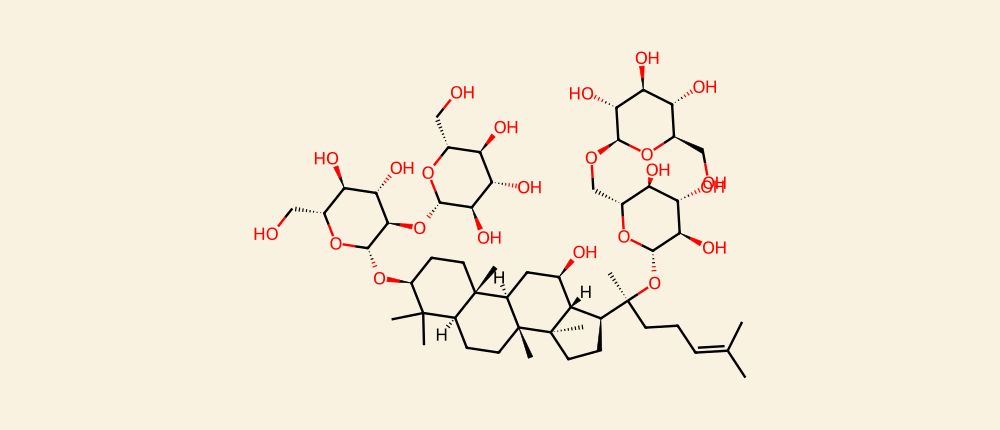
Botanical / product identity

Identity & preparation

Botanical / product
Valeriana officinalis L.
Family
Caprifoliaceae
Preparation cue
Root / rhizome / standardized extract
Marker constituent
Valerenic acid

Whole plant, tea, powder, tincture, oil, standardized extract, purified constituent, and combination products are not assumed to deliver the same exposure.
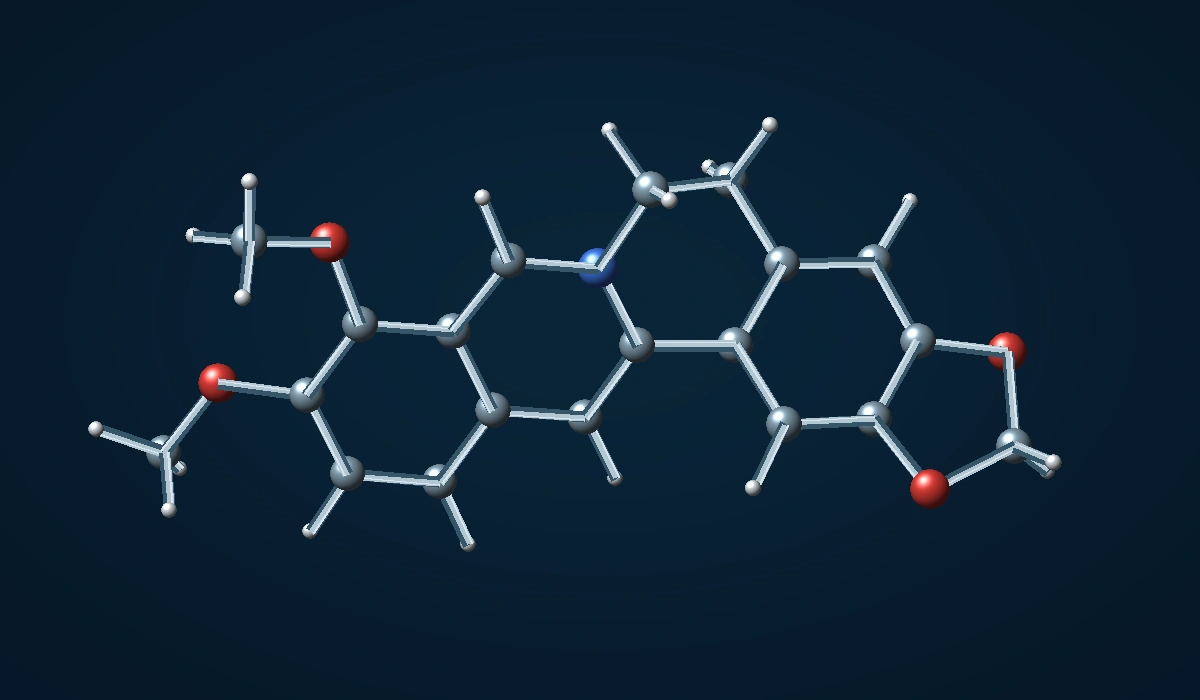
Constituent and mechanism

Chemistry & mechanism

Chemical class: Sesquiterpenoid carboxylic acid

Mechanistic context (laboratory or constituent data): GABA-A beta-subunit modulation; A1 adenosine effects

Mechanism language does not substitute for clinical outcome evidence.
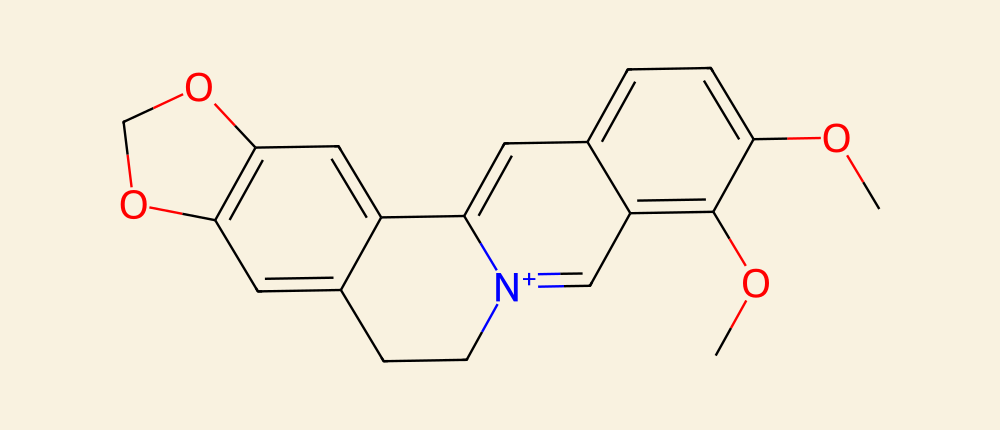
These proposed targets are mechanistic context. Their demonstration for a constituent does not establish the clinical effectiveness of a whole extract; use the evidence panel for patient outcomes.

02
History & curious factsRats, cats, wartime medicine, and the chemistry behind that unforgettable smell.
01 · Folklore

Pied Piper’s secret weapon?

Maud Grieve’s historical herbal repeats the suggestion that the Pied Piper hid valerian roots on his person to attract rats. It is a wonderfully memorable plant story—but a folklore explanation, not a verified event in medieval Hamelin.

Source record: [H1]

02 · Chemistry

The “dirty gym socks” connection

Isovaleric acid occurs in valerian-root preparations and is also a key contributor to foot odor. Skin bacteria can make it by breaking down leucine in sweat. The shared small molecule helps explain the familiar sweaty comparison; valerian’s whole aroma is a mixture, not one chemical.

Source record: [H2] · [H3]

03 · Animal behavior

A catnip cousin—with individual tastes

Valerian root can make some cats rub, roll, lick, and play in a catnip-like response. Studies identify actinidine among its cat-attracting compounds, but cats vary in what they respond to. Research does not establish that actinidine mimics facial pheromones or uses exactly the same receptors as catnip.

Source record: [H4] · [H5]

04 · Names & history

“All-heal,” “Phu,” and a disputed name

Older names include All-heal, Setwall, and Phu. Valere, meaning to be strong or well, is a familiar explanation for “valerian,” but its derivation is debated. The tale that Galen invented Phu as a disgust sound is best treated as a name-story, not a settled historical fact.

Source record: [H1] · [H12]

05 · Medical history

From wartime nerves to air-raid stress

Historical research describes valerian among calming medicines used for soldiers treated at Berlin’s Charité during World War I. NIH also records use in England for air-raid stress during World War II. Those records support wartime use; they do not establish a standardized, mass-issued trench ration or modern PTSD efficacy.

Source record: [H6] · [H7]

06 · Drug identity

Valium is not valerian

Valium is the brand for diazepam, a benzodiazepine introduced in 1963—not a valerian-root preparation. Similar names do not make them interchangeable. Both have connections to GABA signaling, but a shared neurotransmitter system does not make the herb and the prescription drug the same medicine.

Source record: [H8] · [H9]

07 · Laboratory finding

The GABA story: fascinating, still qualified

Laboratory experiments show that valerenic acid can modulate GABA-A receptors. Other experimental work suggests effects on GABA availability and breakdown. These are clues to possible activity, not proof that every valerian capsule reliably induces sleep or works like a benzodiazepine in a patient.

Source record: [H6] · [H9]

08 · Clinical curiosity

When a sleep herb leaves someone restless

Valerian can cause excitability, uneasiness, or vivid dreams instead of the expected calm. NCCIH lists these effects, but does not establish a 5–10% frequency or a terpene-clearance explanation. Worsening restlessness or sleep is a reason to stop and review the product—not increase it.

Source record: [H10]

09 · Agricultural tradition

Preparation 507: flowers on the compost

Biodynamic farming uses valerian flower juice or extract as Preparation 507 in compost management. The flower preparation is distinct from medicinal root. Phosphorus-related claims belong to that farming tradition; rapid earthworm attraction and a sulfur-bioaccumulation mechanism are not established by the cited preparation record.

Source record: [H11]

10 · Historical perspective

Ancient reputation, changing medical fashions

Valerian’s medicinal history reaches back to Greek and Roman accounts, and its uses changed across centuries. Historical sources discuss uses beyond sleep, including antispasmodic and epilepsy-related traditions. Old reputation is cultural history, not present-day proof of efficacy.

Source record: [H6] · [H12]

03
Preparation & dose recordResearch regimens describe specific products. OTC directions belong to the cited label.
Product distinctions

Match the preparation

Root or rhizomeTea, powdered root, tincture, and extracts are different preparations.
Standardized extractRecord extraction and marker content; a marker does not guarantee a sleep effect.
Sleep blendOther sedating ingredients prevent attribution to valerian alone.

Source record: [1]

Dose status

Studied exposure or labeled directions

No established effective insomnia dose is endorsed. NCCIH describes apparent short-term safety with 300–600 mg/day for up to six weeks, but this is a safety observation across studied preparations, not a universal therapeutic recommendation.

Source record: [1]

STRUCTURE RECORD

Molecular identity plates

Examine the selected constituent, then check the preparation and clinical evidence.

MOLECULAR IDENTITY · 01

Valerenic acid

PubChem CID 6440940 ↗

Representative valerian sesquiterpenoid; extract composition varies.

Formula
C15H22O2
Molar mass
234.34 g/mol
Exact mass
234.1620 Da
Charge / rings
+0 / 2
Atom stereocenters
3 defined
Computed three-dimensional ball-and-stick conformer of Valerenic acid
Computed conformer · Carbon: silver · Oxygen: red · Nitrogen: blue · Hydrogen: white · Sulfur: yellow
Descriptors apply to the molecule shown. RDKit drawings use the verified PubChem structure. The 3D view is a computed conformer, not an experimentally determined biological pose; some carbon-bound hydrogens are hidden on larger molecules for clarity.
04
Interpret the evidenceMatch the study to the exact preparation, dose, population, and outcome.
Clinical findings

Benefit, uncertainty, and negative findings

Clinical evidence for insomnia is inconsistent. NCCIH notes that the American Academy of Sleep Medicine recommends against valerian for chronic insomnia. Short-term tolerability observations do not demonstrate effective treatment of a sleep disorder.

Source record: [1]

Clinical interpretation

What this evidence does not establish

Chronic insomnia requires assessment of sleep apnea, mood, pain, medicines, and sleep habits. A sedating effect is not equivalent to improved restorative sleep. Long-term safety and product equivalence remain uncertain.

Source record: [1]

05
Check safetyReview contraindications, interactions, and preparation-specific risk.
Safety assessment

Avoid, stop, or seek care

Headache, gastrointestinal upset, mental dullness, and vivid dreams may occur. Withdrawal symptoms have been reported after abrupt cessation of prolonged use. Medicinal pregnancy and breastfeeding safety are uncertain.

Source record: [1]

Medication review

Interactions and evidence limits

Avoid combining with alcohol or other sedatives without review. Additive impairment is a practical concern with sleep medicines, opioids, or sedating antihistamines. Do not drive if drowsy; laboratory enzyme findings alone do not justify changing prescription doses.

Source record: [1] · [3]

06
Verify the labelMatch the exact marketed product to the evidence before counseling.
Label verification

MFCP label check

  • Exact common and scientific name
  • Plant part or source material when stated
  • Amount per serving and serving size
  • Extract ratio / standardization when stated
  • Marker-constituent amount when stated
  • Added ingredients and combination products
  • Warnings, directions, lot and expiration
  • Independent quality verification when available

MFCP rule: omit rather than invent. Do not infer an unstated standardization, constituent amount, plant part, or dosage form.

Evidence fit

Apply the evidence correctly

Evidence must match the actual preparation, dose, population, and outcome. A mechanism, traditional use, or constituent identity is not by itself proof of clinical benefit.

Clinical perspective Keep a sleep diary and record next-day function.
07
Counseling & follow-upHow to use the label, track symptoms, and know when to seek care.
Your plan

What to do

Keep a sleep diary. Write down how alert you feel the next day. Check all herbs in sleep blends. Do not keep raising the dose each night. Avoid alcohol or other drugs that make you sleepy unless your care team has checked the mix. Do not drive if sleepy. If you have used it for a long time, ask how to stop.

Source record: [1]

Check your progress

What to track

Track sleep, dreams, and next-day alertness. Set a date to check how you feel. Write down each dose and any side effects. Keep a list of all drugs and herbs you use. Bring the label to your next visit. If it does not help, ask what to do next. A dose used in a study may not suit your product.

Source record: [1]

08
Open the source recordFederal references and literature links behind this profile.
Clinical source record

Linked references

Clinical summary reviewed October 1, 2026. Study doses describe the cited preparation; they are not interchangeable product recommendations. Counseling steps are MFCP clinical interpretation.

[1] National Center for Complementary and Integrative Health. Valerian: Usefulness and Safety. Open source ↗

[2] Office of Dietary Supplements. Valerian: Health Professional Fact Sheet. Open source ↗

[3] National Center for Complementary and Integrative Health. Herb–Drug Interactions. Open source ↗

Stories & science

Historical and scientific references

Historical use and folklore describe a plant’s reputation. Clinical and laboratory findings answer different questions.

[H1] Grieve, M. (1931). A Modern Herbal: Valerian. Historical herbal and folklore record. Open source ↗

[H2] Safaralie, A., Fatemi, S., & Sefidkon, F. (2008). Essential oil composition of Valeriana officinalis L. roots cultivated in Iran. Comparative analysis between supercritical CO2 extraction and hydrodistillation. Journal of chromatography. A, 1180(1-2), 159-164. Open source ↗

[H3] Ara, K., Hama, M., Akiba, S., Koike, K., Okisaka, K., Hagura, T., Kamiya, T., & Tomita, F. (2006). Foot odor due to microbial metabolism and its control. Canadian journal of microbiology, 52(4), 357-364. Open source ↗

[H4] Bol, S., Caspers, J., Buckingham, L., Anderson-Shelton, G. D., Ridgway, C., Buffington, C. A., Schulz, S., & Bunnik, E. M. (2017). Responsiveness of cats (Felidae) to silver vine (Actinidia polygama), Tatarian honeysuckle (Lonicera tatarica), valerian (Valeriana officinalis) and catnip (Nepeta cataria). BMC veterinary research, 13(1), 70. Open source ↗

[H5] Bol, S., Scaffidi, A., Bunnik, E. M., & Flematti, G. R. (2022). Behavioral differences among domestic cats in the response to cat-attracting plants and their volatile compounds reveal a potential distinct mechanism of action for actinidine. BMC biology, 20(1), 192. Open source ↗

[H6] Office of Dietary Supplements. Valerian: Health Professional Fact Sheet. Open source ↗

[H7] German Battle Casualties: The Treatment of Functional Somatic Disorders during World War I. Historical medical research. Open source ↗

[H8] DailyMed. Valium: diazepam tablets. Drug label and marketing history. Open source ↗

[H9] Khom, S., Baburin, I., Timin, E., Hohaus, A., Trauner, G., Kopp, B., & Hering, S. (2007). Valerenic acid potentiates and inhibits GABA(A) receptors: molecular mechanism and subunit specificity. Neuropharmacology, 53(1), 178-187. Open source ↗

[H10] National Center for Complementary and Integrative Health. Valerian: Usefulness and Safety. Open source ↗

[H11] Tamil Nadu Agricultural University. BD 507 Valerian: documented biodynamic preparation. Open source ↗

[H12] Oakeley, H. Valeriana officinalis: historical medicinal-garden commentary. Wellcome Collection. Open source ↗

← Back to Natural Products & Botanicals
MFCP natural-product profile 11 of 40

Kava

Piper methysticum G.Forst.
Piperaceae

Control-chart classification: Anxiolytic

Some short-term anxiety trials were positive, but a larger 16-week generalized-anxiety trial did not support efficacy. Rare severe liver injury, including fatal cases, substantially changes the risk–benefit assessment. Kava is not a low-risk default anxiety treatment.

Kava botanical specimen artwork
01
Identify the productConfirm identity, preparation, and constituent language before interpreting evidence.
Botanical / product identity

Identity & preparation

Botanical / product
Piper methysticum G.Forst.
Family
Piperaceae
Preparation cue
Root / rhizome preparation or standardized extract
Marker constituent
Kavain (kavalactone)

Whole plant, tea, powder, tincture, oil, standardized extract, purified constituent, and combination products are not assumed to deliver the same exposure.

Constituent and mechanism

Chemistry & mechanism

Chemical class: alpha-Pyrone (kavalactone)

Mechanistic context (laboratory or constituent data): GABA-A modulation; Na/Ca-channel blockade; MAO-B inhibition

Mechanism language does not substitute for clinical outcome evidence.

These proposed targets are mechanistic context. Their demonstration for a constituent does not establish the clinical effectiveness of a whole extract; use the evidence panel for patient outcomes.

02
Preparation & dose recordResearch regimens describe specific products. OTC directions belong to the cited label.
Product distinctions

Match the preparation

Root extractKavalactone content is the relevant research specification.
Aqueous preparationWater extraction does not guarantee freedom from liver injury.
Alcoholic or acetone extractDifferent processing and composition; not interchangeable with another trial product.

Source record: [1]

Dose status

Studied exposure or labeled directions

Research examples: a six-week trial used 120 or 240 mg kavalactones/day; a later trial used 120 mg twice daily for 16 weeks. These are kavalactone amounts in specific extracts, not milligrams of root powder and not a recommended regimen.

Source record: [2] · [3]

STRUCTURE RECORD

Molecular identity plates

Examine the selected constituent, then check the preparation and clinical evidence.

MOLECULAR IDENTITY · 01

Kavain

PubChem CID 5281565 ↗

One kavalactone in a mixture; a molecule view does not establish extract safety.

Formula
C14H14O3
Molar mass
230.26 g/mol
Exact mass
230.0943 Da
Charge / rings
+0 / 2
Atom stereocenters
1 defined
Computed three-dimensional ball-and-stick conformer of Kavain
Computed conformer · Carbon: silver · Oxygen: red · Nitrogen: blue · Hydrogen: white · Sulfur: yellow
Descriptors apply to the molecule shown. RDKit drawings use the verified PubChem structure. The 3D view is a computed conformer, not an experimentally determined biological pose; some carbon-bound hydrogens are hidden on larger molecules for clarity.
03
Interpret the evidenceMatch the study to the exact preparation, dose, population, and outcome.
Clinical findings

Benefit, uncertainty, and negative findings

Some short-term anxiety trials were positive, but a larger 16-week generalized-anxiety trial did not support efficacy. Rare severe liver injury, including fatal cases, substantially changes the risk–benefit assessment. Kava is not a low-risk default anxiety treatment.

Source record: [1] · [2] · [3]

Primary evidence

Study record

Earlier trial: 75 enrolled; six weeksAqueous extract, 120 or 240 mg kavalactones/dayAnxiety reduction favored kava in the analyzed participants. Small samples and short follow-up limit conclusions.
Later trial: 171 participants; 16 weeksAqueous root extract, 120 mg kavalactones twice dailyAnxiety reduction did not differ significantly from placebo. Memory complaints, tremor, and liver-test abnormalities occurred more frequently with kava.

Source record: [1] · [2] · [3]

04
Check safetyReview contraindications, interactions, and preparation-specific risk.
Safety assessment

Avoid, stop, or seek care

Avoid use in liver disease or after suspected kava-associated injury. Stop and obtain assessment for jaundice, dark urine, persistent nausea, or marked fatigue. Sedation and impaired coordination may occur; heavy prolonged exposure can cause a characteristic skin disorder.

Source record: [1]

Medication review

Interactions and evidence limits

Do not combine with alcohol, benzodiazepines, or other sedatives without clinical oversight. Review other potentially hepatotoxic medicines. Routine laboratory monitoring cannot guarantee prevention of unpredictable liver injury.

Source record: [1] · [4]

05
Verify the labelMatch the exact marketed product to the evidence before counseling.
Label verification

MFCP label check

  • Exact common and scientific name
  • Plant part or source material when stated
  • Amount per serving and serving size
  • Extract ratio / standardization when stated
  • Marker-constituent amount when stated
  • Added ingredients and combination products
  • Warnings, directions, lot and expiration
  • Independent quality verification when available

MFCP rule: omit rather than invent. Do not infer an unstated standardization, constituent amount, plant part, or dosage form.

Evidence fit

Apply the evidence correctly

Evidence must match the actual preparation, dose, population, and outcome. A mechanism, traditional use, or constituent identity is not by itself proof of clinical benefit.

Clinical perspective Discuss established anxiety treatments before considering kava.
06
Counseling & follow-upHow to use the label, track symptoms, and know when to seek care.
Your plan

What to do

Ask about proven ways to treat anxiety before you try kava. Bring the label to your care team. Tell them about liver disease and alcohol use. Kava can harm the liver. Stop and get care for yellow skin, dark urine, nausea that lasts, or marked fatigue. Do not try it again after suspected liver harm. Avoid alcohol and other drugs that make you sleepy.

Source record: [1]

Check your progress

What to track

Track anxiety, daily tasks, sleepiness, and signs of liver harm. Set a date to check how you feel. Write down each dose and any side effects. Keep a list of all drugs and herbs you use. Bring the label to your next visit. If it does not help, ask what to do next. A dose used in a study may not suit your product.

Source record: [1]

07
Open the source recordFederal references and literature links behind this profile.
Clinical source record

Linked references

Clinical summary reviewed October 1, 2026. Study doses describe the cited preparation; they are not interchangeable product recommendations. Counseling steps are MFCP clinical interpretation.

[1] National Center for Complementary and Integrative Health. Kava: Usefulness and Safety. Open source ↗

[2] Sarris J, Stough C, Bousman CA, Wahid ZT, Murray G, Teschke R, Savage KM, Dowell A, Ng C, Schweitzer I. (2013). Kava in the treatment of generalized anxiety disorder: a double-blind, randomized, placebo-controlled study. Journal of clinical psychopharmacology Open source ↗

[3] Sarris J, Byrne GJ, Bousman CA, Cribb L, Savage KM, Holmes O, Murphy J, Macdonald P, Short A, Nazareth S, Jennings E, Thomas SR, Ogden E, Chamoli S, Scholey A, Stough C. (2020). Kava for generalised anxiety disorder: A 16-week double-blind, randomised, placebo-controlled study. The Australian and New Zealand journal of psychiatry Open source ↗

[4] National Center for Complementary and Integrative Health. Herb–Drug Interactions. Open source ↗

← Back to Natural Products & Botanicals
MFCP natural-product profile 32 of 40

Passionflower

Passiflora incarnata L.
Passifloraceae

Control-chart classification: Anxiolytic / sleep

A small four-week pilot compared passionflower extract with oxazepam for generalized anxiety. It is insufficient to establish equivalent efficacy, a standard clinical dose, or long-term treatment benefit. Evidence for sleep outcomes remains limited.

Passionflower botanical specimen artwork
01
Identify the productConfirm identity, preparation, and constituent language before interpreting evidence.
Botanical / product identity

Identity & preparation

Botanical / product
Passiflora incarnata L.
Family
Passifloraceae
Preparation cue
Aerial parts / tea / extract
Marker constituent
Chrysin + C-glycosyl flavones (vitexin)

Whole plant, tea, powder, tincture, oil, standardized extract, purified constituent, and combination products are not assumed to deliver the same exposure.

Constituent and mechanism

Chemistry & mechanism

Chemical class: Flavone / C-glycosylflavones

Mechanistic context (laboratory or constituent data): GABA-A modulation

Mechanism language does not substitute for clinical outcome evidence.

These proposed targets are mechanistic context. Their demonstration for a constituent does not establish the clinical effectiveness of a whole extract; use the evidence panel for patient outcomes.

02
Preparation & dose recordResearch regimens describe specific products. OTC directions belong to the cited label.
Product distinctions

Match the preparation

Passiflora incarnata aerial partsCorrect species matters; ornamental plants are not substitutes.
Liquid extractDrop count depends on the product and cannot be converted without concentration data.
Sedative blendCombined herbs obscure attribution and may increase impairment.

Source record: [1]

Dose status

Studied exposure or labeled directions

Research regimen: 45 drops/day of a particular liquid extract for four weeks in a 36-person pilot. The concentration and product are essential; 45 drops of any passionflower tincture is not an equivalent dose.

Source record: [2]

STRUCTURE RECORD

Molecular identity plates

Examine the selected constituent, then check the preparation and clinical evidence.

MOLECULAR IDENTITY · 01

Vitexin

PubChem CID 5280441 ↗

Representative C-glycosyl flavone; not a unique proven active ingredient for every passionflower product.

Formula
C21H20O10
Molar mass
432.38 g/mol
Exact mass
432.1056 Da
Charge / rings
+0 / 4
Atom stereocenters
5 defined
Computed three-dimensional ball-and-stick conformer of Vitexin
Computed conformer · Carbon: silver · Oxygen: red · Nitrogen: blue · Hydrogen: white · Sulfur: yellow
Descriptors apply to the molecule shown. RDKit drawings use the verified PubChem structure. The 3D view is a computed conformer, not an experimentally determined biological pose; some carbon-bound hydrogens are hidden on larger molecules for clarity.
03
Interpret the evidenceMatch the study to the exact preparation, dose, population, and outcome.
Clinical findings

Benefit, uncertainty, and negative findings

A small four-week pilot compared passionflower extract with oxazepam for generalized anxiety. It is insufficient to establish equivalent efficacy, a standard clinical dose, or long-term treatment benefit. Evidence for sleep outcomes remains limited.

Source record: [1] · [2]

Primary evidence

Study record

36 outpatients with generalized anxiety; four weeksSpecific extract 45 drops/day versus oxazepam 30 mg/dayBoth groups improved and no significant final difference was detected. A small active-comparator pilot without a placebo-only group does not prove equivalence or an established therapeutic dose.

Source record: [1] · [2]

04
Check safetyReview contraindications, interactions, and preparation-specific risk.
Safety assessment

Avoid, stop, or seek care

Drowsiness, dizziness, confusion, and impaired coordination can occur. Avoid medicinal use in pregnancy because of concerns about uterine effects. Breastfeeding safety is uncertain. Tell the procedural team about use before anesthesia or surgery.

Source record: [1]

Medication review

Interactions and evidence limits

Additive sedation is a concern with alcohol, benzodiazepines, sleep medicines, opioids, and anesthetic drugs. Interaction magnitude is not established for every preparation. A clinician should determine perioperative management.

Source record: [1] · [3]

05
Verify the labelMatch the exact marketed product to the evidence before counseling.
Label verification

MFCP label check

  • Exact common and scientific name
  • Plant part or source material when stated
  • Amount per serving and serving size
  • Extract ratio / standardization when stated
  • Marker-constituent amount when stated
  • Added ingredients and combination products
  • Warnings, directions, lot and expiration
  • Independent quality verification when available

MFCP rule: omit rather than invent. Do not infer an unstated standardization, constituent amount, plant part, or dosage form.

Evidence fit

Apply the evidence correctly

Evidence must match the actual preparation, dose, population, and outcome. A mechanism, traditional use, or constituent identity is not by itself proof of clinical benefit.

Clinical perspective Record the exact liquid strength and all sedating ingredients.
06
Counseling & follow-upHow to use the label, track symptoms, and know when to seek care.
Your plan

What to do

Check the strength of the liquid and all herbs in the blend. Track anxiety and how alert you feel. Do not drive if it makes you sleepy or dizzy. Do not replace your prescribed care or raise the dose of an unknown extract. Do not use it while pregnant. Tell your care team before surgery.

Source record: [1]

Check your progress

What to track

Track anxiety, alertness, and daily tasks. Set a date to check how you feel. Write down each dose and any side effects. Keep a list of all drugs and herbs you use. Bring the label to your next visit. If it does not help, ask what to do next. A dose used in a study may not suit your product.

Source record: [1]

07
Open the source recordFederal references and literature links behind this profile.
Clinical source record

Linked references

Clinical summary reviewed October 1, 2026. Study doses describe the cited preparation; they are not interchangeable product recommendations. Counseling steps are MFCP clinical interpretation.

[1] National Center for Complementary and Integrative Health. Passionflower: Usefulness and Safety. Open source ↗

[2] Akhondzadeh S, Naghavi HR, Vazirian M, Shayeganpour A, Rashidi H, Khani M. (2001). Passionflower in the treatment of generalized anxiety: a pilot double-blind randomized controlled trial with oxazepam. Journal of clinical pharmacy and therapeutics Open source ↗

[3] National Center for Complementary and Integrative Health. Herb–Drug Interactions. Open source ↗

← Back to Natural Products & Botanicals
MFCP natural-product profile 19 of 40

Ashwagandha

Withania somnifera (L.) Dunal
Solanaceae

Control-chart classification: Adaptogen / anxiolytic

Some small trials suggest improvement in stress or sleep with selected extracts. Anxiety findings are less certain, and studies do not establish treatment for every stress-related disorder. Marketing terms such as adaptogen do not identify a proven clinical outcome.

Ashwagandha botanical specimen artwork
01
Identify the productConfirm identity, preparation, and constituent language before interpreting evidence.
Botanical / product identity

Identity & preparation

Botanical / product
Withania somnifera (L.) Dunal
Family
Solanaceae
Preparation cue
Root / standardized extract
Marker constituent
Withaferin A / withanolides

Whole plant, tea, powder, tincture, oil, standardized extract, purified constituent, and combination products are not assumed to deliver the same exposure.

Constituent and mechanism

Chemistry & mechanism

Chemical class: Steroidal lactone (withanolide)

Mechanistic context (laboratory or constituent data): GABA-mimetic; Hsp90/NF-kB modulation; HPA-axis attenuation

Mechanism language does not substitute for clinical outcome evidence.

These proposed targets are mechanistic context. Their demonstration for a constituent does not establish the clinical effectiveness of a whole extract; use the evidence panel for patient outcomes.

02
Preparation & dose recordResearch regimens describe specific products. OTC directions belong to the cited label.
Product distinctions

Match the preparation

Root extractThe preparation used in several stress studies.
Root-and-leaf extractDifferent composition and withanolide exposure; assess separately.
Whole herb powderGram-level powder is not equivalent to milligrams of a concentrated extract.

Source record: [1]

Dose status

Studied exposure or labeled directions

Research regimen: a characterized root extract 300 mg twice daily for 60 days in a 64-participant stress trial. This does not validate every 600 mg/day product or a root-and-leaf preparation.

Source record: [2]

STRUCTURE RECORD

Molecular identity plates

Examine the selected constituent, then check the preparation and clinical evidence.

MOLECULAR IDENTITY · 01

Withaferin A

PubChem CID 265237 ↗

One withanolide; root, leaf and extract constituent profiles differ.

Formula
C28H38O6
Molar mass
470.61 g/mol
Exact mass
470.2668 Da
Charge / rings
+0 / 6
Atom stereocenters
11 defined
Computed three-dimensional ball-and-stick conformer of Withaferin A
Computed conformer · Carbon: silver · Oxygen: red · Nitrogen: blue · Hydrogen: white · Sulfur: yellow
Descriptors apply to the molecule shown. RDKit drawings use the verified PubChem structure. The 3D view is a computed conformer, not an experimentally determined biological pose; some carbon-bound hydrogens are hidden on larger molecules for clarity.
03
Interpret the evidenceMatch the study to the exact preparation, dose, population, and outcome.
Clinical findings

Benefit, uncertainty, and negative findings

Some small trials suggest improvement in stress or sleep with selected extracts. Anxiety findings are less certain, and studies do not establish treatment for every stress-related disorder. Marketing terms such as adaptogen do not identify a proven clinical outcome.

Source record: [1] · [2]

Primary evidence

Study record

64 adults reporting chronic stress; 60 daysCharacterized root extract 300 mg twice daily versus placeboStress-scale scores and cortisol improved more with extract. This single-center trial evaluates stress measures, not long-term remission of an anxiety disorder.

Source record: [1] · [2]

04
Check safetyReview contraindications, interactions, and preparation-specific risk.
Safety assessment

Avoid, stop, or seek care

Gastrointestinal effects and drowsiness occur; rare liver injury has been reported. Avoid during pregnancy and breastfeeding. NCCIH advises against use in people with autoimmune or thyroid disorders; hormone-sensitive prostate cancer also warrants avoidance and specialist review.

Source record: [1]

Medication review

Interactions and evidence limits

Review thyroid hormone, immunosuppressants, sedatives, antiseizure medicines, and blood-pressure or glucose-lowering therapy. These are review triggers, not automatic prescription dose changes. Symptoms of thyroid excess or liver injury require assessment.

Source record: [1] · [3]

05
Verify the labelMatch the exact marketed product to the evidence before counseling.
Label verification

MFCP label check

  • Exact common and scientific name
  • Plant part or source material when stated
  • Amount per serving and serving size
  • Extract ratio / standardization when stated
  • Marker-constituent amount when stated
  • Added ingredients and combination products
  • Warnings, directions, lot and expiration
  • Independent quality verification when available

MFCP rule: omit rather than invent. Do not infer an unstated standardization, constituent amount, plant part, or dosage form.

Evidence fit

Apply the evidence correctly

Evidence must match the actual preparation, dose, population, and outcome. A mechanism, traditional use, or constituent identity is not by itself proof of clinical benefit.

Clinical perspective Define a specific stress or sleep outcome and review date.
06
Counseling & follow-upHow to use the label, track symptoms, and know when to seek care.
Your plan

What to do

Set a clear goal for stress or sleep. Bring the label to your care team. Tell them if you have thyroid, immune, or liver disease. Do not use it while pregnant or nursing. Check for clashes with your drugs before use. Stop and get care for yellow skin, marked stomach upset, or a racing heart.

Source record: [1]

Check your progress

What to track

Track stress, sleep, stomach upset, and new symptoms. Set a date to check how you feel. Write down each dose and any side effects. Keep a list of all drugs and herbs you use. Bring the label to your next visit. If it does not help, ask what to do next. A dose used in a study may not suit your product.

Source record: [1]

07
Open the source recordFederal references and literature links behind this profile.
Clinical source record

Linked references

Clinical summary reviewed October 1, 2026. Study doses describe the cited preparation; they are not interchangeable product recommendations. Counseling steps are MFCP clinical interpretation.

[1] National Center for Complementary and Integrative Health. Ashwagandha: Usefulness and Safety. Open source ↗

[2] Chandrasekhar K, Kapoor J, Anishetty S. (2012). A prospective, randomized double-blind, placebo-controlled study of safety and efficacy of a high-concentration full-spectrum extract of ashwagandha root in reducing stress and anxiety in adults. Indian journal of psychological medicine Open source ↗

[3] National Center for Complementary and Integrative Health. Herb–Drug Interactions. Open source ↗

← Back to Natural Products & Botanicals
MFCP natural-product profile 20 of 40

Rhodiola

Rhodiola rosea L.
Crassulaceae

Control-chart classification: Adaptogen (fatigue / stress)

NCCIH concludes that reliable evidence is insufficient to determine benefit for any health purpose. Small depression and fatigue studies are exploratory. A short trial of SHR-5 does not establish equivalence to an antidepressant or treatment for persistent unexplained fatigue.

Rhodiola botanical specimen artwork
01
Identify the productConfirm identity, preparation, and constituent language before interpreting evidence.
Botanical / product identity

Identity & preparation

Botanical / product
Rhodiola rosea L.
Family
Crassulaceae
Preparation cue
Root / standardized extract
Marker constituent
Salidroside + rosavins

Whole plant, tea, powder, tincture, oil, standardized extract, purified constituent, and combination products are not assumed to deliver the same exposure.

Constituent and mechanism

Chemistry & mechanism

Chemical class: Phenylethanoid / phenylpropanoid glycosides

Mechanistic context (laboratory or constituent data): Monoamine modulation; HPA / stress-response attenuation

Mechanism language does not substitute for clinical outcome evidence.

These proposed targets are mechanistic context. Their demonstration for a constituent does not establish the clinical effectiveness of a whole extract; use the evidence panel for patient outcomes.

02
Preparation & dose recordResearch regimens describe specific products. OTC directions belong to the cited label.
Product distinctions

Match the preparation

Rhodiola rosea root or rhizomeSpecies and plant part should be explicit.
SHR-5 extractA specific research preparation.
Other Rhodiola species or blendsResearch cannot be transferred solely because the name is similar.

Source record: [1]

Dose status

Studied exposure or labeled directions

Research regimen: SHR-5 340 or 680 mg/day for six weeks in a trial of mild to moderate depression. This is a study exposure, not an established antidepressant dose or an endorsement of uncharacterized capsules.

Source record: [2] · [3]

STRUCTURE RECORD

Molecular identity plates

Examine the selected constituent, then check the preparation and clinical evidence.

MOLECULAR IDENTITY · 01

Salidroside

PubChem CID 159278 ↗

One rhodiola marker; salidroside and rosavins are different chemical measures.

Formula
C14H20O7
Molar mass
300.31 g/mol
Exact mass
300.1209 Da
Charge / rings
+0 / 2
Atom stereocenters
5 defined
Computed three-dimensional ball-and-stick conformer of Salidroside
Computed conformer · Carbon: silver · Oxygen: red · Nitrogen: blue · Hydrogen: white · Sulfur: yellow
Descriptors apply to the molecule shown. RDKit drawings use the verified PubChem structure. The 3D view is a computed conformer, not an experimentally determined biological pose; some carbon-bound hydrogens are hidden on larger molecules for clarity.
03
Interpret the evidenceMatch the study to the exact preparation, dose, population, and outcome.
Clinical findings

Benefit, uncertainty, and negative findings

NCCIH concludes that reliable evidence is insufficient to determine benefit for any health purpose. Small depression and fatigue studies are exploratory. A short trial of SHR-5 does not establish equivalence to an antidepressant or treatment for persistent unexplained fatigue.

Source record: [1] · [2] · [3]

Primary evidence

Study record

89 participants with mild to moderate depression; six weeksSHR-5 340 or 680 mg/day versus placeboDepression measures improved in the active groups in this small study.
57 participants with major depression; 12 weeksStandardized rhodiola, sertraline, or placeboBetween-group changes in depression scales were not statistically significant. Fewer adverse events with rhodiola do not establish equivalent antidepressant efficacy.

Source record: [1] · [2] · [3]

04
Check safetyReview contraindications, interactions, and preparation-specific risk.
Safety assessment

Avoid, stop, or seek care

Headache, dizziness, insomnia, and dry mouth or increased salivation can occur. Medicinal pregnancy and breastfeeding safety is uncertain. Worsening agitation or sleep disturbance should prompt discontinuation and review.

Source record: [1]

Medication review

Interactions and evidence limits

An interaction with losartan has been reported. Review psychiatric and cardiovascular medicines individually; do not treat laboratory interaction predictions as proven clinical effects or add rhodiola to an antidepressant without assessment.

Source record: [1] · [4]

05
Verify the labelMatch the exact marketed product to the evidence before counseling.
Label verification

MFCP label check

  • Exact common and scientific name
  • Plant part or source material when stated
  • Amount per serving and serving size
  • Extract ratio / standardization when stated
  • Marker-constituent amount when stated
  • Added ingredients and combination products
  • Warnings, directions, lot and expiration
  • Independent quality verification when available

MFCP rule: omit rather than invent. Do not infer an unstated standardization, constituent amount, plant part, or dosage form.

Evidence fit

Apply the evidence correctly

Evidence must match the actual preparation, dose, population, and outcome. A mechanism, traditional use, or constituent identity is not by itself proof of clinical benefit.

Clinical perspective Confirm the species and preparation, and avoid late-day use if sleep worsens.
06
Counseling & follow-upHow to use the label, track symptoms, and know when to seek care.
Your plan

What to do

Check the plant name and type of extract. Do not take it late in the day if it keeps you awake. Track mood or fatigue with a clear goal. Do not keep adding herbs or raising doses if it does not help. Get care for low mood or fatigue that lasts or disrupts your day. Check your drugs with your care team first.

Source record: [1]

Check your progress

What to track

Track fatigue, mood, and sleep. Set a date to check how you feel. Write down each dose and any side effects. Keep a list of all drugs and herbs you use. Bring the label to your next visit. If it does not help, ask what to do next. A dose used in a study may not suit your product.

Source record: [1]

07
Open the source recordFederal references and literature links behind this profile.
Clinical source record

Linked references

Clinical summary reviewed October 1, 2026. Study doses describe the cited preparation; they are not interchangeable product recommendations. Counseling steps are MFCP clinical interpretation.

[1] National Center for Complementary and Integrative Health. Rhodiola: Usefulness and Safety. Open source ↗

[2] Darbinyan V, Aslanyan G, Amroyan E, Gabrielyan E, Malmström C, Panossian A. (2007). Clinical trial of Rhodiola rosea L. extract SHR-5 in the treatment of mild to moderate depression. Nordic journal of psychiatry Open source ↗

[3] Mao JJ, Xie SX, Zee J, Soeller I, Li QS, Rockwell K, Amsterdam JD. (2015). Rhodiola rosea versus sertraline for major depressive disorder: A randomized placebo-controlled trial. Phytomedicine : international journal of phytotherapy and phytopharmacology Open source ↗

[4] National Center for Complementary and Integrative Health. Herb–Drug Interactions. Open source ↗

← Back to Natural Products & Botanicals
MFCP natural-product profile 07 of 40

St. John’s Wort

Hypericum perforatum L.
Hypericaceae

Control-chart classification: Antidepressant (mild–moderate)

Some extracts have evidence for mild to moderate depression, but results are not consistent across severity and studies. A 340-participant major-depression trial found no benefit over placebo on its primary outcomes. The guide does not recommend self-diagnosis or unsupervised substitution for prescribed treatment.

St Johns Wort botanical specimen artwork
01
Identify the productConfirm identity, preparation, and constituent language before interpreting evidence.
Botanical / product identity

Identity & preparation

Botanical / product
Hypericum perforatum L.
Family
Hypericaceae
Preparation cue
Aerial parts / standardized extract
Marker constituent
Hyperforin; hypericin

Whole plant, tea, powder, tincture, oil, standardized extract, purified constituent, and combination products are not assumed to deliver the same exposure.

Constituent and mechanism

Chemistry & mechanism

Chemical class: Phloroglucinol (hyperforin) + naphthodianthrone (hypericin)

Mechanistic context (laboratory or constituent data): Nonselective monoamine reuptake inhibition; hyperforin = potent PXR (NR1I2) agonist -> CYP3A4/P-gp induction

Mechanism language does not substitute for clinical outcome evidence.

These proposed targets are mechanistic context. Their demonstration for a constituent does not establish the clinical effectiveness of a whole extract; use the evidence panel for patient outcomes.

02
Preparation & dose recordResearch regimens describe specific products. OTC directions belong to the cited label.
Product distinctions

Match the preparation

Hypericum perforatum extractHyperforin, hypericin, and extraction vary substantially.
Low-hyperforin productDoes not justify assuming the complete interaction risk has disappeared.
Tea or topical preparationClinical antidepressant findings cannot be transferred automatically.

Source record: [1]

Dose status

Studied exposure or labeled directions

Research example: 900–1,500 mg/day of a specified extract for eight weeks in the negative major-depression trial. This is not a recommended dose; different products and hyperforin content can produce different drug-interaction exposures.

Source record: [2]

STRUCTURE RECORD

Molecular identity plates

Examine the selected constituent, then check the preparation and clinical evidence.

MOLECULAR IDENTITY · 01

Hyperforin

PubChem CID 441298 ↗

One St. John’s wort constituent; extract content varies.

Formula
C35H52O4
Molar mass
536.80 g/mol
Exact mass
536.3866 Da
Charge / rings
+0 / 2
Atom stereocenters
4 defined
Computed three-dimensional ball-and-stick conformer of Hyperforin
Computed conformer · Carbon: silver · Oxygen: red · Nitrogen: blue · Hydrogen: white · Sulfur: yellow
Descriptors apply to the molecule shown. RDKit drawings use the verified PubChem structure. The 3D view is a computed conformer, not an experimentally determined biological pose; some carbon-bound hydrogens are hidden on larger molecules for clarity.
MOLECULAR IDENTITY · 02

Hypericin

PubChem CID 3663 ↗

A chemically distinct constituent; not a substitute for hyperforin or the complete extract.

Formula
C30H16O8
Molar mass
504.45 g/mol
Exact mass
504.0845 Da
Charge / rings
+0 / 8
Atom stereocenters
0 defined
Computed three-dimensional ball-and-stick conformer of Hypericin
Computed conformer · Carbon: silver · Oxygen: red · Nitrogen: blue · Hydrogen: white · Sulfur: yellow
Descriptors apply to the molecule shown. RDKit drawings use the verified PubChem structure. The 3D view is a computed conformer, not an experimentally determined biological pose; some carbon-bound hydrogens are hidden on larger molecules for clarity.
03
Interpret the evidenceMatch the study to the exact preparation, dose, population, and outcome.
Clinical findings

Benefit, uncertainty, and negative findings

Some extracts have evidence for mild to moderate depression, but results are not consistent across severity and studies. A 340-participant major-depression trial found no benefit over placebo on its primary outcomes. The guide does not recommend self-diagnosis or unsupervised substitution for prescribed treatment.

Source record: [1] · [2]

Primary evidence

Study record

340 adults with moderately severe major depression; eight weeksLI-160 900–1,500 mg/day, sertraline, or placeboNeither active treatment significantly outperformed placebo on the two primary outcomes. Limited assay sensitivity is a study limitation; the result does not establish benefit from the extract.

Source record: [1] · [2]

04
Check safetyReview contraindications, interactions, and preparation-specific risk.
Safety assessment

Avoid, stop, or seek care

Photosensitivity, gastrointestinal effects, restlessness, and other adverse effects may occur. Pregnancy and breastfeeding use is discouraged. New agitation, mood elevation, or suicidal thinking requires prompt clinical assessment.

Source record: [1]

Medication review

Interactions and evidence limits

Clinically important enzyme and P-glycoprotein induction can reduce exposure to transplant drugs, some HIV drugs, hormonal contraceptives, warfarin, digoxin, and many others. Combining with serotonergic medicines can cause serious toxicity. A complete medication review is essential before initiation or withdrawal.

Source record: [1] · [3]

05
Verify the labelMatch the exact marketed product to the evidence before counseling.
Label verification

MFCP label check

  • Exact common and scientific name
  • Plant part or source material when stated
  • Amount per serving and serving size
  • Extract ratio / standardization when stated
  • Marker-constituent amount when stated
  • Added ingredients and combination products
  • Warnings, directions, lot and expiration
  • Independent quality verification when available

MFCP rule: omit rather than invent. Do not infer an unstated standardization, constituent amount, plant part, or dosage form.

Evidence fit

Apply the evidence correctly

Evidence must match the actual preparation, dose, population, and outcome. A mechanism, traditional use, or constituent identity is not by itself proof of clinical benefit.

Clinical perspective Include contraceptives and nonprescription medicines in the review.
06
Counseling & follow-upHow to use the label, track symptoms, and know when to seek care.
Your plan

What to do

This herb can change how many drugs work. Tell your care team about all drugs, birth control, and herbs you use. Do not add it to a drug for depression on your own. Do not stop prescribed care on your own. Ask for a plan before you start or stop this herb. Get urgent help for new thoughts of self-harm or severe mood changes.

Source record: [1]

Check your progress

What to track

Track mood, sleep, and drug changes with your care team. Set a date to check how you feel. Write down each dose and any side effects. Keep a list of all drugs and herbs you use. Bring the label to your next visit. If it does not help, ask what to do next. A dose used in a study may not suit your product.

Source record: [1]

07
Open the source recordFederal references and literature links behind this profile.
Clinical source record

Linked references

Clinical summary reviewed October 1, 2026. Study doses describe the cited preparation; they are not interchangeable product recommendations. Counseling steps are MFCP clinical interpretation.

[1] National Center for Complementary and Integrative Health. St. John’s Wort: Usefulness and Safety. Open source ↗

[2] Hypericum Depression Trial Study Group, Davidson JR, Gadde KM, Fairbank JA, Krishnan KRR, Califf RM, Binanay C, Parker CB, Pugh N, Hartwell TD, Vitiello B, Ritz L, Severe J, Cole JO, de Battista C, Doraiswamy PM, Feighner JP, Keck P, Kelsey J, Lin KM, Londborg PD, Nemeroff CB, Schatzberg AF, Sheehan DV, Srivastava RK, Taylor L, Trivedi MH, Weisler RH. (2002). Effect of Hypericum perforatum (St John's wort) in major depressive disorder: a randomized controlled trial. JAMA Open source ↗

[3] National Center for Complementary and Integrative Health. Herb–Drug Interactions. Open source ↗

← Back to Natural Products & Botanicals
MFCP natural-product profile 03 of 40

Echinacea

Echinacea purpurea (L.) Moench
Asteraceae

Control-chart classification: Immunostimulant (URTI)

Some evidence suggests a small reduction in cold risk, but treatment effects on duration or severity are uncertain. A 719-participant trial did not find a statistically significant improvement in its primary cold outcomes. It is not a substitute for evaluation of serious respiratory illness.

Echinacea botanical specimen artwork
01
Identify the productConfirm identity, preparation, and constituent language before interpreting evidence.
Botanical / product identity

Identity & preparation

Botanical / product
Echinacea purpurea (L.) Moench
Family
Asteraceae
Preparation cue
Aerial parts and/or root; species- and preparation-specific
Marker constituent
Dodeca-2E,4E-dienoic acid isobutylamide / echinoric acid / polysaccharides

Whole plant, tea, powder, tincture, oil, standardized extract, purified constituent, and combination products are not assumed to deliver the same exposure.

Constituent and mechanism

Chemistry & mechanism

Chemical class: Alkylamides + phenylpropanoids + polysaccharides

Mechanistic context (laboratory or constituent data): Alkylamides bind cannabinoid CB2 receptor; innate-immune modulation

Mechanism language does not substitute for clinical outcome evidence.

These proposed targets are mechanistic context. Their demonstration for a constituent does not establish the clinical effectiveness of a whole extract; use the evidence panel for patient outcomes.

02
Preparation & dose recordResearch regimens describe specific products. OTC directions belong to the cited label.
Product distinctions

Match the preparation

E. purpurea, E. angustifolia, or E. pallidaSpecies are not interchangeable.
Aerial parts or rootPlant part and extraction affect composition.
Juice, tincture, or dry extractA single capsule mass does not specify a common clinical exposure.

Source record: [1]

Dose status

Studied exposure or labeled directions

No universal cold-treatment dose is established. The preparation, species, plant part, and timing differed across trials. This guide does not transform a study of one combined extract into a dose for every echinacea product.

Source record: [2]

STRUCTURE RECORD

Molecular identity plates

Examine the selected constituent, then check the preparation and clinical evidence.

MOLECULAR IDENTITY · 01

Chicoric acid

PubChem CID 5281764 ↗

Representative phenolic marker, particularly relevant to Echinacea purpurea; other species and plant parts differ.

Formula
C22H18O12
Molar mass
474.37 g/mol
Exact mass
474.0798 Da
Charge / rings
+0 / 2
Atom stereocenters
2 defined
Computed three-dimensional ball-and-stick conformer of Chicoric acid
Computed conformer · Carbon: silver · Oxygen: red · Nitrogen: blue · Hydrogen: white · Sulfur: yellow
Descriptors apply to the molecule shown. RDKit drawings use the verified PubChem structure. The 3D view is a computed conformer, not an experimentally determined biological pose; some carbon-bound hydrogens are hidden on larger molecules for clarity.
03
Interpret the evidenceMatch the study to the exact preparation, dose, population, and outcome.
Clinical findings

Benefit, uncertainty, and negative findings

Some evidence suggests a small reduction in cold risk, but treatment effects on duration or severity are uncertain. A 719-participant trial did not find a statistically significant improvement in its primary cold outcomes. It is not a substitute for evaluation of serious respiratory illness.

Source record: [1] · [2]

Primary evidence

Study record

719 participants with new coldsCharacterized root-extract tablets versus blinded placebo and other comparison groupsThe blinded-group difference in illness duration was 0.53 day in favor of echinacea but was not statistically significant. Severity also did not show a significant primary benefit.

Source record: [1] · [2]

04
Check safetyReview contraindications, interactions, and preparation-specific risk.
Safety assessment

Avoid, stop, or seek care

Gastrointestinal symptoms and allergic reactions can occur; reactions may be severe. Children in a trial developed rashes, so pediatric use deserves explicit review. Pregnancy data are limited and breastfeeding safety is uncertain.

Source record: [1]

Medication review

Interactions and evidence limits

Clinical evidence about liver-enzyme interactions is conflicting. Interactions with immunosuppressants and caffeine are possible or theoretical rather than established for every product. Transplant and immunosuppressed patients should obtain specialist medication review.

Source record: [1] · [3]

05
Verify the labelMatch the exact marketed product to the evidence before counseling.
Label verification

MFCP label check

  • Exact common and scientific name
  • Plant part or source material when stated
  • Amount per serving and serving size
  • Extract ratio / standardization when stated
  • Marker-constituent amount when stated
  • Added ingredients and combination products
  • Warnings, directions, lot and expiration
  • Independent quality verification when available

MFCP rule: omit rather than invent. Do not infer an unstated standardization, constituent amount, plant part, or dosage form.

Evidence fit

Apply the evidence correctly

Evidence must match the actual preparation, dose, population, and outcome. A mechanism, traditional use, or constituent identity is not by itself proof of clinical benefit.

Clinical perspective Record species, part, extract, and all cold-product ingredients.
06
Counseling & follow-upHow to use the label, track symptoms, and know when to seek care.
Your plan

What to do

Check the plant, plant part, and added cold drugs on the label. Tell your care team about plant allergies. A claim that it prevents colds is not the same as proof that it treats a cold. Stop for a rash or other signs of allergy. Get care if breathing is hard or cold symptoms get worse.

Source record: [1]

Check your progress

What to track

Track cold symptoms, rashes, and stomach upset. Set a date to check how you feel. Write down each dose and any side effects. Keep a list of all drugs and herbs you use. Bring the label to your next visit. If it does not help, ask what to do next. A dose used in a study may not suit your product.

Source record: [1]

07
Open the source recordFederal references and literature links behind this profile.
Clinical source record

Linked references

Clinical summary reviewed October 1, 2026. Study doses describe the cited preparation; they are not interchangeable product recommendations. Counseling steps are MFCP clinical interpretation.

[1] National Center for Complementary and Integrative Health. Echinacea: Usefulness and Safety. Open source ↗

[2] Barrett B, Brown R, Rakel D, Mundt M, Bone K, Barlow S, Ewers T. (2010). Echinacea for treating the common cold: a randomized trial. Annals of internal medicine Open source ↗

[3] National Center for Complementary and Integrative Health. Herb–Drug Interactions. Open source ↗

← Back to Natural Products & Botanicals
MFCP natural-product profile 27 of 40

Elderberry

Sambucus nigra L.
Viburnaceae

Control-chart classification: Antiviral / cold-flu symptom relief

A small earlier influenza trial reported improvement, but a later randomized trial did not show an overall benefit. The evidence does not establish elderberry as an influenza or COVID-19 treatment. It must not delay appropriate testing or indicated antiviral treatment.

Elderberry botanical specimen artwork
01
Identify the productConfirm identity, preparation, and constituent language before interpreting evidence.
Botanical / product identity

Identity & preparation

Botanical / product
Sambucus nigra L.
Family
Viburnaceae
Preparation cue
Cooked berry / syrup / standardized extract
Marker constituent
Anthocyanins (cyanidin-3-glucoside)

Whole plant, tea, powder, tincture, oil, standardized extract, purified constituent, and combination products are not assumed to deliver the same exposure.

Constituent and mechanism

Chemistry & mechanism

Chemical class: Anthocyanin flavonoids

Mechanistic context (laboratory or constituent data): Immunomodulatory; proposed viral hemagglutinin binding

Mechanism language does not substitute for clinical outcome evidence.

These proposed targets are mechanistic context. Their demonstration for a constituent does not establish the clinical effectiveness of a whole extract; use the evidence panel for patient outcomes.

02
Preparation & dose recordResearch regimens describe specific products. OTC directions belong to the cited label.
Product distinctions

Match the preparation

Processed Sambucus nigra fruitThe relevant preparation in several small respiratory studies.
Commercial syrup or extractConcentration, processing, and added ingredients differ.
Raw or unripe fruit, leaves, or stemsNot a safe substitute for a characterized processed product.

Source record: [1]

Dose status

Studied exposure or labeled directions

Research example: a specified syrup 15 mL four times daily for five days in a 60-participant influenza trial. This is not a universal syrup dose; concentration and later conflicting findings limit application.

Source record: [2] · [3]

STRUCTURE RECORD

Molecular identity plates

Examine the selected constituent, then check the preparation and clinical evidence.

MOLECULAR IDENTITY · 01

Cyanidin-3-glucoside

PubChem CID 441667 ↗

One anthocyanin; the record’s ionic form is shown, without assigning a salt to the plant.

Formula
C21H21O11+
Molar mass
449.39 g/mol
Exact mass
449.1078 Da
Charge / rings
+1 / 4
Atom stereocenters
5 defined
Computed three-dimensional ball-and-stick conformer of Cyanidin-3-glucoside
Computed conformer · Carbon: silver · Oxygen: red · Nitrogen: blue · Hydrogen: white · Sulfur: yellow
Descriptors apply to the molecule shown. RDKit drawings use the verified PubChem structure. The 3D view is a computed conformer, not an experimentally determined biological pose; some carbon-bound hydrogens are hidden on larger molecules for clarity.
03
Interpret the evidenceMatch the study to the exact preparation, dose, population, and outcome.
Clinical findings

Benefit, uncertainty, and negative findings

A small earlier influenza trial reported improvement, but a later randomized trial did not show an overall benefit. The evidence does not establish elderberry as an influenza or COVID-19 treatment. It must not delay appropriate testing or indicated antiviral treatment.

Source record: [1] · [2] · [3]

Primary evidence

Study record

Earlier influenza trial: 60 adults; five treatment daysSpecified syrup 15 mL four times daily versus placeboSymptoms were reported relieved about four days earlier in the extract group; the trial was small.
Later trial: 87 PCR-confirmed influenza patients, age five and olderAge-adjusted syrup regimen versus placebo; oseltamivir use permittedTime to all symptoms being absent or mild was 5.3 days with elderberry versus 4.9 with placebo, without a significant difference. This conflicts with the earlier favorable result.

Source record: [1] · [2] · [3]

04
Check safetyReview contraindications, interactions, and preparation-specific risk.
Safety assessment

Avoid, stop, or seek care

Raw or unripe berries and other plant parts contain cyanogenic substances that can cause nausea, vomiting, and severe diarrhea. Medicinal pregnancy and breastfeeding safety is uncertain. Severe illness or dehydration requires clinical assessment.

Source record: [1]

Medication review

Interactions and evidence limits

Robust clinical interaction data are limited. Immune-related laboratory claims are not evidence that an extract is suitable during immunosuppressive treatment. Review complex regimens and avoid presenting speculative interactions as quantified clinical effects.

Source record: [1] · [4]

05
Verify the labelMatch the exact marketed product to the evidence before counseling.
Label verification

MFCP label check

  • Exact common and scientific name
  • Plant part or source material when stated
  • Amount per serving and serving size
  • Extract ratio / standardization when stated
  • Marker-constituent amount when stated
  • Added ingredients and combination products
  • Warnings, directions, lot and expiration
  • Independent quality verification when available

MFCP rule: omit rather than invent. Do not infer an unstated standardization, constituent amount, plant part, or dosage form.

Evidence fit

Apply the evidence correctly

Evidence must match the actual preparation, dose, population, and outcome. A mechanism, traditional use, or constituent identity is not by itself proof of clinical benefit.

Clinical perspective Check fruit species, processing, concentration, and all added cold ingredients.
06
Counseling & follow-upHow to use the label, track symptoms, and know when to seek care.
Your plan

What to do

Use a properly processed fruit product. Do not use raw or unripe berries or other plant parts. They can make you very ill. Check all added cold ingredients. A supplement must not delay care for a serious illness. Get care for trouble breathing, signs of too little fluid, or a high fever that lasts.

Source record: [1]

Check your progress

What to track

Track symptoms, fluid intake, fever, and stomach upset. Set a date to check how you feel. Write down each dose and any side effects. Keep a list of all drugs and herbs you use. Bring the label to your next visit. If it does not help, ask what to do next. A dose used in a study may not suit your product.

Source record: [1]

07
Open the source recordFederal references and literature links behind this profile.
Clinical source record

Linked references

Clinical summary reviewed October 1, 2026. Study doses describe the cited preparation; they are not interchangeable product recommendations. Counseling steps are MFCP clinical interpretation.

[1] National Center for Complementary and Integrative Health. Elderberry: Usefulness and Safety. Open source ↗

[2] Zakay-Rones Z, Thom E, Wollan T, Wadstein J. (2004). Randomized study of the efficacy and safety of oral elderberry extract in the treatment of influenza A and B virus infections. The Journal of international medical research Open source ↗

[3] Macknin M, Wolski K, Negrey J, Mace S. (2020). Elderberry Extract Outpatient Influenza Treatment for Emergency Room Patients Ages 5 and Above: a Randomized, Double-Blind, Placebo-Controlled Trial. Journal of general internal medicine Open source ↗

[4] National Center for Complementary and Integrative Health. Herb–Drug Interactions. Open source ↗

← Back to Natural Products & Botanicals
MFCP natural-product profile 06 of 40

Asian Ginseng

Panax ginseng C.A.Mey.
Araliaceae

Control-chart classification: Adaptogen / tonic

Clinical trials suggest possible small benefits for some fatigue or sexual-function outcomes, but many are small and short. Blood-glucose findings are conflicting. Most research does not support improved athletic performance. These findings are not interchangeable across species or ginseng blends.

Asian Ginseng botanical specimen artwork
01
Identify the productConfirm identity, preparation, and constituent language before interpreting evidence.
Botanical / product identity

Identity & preparation

Botanical / product
Panax ginseng C.A.Mey.
Family
Araliaceae
Preparation cue
Root / standardized extract
Marker constituent
Ginsenosides (Rg1, Rb1)

Whole plant, tea, powder, tincture, oil, standardized extract, purified constituent, and combination products are not assumed to deliver the same exposure.

Constituent and mechanism

Chemistry & mechanism

Chemical class: Dammarane triterpenoid saponins

Mechanistic context (laboratory or constituent data): Multi-target: ion-channel, NO/eNOS, steroid-receptor-like effects

Mechanism language does not substitute for clinical outcome evidence.

These proposed targets are mechanistic context. Their demonstration for a constituent does not establish the clinical effectiveness of a whole extract; use the evidence panel for patient outcomes.

02
Preparation & dose recordResearch regimens describe specific products. OTC directions belong to the cited label.
Product distinctions

Match the preparation

Panax ginseng rootAsian ginseng, distinct from American ginseng or Eleutherococcus.
Red or white ginsengProcessing differences may change composition.
Standardized extractGinsenoside content and preparation are needed to interpret evidence.

Source record: [1]

Dose status

Studied exposure or labeled directions

No single evidence-based dose is established across the advertised indications. Use a specific study’s preparation and outcome when evaluating a product; do not convert red-ginseng powder into an arbitrary extract dose.

Source record: [1]

STRUCTURE RECORD

Molecular identity plates

Examine the selected constituent, then check the preparation and clinical evidence.

MOLECULAR IDENTITY · 01

Ginsenoside Rg1

PubChem CID 441923 ↗

One defined ginsenoside; not total ginsenosides.

Formula
C42H72O14
Molar mass
801.02 g/mol
Exact mass
800.4922 Da
Charge / rings
+0 / 6
Atom stereocenters
21 defined
Computed three-dimensional ball-and-stick conformer of Ginsenoside Rg1
Computed conformer · Carbon: silver · Oxygen: red · Nitrogen: blue · Hydrogen: white · Sulfur: yellow
Descriptors apply to the molecule shown. RDKit drawings use the verified PubChem structure. The 3D view is a computed conformer, not an experimentally determined biological pose; some carbon-bound hydrogens are hidden on larger molecules for clarity.
MOLECULAR IDENTITY · 02

Ginsenoside Rb1

PubChem CID 9898279 ↗

A separate ginsenoside with a different sugar substitution pattern.

Formula
C54H92O23
Molar mass
1109.31 g/mol
Exact mass
1108.6029 Da
Charge / rings
+0 / 8
Atom stereocenters
30 defined
Computed three-dimensional ball-and-stick conformer of Ginsenoside Rb1
Computed conformer · Carbon: silver · Oxygen: red · Nitrogen: blue · Hydrogen: white · Sulfur: yellow
Descriptors apply to the molecule shown. RDKit drawings use the verified PubChem structure. The 3D view is a computed conformer, not an experimentally determined biological pose; some carbon-bound hydrogens are hidden on larger molecules for clarity.
03
Interpret the evidenceMatch the study to the exact preparation, dose, population, and outcome.
Clinical findings

Benefit, uncertainty, and negative findings

Clinical trials suggest possible small benefits for some fatigue or sexual-function outcomes, but many are small and short. Blood-glucose findings are conflicting. Most research does not support improved athletic performance. These findings are not interchangeable across species or ginseng blends.

Source record: [1]

Clinical interpretation

What this evidence does not establish

Fatigue, erectile symptoms, or abnormal glucose should be assessed for underlying causes. Short-term tolerability does not establish indefinite safety. Blended adaptogen products cannot be evaluated from the ginseng label alone.

Source record: [1]

04
Check safetyReview contraindications, interactions, and preparation-specific risk.
Safety assessment

Avoid, stop, or seek care

Insomnia is the most common adverse effect. Severe allergy and uncommon liver injury have been reported. Ginseng may worsen autoimmune conditions or lower glucose. Medicinal use in pregnancy, breastfeeding, and children requires particular caution.

Source record: [1]

Medication review

Interactions and evidence limits

Warfarin findings are mixed and should not be reduced to a predictable direction of effect. Review anticoagulation, glucose-lowering drugs, and immunosuppressive treatment. A medication plan may need monitoring rather than automatic dose changes.

Source record: [1] · [2]

05
Verify the labelMatch the exact marketed product to the evidence before counseling.
Label verification

MFCP label check

  • Exact common and scientific name
  • Plant part or source material when stated
  • Amount per serving and serving size
  • Extract ratio / standardization when stated
  • Marker-constituent amount when stated
  • Added ingredients and combination products
  • Warnings, directions, lot and expiration
  • Independent quality verification when available

MFCP rule: omit rather than invent. Do not infer an unstated standardization, constituent amount, plant part, or dosage form.

Evidence fit

Apply the evidence correctly

Evidence must match the actual preparation, dose, population, and outcome. A mechanism, traditional use, or constituent identity is not by itself proof of clinical benefit.

Clinical perspective Check Panax species, root preparation, and ginsenosides.
06
Counseling & follow-upHow to use the label, track symptoms, and know when to seek care.
Your plan

What to do

Check the plant name, root form, and ingredients. Track the symptom you want to improve and your sleep. If you have diabetes, ask how to check your blood sugar. Ask about clashes with your drugs before use. A herb for fatigue or sex problems does not replace care for the cause.

Source record: [1]

Check your progress

What to track

Track sleep, symptoms, and blood sugar when your care team advises it. Set a date to check how you feel. Write down each dose and any side effects. Keep a list of all drugs and herbs you use. Bring the label to your next visit. If it does not help, ask what to do next. A dose used in a study may not suit your product.

Source record: [1]

07
Open the source recordFederal references and literature links behind this profile.
Clinical source record

Linked references

Clinical summary reviewed October 1, 2026. Study doses describe the cited preparation; they are not interchangeable product recommendations. Counseling steps are MFCP clinical interpretation.

[1] National Center for Complementary and Integrative Health. Asian Ginseng: Usefulness and Safety. Open source ↗

[2] National Center for Complementary and Integrative Health. Herb–Drug Interactions. Open source ↗

← Back to Natural Products & Botanicals
MFCP natural-product profile 34 of 40

Goldenseal

Hydrastis canadensis L.
Ranunculaceae

Control-chart classification: Antimicrobial / mucous-membrane tonic

Goldenseal has not been shown effective for a health condition in rigorous clinical studies. Results for isolated berberine cannot be assigned to a whole goldenseal extract. Claims about infection, digestion, or diabetes should therefore be treated as unestablished.

Goldenseal botanical specimen artwork
01
Identify the productConfirm identity, preparation, and constituent language before interpreting evidence.
Botanical / product identity

Identity & preparation

Botanical / product
Hydrastis canadensis L.
Family
Ranunculaceae
Preparation cue
Root / rhizome preparation; alkaloid content matters
Marker constituent
Berberine (+ hydrastine)

Whole plant, tea, powder, tincture, oil, standardized extract, purified constituent, and combination products are not assumed to deliver the same exposure.

Constituent and mechanism

Chemistry & mechanism

Chemical class: Isoquinoline alkaloids

Mechanistic context (laboratory or constituent data): Berberine: AMPK activation, antimicrobial, alpha-adrenergic; hydrastine vasoconstrictor

Mechanism language does not substitute for clinical outcome evidence.

These proposed targets are mechanistic context. Their demonstration for a constituent does not establish the clinical effectiveness of a whole extract; use the evidence panel for patient outcomes.

02
Preparation & dose recordResearch regimens describe specific products. OTC directions belong to the cited label.
Product distinctions

Match the preparation

Hydrastis canadensis root or rhizomeAuthenticity and adulteration are important.
Whole-herb extractExposure to berberine and other constituents differs from purified berberine.
Isolated berberine productIts clinical studies do not establish efficacy of goldenseal.

Source record: [1]

Dose status

Studied exposure or labeled directions

No established effective therapeutic dose is supplied. Short-term research exposures or commercial label directions are not validated treatment regimens. This guide does not recommend goldenseal for glucose control or infection.

Source record: [1]

STRUCTURE RECORD

Molecular identity plates

Examine the selected constituent, then check the preparation and clinical evidence.

MOLECULAR IDENTITY · 01

Berberine

PubChem CID 2353 ↗

The berberine cation, not an unspecified commercial salt or the whole goldenseal extract.

Formula
C20H18NO4+
Molar mass
336.37 g/mol
Exact mass
336.1230 Da
Charge / rings
+1 / 5
Atom stereocenters
0 defined
Computed three-dimensional ball-and-stick conformer of Berberine
Computed conformer · Carbon: silver · Oxygen: red · Nitrogen: blue · Hydrogen: white · Sulfur: yellow
Descriptors apply to the molecule shown. RDKit drawings use the verified PubChem structure. The 3D view is a computed conformer, not an experimentally determined biological pose; some carbon-bound hydrogens are hidden on larger molecules for clarity.
03
Interpret the evidenceMatch the study to the exact preparation, dose, population, and outcome.
Clinical findings

Benefit, uncertainty, and negative findings

Goldenseal has not been shown effective for a health condition in rigorous clinical studies. Results for isolated berberine cannot be assigned to a whole goldenseal extract. Claims about infection, digestion, or diabetes should therefore be treated as unestablished.

Source record: [1]

Clinical interpretation

What this evidence does not establish

Species identity, constituent content, and absorption matter. A berberine molecular plate is an identity illustration, not proof that a capsule produces a clinical berberine exposure or an antimicrobial effect in a patient.

Source record: [1]

04
Check safetyReview contraindications, interactions, and preparation-specific risk.
Safety assessment

Avoid, stop, or seek care

Avoid during pregnancy and breastfeeding and do not give to infants, because berberine poses particular neonatal risks. Long-term safety is uncertain. Persistent infection symptoms or deteriorating glucose control need appropriate care.

Source record: [1]

Medication review

Interactions and evidence limits

Goldenseal has clinically important interaction potential. In healthy adults, it reduced metformin exposure by about 25%, raising concern about impaired glucose control. Review enzyme-mediated interactions and narrow therapeutic index medicines before use.

Source record: [1] · [2]

05
Verify the labelMatch the exact marketed product to the evidence before counseling.
Label verification

MFCP label check

  • Exact common and scientific name
  • Plant part or source material when stated
  • Amount per serving and serving size
  • Extract ratio / standardization when stated
  • Marker-constituent amount when stated
  • Added ingredients and combination products
  • Warnings, directions, lot and expiration
  • Independent quality verification when available

MFCP rule: omit rather than invent. Do not infer an unstated standardization, constituent amount, plant part, or dosage form.

Evidence fit

Apply the evidence correctly

Evidence must match the actual preparation, dose, population, and outcome. A mechanism, traditional use, or constituent identity is not by itself proof of clinical benefit.

Clinical perspective Confirm that the product is actually goldenseal rather than another berberine-containing plant.
06
Counseling & follow-upHow to use the label, track symptoms, and know when to seek care.
Your plan

What to do

Check that the plant is goldenseal. Other plants with the same chemical are not the same product. Ask a pharmacist to check all your drugs. It may change how they work. Do not use it in place of drugs for an infection or diabetes. Do not use it while pregnant or nursing. Do not give it to a baby.

Source record: [1]

Check your progress

What to track

Track symptoms and blood sugar if your care team advises it. Set a date to check how you feel. Write down each dose and any side effects. Keep a list of all drugs and herbs you use. Bring the label to your next visit. If it does not help, ask what to do next. A dose used in a study may not suit your product.

Source record: [1]

07
Open the source recordFederal references and literature links behind this profile.
Clinical source record

Linked references

Clinical summary reviewed October 1, 2026. Study doses describe the cited preparation; they are not interchangeable product recommendations. Counseling steps are MFCP clinical interpretation.

[1] National Center for Complementary and Integrative Health. Goldenseal: Usefulness and Safety. Open source ↗

[2] National Center for Complementary and Integrative Health. Herb–Drug Interactions. Open source ↗

← Back to Natural Products & Botanicals
MFCP natural-product profile 04 of 40

Garlic

Allium sativum L.
Amaryllidaceae

Control-chart classification: Cardiovascular (lipid / BP) adjunct

Some studies suggest modest effects on cholesterol or blood pressure, but results vary. A six-month trial of raw garlic, powder, and aged extract found no significant LDL benefit. Garlic should not replace indicated lipid-lowering or antihypertensive treatment.

Garlic botanical specimen artwork
01
Identify the productConfirm identity, preparation, and constituent language before interpreting evidence.
Botanical / product identity

Identity & preparation

Botanical / product
Allium sativum L.
Family
Amaryllidaceae
Preparation cue
Bulb / powder / aged extract / oil preparation
Marker constituent
Allicin (diallyl thiosulfinate)

Whole plant, tea, powder, tincture, oil, standardized extract, purified constituent, and combination products are not assumed to deliver the same exposure.

Constituent and mechanism

Chemistry & mechanism

Chemical class: Organosulfur thiosulfinate

Mechanistic context (laboratory or constituent data): H2S donor; TRPA1/Kv modulation; modest HMG-CoA / eNOS effects

Mechanism language does not substitute for clinical outcome evidence.

These proposed targets are mechanistic context. Their demonstration for a constituent does not establish the clinical effectiveness of a whole extract; use the evidence panel for patient outcomes.

02
Preparation & dose recordResearch regimens describe specific products. OTC directions belong to the cited label.
Product distinctions

Match the preparation

Food or raw garlicCulinary exposure differs from concentrated supplements.
Garlic powderProcessing and allicin-release characteristics matter.
Aged garlic extractA different preparation with its own constituent profile and trials.

Source record: [1]

Dose status

Studied exposure or labeled directions

Research example: preparations approximating a 4 g raw-garlic clove, taken six days per week for six months in a 192-participant lipid trial. The negative result does not justify prescribing that exposure or assuming every garlic preparation behaves identically.

Source record: [2]

STRUCTURE RECORD

Molecular identity plates

Examine the selected constituent, then check the preparation and clinical evidence.

MOLECULAR IDENTITY · 01

Allicin

PubChem CID 65036 ↗

A reactive thiosulfinate; a static structure does not state product stability or allicin yield.

Formula
C6H10OS2
Molar mass
162.28 g/mol
Exact mass
162.0173 Da
Charge / rings
+0 / 0
Atom stereocenters
0 defined / 1 unspecified
Computed three-dimensional ball-and-stick conformer of Allicin
Computed conformer · Carbon: silver · Oxygen: red · Nitrogen: blue · Hydrogen: white · Sulfur: yellow
Descriptors apply to the molecule shown. RDKit drawings use the verified PubChem structure. The 3D view is a computed conformer, not an experimentally determined biological pose; some carbon-bound hydrogens are hidden on larger molecules for clarity.
03
Interpret the evidenceMatch the study to the exact preparation, dose, population, and outcome.
Clinical findings

Benefit, uncertainty, and negative findings

Some studies suggest modest effects on cholesterol or blood pressure, but results vary. A six-month trial of raw garlic, powder, and aged extract found no significant LDL benefit. Garlic should not replace indicated lipid-lowering or antihypertensive treatment.

Source record: [1] · [2]

Primary evidence

Study record

192 adults with moderately elevated LDL; six monthsRaw garlic, powder, aged extract, or placeboNo preparation significantly lowered LDL. This was a characterized product comparison; findings do not establish that every garlic product is identical.

Source record: [1] · [2]

04
Check safetyReview contraindications, interactions, and preparation-specific risk.
Safety assessment

Avoid, stop, or seek care

Breath or body odor, gastrointestinal discomfort, and allergy may occur. Supplements may increase bleeding risk. Raw garlic applied to skin can cause significant irritation or burns. Medicinal pregnancy and breastfeeding safety is uncertain.

Source record: [1]

Medication review

Interactions and evidence limits

Review anticoagulants, antiplatelets, and planned procedures, especially with concentrated supplements. Normal food use should be documented separately. Do not assume that a bleeding concern can be managed by independently changing an anticoagulant dose.

Source record: [1] · [3]

05
Verify the labelMatch the exact marketed product to the evidence before counseling.
Label verification

MFCP label check

  • Exact common and scientific name
  • Plant part or source material when stated
  • Amount per serving and serving size
  • Extract ratio / standardization when stated
  • Marker-constituent amount when stated
  • Added ingredients and combination products
  • Warnings, directions, lot and expiration
  • Independent quality verification when available

MFCP rule: omit rather than invent. Do not infer an unstated standardization, constituent amount, plant part, or dosage form.

Evidence fit

Apply the evidence correctly

Evidence must match the actual preparation, dose, population, and outcome. A mechanism, traditional use, or constituent identity is not by itself proof of clinical benefit.

Clinical perspective Identify the preparation and daily amount.
06
Counseling & follow-upHow to use the label, track symptoms, and know when to seek care.
Your plan

What to do

Write down the type and daily amount. Keep your usual plan for heart health. Check blood pressure or blood fats only as your care team advises. Tell them about bruising, bleeding, or planned surgery. Do not change a blood thinner on your own. Do not put raw garlic on skin; it can burn.

Source record: [1]

Check your progress

What to track

Track side effects and the goals set by your care team. Set a date to check how you feel. Write down each dose and any side effects. Keep a list of all drugs and herbs you use. Bring the label to your next visit. If it does not help, ask what to do next. A dose used in a study may not suit your product.

Source record: [1]

07
Open the source recordFederal references and literature links behind this profile.
Clinical source record

Linked references

Clinical summary reviewed October 1, 2026. Study doses describe the cited preparation; they are not interchangeable product recommendations. Counseling steps are MFCP clinical interpretation.

[1] National Center for Complementary and Integrative Health. Garlic: Usefulness and Safety. Open source ↗

[2] Gardner CD, Lawson LD, Block E, Chatterjee LM, Kiazand A, Balise RR, Kraemer HC. (2007). Effect of raw garlic vs commercial garlic supplements on plasma lipid concentrations in adults with moderate hypercholesterolemia: a randomized clinical trial. Archives of internal medicine Open source ↗

[3] National Center for Complementary and Integrative Health. Herb–Drug Interactions. Open source ↗

← Back to Natural Products & Botanicals
MFCP natural-product profile 14 of 40

Green Tea

Camellia sinensis (L.) Kuntze
Theaceae

Control-chart classification: Antioxidant / metabolic

Green-tea studies suggest small changes in some lipid or weight outcomes, but do not establish a dependable weight-loss treatment or cancer prevention. Evidence from a beverage cannot be transferred to a high-dose extract. A catechin mechanism is not a clinical outcome.

Green Tea botanical specimen artwork
01
Identify the productConfirm identity, preparation, and constituent language before interpreting evidence.
Botanical / product identity

Identity & preparation

Botanical / product
Camellia sinensis (L.) Kuntze
Family
Theaceae
Preparation cue
Leaf / brewed tea / concentrated extract
Marker constituent
EGCG (represented: (-)-epicatechin core)

Whole plant, tea, powder, tincture, oil, standardized extract, purified constituent, and combination products are not assumed to deliver the same exposure.

Constituent and mechanism

Chemistry & mechanism

Chemical class: Flavan-3-ol catechin

Mechanistic context (laboratory or constituent data): 67-kDa laminin-receptor binding; proteasome & COMT inhibition; antioxidant

Mechanism language does not substitute for clinical outcome evidence.

These proposed targets are mechanistic context. Their demonstration for a constituent does not establish the clinical effectiveness of a whole extract; use the evidence panel for patient outcomes.

02
Preparation & dose recordResearch regimens describe specific products. OTC directions belong to the cited label.
Product distinctions

Match the preparation

Brewed Camellia sinensis teaBeverage exposure includes variable caffeine.
Concentrated catechin or EGCG extractDifferent dose and liver-risk profile from a cup of tea.
Decaffeinated extractRemoving caffeine does not remove catechins or all adverse-effect risks.

Source record: [1]

Dose status

Studied exposure or labeled directions

No universal therapeutic dose is endorsed. Record actual EGCG or catechin content and caffeine separately. A capsule’s total extract mass and an unspecified number of tea cups cannot be converted into one evidence-based dose.

Source record: [1]

STRUCTURE RECORD

Molecular identity plates

Examine the selected constituent, then check the preparation and clinical evidence.

MOLECULAR IDENTITY · 01

(-)-Epigallocatechin gallate

PubChem CID 65064 ↗

EGCG is depicted in full, rather than substituting an epicatechin core. Tea and concentrated extracts differ.

Formula
C22H18O11
Molar mass
458.38 g/mol
Exact mass
458.0849 Da
Charge / rings
+0 / 4
Atom stereocenters
2 defined
Computed three-dimensional ball-and-stick conformer of (-)-Epigallocatechin gallate
Computed conformer · Carbon: silver · Oxygen: red · Nitrogen: blue · Hydrogen: white · Sulfur: yellow
Descriptors apply to the molecule shown. RDKit drawings use the verified PubChem structure. The 3D view is a computed conformer, not an experimentally determined biological pose; some carbon-bound hydrogens are hidden on larger molecules for clarity.
03
Interpret the evidenceMatch the study to the exact preparation, dose, population, and outcome.
Clinical findings

Benefit, uncertainty, and negative findings

Green-tea studies suggest small changes in some lipid or weight outcomes, but do not establish a dependable weight-loss treatment or cancer prevention. Evidence from a beverage cannot be transferred to a high-dose extract. A catechin mechanism is not a clinical outcome.

Source record: [1]

Clinical interpretation

What this evidence does not establish

Concentrated extracts need their own benefit–risk assessment. Decaffeinated does not mean liver-safe. Avoid using pharmacologic catechin exposures simply to reproduce laboratory effects.

Source record: [1]

04
Check safetyReview contraindications, interactions, and preparation-specific risk.
Safety assessment

Avoid, stop, or seek care

Concentrated extracts have been associated with liver injury. Caffeine can worsen insomnia, anxiety, or palpitations. Stop an extract and obtain assessment for jaundice, dark urine, persistent nausea, or unexplained fatigue.

Source record: [1]

Medication review

Interactions and evidence limits

Green tea can reduce nadolol exposure; interactions with atorvastatin and raloxifene have also been reported. Review those medicines and other critical therapies before introducing an extract or a major sustained change in tea intake.

Source record: [1] · [2]

05
Verify the labelMatch the exact marketed product to the evidence before counseling.
Label verification

MFCP label check

  • Exact common and scientific name
  • Plant part or source material when stated
  • Amount per serving and serving size
  • Extract ratio / standardization when stated
  • Marker-constituent amount when stated
  • Added ingredients and combination products
  • Warnings, directions, lot and expiration
  • Independent quality verification when available

MFCP rule: omit rather than invent. Do not infer an unstated standardization, constituent amount, plant part, or dosage form.

Evidence fit

Apply the evidence correctly

Evidence must match the actual preparation, dose, population, and outcome. A mechanism, traditional use, or constituent identity is not by itself proof of clinical benefit.

Clinical perspective Count caffeine from all beverages and supplements.
06
Counseling & follow-upHow to use the label, track symptoms, and know when to seek care.
Your plan

What to do

Count caffeine from all drinks and pills. Caffeine is a stimulant that can disturb sleep or make your heart race. Bring the extract label to your care team. Tell them about liver disease and all drugs you take. Stop an extract and get care for yellow skin, dark urine, or nausea or fatigue that lasts.

Source record: [1]

Check your progress

What to track

Track sleep, stomach upset, and new symptoms. Set a date to check how you feel. Write down each dose and any side effects. Keep a list of all drugs and herbs you use. Bring the label to your next visit. If it does not help, ask what to do next. A dose used in a study may not suit your product.

Source record: [1]

07
Open the source recordFederal references and literature links behind this profile.
Clinical source record

Linked references

Clinical summary reviewed October 1, 2026. Study doses describe the cited preparation; they are not interchangeable product recommendations. Counseling steps are MFCP clinical interpretation.

[1] National Center for Complementary and Integrative Health. Green Tea: Usefulness and Safety. Open source ↗

[2] National Center for Complementary and Integrative Health. Herb–Drug Interactions. Open source ↗

← Back to Natural Products & Botanicals
MFCP natural-product profile 22 of 40

Hawthorn

Crataegus monogyna Jacq. / C. laevigata
Rosaceae

Control-chart classification: Cardiotonic (HF adjunct, EU)

The large SPICE trial tested hawthorn as an addition to standard heart-failure treatment and did not show a significant benefit for its primary cardiac-event outcome. Hawthorn should not replace established heart-failure or antianginal medicines.

Hawthorn botanical specimen artwork
01
Identify the productConfirm identity, preparation, and constituent language before interpreting evidence.
Botanical / product identity

Identity & preparation

Botanical / product
Crataegus monogyna Jacq. / C. laevigata
Family
Rosaceae
Preparation cue
Leaf/flower/fruit extract; product-specific
Marker constituent
Oligomeric procyanidins + vitexin

Whole plant, tea, powder, tincture, oil, standardized extract, purified constituent, and combination products are not assumed to deliver the same exposure.

Constituent and mechanism

Chemistry & mechanism

Chemical class: Flavonoids + oligomeric procyanidins

Mechanistic context (laboratory or constituent data): Positive inotropy + vasodilation via PDE inhibition / NO

Mechanism language does not substitute for clinical outcome evidence.

These proposed targets are mechanistic context. Their demonstration for a constituent does not establish the clinical effectiveness of a whole extract; use the evidence panel for patient outcomes.

02
Preparation & dose recordResearch regimens describe specific products. OTC directions belong to the cited label.
Product distinctions

Match the preparation

Crataegus leaf with flowerThe plant material used in the WS 1442 heart-failure study.
Berry or root productDoes not share the same evidence.
Tejocote root weight-loss productA separate safety concern; some products have contained toxic yellow oleander.

Source record: [1]

Dose status

Studied exposure or labeled directions

Research regimen: WS 1442 leaf-with-flower extract 900 mg/day for 24 months in 2,681 participants with reduced-ejection-fraction heart failure. This describes an adjunctive trial, not an approved dose for any berry or root supplement.

Source record: [2]

STRUCTURE RECORD

Molecular identity plates

Examine the selected constituent, then check the preparation and clinical evidence.

MOLECULAR IDENTITY · 01

Vitexin

PubChem CID 5280441 ↗

One defined flavonoid marker; oligomeric procyanidins are a separate, variable mixture.

Formula
C21H20O10
Molar mass
432.38 g/mol
Exact mass
432.1056 Da
Charge / rings
+0 / 4
Atom stereocenters
5 defined
Computed three-dimensional ball-and-stick conformer of Vitexin
Computed conformer · Carbon: silver · Oxygen: red · Nitrogen: blue · Hydrogen: white · Sulfur: yellow
Descriptors apply to the molecule shown. RDKit drawings use the verified PubChem structure. The 3D view is a computed conformer, not an experimentally determined biological pose; some carbon-bound hydrogens are hidden on larger molecules for clarity.
03
Interpret the evidenceMatch the study to the exact preparation, dose, population, and outcome.
Clinical findings

Benefit, uncertainty, and negative findings

The large SPICE trial tested hawthorn as an addition to standard heart-failure treatment and did not show a significant benefit for its primary cardiac-event outcome. Hawthorn should not replace established heart-failure or antianginal medicines.

Source record: [1] · [2]

Primary evidence

Study record

2,681 adults with NYHA class II–III heart failure and LVEF ≤35%; 24 monthsWS 1442 900 mg/day added to standard care versus placeboPrimary cardiac-event hazard ratio was 0.95 (95% CI 0.82–1.10), without a significant benefit. A favorable subgroup observation does not replace the negative primary result.

Source record: [1] · [2]

04
Check safetyReview contraindications, interactions, and preparation-specific risk.
Safety assessment

Avoid, stop, or seek care

Dizziness and gastrointestinal effects may occur. New chest pain, syncope, breathlessness, or edema needs prompt assessment. FDA safety alerts about substituted yellow oleander in some tejocote-root products warrant careful product identification.

Source record: [1]

Medication review

Interactions and evidence limits

Review cardiac medicines and blood pressure individually. Do not treat every proposed digoxin interaction as established or adjust cardiac doses without the treating clinician. The adulteration hazard is distinct from a pharmacokinetic interaction.

Source record: [1] · [4]

05
Verify the labelMatch the exact marketed product to the evidence before counseling.
Label verification

MFCP label check

  • Exact common and scientific name
  • Plant part or source material when stated
  • Amount per serving and serving size
  • Extract ratio / standardization when stated
  • Marker-constituent amount when stated
  • Added ingredients and combination products
  • Warnings, directions, lot and expiration
  • Independent quality verification when available

MFCP rule: omit rather than invent. Do not infer an unstated standardization, constituent amount, plant part, or dosage form.

Evidence fit

Apply the evidence correctly

Evidence must match the actual preparation, dose, population, and outcome. A mechanism, traditional use, or constituent identity is not by itself proof of clinical benefit.

Clinical perspective Confirm species, leaf-with-flower preparation, and extract identity.
06
Counseling & follow-upHow to use the label, track symptoms, and know when to seek care.
Your plan

What to do

Keep your prescribed heart care in place. Check the plant and extract with your care team. Do not use an unknown root product on your own. Some products sold as tejocote root have contained a toxic plant. Follow your existing plan for checking weight and symptoms. Get prompt care for chest pain, fainting, or new trouble breathing.

Source record: [1] [3]

Check your progress

What to track

Track symptoms and weight as your heart team advises. Set a date to check how you feel. Write down each dose and any side effects. Keep a list of all drugs and herbs you use. Bring the label to your next visit. If it does not help, ask what to do next. A dose used in a study may not suit your product.

Source record: [1] [3]

07
Open the source recordFederal references and literature links behind this profile.
Clinical source record

Linked references

Clinical summary reviewed October 1, 2026. Study doses describe the cited preparation; they are not interchangeable product recommendations. Counseling steps are MFCP clinical interpretation.

[1] National Center for Complementary and Integrative Health. Hawthorn: Usefulness and Safety. Open source ↗

[2] Holubarsch CJ, Colucci WS, Meinertz T, Gaus W, Tendera M, Survival and Prognosis: Investigation of Crataegus Extract WS 1442 in CHF (SPICE) trial study group. (2008). The efficacy and safety of Crataegus extract WS 1442 in patients with heart failure: the SPICE trial. European journal of heart failure Open source ↗

[3] U.S. Food and Drug Administration. FDA Issues Warning About Certain Products Containing Toxic Yellow Oleander. Open source ↗

[4] National Center for Complementary and Integrative Health. Herb–Drug Interactions. Open source ↗

← Back to Natural Products & Botanicals
MFCP natural-product profile 23 of 40

Horse Chestnut

Aesculus hippocastanum L.
Sapindaceae

Control-chart classification: Chronic venous insufficiency

Some short-term studies suggest improvement in chronic venous insufficiency symptoms and leg swelling. A trial compared a standardized seed extract with compression. This does not establish prevention or treatment of a deep-vein thrombosis or other acute cause of leg swelling.

Horse Chestnut botanical specimen artwork
01
Identify the productConfirm identity, preparation, and constituent language before interpreting evidence.
Botanical / product identity

Identity & preparation

Botanical / product
Aesculus hippocastanum L.
Family
Sapindaceae
Preparation cue
Standardized seed extract — raw seed is not equivalent
Marker constituent
Aescin (escin)

Whole plant, tea, powder, tincture, oil, standardized extract, purified constituent, and combination products are not assumed to deliver the same exposure.

Constituent and mechanism

Chemistry & mechanism

Chemical class: Triterpene saponin mixture

Mechanistic context (laboratory or constituent data): Venotonic / anti-edematous; reduces capillary permeability

Mechanism language does not substitute for clinical outcome evidence.

These proposed targets are mechanistic context. Their demonstration for a constituent does not establish the clinical effectiveness of a whole extract; use the evidence panel for patient outcomes.

02
Preparation & dose recordResearch regimens describe specific products. OTC directions belong to the cited label.
Product distinctions

Match the preparation

Standardized Aesculus hippocastanum seed extractProcessing removes toxic components; aescin content defines studied exposure.
Raw seeds, bark, flowers, or leavesToxic and unsuitable for self-treatment.
Topical productOral trial findings do not establish topical efficacy.

Source record: [1]

Dose status

Studied exposure or labeled directions

Research regimen: standardized seed extract providing 50 mg aescin twice daily for 12 weeks in a chronic venous insufficiency trial. This is aescin content, not 50 mg of raw seed or any capsule labeled horse chestnut.

Source record: [2]

STRUCTURE RECORD

Molecular identity plates

Examine the selected constituent, then check the preparation and clinical evidence.

MOLECULAR IDENTITY · 01

Escin Ia

PubChem CID 6476030 ↗

One defined component of the aescin mixture; not a molecular formula for total aescin.

Formula
C55H86O24
Molar mass
1131.27 g/mol
Exact mass
1130.5509 Da
Charge / rings
+0 / 8
Atom stereocenters
27 defined
Computed three-dimensional ball-and-stick conformer of Escin Ia
Computed conformer · Carbon: silver · Oxygen: red · Nitrogen: blue · Hydrogen: white · Sulfur: yellow
Descriptors apply to the molecule shown. RDKit drawings use the verified PubChem structure. The 3D view is a computed conformer, not an experimentally determined biological pose; some carbon-bound hydrogens are hidden on larger molecules for clarity.
03
Interpret the evidenceMatch the study to the exact preparation, dose, population, and outcome.
Clinical findings

Benefit, uncertainty, and negative findings

Some short-term studies suggest improvement in chronic venous insufficiency symptoms and leg swelling. A trial compared a standardized seed extract with compression. This does not establish prevention or treatment of a deep-vein thrombosis or other acute cause of leg swelling.

Source record: [1] · [2]

Primary evidence

Study record

240 patients with chronic venous insufficiency; 12 weeksStandardized seed extract, compression stockings, or placeboAffected-leg volume decreased about 44 mL with extract and 47 mL with compression, while increasing about 10 mL with placebo. This is short-term edema evidence, not clot treatment.

Source record: [1] · [2]

04
Check safetyReview contraindications, interactions, and preparation-specific risk.
Safety assessment

Avoid, stop, or seek care

Raw plant material is toxic. Processed extracts can cause gastrointestinal upset, headache, dizziness, or itching. Pregnancy and breastfeeding safety is uncertain. A newly painful, red, warm, or one-sided swollen leg requires prompt assessment.

Source record: [1]

Medication review

Interactions and evidence limits

Clinical interaction data are limited. Review anticoagulants and complex medication regimens rather than claiming a precise bleeding effect for all standardized products. Processing and residual toxic constituents remain part of safety review.

Source record: [1] · [3]

05
Verify the labelMatch the exact marketed product to the evidence before counseling.
Label verification

MFCP label check

  • Exact common and scientific name
  • Plant part or source material when stated
  • Amount per serving and serving size
  • Extract ratio / standardization when stated
  • Marker-constituent amount when stated
  • Added ingredients and combination products
  • Warnings, directions, lot and expiration
  • Independent quality verification when available

MFCP rule: omit rather than invent. Do not infer an unstated standardization, constituent amount, plant part, or dosage form.

Evidence fit

Apply the evidence correctly

Evidence must match the actual preparation, dose, population, and outcome. A mechanism, traditional use, or constituent identity is not by itself proof of clinical benefit.

Clinical perspective Check aescin content and confirmation of a processed seed extract.
06
Counseling & follow-upHow to use the label, track symptoms, and know when to seek care.
Your plan

What to do

Use only a properly processed seed extract. Raw plant parts are toxic. Check the label with your care team. Keep wearing prescribed support stockings. Track leg swelling and pain. A new red, warm, painful, or swollen leg needs prompt care, especially if only one leg is affected. Do not treat a possible clot with a herb.

Source record: [1]

Check your progress

What to track

Track leg swelling, pain, and side effects. Set a date to check how you feel. Write down each dose and any side effects. Keep a list of all drugs and herbs you use. Bring the label to your next visit. If it does not help, ask what to do next. A dose used in a study may not suit your product.

Source record: [1]

07
Open the source recordFederal references and literature links behind this profile.
Clinical source record

Linked references

Clinical summary reviewed October 1, 2026. Study doses describe the cited preparation; they are not interchangeable product recommendations. Counseling steps are MFCP clinical interpretation.

[1] National Center for Complementary and Integrative Health. Horse Chestnut: Usefulness and Safety. Open source ↗

[2] Diehm C, Trampisch HJ, Lange S, Schmidt C. (1996). Comparison of leg compression stocking and oral horse-chestnut seed extract therapy in patients with chronic venous insufficiency. Lancet (London, England) Open source ↗

[3] National Center for Complementary and Integrative Health. Herb–Drug Interactions. Open source ↗

← Back to Natural Products & Botanicals
MFCP natural-product profile 25 of 40

Fenugreek

Trigonella foenum-graecum L.
Fabaceae

Control-chart classification: Glycemic / galactagogue

Some small studies report changes in glucose, but overall evidence quality is limited and findings do not establish a dependable diabetes treatment. Evidence for increasing milk supply is also uncertain. Food use does not validate a concentrated medicinal regimen.

Fenugreek botanical specimen artwork
01
Identify the productConfirm identity, preparation, and constituent language before interpreting evidence.
Botanical / product identity

Identity & preparation

Botanical / product
Trigonella foenum-graecum L.
Family
Fabaceae
Preparation cue
Seed / powder / extract
Marker constituent
Trigonelline (+ 4-hydroxyisoleucine, diosgenin)

Whole plant, tea, powder, tincture, oil, standardized extract, purified constituent, and combination products are not assumed to deliver the same exposure.

Constituent and mechanism

Chemistry & mechanism

Chemical class: Pyridine alkaloid + steroidal sapogenin

Mechanistic context (laboratory or constituent data): 4-OH-isoleucine insulinotropic; alpha-amylase inhibition

Mechanism language does not substitute for clinical outcome evidence.

These proposed targets are mechanistic context. Their demonstration for a constituent does not establish the clinical effectiveness of a whole extract; use the evidence panel for patient outcomes.

02
Preparation & dose recordResearch regimens describe specific products. OTC directions belong to the cited label.
Product distinctions

Match the preparation

Trigonella foenum-graecum seed as foodCulinary use differs from concentrated supplementation.
Seed powderGram-level exposure, fiber, and gastrointestinal effects matter.
Standardized extract or lactation blendNot equivalent to seed powder or evidence for a single ingredient.

Source record: [1]

Dose status

Studied exposure or labeled directions

No established therapeutic dose is endorsed for diabetes or milk supply. Trials use different seed powders and extracts. The label’s gram or milligram amount is a product direction, not proof of clinical efficacy.

Source record: [1]

STRUCTURE RECORD

Molecular identity plates

Examine the selected constituent, then check the preparation and clinical evidence.

MOLECULAR IDENTITY · 01

Trigonelline

PubChem CID 5570 ↗

One fenugreek constituent; the molecule shown does not represent all seed constituents.

Formula
C7H7NO2
Molar mass
137.14 g/mol
Exact mass
137.0477 Da
Charge / rings
+0 / 1
Atom stereocenters
0 defined
Computed three-dimensional ball-and-stick conformer of Trigonelline
Computed conformer · Carbon: silver · Oxygen: red · Nitrogen: blue · Hydrogen: white · Sulfur: yellow
Descriptors apply to the molecule shown. RDKit drawings use the verified PubChem structure. The 3D view is a computed conformer, not an experimentally determined biological pose; some carbon-bound hydrogens are hidden on larger molecules for clarity.
03
Interpret the evidenceMatch the study to the exact preparation, dose, population, and outcome.
Clinical findings

Benefit, uncertainty, and negative findings

Some small studies report changes in glucose, but overall evidence quality is limited and findings do not establish a dependable diabetes treatment. Evidence for increasing milk supply is also uncertain. Food use does not validate a concentrated medicinal regimen.

Source record: [1]

Clinical interpretation

What this evidence does not establish

Glucose changes in small trials are not evidence of reduced diabetic complications. Multi-ingredient lactation products do not identify fenugreek’s independent effect. Feeding difficulties require assessment of latch, transfer, infant growth, and maternal factors.

Source record: [1]

04
Check safetyReview contraindications, interactions, and preparation-specific risk.
Safety assessment

Avoid, stop, or seek care

Diarrhea, nausea, and allergic reactions can occur. Large supplemental amounts may lower glucose. Avoid medicinal exposures during pregnancy because of fetal-risk concerns; ordinary food amounts are a separate exposure category.

Source record: [1]

Medication review

Interactions and evidence limits

Glucose-lowering medicines may require closer monitoring if a supplement is introduced. This is a review trigger, not permission to reduce prescribed therapy. Review allergy history and other ingredients rather than assuming a seed powder is inert.

Source record: [1] · [2]

05
Verify the labelMatch the exact marketed product to the evidence before counseling.
Label verification

MFCP label check

  • Exact common and scientific name
  • Plant part or source material when stated
  • Amount per serving and serving size
  • Extract ratio / standardization when stated
  • Marker-constituent amount when stated
  • Added ingredients and combination products
  • Warnings, directions, lot and expiration
  • Independent quality verification when available

MFCP rule: omit rather than invent. Do not infer an unstated standardization, constituent amount, plant part, or dosage form.

Evidence fit

Apply the evidence correctly

Evidence must match the actual preparation, dose, population, and outcome. A mechanism, traditional use, or constituent identity is not by itself proof of clinical benefit.

Clinical perspective Record preparation and amount.
06
Counseling & follow-upHow to use the label, track symptoms, and know when to seek care.
Your plan

What to do

Write down the form and amount. If you have diabetes, check with your care team about blood sugar tests. Do not use large supplement doses while pregnant. If you want to increase milk supply, ask for help with the baby’s feeds and growth first. Stop for signs of allergy or marked stomach upset. Do not raise the dose based on stories of benefit.

Source record: [1]

Check your progress

What to track

Track blood sugar when advised, stomach upset, and the goal of use. Set a date to check how you feel. Write down each dose and any side effects. Keep a list of all drugs and herbs you use. Bring the label to your next visit. If it does not help, ask what to do next. A dose used in a study may not suit your product.

Source record: [1]

07
Open the source recordFederal references and literature links behind this profile.
Clinical source record

Linked references

Clinical summary reviewed October 1, 2026. Study doses describe the cited preparation; they are not interchangeable product recommendations. Counseling steps are MFCP clinical interpretation.

[1] National Center for Complementary and Integrative Health. Fenugreek: Usefulness and Safety. Open source ↗

[2] National Center for Complementary and Integrative Health. Herb–Drug Interactions. Open source ↗

← Back to Natural Products & Botanicals
MFCP natural-product profile 12 of 40

Black Cohosh

Actaea racemosa L. (syn. Cimicifuga racemosa)
Ranunculaceae

Control-chart classification: Menopausal vasomotor symptoms

Menopausal-symptom results are mixed and depend on the preparation. A randomized crossover trial in women with hot flashes did not show improved outcomes with black cohosh. A positive result with one extract cannot be generalized to all products or populations.

Black Cohosh botanical specimen artwork
01
Identify the productConfirm identity, preparation, and constituent language before interpreting evidence.
Botanical / product identity

Identity & preparation

Botanical / product
Actaea racemosa L. (syn. Cimicifuga racemosa)
Family
Ranunculaceae
Preparation cue
Root / rhizome extract
Marker constituent
Actein / cimicifugoside (triterpene glycosides)

Whole plant, tea, powder, tincture, oil, standardized extract, purified constituent, and combination products are not assumed to deliver the same exposure.

Constituent and mechanism

Chemistry & mechanism

Chemical class: Cycloartane triterpene glycosides

Mechanistic context (laboratory or constituent data): Non-estrogenic per current evidence; serotonergic (5-HT7) + dopaminergic activity proposed

Mechanism language does not substitute for clinical outcome evidence.

These proposed targets are mechanistic context. Their demonstration for a constituent does not establish the clinical effectiveness of a whole extract; use the evidence panel for patient outcomes.

02
Preparation & dose recordResearch regimens describe specific products. OTC directions belong to the cited label.
Product distinctions

Match the preparation

Actaea racemosa root or rhizomeCorrect species is essential; blue cohosh is a different plant.
Characterized extractExtraction and triterpene specification matter.
Menopause blendOutcomes cannot be assigned to black cohosh alone.

Source record: [1]

Dose status

Studied exposure or labeled directions

Research example: black cohosh 20 mg twice daily during four-week treatment periods in the cited negative hot-flash trial. This is not an established effective dose or a recommendation for a different extract.

Source record: [2]

STRUCTURE RECORD

Molecular identity plates

Examine the selected constituent, then check the preparation and clinical evidence.

MOLECULAR IDENTITY · 01

Actein

PubChem CID 10032468 ↗

A defined triterpene glycoside marker; not the full extract or a proven sole active ingredient.

Formula
C37H56O11
Molar mass
676.84 g/mol
Exact mass
676.3823 Da
Charge / rings
+0 / 9
Atom stereocenters
19 defined
Computed three-dimensional ball-and-stick conformer of Actein
Computed conformer · Carbon: silver · Oxygen: red · Nitrogen: blue · Hydrogen: white · Sulfur: yellow
Descriptors apply to the molecule shown. RDKit drawings use the verified PubChem structure. The 3D view is a computed conformer, not an experimentally determined biological pose; some carbon-bound hydrogens are hidden on larger molecules for clarity.
03
Interpret the evidenceMatch the study to the exact preparation, dose, population, and outcome.
Clinical findings

Benefit, uncertainty, and negative findings

Menopausal-symptom results are mixed and depend on the preparation. A randomized crossover trial in women with hot flashes did not show improved outcomes with black cohosh. A positive result with one extract cannot be generalized to all products or populations.

Source record: [1] · [2]

Primary evidence

Study record

132 participants; two four-week crossover periodsCimicifuga racemosa 20 mg twice daily versus placeboHot-flash scores fell 20% with black cohosh versus 27% with placebo; the difference was not significant. The result does not support this regimen for hot-flash relief.

Source record: [1] · [2]

04
Check safetyReview contraindications, interactions, and preparation-specific risk.
Safety assessment

Avoid, stop, or seek care

Gastrointestinal symptoms and rash may occur. Liver injury has been reported with products labeled black cohosh, although causation and product identity can be uncertain. Stop for jaundice, dark urine, or persistent unexplained fatigue. Pregnancy and breastfeeding safety is uncertain.

Source record: [1]

Medication review

Interactions and evidence limits

Robust clinical interaction evidence is limited; review cancer therapies and medicines affecting the liver individually. Do not infer that the absence of a proven interaction makes a poorly characterized product appropriate during cancer care.

Source record: [1] · [4]

05
Verify the labelMatch the exact marketed product to the evidence before counseling.
Label verification

MFCP label check

  • Exact common and scientific name
  • Plant part or source material when stated
  • Amount per serving and serving size
  • Extract ratio / standardization when stated
  • Marker-constituent amount when stated
  • Added ingredients and combination products
  • Warnings, directions, lot and expiration
  • Independent quality verification when available

MFCP rule: omit rather than invent. Do not infer an unstated standardization, constituent amount, plant part, or dosage form.

Evidence fit

Apply the evidence correctly

Evidence must match the actual preparation, dose, population, and outcome. A mechanism, traditional use, or constituent identity is not by itself proof of clinical benefit.

Clinical perspective Confirm Actaea racemosa and exclude blue cohosh or substituted species.
06
Counseling & follow-upHow to use the label, track symptoms, and know when to seek care.
Your plan

What to do

Check the full plant name. Black cohosh and blue cohosh are different plants. Track hot flashes and sleep. Ask about proven ways to manage these symptoms. Do not keep taking it without a useful benefit. Stop and get care for yellow skin, dark urine, or fatigue that lasts. These may be signs of liver harm.

Source record: [1]

Check your progress

What to track

Track hot flashes, sleep, and side effects. Set a date to check how you feel. Write down each dose and any side effects. Keep a list of all drugs and herbs you use. Bring the label to your next visit. If it does not help, ask what to do next. A dose used in a study may not suit your product.

Source record: [1]

07
Open the source recordFederal references and literature links behind this profile.
Clinical source record

Linked references

Clinical summary reviewed October 1, 2026. Study doses describe the cited preparation; they are not interchangeable product recommendations. Counseling steps are MFCP clinical interpretation.

[1] National Center for Complementary and Integrative Health. Black Cohosh: Usefulness and Safety. Open source ↗

[2] Pockaj BA, Gallagher JG, Loprinzi CL, Stella PJ, Barton DL, Sloan JA, Lavasseur BI, Rao RM, Fitch TR, Rowland KM, Novotny PJ, Flynn PJ, Richelson E, Fauq AH. (2006). Phase III double-blind, randomized, placebo-controlled crossover trial of black cohosh in the management of hot flashes: NCCTG Trial N01CC1. Journal of clinical oncology : official journal of the American Society of Clinical Oncology Open source ↗

[3] Office of Dietary Supplements. Black Cohosh: Health Professional Fact Sheet. Open source ↗

[4] National Center for Complementary and Integrative Health. Herb–Drug Interactions. Open source ↗

← Back to Natural Products & Botanicals
MFCP natural-product profile 37 of 40

Dong Quai

Angelica sinensis (Oliv.) Diels
Apiaceae

Control-chart classification: Gynecologic tonic (TCM)

A 24-week randomized trial in 71 postmenopausal women did not find benefit for menopausal symptoms or estrogen-like effects on the assessed tissues. This negative single-herb trial does not support claims that dong quai reliably balances hormones.

Dong Quai botanical specimen artwork
01
Identify the productConfirm identity, preparation, and constituent language before interpreting evidence.
Botanical / product identity

Identity & preparation

Botanical / product
Angelica sinensis (Oliv.) Diels
Family
Apiaceae
Preparation cue
Root / decoction / extract
Marker constituent
(Z)-Ligustilide + ferulic acid

Whole plant, tea, powder, tincture, oil, standardized extract, purified constituent, and combination products are not assumed to deliver the same exposure.

Constituent and mechanism

Chemistry & mechanism

Chemical class: Phthalide + phenylpropanoid

Mechanistic context (laboratory or constituent data): Uterine smooth-muscle effects; antiplatelet (coumarins)

Mechanism language does not substitute for clinical outcome evidence.

These proposed targets are mechanistic context. Their demonstration for a constituent does not establish the clinical effectiveness of a whole extract; use the evidence panel for patient outcomes.

02
Preparation & dose recordResearch regimens describe specific products. OTC directions belong to the cited label.
Product distinctions

Match the preparation

Angelica sinensis rootCorrect species and root preparation matter.
Single-herb productEvidence must address dong quai itself.
Traditional multi-herb formulaFindings cannot be assigned to one constituent or copied to a single-herb capsule.

Source record: [1]

Dose status

Studied exposure or labeled directions

No established effective menopausal dose is provided. The cited trial is a negative efficacy study, not a basis for prescribing a root-powder regimen. Formula-specific directions are not evidence for a universal dong-quai dose.

Source record: [1] · [2]

STRUCTURE RECORD

Molecular identity plates

Examine the selected constituent, then check the preparation and clinical evidence.

MOLECULAR IDENTITY · 01

(Z)-Ligustilide

PubChem CID 5319022 ↗

Defined Z isomer; distinguish from E-ligustilide and from other dong-quai constituents.

Formula
C12H14O2
Molar mass
190.24 g/mol
Exact mass
190.0994 Da
Charge / rings
+0 / 2
Atom stereocenters
0 defined
Computed three-dimensional ball-and-stick conformer of (Z)-Ligustilide
Computed conformer · Carbon: silver · Oxygen: red · Nitrogen: blue · Hydrogen: white · Sulfur: yellow
Descriptors apply to the molecule shown. RDKit drawings use the verified PubChem structure. The 3D view is a computed conformer, not an experimentally determined biological pose; some carbon-bound hydrogens are hidden on larger molecules for clarity.
03
Interpret the evidenceMatch the study to the exact preparation, dose, population, and outcome.
Clinical findings

Benefit, uncertainty, and negative findings

A 24-week randomized trial in 71 postmenopausal women did not find benefit for menopausal symptoms or estrogen-like effects on the assessed tissues. This negative single-herb trial does not support claims that dong quai reliably balances hormones.

Source record: [1] · [2]

Primary evidence

Study record

71 postmenopausal women; 24 weeksSingle-herb dong quai versus placeboNo significant differences in vasomotor symptoms, endometrial thickness, or vaginal maturation.
One patient stabilized on warfarinDong quai taken concurrently for four weeksINR rose more than twofold and improved after discontinuation. This case supports an interaction concern but cannot predict a universal magnitude or mechanism.

Source record: [1] · [2]

04
Check safetyReview contraindications, interactions, and preparation-specific risk.
Safety assessment

Avoid, stop, or seek care

Medicinal pregnancy and breastfeeding safety is insufficient for a confident recommendation. Bleeding risk and allergy deserve review. Unexpected vaginal bleeding needs assessment rather than treatment with a hormone-balancing supplement.

Source record: [1]

Medication review

Interactions and evidence limits

Review warfarin, other anticoagulants, and antiplatelets because a clinically relevant interaction concern has been reported. The magnitude is not predictable from root weight. Do not change an anticoagulant dose independently.

Source record: [1] · [2] · [3]

05
Verify the labelMatch the exact marketed product to the evidence before counseling.
Label verification

MFCP label check

  • Exact common and scientific name
  • Plant part or source material when stated
  • Amount per serving and serving size
  • Extract ratio / standardization when stated
  • Marker-constituent amount when stated
  • Added ingredients and combination products
  • Warnings, directions, lot and expiration
  • Independent quality verification when available

MFCP rule: omit rather than invent. Do not infer an unstated standardization, constituent amount, plant part, or dosage form.

Evidence fit

Apply the evidence correctly

Evidence must match the actual preparation, dose, population, and outcome. A mechanism, traditional use, or constituent identity is not by itself proof of clinical benefit.

Clinical perspective Identify every formula ingredient and the actual target symptom.
06
Counseling & follow-upHow to use the label, track symptoms, and know when to seek care.
Your plan

What to do

Check each herb in the formula. Tell your care team which symptom you want to treat. This herb is not a proven replacement for hormone treatment. Tell them if you take warfarin or another blood thinner. Do not change that drug on your own. Get care for bleeding you cannot explain.

Source record: [1] [2]

Check your progress

What to track

Track symptoms and any bleeding or bruising. Set a date to check how you feel. Write down each dose and any side effects. Keep a list of all drugs and herbs you use. Bring the label to your next visit. If it does not help, ask what to do next. A dose used in a study may not suit your product.

Source record: [1] [2]

07
Open the source recordFederal references and literature links behind this profile.
Clinical source record

Linked references

Clinical summary reviewed October 1, 2026. Study doses describe the cited preparation; they are not interchangeable product recommendations. Counseling steps are MFCP clinical interpretation.

[1] Hirata JD, Swiersz LM, Zell B, Small R, Ettinger B. (1997). Does dong quai have estrogenic effects in postmenopausal women? A double-blind, placebo-controlled trial. Fertility and sterility Open source ↗

[2] Page RL, Lawrence JD. (1999). Potentiation of warfarin by dong quai. Pharmacotherapy Open source ↗

[3] National Center for Complementary and Integrative Health. Herb–Drug Interactions. Open source ↗

← Back to Natural Products & Botanicals
MFCP natural-product profile 29 of 40

Maca

Lepidium meyenii Walp.
Brassicaceae

Control-chart classification: Energy / libido / fertility

A small study in healthy men reported an increase in sexual desire after several weeks of maca, without a corresponding increase in testosterone or estradiol. This does not establish treatment of erectile dysfunction, infertility, or a hormonal deficiency.

Maca botanical specimen artwork
01
Identify the productConfirm identity, preparation, and constituent language before interpreting evidence.
Botanical / product identity

Identity & preparation

Botanical / product
Lepidium meyenii Walp.
Family
Brassicaceae
Preparation cue
Hypocotyl/root powder or extract
Marker constituent
Macamides + glucosinolates

Whole plant, tea, powder, tincture, oil, standardized extract, purified constituent, and combination products are not assumed to deliver the same exposure.

Constituent and mechanism

Chemistry & mechanism

Chemical class: Fatty-acid benzylamides / glucosinolates

Mechanistic context (laboratory or constituent data): Non-hormonal; mechanism not established

Mechanism language does not substitute for clinical outcome evidence.

These proposed targets are mechanistic context. Their demonstration for a constituent does not establish the clinical effectiveness of a whole extract; use the evidence panel for patient outcomes.

02
Preparation & dose recordResearch regimens describe specific products. OTC directions belong to the cited label.
Product distinctions

Match the preparation

Lepidium meyenii or L. peruvianum hypocotylSpecies naming and plant material should be explicit.
Gelatinized macaProcessing changes starch and is relevant to trial matching.
Concentrated extract or color variantNot automatically equivalent to studied powder.

Source record: [1]

Dose status

Studied exposure or labeled directions

Research regimen: gelatinized maca 1.5 or 3 g/day for 12 weeks in the cited sexual-desire study. The exposure is maca material, not an equivalent milligram amount of any concentrated extract.

Source record: [1]

STRUCTURE RECORD

Molecular identity plates

Examine the selected constituent, then check the preparation and clinical evidence.

MOLECULAR IDENTITY · 01

N-Benzylhexadecanamide

PubChem CID 11198769 ↗

One identified macamide; not a formula for total macamides or glucosinolates.

Formula
C23H39NO
Molar mass
345.57 g/mol
Exact mass
345.3032 Da
Charge / rings
+0 / 1
Atom stereocenters
0 defined
Computed three-dimensional ball-and-stick conformer of N-Benzylhexadecanamide
Computed conformer · Carbon: silver · Oxygen: red · Nitrogen: blue · Hydrogen: white · Sulfur: yellow
Descriptors apply to the molecule shown. RDKit drawings use the verified PubChem structure. The 3D view is a computed conformer, not an experimentally determined biological pose; some carbon-bound hydrogens are hidden on larger molecules for clarity.
03
Interpret the evidenceMatch the study to the exact preparation, dose, population, and outcome.
Clinical findings

Benefit, uncertainty, and negative findings

A small study in healthy men reported an increase in sexual desire after several weeks of maca, without a corresponding increase in testosterone or estradiol. This does not establish treatment of erectile dysfunction, infertility, or a hormonal deficiency.

Source record: [1]

Primary evidence

Study record

Healthy men ages 21–56; 12 weeksGelatinized maca 1.5 or 3 g/day versus placeboSelf-reported sexual desire improved from week eight without a corresponding rise in testosterone or estradiol. This does not establish fertility or erectile-function treatment.

Source record: [1]

04
Check safetyReview contraindications, interactions, and preparation-specific risk.
Safety assessment

Avoid, stop, or seek care

Long-term and reproductive safety data are limited. Medicinal use in pregnancy or breastfeeding should not be assumed safe. Allergy or gastrointestinal intolerance is a reason to stop and review the preparation.

Source record: [1]

Medication review

Interactions and evidence limits

Well-characterized clinical interaction data are limited. Review endocrine therapy and complex regimens individually; theoretical hormonal claims should not be promoted as established drug interactions or as evidence that maca raises testosterone.

Source record: [1] · [2]

05
Verify the labelMatch the exact marketed product to the evidence before counseling.
Label verification

MFCP label check

  • Exact common and scientific name
  • Plant part or source material when stated
  • Amount per serving and serving size
  • Extract ratio / standardization when stated
  • Marker-constituent amount when stated
  • Added ingredients and combination products
  • Warnings, directions, lot and expiration
  • Independent quality verification when available

MFCP rule: omit rather than invent. Do not infer an unstated standardization, constituent amount, plant part, or dosage form.

Evidence fit

Apply the evidence correctly

Evidence must match the actual preparation, dose, population, and outcome. A mechanism, traditional use, or constituent identity is not by itself proof of clinical benefit.

Clinical perspective Clarify whether the concern is desire, erections, pain, fertility, or mood.
06
Counseling & follow-upHow to use the label, track symptoms, and know when to seek care.
Your plan

What to do

Tell your care team what you want to improve. Low desire, erection problems, pain, and fertility concerns need different care. Record the type and amount you take. Get care for new or lasting sex-related symptoms. Avoid blends with unknown ingredients. Judge benefit by the goal you agreed on.

Source record: [1]

Check your progress

What to track

Track your goal and any side effects. Set a date to check how you feel. Write down each dose and any side effects. Keep a list of all drugs and herbs you use. Bring the label to your next visit. If it does not help, ask what to do next. A dose used in a study may not suit your product.

Source record: [1]

07
Open the source recordFederal references and literature links behind this profile.
Clinical source record

Linked references

Clinical summary reviewed October 1, 2026. Study doses describe the cited preparation; they are not interchangeable product recommendations. Counseling steps are MFCP clinical interpretation.

[1] Gonzales GF, Córdova A, Vega K, Chung A, Villena A, Góñez C, Castillo S. (2002). Effect of Lepidium meyenii (MACA) on sexual desire and its absent relationship with serum testosterone levels in adult healthy men. Andrologia Open source ↗

[2] National Center for Complementary and Integrative Health. Herb–Drug Interactions. Open source ↗

← Back to Natural Products & Botanicals
MFCP natural-product profile 08 of 40

Saw Palmetto

Serenoa repens (W.Bartram) Small
Arecaceae

Control-chart classification: BPH / lower-urinary-tract (men’s health)

The CAMUS trial found no improvement in urinary symptoms over placebo despite escalating the studied extract above its usual trial amount. High-quality findings do not support saw palmetto as a dependable treatment for lower urinary tract symptoms attributed to benign prostatic enlargement.

Saw Palmetto botanical specimen artwork
01
Identify the productConfirm identity, preparation, and constituent language before interpreting evidence.
Botanical / product identity

Identity & preparation

Botanical / product
Serenoa repens (W.Bartram) Small
Family
Arecaceae
Preparation cue
Berry lipid extract
Marker constituent
Free fatty acids + phytosterols (beta-sitosterol)

Whole plant, tea, powder, tincture, oil, standardized extract, purified constituent, and combination products are not assumed to deliver the same exposure.

Constituent and mechanism

Chemistry & mechanism

Chemical class: Lipophilic fatty acids / phytosterols

Mechanistic context (laboratory or constituent data): 5alpha-reductase inhibition + anti-androgenic / anti-inflammatory

Mechanism language does not substitute for clinical outcome evidence.

These proposed targets are mechanistic context. Their demonstration for a constituent does not establish the clinical effectiveness of a whole extract; use the evidence panel for patient outcomes.

02
Preparation & dose recordResearch regimens describe specific products. OTC directions belong to the cited label.
Product distinctions

Match the preparation

Serenoa repens berry extractLipid and extraction characteristics vary.
Standardized extractA capsule mass alone does not establish equivalence.
Prostate blendOutcomes cannot be attributed to saw palmetto alone.

Source record: [1]

Dose status

Studied exposure or labeled directions

Research regimen: 320 mg/day, then 640 mg/day, then 960 mg/day in successive 24-week periods, totaling 72 weeks. This was a negative escalation trial, not a recommendation to increase a product to 960 mg/day.

Source record: [2]

STRUCTURE RECORD

Molecular identity plates

Examine the selected constituent, then check the preparation and clinical evidence.

MOLECULAR IDENTITY · 01

Beta-sitosterol

PubChem CID 222284 ↗

One phytosterol; the extract also contains a variable fatty-acid fraction.

Formula
C29H50O
Molar mass
414.72 g/mol
Exact mass
414.3862 Da
Charge / rings
+0 / 4
Atom stereocenters
9 defined
Computed three-dimensional ball-and-stick conformer of Beta-sitosterol
Computed conformer · Carbon: silver · Oxygen: red · Nitrogen: blue · Hydrogen: white · Sulfur: yellow
Descriptors apply to the molecule shown. RDKit drawings use the verified PubChem structure. The 3D view is a computed conformer, not an experimentally determined biological pose; some carbon-bound hydrogens are hidden on larger molecules for clarity.
03
Interpret the evidenceMatch the study to the exact preparation, dose, population, and outcome.
Clinical findings

Benefit, uncertainty, and negative findings

The CAMUS trial found no improvement in urinary symptoms over placebo despite escalating the studied extract above its usual trial amount. High-quality findings do not support saw palmetto as a dependable treatment for lower urinary tract symptoms attributed to benign prostatic enlargement.

Source record: [1] · [2]

Primary evidence

Study record

369 men with lower urinary tract symptoms; 72 weeksExtract escalated from 320 to 640 to 960 mg/day versus placeboUrinary symptom scores improved by 2.20 points with extract versus 2.99 with placebo. No secondary outcome established an extract benefit.

Source record: [1] · [2]

04
Check safetyReview contraindications, interactions, and preparation-specific risk.
Safety assessment

Avoid, stop, or seek care

Adverse effects are usually mild gastrointestinal symptoms, headache, or dizziness. Acute urinary retention, fever with urinary symptoms, visible blood, or significant pain needs prompt care. Pregnancy use is inappropriate; this is not a reproductive-health supplement.

Source record: [1]

Medication review

Interactions and evidence limits

No predictable clinically important interaction is established for every product. Review anticoagulants and multi-ingredient prostate products individually. Do not stop an alpha blocker or other prescribed urinary treatment because a botanical label says prostate support.

Source record: [1] · [3]

05
Verify the labelMatch the exact marketed product to the evidence before counseling.
Label verification

MFCP label check

  • Exact common and scientific name
  • Plant part or source material when stated
  • Amount per serving and serving size
  • Extract ratio / standardization when stated
  • Marker-constituent amount when stated
  • Added ingredients and combination products
  • Warnings, directions, lot and expiration
  • Independent quality verification when available

MFCP rule: omit rather than invent. Do not infer an unstated standardization, constituent amount, plant part, or dosage form.

Evidence fit

Apply the evidence correctly

Evidence must match the actual preparation, dose, population, and outcome. A mechanism, traditional use, or constituent identity is not by itself proof of clinical benefit.

Clinical perspective Track symptom severity and bother with a consistent measure.
06
Counseling & follow-upHow to use the label, track symptoms, and know when to seek care.
Your plan

What to do

Track urinary symptoms with a clear measure. Studies have not shown a useful benefit for an enlarged prostate. Keep the tests and care your team has planned. Do not stop prescribed drugs on your own. Get prompt care if you cannot pass urine, have blood in urine, or have fever or marked pain.

Source record: [1]

Check your progress

What to track

Track how often you pass urine, sleep loss, and symptoms. Set a date to check how you feel. Write down each dose and any side effects. Keep a list of all drugs and herbs you use. Bring the label to your next visit. If it does not help, ask what to do next. A dose used in a study may not suit your product.

Source record: [1]

07
Open the source recordFederal references and literature links behind this profile.
Clinical source record

Linked references

Clinical summary reviewed October 1, 2026. Study doses describe the cited preparation; they are not interchangeable product recommendations. Counseling steps are MFCP clinical interpretation.

[1] National Center for Complementary and Integrative Health. Saw Palmetto: Usefulness and Safety. Open source ↗

[2] Barry MJ, Meleth S, Lee JY, Kreder KJ, Avins AL, Nickel JC, Roehrborn CG, Crawford ED, Foster HE, Kaplan SA, McCullough A, Andriole GL, Naslund MJ, Williams OD, Kusek JW, Meyers CM, Betz JM, Cantor A, McVary KT, Complementary and Alternative Medicine for Urological Symptoms (CAMUS) Study Group. (2011). Effect of increasing doses of saw palmetto extract on lower urinary tract symptoms: a randomized trial. JAMA Open source ↗

[3] National Center for Complementary and Integrative Health. Herb–Drug Interactions. Open source ↗

← Back to Natural Products & Botanicals
MFCP natural-product profile 13 of 40

Cranberry

Vaccinium macrocarpon Aiton
Ericaceae

Control-chart classification: Urinary-tract prophylaxis

Cranberry may reduce recurrent symptomatic urinary infections in selected populations, particularly some women with recurrent infections. It does not treat an active UTI. Evidence cannot be assumed identical for all patients, juices, tablets, or PAC measurements.

Cranberry botanical specimen artwork
01
Identify the productConfirm identity, preparation, and constituent language before interpreting evidence.
Botanical / product identity

Identity & preparation

Botanical / product
Vaccinium macrocarpon Aiton
Family
Ericaceae
Preparation cue
Fruit / juice / standardized PAC extract
Marker constituent
A-type proanthocyanidins (PACs)

Whole plant, tea, powder, tincture, oil, standardized extract, purified constituent, and combination products are not assumed to deliver the same exposure.

Constituent and mechanism

Chemistry & mechanism

Chemical class: Oligomeric proanthocyanidins (PACs)

Mechanistic context (laboratory or constituent data): A-type PACs block P-fimbriae (FimH) adhesion of uropathogenic E. coli

Mechanism language does not substitute for clinical outcome evidence.

These proposed targets are mechanistic context. Their demonstration for a constituent does not establish the clinical effectiveness of a whole extract; use the evidence panel for patient outcomes.

02
Preparation & dose recordResearch regimens describe specific products. OTC directions belong to the cited label.
Product distinctions

Match the preparation

Juice or fruit preparationSugar, volume, and cranberry content vary.
PAC-characterized extractProanthocyanidin amount depends on the assay method.
Cranberry blendAdded ingredients may alter tolerability or drug review.

Source record: [1]

Dose status

Studied exposure or labeled directions

No universally established preventive dose is supplied. PAC content, assay, dosing schedule, and product formulation differ across studies. A commonly marketed PAC number should not be presented as an FDA-established effective dose.

Source record: [1]

STRUCTURE RECORD

Molecular identity plates

Examine the selected constituent, then check the preparation and clinical evidence.

MOLECULAR IDENTITY · 01

Procyanidin A2

PubChem CID 124025 ↗

One defined A-type proanthocyanidin dimer; not total cranberry PACs or a PAC assay result.

Formula
C30H24O12
Molar mass
576.51 g/mol
Exact mass
576.1268 Da
Charge / rings
+0 / 7
Atom stereocenters
5 defined
Computed three-dimensional ball-and-stick conformer of Procyanidin A2
Computed conformer · Carbon: silver · Oxygen: red · Nitrogen: blue · Hydrogen: white · Sulfur: yellow
Descriptors apply to the molecule shown. RDKit drawings use the verified PubChem structure. The 3D view is a computed conformer, not an experimentally determined biological pose; some carbon-bound hydrogens are hidden on larger molecules for clarity.
03
Interpret the evidenceMatch the study to the exact preparation, dose, population, and outcome.
Clinical findings

Benefit, uncertainty, and negative findings

Cranberry may reduce recurrent symptomatic urinary infections in selected populations, particularly some women with recurrent infections. It does not treat an active UTI. Evidence cannot be assumed identical for all patients, juices, tablets, or PAC measurements.

Source record: [1]

Clinical interpretation

What this evidence does not establish

Prevention must be distinguished from treatment. A product’s total extract weight does not reveal PAC exposure. Symptoms during prophylaxis still require assessment and appropriate antimicrobial management when indicated.

Source record: [1]

04
Check safetyReview contraindications, interactions, and preparation-specific risk.
Safety assessment

Avoid, stop, or seek care

Large amounts can cause gastrointestinal upset. Consider juice sugar and calorie intake when relevant. Fever, flank pain, vomiting, pregnancy with urinary symptoms, or systemic illness needs timely care rather than cranberry-only treatment.

Source record: [1]

Medication review

Interactions and evidence limits

Warfarin interaction evidence is conflicting. A sustained change in concentrated cranberry intake warrants a medication and INR-monitoring review rather than a promise of either no effect or inevitable bleeding.

Source record: [1] · [2]

05
Verify the labelMatch the exact marketed product to the evidence before counseling.
Label verification

MFCP label check

  • Exact common and scientific name
  • Plant part or source material when stated
  • Amount per serving and serving size
  • Extract ratio / standardization when stated
  • Marker-constituent amount when stated
  • Added ingredients and combination products
  • Warnings, directions, lot and expiration
  • Independent quality verification when available

MFCP rule: omit rather than invent. Do not infer an unstated standardization, constituent amount, plant part, or dosage form.

Evidence fit

Apply the evidence correctly

Evidence must match the actual preparation, dose, population, and outcome. A mechanism, traditional use, or constituent identity is not by itself proof of clinical benefit.

Clinical perspective Confirm the recurrent-UTI diagnosis and prevention goal.
06
Counseling & follow-upHow to use the label, track symptoms, and know when to seek care.
Your plan

What to do

Ask whether your goal is to help prevent repeat urinary infections. Cranberry does not treat an infection you have now. Write down the product and strength. Get care for urinary symptoms. Fever, back or side pain, and vomiting can mean a more serious infection. Do not delay care, especially if pregnant. Ask about changes to warfarin monitoring.

Source record: [1]

Check your progress

What to track

Track urinary symptoms and the plan agreed with your care team. Set a date to check how you feel. Write down each dose and any side effects. Keep a list of all drugs and herbs you use. Bring the label to your next visit. If it does not help, ask what to do next. A dose used in a study may not suit your product.

Source record: [1]

07
Open the source recordFederal references and literature links behind this profile.
Clinical source record

Linked references

Clinical summary reviewed October 1, 2026. Study doses describe the cited preparation; they are not interchangeable product recommendations. Counseling steps are MFCP clinical interpretation.

[1] National Center for Complementary and Integrative Health. Cranberry: Usefulness and Safety. Open source ↗

[2] National Center for Complementary and Integrative Health. Herb–Drug Interactions. Open source ↗

← Back to Natural Products & Botanicals
MFCP natural-product profile 15 of 40

Aloe Vera

Aloe vera (L.) Burm.f.
Asphodelaceae

Control-chart classification: Topical emollient (gel) / stimulant laxative (latex)

Some clinical studies suggest that topical gel may improve minor burn healing, but evidence varies by preparation and indication. Small oral studies do not establish a diabetes, weight-loss, or inflammatory-bowel-disease treatment. Gel, latex, and whole leaf are not interchangeable.

Aloe Vera botanical specimen artwork
01
Identify the productConfirm identity, preparation, and constituent language before interpreting evidence.
Botanical / product identity

Identity & preparation

Botanical / product
Aloe vera (L.) Burm.f.
Family
Asphodelaceae
Preparation cue
Inner-leaf gel vs latex — do not treat as interchangeable
Marker constituent
Aloin A (anthrone C-glycoside — latex)

Whole plant, tea, powder, tincture, oil, standardized extract, purified constituent, and combination products are not assumed to deliver the same exposure.

Constituent and mechanism

Chemistry & mechanism

Chemical class: Anthranoid (latex) / polysaccharide (gel)

Mechanistic context (laboratory or constituent data): Latex anthranoids -> colonic prostaglandin/motility (laxative); gel = emollient/wound

Mechanism language does not substitute for clinical outcome evidence.

These proposed targets are mechanistic context. Their demonstration for a constituent does not establish the clinical effectiveness of a whole extract; use the evidence panel for patient outcomes.

02
Preparation & dose recordResearch regimens describe specific products. OTC directions belong to the cited label.
Product distinctions

Match the preparation

Inner-leaf gelThe topical preparation used in some skin and burn studies.
LatexAnthraquinone-containing material near the outer leaf; a stimulant-laxative exposure.
Whole-leaf extractDecolorized and non-decolorized products require separate assessment.

Source record: [1]

Dose status

Studied exposure or labeled directions

No universal therapeutic dose applies. Follow a topical product’s directions for its intended use. Oral latex is not presented as an appropriate laxative regimen; FDA required its removal from OTC laxative products because safety data were inadequate.

Source record: [1]

STRUCTURE RECORD

Molecular identity plates

Examine the selected constituent, then check the preparation and clinical evidence.

MOLECULAR IDENTITY · 01

Aloin A

PubChem CID 12305761 ↗

A latex-associated anthrone glycoside. This does not represent inner-leaf gel or imply that gel and latex are interchangeable.

Formula
C21H22O9
Molar mass
418.40 g/mol
Exact mass
418.1264 Da
Charge / rings
+0 / 4
Atom stereocenters
6 defined
Computed three-dimensional ball-and-stick conformer of Aloin A
Computed conformer · Carbon: silver · Oxygen: red · Nitrogen: blue · Hydrogen: white · Sulfur: yellow
Descriptors apply to the molecule shown. RDKit drawings use the verified PubChem structure. The 3D view is a computed conformer, not an experimentally determined biological pose; some carbon-bound hydrogens are hidden on larger molecules for clarity.
03
Interpret the evidenceMatch the study to the exact preparation, dose, population, and outcome.
Clinical findings

Benefit, uncertainty, and negative findings

Some clinical studies suggest that topical gel may improve minor burn healing, but evidence varies by preparation and indication. Small oral studies do not establish a diabetes, weight-loss, or inflammatory-bowel-disease treatment. Gel, latex, and whole leaf are not interchangeable.

Source record: [1]

Clinical interpretation

What this evidence does not establish

A claim of purified or decolorized does not itself establish clinical benefit. The aloin molecular plate relates especially to latex exposure and should not be read as the main active ingredient in every inner-gel product.

Source record: [1]

04
Check safetyReview contraindications, interactions, and preparation-specific risk.
Safety assessment

Avoid, stop, or seek care

Topical gel can cause burning, itching, or rash. Oral latex can cause cramps and diarrhea; oral leaf extracts have been associated with hepatitis. Non-decolorized whole-leaf extracts raise carcinogenicity concerns. Avoid medicinal oral use during pregnancy and breastfeeding.

Source record: [1]

Medication review

Interactions and evidence limits

Excessive latex-induced diarrhea can increase cardiac-glycoside risk, including with digoxin. Review glucose-lowering drugs if an oral product is considered. A topical skin regimen does not have the same exposure assumptions as oral aloe.

Source record: [1] · [2]

05
Verify the labelMatch the exact marketed product to the evidence before counseling.
Label verification

MFCP label check

  • Exact common and scientific name
  • Plant part or source material when stated
  • Amount per serving and serving size
  • Extract ratio / standardization when stated
  • Marker-constituent amount when stated
  • Added ingredients and combination products
  • Warnings, directions, lot and expiration
  • Independent quality verification when available

MFCP rule: omit rather than invent. Do not infer an unstated standardization, constituent amount, plant part, or dosage form.

Evidence fit

Apply the evidence correctly

Evidence must match the actual preparation, dose, population, and outcome. A mechanism, traditional use, or constituent identity is not by itself proof of clinical benefit.

Clinical perspective Check the actual leaf fraction and route.
06
Counseling & follow-upHow to use the label, track symptoms, and know when to seek care.
Your plan

What to do

Check the leaf part and whether the product is for skin or oral use. Do not swallow skin gel. Do not use it for a deep, large, or infected burn; get care. Stop an oral product for marked diarrhea or signs of liver harm. Keep your prescribed diabetes care in place.

Source record: [1]

Check your progress

What to track

Track skin changes or side effects from the exact product used. Set a date to check how you feel. Write down each dose and any side effects. Keep a list of all drugs and herbs you use. Bring the label to your next visit. If it does not help, ask what to do next. A dose used in a study may not suit your product.

Source record: [1]

07
Open the source recordFederal references and literature links behind this profile.
Clinical source record

Linked references

Clinical summary reviewed October 1, 2026. Study doses describe the cited preparation; they are not interchangeable product recommendations. Counseling steps are MFCP clinical interpretation.

[1] National Center for Complementary and Integrative Health. Aloe Vera: Usefulness and Safety. Open source ↗

[2] National Center for Complementary and Integrative Health. Herb–Drug Interactions. Open source ↗

← Back to Natural Products & Botanicals
MFCP natural-product profile 16 of 40

Chamomile

Matricaria chamomilla L.
Asteraceae

Control-chart classification: Mild sedative / GI antispasmodic

Some preliminary anxiety research is encouraging, but NCCIH finds insufficient reliable evidence to rate chamomile’s usefulness for most indications. A continuation trial in anxiety responders does not prove that chamomile tea treats generalized anxiety or chronic insomnia.

Chamomile botanical specimen artwork
01
Identify the productConfirm identity, preparation, and constituent language before interpreting evidence.
Botanical / product identity

Identity & preparation

Botanical / product
Matricaria chamomilla L.
Family
Asteraceae
Preparation cue
Flower / tea / extract
Marker constituent
Apigenin (+ alpha-bisabolol)

Whole plant, tea, powder, tincture, oil, standardized extract, purified constituent, and combination products are not assumed to deliver the same exposure.

Constituent and mechanism

Chemistry & mechanism

Chemical class: Flavone / sesquiterpene alcohol

Mechanistic context (laboratory or constituent data): Apigenin = benzodiazepine-site GABA-A ligand (anxiolytic)

Mechanism language does not substitute for clinical outcome evidence.

These proposed targets are mechanistic context. Their demonstration for a constituent does not establish the clinical effectiveness of a whole extract; use the evidence panel for patient outcomes.

02
Preparation & dose recordResearch regimens describe specific products. OTC directions belong to the cited label.
Product distinctions

Match the preparation

German chamomileMatricaria recutita or its accepted synonyms, distinct from Roman chamomile.
TeaFood-level exposure is not equivalent to an extract dose.
Characterized oral extractThe relevant preparation in exploratory anxiety trials.

Source record: [1]

Dose status

Studied exposure or labeled directions

Research regimen: pharmaceutical-grade extract 500 mg three times daily during an initial 12-week phase, followed by randomized continuation among responders. This responder-enriched design limits generalization; the dose cannot be translated into cups of tea.

Source record: [2]

STRUCTURE RECORD

Molecular identity plates

Examine the selected constituent, then check the preparation and clinical evidence.

MOLECULAR IDENTITY · 01

Apigenin

PubChem CID 5280443 ↗

One flavone marker; distinct from alpha-bisabolol and the complete chamomile preparation.

Formula
C15H10O5
Molar mass
270.24 g/mol
Exact mass
270.0528 Da
Charge / rings
+0 / 3
Atom stereocenters
0 defined
Computed three-dimensional ball-and-stick conformer of Apigenin
Computed conformer · Carbon: silver · Oxygen: red · Nitrogen: blue · Hydrogen: white · Sulfur: yellow
Descriptors apply to the molecule shown. RDKit drawings use the verified PubChem structure. The 3D view is a computed conformer, not an experimentally determined biological pose; some carbon-bound hydrogens are hidden on larger molecules for clarity.
03
Interpret the evidenceMatch the study to the exact preparation, dose, population, and outcome.
Clinical findings

Benefit, uncertainty, and negative findings

Some preliminary anxiety research is encouraging, but NCCIH finds insufficient reliable evidence to rate chamomile’s usefulness for most indications. A continuation trial in anxiety responders does not prove that chamomile tea treats generalized anxiety or chronic insomnia.

Source record: [1] · [2]

Primary evidence

Study record

179 enrolled; 93 responders randomized after 12 weeks of open-label treatmentExtract 1,500 mg/day followed by 26-week continuation or placeboRelapse occurred in 15.2% continuing chamomile versus 25.5% switched to placebo, but the primary relapse analysis was not significant. Some secondary anxiety measures favored continuation.

Source record: [1] · [2]

04
Check safetyReview contraindications, interactions, and preparation-specific risk.
Safety assessment

Avoid, stop, or seek care

Allergy can be severe, particularly in people allergic to ragweed and related plants. Nausea or dizziness may occur. Avoid eye exposure. Medicinal pregnancy and breastfeeding safety is uncertain; hormone-sensitive conditions require individualized review.

Source record: [1]

Medication review

Interactions and evidence limits

Warfarin and some liver-metabolized drug interactions have been reported; additive sedation is a theoretical concern. Preliminary contraceptive concerns are not a quantified failure risk. Review critical medicines rather than assuming food-level and concentrated exposures are identical.

Source record: [1] · [3]

05
Verify the labelMatch the exact marketed product to the evidence before counseling.
Label verification

MFCP label check

  • Exact common and scientific name
  • Plant part or source material when stated
  • Amount per serving and serving size
  • Extract ratio / standardization when stated
  • Marker-constituent amount when stated
  • Added ingredients and combination products
  • Warnings, directions, lot and expiration
  • Independent quality verification when available

MFCP rule: omit rather than invent. Do not infer an unstated standardization, constituent amount, plant part, or dosage form.

Evidence fit

Apply the evidence correctly

Evidence must match the actual preparation, dose, population, and outcome. A mechanism, traditional use, or constituent identity is not by itself proof of clinical benefit.

Clinical perspective Identify German versus Roman chamomile and the route.
06
Counseling & follow-upHow to use the label, track symptoms, and know when to seek care.
Your plan

What to do

Check the type of chamomile and how it is used. Tell your care team about ragweed or other plant allergies. Track anxiety and daily tasks, not just sleepiness. Do not put it in the eyes. Tea does not replace care for lasting anxiety, sleep problems, or a baby’s feeding problem. Ask about clashes with your drugs.

Source record: [1]

Check your progress

What to track

Track symptoms, alertness, and any rash or stomach upset. Set a date to check how you feel. Write down each dose and any side effects. Keep a list of all drugs and herbs you use. Bring the label to your next visit. If it does not help, ask what to do next. A dose used in a study may not suit your product.

Source record: [1]

07
Open the source recordFederal references and literature links behind this profile.
Clinical source record

Linked references

Clinical summary reviewed October 1, 2026. Study doses describe the cited preparation; they are not interchangeable product recommendations. Counseling steps are MFCP clinical interpretation.

[1] National Center for Complementary and Integrative Health. Chamomile: Usefulness and Safety. Open source ↗

[2] Mao JJ, Xie SX, Keefe JR, Soeller I, Li QS, Amsterdam JD. (2016). Long-term chamomile (Matricaria chamomilla L.) treatment for generalized anxiety disorder: A randomized clinical trial. Phytomedicine : international journal of phytotherapy and phytopharmacology Open source ↗

[3] National Center for Complementary and Integrative Health. Herb–Drug Interactions. Open source ↗

← Back to Natural Products & Botanicals
MFCP natural-product profile 24 of 40

Bilberry

Vaccinium myrtillus L.
Ericaceae

Control-chart classification: Ophthalmic / vascular antioxidant

Bilberry has not been clearly shown to help any health condition. The most rigorous night-vision studies did not find benefit in healthy people. The historical pilot story and an antioxidant mechanism should not be represented as established clinical efficacy.

Bilberry botanical specimen artwork
01
Identify the productConfirm identity, preparation, and constituent language before interpreting evidence.
Botanical / product identity

Identity & preparation

Botanical / product
Vaccinium myrtillus L.
Family
Ericaceae
Preparation cue
Fruit / anthocyanin-standardized extract
Marker constituent
Anthocyanins (represented: cyanidin)

Whole plant, tea, powder, tincture, oil, standardized extract, purified constituent, and combination products are not assumed to deliver the same exposure.

Constituent and mechanism

Chemistry & mechanism

Chemical class: Anthocyanidin flavonoids

Mechanistic context (laboratory or constituent data): Antioxidant; microvascular/capillary stabilization

Mechanism language does not substitute for clinical outcome evidence.

These proposed targets are mechanistic context. Their demonstration for a constituent does not establish the clinical effectiveness of a whole extract; use the evidence panel for patient outcomes.

02
Preparation & dose recordResearch regimens describe specific products. OTC directions belong to the cited label.
Product distinctions

Match the preparation

Vaccinium myrtillus fruitFood consumption is distinct from a concentrated extract.
Anthocyanin-characterized fruit extractMarker content and assay matter.
Leaf preparationDifferent safety profile; not interchangeable with fruit.

Source record: [1]

Dose status

Studied exposure or labeled directions

No established effective eye-health dose is provided. NCCIH reports that fruit extracts up to 160 mg/day have been used for up to six months in research and appear well tolerated; this is a tolerability observation, not an effective treatment regimen.

Source record: [1]

STRUCTURE RECORD

Molecular identity plates

Examine the selected constituent, then check the preparation and clinical evidence.

MOLECULAR IDENTITY · 01

Cyanidin

PubChem CID 128861 ↗

An anthocyanidin aglycone, not a depiction of all glycosylated bilberry anthocyanins.

Formula
C15H11O6+
Molar mass
287.25 g/mol
Exact mass
287.0550 Da
Charge / rings
+1 / 3
Atom stereocenters
0 defined
Computed three-dimensional ball-and-stick conformer of Cyanidin
Computed conformer · Carbon: silver · Oxygen: red · Nitrogen: blue · Hydrogen: white · Sulfur: yellow
Descriptors apply to the molecule shown. RDKit drawings use the verified PubChem structure. The 3D view is a computed conformer, not an experimentally determined biological pose; some carbon-bound hydrogens are hidden on larger molecules for clarity.
03
Interpret the evidenceMatch the study to the exact preparation, dose, population, and outcome.
Clinical findings

Benefit, uncertainty, and negative findings

Bilberry has not been clearly shown to help any health condition. The most rigorous night-vision studies did not find benefit in healthy people. The historical pilot story and an antioxidant mechanism should not be represented as established clinical efficacy.

Source record: [1]

Clinical interpretation

What this evidence does not establish

An anthocyanin percentage does not establish treatment of macular degeneration, cataract, diabetic retinopathy, or impaired night vision. Evidence for another Vaccinium species or a mixed eye-health product cannot be assigned to bilberry alone.

Source record: [1]

04
Check safetyReview contraindications, interactions, and preparation-specific risk.
Safety assessment

Avoid, stop, or seek care

Fruit in food amounts is generally considered safe. High-dose or prolonged leaf use may be unsafe. Medicinal pregnancy and breastfeeding safety is uncertain. New flashes, floaters, a curtain-like visual loss, or sudden loss of vision requires urgent eye assessment.

Source record: [1]

Medication review

Interactions and evidence limits

Clinical interaction data are limited. Review anticoagulants and diabetes medicines individually rather than converting laboratory findings into universal bleeding or glucose claims. Include every ingredient of an eye-health blend.

Source record: [1] · [2]

05
Verify the labelMatch the exact marketed product to the evidence before counseling.
Label verification

MFCP label check

  • Exact common and scientific name
  • Plant part or source material when stated
  • Amount per serving and serving size
  • Extract ratio / standardization when stated
  • Marker-constituent amount when stated
  • Added ingredients and combination products
  • Warnings, directions, lot and expiration
  • Independent quality verification when available

MFCP rule: omit rather than invent. Do not infer an unstated standardization, constituent amount, plant part, or dosage form.

Evidence fit

Apply the evidence correctly

Evidence must match the actual preparation, dose, population, and outcome. A mechanism, traditional use, or constituent identity is not by itself proof of clinical benefit.

Clinical perspective Confirm fruit versus leaf and the exact species.
06
Counseling & follow-upHow to use the label, track symptoms, and know when to seek care.
Your plan

What to do

Check whether the product uses fruit or leaves. The health benefit is not proven. Keep your eye exams and prescribed care. Do not take more because your sight is getting worse. New flashes, spots, a dark curtain over your view, or sudden loss of sight needs urgent eye care.

Source record: [1]

Check your progress

What to track

Track symptoms and any side effects. Keep your planned eye visits. Set a date to check how you feel. Write down each dose and any side effects. Keep a list of all drugs and herbs you use. Bring the label to your next visit. If it does not help, ask what to do next. A dose used in a study may not suit your product.

Source record: [1]

07
Open the source recordFederal references and literature links behind this profile.
Clinical source record

Linked references

Clinical summary reviewed October 1, 2026. Study doses describe the cited preparation; they are not interchangeable product recommendations. Counseling steps are MFCP clinical interpretation.

[1] National Center for Complementary and Integrative Health. Bilberry: Usefulness and Safety. Open source ↗

[2] National Center for Complementary and Integrative Health. Herb–Drug Interactions. Open source ↗

← Back to Natural Products & Botanicals
MFCP natural-product profile 09 of 40

Milk Thistle

Silybum marianum (L.) Gaertn.
Asteraceae

Control-chart classification: Hepatoprotective

A trial in chronic hepatitis C found no significant benefit of oral silymarin on ALT, viral load, or quality of life. A NASH trial did not meet its primary histologic improvement endpoint. Milk thistle is not an established antiviral, liver detoxification treatment, or substitute for cause-directed liver care.

Milk Thistle botanical specimen artwork
01
Identify the productConfirm identity, preparation, and constituent language before interpreting evidence.
Botanical / product identity

Identity & preparation

Botanical / product
Silybum marianum (L.) Gaertn.
Family
Asteraceae
Preparation cue
Fruit / seed extract standardized to silymarin
Marker constituent
Silibinin (silymarin complex)

Whole plant, tea, powder, tincture, oil, standardized extract, purified constituent, and combination products are not assumed to deliver the same exposure.

Constituent and mechanism

Chemistry & mechanism

Chemical class: Flavonolignan

Mechanistic context (laboratory or constituent data): Membrane-stabilizing / antioxidant; inhibits leukotriene synthesis; reduces hepatic fibrogenesis

Mechanism language does not substitute for clinical outcome evidence.

These proposed targets are mechanistic context. Their demonstration for a constituent does not establish the clinical effectiveness of a whole extract; use the evidence panel for patient outcomes.

02
Preparation & dose recordResearch regimens describe specific products. OTC directions belong to the cited label.
Product distinctions

Match the preparation

Silybum marianum seed or fruit extractSilymarin is a constituent mixture, not a single exposure.
Silybin or enhanced formulationDifferent absorption and clinical record.
Liver-support blendMultiple ingredients can themselves introduce liver risk.

Source record: [1]

Dose status

Studied exposure or labeled directions

Research regimens: silymarin 420 or 700 mg three times daily for 24 weeks in the hepatitis C trial, and 700 mg three times daily for 48 weeks in the NASH trial. These negative efficacy regimens are not recommended therapeutic doses.

Source record: [2] · [3]

STRUCTURE RECORD

Molecular identity plates

Examine the selected constituent, then check the preparation and clinical evidence.

MOLECULAR IDENTITY · 01

Silybin A

PubChem CID 31553 ↗

One defined stereoisomer within the silybin/silymarin mixture; not a formula for total silymarin.

Formula
C25H22O10
Molar mass
482.44 g/mol
Exact mass
482.1213 Da
Charge / rings
+0 / 5
Atom stereocenters
4 defined
Computed three-dimensional ball-and-stick conformer of Silybin A
Computed conformer · Carbon: silver · Oxygen: red · Nitrogen: blue · Hydrogen: white · Sulfur: yellow
Descriptors apply to the molecule shown. RDKit drawings use the verified PubChem structure. The 3D view is a computed conformer, not an experimentally determined biological pose; some carbon-bound hydrogens are hidden on larger molecules for clarity.
03
Interpret the evidenceMatch the study to the exact preparation, dose, population, and outcome.
Clinical findings

Benefit, uncertainty, and negative findings

A trial in chronic hepatitis C found no significant benefit of oral silymarin on ALT, viral load, or quality of life. A NASH trial did not meet its primary histologic improvement endpoint. Milk thistle is not an established antiviral, liver detoxification treatment, or substitute for cause-directed liver care.

Source record: [1] · [2] · [3]

Primary evidence

Study record

154 participants with chronic hepatitis C; 24 weeksSilymarin 420 or 700 mg three times daily versus placeboOnly two participants in each group met the primary ALT response endpoint. Viral load and quality-of-life differences were not significant.
99 adults with biopsy-proven NASH; 48 weeksSilymarin 700 mg three times daily versus placeboThe primary activity-score endpoint was met by 32.7% versus 26.0%, without a significant difference. Favorable secondary fibrosis findings require confirmation.

Source record: [1] · [2] · [3]

04
Check safetyReview contraindications, interactions, and preparation-specific risk.
Safety assessment

Avoid, stop, or seek care

Gastrointestinal symptoms and allergy, especially to related Asteraceae plants, can occur. Product contamination and composition variability are concerns. New jaundice or worsening liver symptoms needs assessment; do not interpret it as a detoxification reaction.

Source record: [1]

Medication review

Interactions and evidence limits

Review glucose-lowering medicines and complex liver-disease regimens. Laboratory enzyme effects do not establish the same clinical interaction for every product. The full ingredient list of a liver-support blend is essential.

Source record: [1] · [4]

05
Verify the labelMatch the exact marketed product to the evidence before counseling.
Label verification

MFCP label check

  • Exact common and scientific name
  • Plant part or source material when stated
  • Amount per serving and serving size
  • Extract ratio / standardization when stated
  • Marker-constituent amount when stated
  • Added ingredients and combination products
  • Warnings, directions, lot and expiration
  • Independent quality verification when available

MFCP rule: omit rather than invent. Do not infer an unstated standardization, constituent amount, plant part, or dosage form.

Evidence fit

Apply the evidence correctly

Evidence must match the actual preparation, dose, population, and outcome. A mechanism, traditional use, or constituent identity is not by itself proof of clinical benefit.

Clinical perspective Confirm the exact silymarin preparation and avoid duplicate blends.
06
Counseling & follow-upHow to use the label, track symptoms, and know when to seek care.
Your plan

What to do

Check the exact extract and all added herbs. Keep the treatment for the cause of liver disease in place. This herb does not replace that care. Review liver test results with your team. Stop for allergy or marked stomach upset. New yellow skin or worse liver symptoms needs care; it is not a sign of detox.

Source record: [1]

Check your progress

What to track

Track side effects and liver results as your care team advises. Set a date to check how you feel. Write down each dose and any side effects. Keep a list of all drugs and herbs you use. Bring the label to your next visit. If it does not help, ask what to do next. A dose used in a study may not suit your product.

Source record: [1]

07
Open the source recordFederal references and literature links behind this profile.
Clinical source record

Linked references

Clinical summary reviewed October 1, 2026. Study doses describe the cited preparation; they are not interchangeable product recommendations. Counseling steps are MFCP clinical interpretation.

[1] National Center for Complementary and Integrative Health. Milk Thistle: Usefulness and Safety. Open source ↗

[2] Fried MW, Navarro VJ, Afdhal N, Belle SH, Wahed AS, Hawke RL, Doo E, Meyers CM, Reddy KR, Silymarin in NASH and C Hepatitis (SyNCH) Study Group. (2012). Effect of silymarin (milk thistle) on liver disease in patients with chronic hepatitis C unsuccessfully treated with interferon therapy: a randomized controlled trial. JAMA Open source ↗

[3] Wah Kheong C, Nik Mustapha NR, Mahadeva S. (2017). A Randomized Trial of Silymarin for the Treatment of Nonalcoholic Steatohepatitis. Clinical gastroenterology and hepatology : the official clinical practice journal of the American Gastroenterological Association Open source ↗

[4] National Center for Complementary and Integrative Health. Herb–Drug Interactions. Open source ↗

← Back to Natural Products & Botanicals
MFCP natural-product profile 31 of 40

Guarana

Paullinia cupana Kunth
Sapindaceae

Control-chart classification: Stimulant / energy

A small breast-cancer chemotherapy study suggested improvement in fatigue with a specific extract, but another randomized cancer-fatigue trial did not confirm benefit. These findings do not establish routine cancer-fatigue treatment, weight loss, or safe athletic enhancement.

Guarana botanical specimen artwork
01
Identify the productConfirm identity, preparation, and constituent language before interpreting evidence.
Botanical / product identity

Identity & preparation

Botanical / product
Paullinia cupana Kunth
Family
Sapindaceae
Preparation cue
Seed / powdered or standardized caffeine-containing extract
Marker constituent
Caffeine

Whole plant, tea, powder, tincture, oil, standardized extract, purified constituent, and combination products are not assumed to deliver the same exposure.

Constituent and mechanism

Chemistry & mechanism

Chemical class: Purine (methylxanthine) alkaloid

Mechanistic context (laboratory or constituent data): Adenosine A1/A2A receptor antagonist

Mechanism language does not substitute for clinical outcome evidence.

These proposed targets are mechanistic context. Their demonstration for a constituent does not establish the clinical effectiveness of a whole extract; use the evidence panel for patient outcomes.

02
Preparation & dose recordResearch regimens describe specific products. OTC directions belong to the cited label.
Product distinctions

Match the preparation

Paullinia cupana seedCaffeine content varies and must be quantified.
Standardized extractExtract mass is not the caffeine dose.
Energy or weight-loss blendCount all caffeine and other stimulant ingredients.

Source record: [1]

Dose status

Studied exposure or labeled directions

Research example: guarana extract 50 mg twice daily for 21 days in the cited small chemotherapy-fatigue trial. This is extract mass, not 100 mg/day of caffeine, and not a recommended dose for a different stimulant product.

Source record: [1] · [2]

STRUCTURE RECORD

Molecular identity plates

Examine the selected constituent, then check the preparation and clinical evidence.

MOLECULAR IDENTITY · 01

Caffeine

PubChem CID 2519 ↗

A defined methylxanthine; label caffeine amount must come from the product, not this molecular plate.

Formula
C8H10N4O2
Molar mass
194.19 g/mol
Exact mass
194.0804 Da
Charge / rings
+0 / 2
Atom stereocenters
0 defined
Computed three-dimensional ball-and-stick conformer of Caffeine
Computed conformer · Carbon: silver · Oxygen: red · Nitrogen: blue · Hydrogen: white · Sulfur: yellow
Descriptors apply to the molecule shown. RDKit drawings use the verified PubChem structure. The 3D view is a computed conformer, not an experimentally determined biological pose; some carbon-bound hydrogens are hidden on larger molecules for clarity.
03
Interpret the evidenceMatch the study to the exact preparation, dose, population, and outcome.
Clinical findings

Benefit, uncertainty, and negative findings

A small breast-cancer chemotherapy study suggested improvement in fatigue with a specific extract, but another randomized cancer-fatigue trial did not confirm benefit. These findings do not establish routine cancer-fatigue treatment, weight loss, or safe athletic enhancement.

Source record: [1] · [2]

Primary evidence

Study record

75 breast-cancer chemotherapy patients in a crossover studyExtract 50 mg twice daily for 21 days versus placeboSeveral fatigue scales favored guarana; the result is short term and specific to the studied product and population.
40 enrolled; 33 randomized after an open-label phasePC-18 37.5 mg twice daily or placebo during maintenanceNo significant randomized-group differences in fatigue or other assessed outcomes. The responder-enriched maintenance design limits generalization.

Source record: [1] · [2]

04
Check safetyReview contraindications, interactions, and preparation-specific risk.
Safety assessment

Avoid, stop, or seek care

Caffeine can cause insomnia, anxiety, palpitations, or gastrointestinal symptoms. High or rapidly consumed exposures can be dangerous. Pregnancy, arrhythmia, and pediatric contexts require a separate assessment; a general adult caffeine figure is not a universal safe dose.

Source record: [1]

Medication review

Interactions and evidence limits

Review other stimulants, energy drinks, caffeine-containing analgesics, and medicines that alter caffeine handling. Additive stimulation is a practical concern. Coordinate any cancer-related use with the oncology team.

Source record: [1] · [4]

05
Verify the labelMatch the exact marketed product to the evidence before counseling.
Label verification

MFCP label check

  • Exact common and scientific name
  • Plant part or source material when stated
  • Amount per serving and serving size
  • Extract ratio / standardization when stated
  • Marker-constituent amount when stated
  • Added ingredients and combination products
  • Warnings, directions, lot and expiration
  • Independent quality verification when available

MFCP rule: omit rather than invent. Do not infer an unstated standardization, constituent amount, plant part, or dosage form.

Evidence fit

Apply the evidence correctly

Evidence must match the actual preparation, dose, population, and outcome. A mechanism, traditional use, or constituent identity is not by itself proof of clinical benefit.

Clinical perspective Calculate total daily caffeine from every source and avoid products that do not disclose it.
06
Counseling & follow-upHow to use the label, track symptoms, and know when to seek care.
Your plan

What to do

Count caffeine from every drink, pill, and energy product. Do not guess caffeine content from the weight of an extract. Avoid products that do not list it. Track sleep and a racing heart as well as fatigue. Stop for marked heart symptoms or anxiety. Ask your cancer team before use during cancer care.

Source record: [1] [3]

Check your progress

What to track

Track total caffeine, sleep, and heart symptoms. Set a date to check how you feel. Write down each dose and any side effects. Keep a list of all drugs and herbs you use. Bring the label to your next visit. If it does not help, ask what to do next. A dose used in a study may not suit your product.

Source record: [1] [3]

07
Open the source recordFederal references and literature links behind this profile.
Clinical source record

Linked references

Clinical summary reviewed October 1, 2026. Study doses describe the cited preparation; they are not interchangeable product recommendations. Counseling steps are MFCP clinical interpretation.

[1] de Oliveira Campos MP, Riechelmann R, Martins LC, Hassan BJ, Casa FB, Del Giglio A. (2011). Guarana (Paullinia cupana) improves fatigue in breast cancer patients undergoing systemic chemotherapy. Journal of alternative and complementary medicine (New York, N.Y.) Open source ↗

[2] del Giglio AB, Cubero Dde I, Lerner TG, Guariento RT, de Azevedo RG, Paiva H, Goldman C, Carelli B, Cruz FM, Schindler F, Pianowski L, de Matos LL, del Giglio A. (2013). Purified dry extract of Paullinia cupana (guaraná) (PC-18) for chemotherapy-related fatigue in patients with solid tumors: an early discontinuation study. Journal of dietary supplements Open source ↗

[3] U.S. Food and Drug Administration. Spilling the Beans: How Much Caffeine is Too Much? Open source ↗

[4] National Center for Complementary and Integrative Health. Herb–Drug Interactions. Open source ↗

← Back to Natural Products & Botanicals
MFCP natural-product profile 40 of 40

Yaupon Holly

Ilex vomitoria Aiton
Aquifoliaceae

Control-chart classification: Stimulant tea / antioxidant

Analytical research identifies caffeine and related constituents in yaupon, but this is not clinical evidence of disease treatment. No dependable therapeutic benefit or established medicinal dose is demonstrated here. Botanical or historical use should not be promoted as a proven health outcome.

Yaupon Holly botanical specimen artwork
01
Identify the productConfirm identity, preparation, and constituent language before interpreting evidence.
Botanical / product identity

Identity & preparation

Botanical / product
Ilex vomitoria Aiton
Family
Aquifoliaceae
Preparation cue
Leaf / brewed tea or dried-leaf preparation
Marker constituent
Caffeine + theobromine + theophylline

Whole plant, tea, powder, tincture, oil, standardized extract, purified constituent, and combination products are not assumed to deliver the same exposure.

Constituent and mechanism

Chemistry & mechanism

Chemical class: Purine (methylxanthine) alkaloids + chlorogenic acids

Mechanistic context (laboratory or constituent data): Methylxanthine adenosine A1/A2A receptor antagonism

Mechanism language does not substitute for clinical outcome evidence.

These proposed targets are mechanistic context. Their demonstration for a constituent does not establish the clinical effectiveness of a whole extract; use the evidence panel for patient outcomes.

02
Preparation & dose recordResearch regimens describe specific products. OTC directions belong to the cited label.
Product distinctions

Match the preparation

Ilex vomitoria leaf beverageA caffeinated drink; correct species and processing matter.
Brewed teaCaffeine exposure changes with leaf amount, processing, and brewing.
Concentrated extractBeverage familiarity does not establish supplement safety.

Source record: [1]

Dose status

Studied exposure or labeled directions

No therapeutic dose is established. For a beverage, use measured or reliably disclosed caffeine content when available. Do not invent milligrams per cup from the plant name or assume all commercial brews have the same strength.

Source record: [1] · [2]

STRUCTURE RECORD

Molecular identity plates

Examine the selected constituent, then check the preparation and clinical evidence.

MOLECULAR IDENTITY · 01

Caffeine

PubChem CID 2519 ↗

One methylxanthine; content varies by preparation.

Formula
C8H10N4O2
Molar mass
194.19 g/mol
Exact mass
194.0804 Da
Charge / rings
+0 / 2
Atom stereocenters
0 defined
Computed three-dimensional ball-and-stick conformer of Caffeine
Computed conformer · Carbon: silver · Oxygen: red · Nitrogen: blue · Hydrogen: white · Sulfur: yellow
Descriptors apply to the molecule shown. RDKit drawings use the verified PubChem structure. The 3D view is a computed conformer, not an experimentally determined biological pose; some carbon-bound hydrogens are hidden on larger molecules for clarity.
MOLECULAR IDENTITY · 02

Theobromine

PubChem CID 5429 ↗

A distinct methylxanthine; not equivalent milligram-for-milligram to caffeine.

Formula
C7H8N4O2
Molar mass
180.17 g/mol
Exact mass
180.0647 Da
Charge / rings
+0 / 2
Atom stereocenters
0 defined
Computed three-dimensional ball-and-stick conformer of Theobromine
Computed conformer · Carbon: silver · Oxygen: red · Nitrogen: blue · Hydrogen: white · Sulfur: yellow
Descriptors apply to the molecule shown. RDKit drawings use the verified PubChem structure. The 3D view is a computed conformer, not an experimentally determined biological pose; some carbon-bound hydrogens are hidden on larger molecules for clarity.
MOLECULAR IDENTITY · 03

Theophylline

PubChem CID 2153 ↗

A distinct methylxanthine shown as a chemical reference, not a claim about a specific beverage amount.

Formula
C7H8N4O2
Molar mass
180.17 g/mol
Exact mass
180.0647 Da
Charge / rings
+0 / 2
Atom stereocenters
0 defined
Computed three-dimensional ball-and-stick conformer of Theophylline
Computed conformer · Carbon: silver · Oxygen: red · Nitrogen: blue · Hydrogen: white · Sulfur: yellow
Descriptors apply to the molecule shown. RDKit drawings use the verified PubChem structure. The 3D view is a computed conformer, not an experimentally determined biological pose; some carbon-bound hydrogens are hidden on larger molecules for clarity.

Comparative methylxanthine reference: this plate does not establish theophylline as a constituent of yaupon leaf or quantify it in a beverage.

03
Interpret the evidenceMatch the study to the exact preparation, dose, population, and outcome.
Clinical findings

Benefit, uncertainty, and negative findings

Analytical research identifies caffeine and related constituents in yaupon, but this is not clinical evidence of disease treatment. No dependable therapeutic benefit or established medicinal dose is demonstrated here. Botanical or historical use should not be promoted as a proven health outcome.

Source record: [1] · [2]

Primary evidence

Study record

Plant-composition experiments and leaf metabolomicsIlex vomitoria samples; no patient treatment comparisonCaffeine and related chemistry were measured, with substantial variation by growing conditions. These are analytical studies, not therapeutic trials or a standard caffeine amount per cup.

Source record: [1] · [2]

04
Check safetyReview contraindications, interactions, and preparation-specific risk.
Safety assessment

Avoid, stop, or seek care

Caffeine may worsen insomnia, anxiety, palpitations, or reflux. Concentrated exposure and pregnancy or pediatric use require individualized review. Do not forage unidentified hollies or substitute berries or other plant parts for a prepared leaf beverage.

Source record: [1]

Medication review

Interactions and evidence limits

Count other caffeinated drinks, energy supplements, and stimulant medicines. Medication-related caffeine sensitivity and additive stimulation require review. A beverage should not be used to compensate for persistent unexplained fatigue.

Source record: [1] · [4]

05
Verify the labelMatch the exact marketed product to the evidence before counseling.
Label verification

MFCP label check

  • Exact common and scientific name
  • Plant part or source material when stated
  • Amount per serving and serving size
  • Extract ratio / standardization when stated
  • Marker-constituent amount when stated
  • Added ingredients and combination products
  • Warnings, directions, lot and expiration
  • Independent quality verification when available

MFCP rule: omit rather than invent. Do not infer an unstated standardization, constituent amount, plant part, or dosage form.

Evidence fit

Apply the evidence correctly

Evidence must match the actual preparation, dose, population, and outcome. A mechanism, traditional use, or constituent identity is not by itself proof of clinical benefit.

Clinical perspective Confirm Ilex vomitoria leaf and a food-use preparation.
06
Counseling & follow-upHow to use the label, track symptoms, and know when to seek care.
Your plan

What to do

Use a clearly labeled leaf drink made for food use. Do not use berries or guess the identity of wild holly. Note how much you brew and when you drink it. Use measured caffeine facts, not sales claims. Cut back or stop if sleep, anxiety, or a racing heart gets worse. Get care for fatigue that lasts.

Source record: [1] [3]

Check your progress

What to track

Track caffeine, sleep, and heart symptoms. Set a date to check how you feel. Write down each dose and any side effects. Keep a list of all drugs and herbs you use. Bring the label to your next visit. If it does not help, ask what to do next. A dose used in a study may not suit your product.

Source record: [1] [3]

07
Open the source recordFederal references and literature links behind this profile.
Clinical source record

Linked references

Clinical summary reviewed October 1, 2026. Study doses describe the cited preparation; they are not interchangeable product recommendations. Counseling steps are MFCP clinical interpretation.

[1] Palumbo MJ, Putz FE, Talcott ST. (2007). Nitrogen fertilizer and gender effects on the secondary metabolism of yaupon, a caffeine-containing North American holly. Oecologia Open source ↗

[2] Negrin A, Long C, Motley TJ, Kennelly EJ. (2019). LC-MS Metabolomics and Chemotaxonomy of Caffeine-Containing Holly ( Ilex) Species and Related Taxa in the Aquifoliaceae. Journal of agricultural and food chemistry Open source ↗

[3] U.S. Food and Drug Administration. Spilling the Beans: How Much Caffeine is Too Much? Open source ↗

[4] National Center for Complementary and Integrative Health. Herb–Drug Interactions. Open source ↗

← Back to Natural Products & Botanicals
MFCP natural-product profile 30 of 40

Yohimbe

Pausinystalia johimbe (K.Schum.) Pierre ex Beille
Rubiaceae

Control-chart classification: Erectile dysfunction / sympatholytic

NCCIH finds insufficient evidence to establish yohimbe’s effectiveness for any condition. Serious adverse effects are documented. Studies of purified yohimbine do not establish that a bark supplement safely treats erectile dysfunction, obesity, or low mood.

Yohimbe botanical specimen artwork
01
Identify the productConfirm identity, preparation, and constituent language before interpreting evidence.
Botanical / product identity

Identity & preparation

Botanical / product
Pausinystalia johimbe (K.Schum.) Pierre ex Beille
Family
Rubiaceae
Preparation cue
Bark / yohimbine-containing preparation
Marker constituent
Yohimbine

Whole plant, tea, powder, tincture, oil, standardized extract, purified constituent, and combination products are not assumed to deliver the same exposure.

Constituent and mechanism

Chemistry & mechanism

Chemical class: Indole (yohimbane) alkaloid

Mechanistic context (laboratory or constituent data): alpha2-adrenoceptor antagonist

Mechanism language does not substitute for clinical outcome evidence.

These proposed targets are mechanistic context. Their demonstration for a constituent does not establish the clinical effectiveness of a whole extract; use the evidence panel for patient outcomes.

02
Preparation & dose recordResearch regimens describe specific products. OTC directions belong to the cited label.
Product distinctions

Match the preparation

Pausinystalia yohimbe barkUnreliable yohimbine content can make exposure unpredictable.
Dietary supplementDoes not have the same quality or evidence as a purified medicine.
Purified yohimbineA distinct pharmacologic product; research does not validate unstandardized bark.

Source record: [1]

Dose status

Studied exposure or labeled directions

No safe and effective supplement dose is endorsed. Inaccurate or absent yohimbine disclosure prevents a reliable dose calculation. A label amount of bark is not a predictable pharmacologic yohimbine exposure.

Source record: [1]

STRUCTURE RECORD

Molecular identity plates

Examine the selected constituent, then check the preparation and clinical evidence.

MOLECULAR IDENTITY · 01

Yohimbine

PubChem CID 8969 ↗

A defined alkaloid; yohimbe bark products are not interchangeable with a standardized yohimbine medicine.

Formula
C21H26N2O3
Molar mass
354.45 g/mol
Exact mass
354.1943 Da
Charge / rings
+0 / 5
Atom stereocenters
5 defined
Computed three-dimensional ball-and-stick conformer of Yohimbine
Computed conformer · Carbon: silver · Oxygen: red · Nitrogen: blue · Hydrogen: white · Sulfur: yellow
Descriptors apply to the molecule shown. RDKit drawings use the verified PubChem structure. The 3D view is a computed conformer, not an experimentally determined biological pose; some carbon-bound hydrogens are hidden on larger molecules for clarity.
03
Interpret the evidenceMatch the study to the exact preparation, dose, population, and outcome.
Clinical findings

Benefit, uncertainty, and negative findings

NCCIH finds insufficient evidence to establish yohimbe’s effectiveness for any condition. Serious adverse effects are documented. Studies of purified yohimbine do not establish that a bark supplement safely treats erectile dysfunction, obesity, or low mood.

Source record: [1]

Clinical interpretation

What this evidence does not establish

An alpha-2 receptor mechanism is not evidence that a retail product improves the advertised outcome. The benefit–risk balance is unfavorable for unsupervised use, particularly in stimulant or sexual-performance blends.

Source record: [1]

04
Check safetyReview contraindications, interactions, and preparation-specific risk.
Safety assessment

Avoid, stop, or seek care

Yohimbine has been associated with arrhythmias, blood-pressure problems, myocardial infarction, and seizures. Anxiety, tachycardia, and gastrointestinal symptoms also occur. Avoid during pregnancy or breastfeeding. Chest pain, severe headache, seizure, or marked palpitations requires urgent care.

Source record: [1]

Medication review

Interactions and evidence limits

NCCIH cautions against use with monoamine oxidase inhibitors and tricyclic antidepressants. Review other stimulants and cardiovascular or psychiatric medicines. Do not attempt to counteract adverse effects by independently changing prescribed drugs.

Source record: [1] · [2]

05
Verify the labelMatch the exact marketed product to the evidence before counseling.
Label verification

MFCP label check

  • Exact common and scientific name
  • Plant part or source material when stated
  • Amount per serving and serving size
  • Extract ratio / standardization when stated
  • Marker-constituent amount when stated
  • Added ingredients and combination products
  • Warnings, directions, lot and expiration
  • Independent quality verification when available

MFCP rule: omit rather than invent. Do not infer an unstated standardization, constituent amount, plant part, or dosage form.

Evidence fit

Apply the evidence correctly

Evidence must match the actual preparation, dose, population, and outcome. A mechanism, traditional use, or constituent identity is not by itself proof of clinical benefit.

Clinical perspective Ask specifically about sexual-performance and fat-burning blends.
06
Counseling & follow-upHow to use the label, track symptoms, and know when to seek care.
Your plan

What to do

Check sex-performance and weight-loss blends for this herb. The amount may not be reliable, so there is no dependable dose plan. Ask for care for the cause of sex problems or fatigue. Stop after marked side effects. Chest pain, a seizure, a severe headache, or a racing heart needs urgent care. Do not change your drugs to offset side effects.

Source record: [1]

Check your progress

What to track

Track symptoms and bring the full label to your care team. Set a date to check how you feel. Write down each dose and any side effects. Keep a list of all drugs and herbs you use. Bring the label to your next visit. If it does not help, ask what to do next. A dose used in a study may not suit your product.

Source record: [1]

07
Open the source recordFederal references and literature links behind this profile.
Clinical source record

Linked references

Clinical summary reviewed October 1, 2026. Study doses describe the cited preparation; they are not interchangeable product recommendations. Counseling steps are MFCP clinical interpretation.

[1] National Center for Complementary and Integrative Health. Yohimbe: Usefulness and Safety. Open source ↗

[2] National Center for Complementary and Integrative Health. Herb–Drug Interactions. Open source ↗

← Back to Natural Products & Botanicals
MFCP natural-product profile 39 of 40

Butterbur

Petasites hybridus (L.) G.Gaertn.
Asteraceae

Control-chart classification: Migraine prophylaxis / allergic rhinitis

A migraine-prevention trial found reduced attack frequency with a specified root extract. However, major safety concerns led the American Academy of Neurology to withdraw its earlier recommendation. Efficacy findings do not establish an acceptable risk–benefit balance for self-treatment.

Butterbur botanical specimen artwork
01
Identify the productConfirm identity, preparation, and constituent language before interpreting evidence.
Botanical / product identity

Identity & preparation

Botanical / product
Petasites hybridus (L.) G.Gaertn.
Family
Asteraceae
Preparation cue
Only PA-free (pyrrolizidine-alkaloid-depleted) standardized extract
Marker constituent
Petasin / isopetasin

Whole plant, tea, powder, tincture, oil, standardized extract, purified constituent, and combination products are not assumed to deliver the same exposure.

Constituent and mechanism

Chemistry & mechanism

Chemical class: Sesquiterpene esters

Mechanistic context (laboratory or constituent data): Leukotriene-synthesis inhibition + Ca-channel blockade

Mechanism language does not substitute for clinical outcome evidence.

These proposed targets are mechanistic context. Their demonstration for a constituent does not establish the clinical effectiveness of a whole extract; use the evidence panel for patient outcomes.

02
Preparation & dose recordResearch regimens describe specific products. OTC directions belong to the cited label.
Product distinctions

Match the preparation

Petasites hybridus root extractThe preparation used in some migraine trials.
Leaf extractA different preparation studied for allergic rhinitis.
Raw plant or PA-containing productPyrrolizidine alkaloids introduce serious toxicity.

Source record: [1]

Dose status

Studied exposure or labeled directions

Historical research regimen: a specified root extract 75 mg twice daily for four months. This is a trial description, not a recommendation. No raw, unverified, or PA-containing preparation should be assigned this regimen.

Source record: [2]

STRUCTURE RECORD

Molecular identity plates

Examine the selected constituent, then check the preparation and clinical evidence.

MOLECULAR IDENTITY · 01

Petasin

PubChem CID 5281526 ↗

One sesquiterpene ester; its depiction does not establish absence of toxic pyrrolizidine alkaloids.

Formula
C20H28O3
Molar mass
316.44 g/mol
Exact mass
316.2038 Da
Charge / rings
+0 / 2
Atom stereocenters
4 defined
Computed three-dimensional ball-and-stick conformer of Petasin
Computed conformer · Carbon: silver · Oxygen: red · Nitrogen: blue · Hydrogen: white · Sulfur: yellow
Descriptors apply to the molecule shown. RDKit drawings use the verified PubChem structure. The 3D view is a computed conformer, not an experimentally determined biological pose; some carbon-bound hydrogens are hidden on larger molecules for clarity.
03
Interpret the evidenceMatch the study to the exact preparation, dose, population, and outcome.
Clinical findings

Benefit, uncertainty, and negative findings

A migraine-prevention trial found reduced attack frequency with a specified root extract. However, major safety concerns led the American Academy of Neurology to withdraw its earlier recommendation. Efficacy findings do not establish an acceptable risk–benefit balance for self-treatment.

Source record: [1] · [2]

Primary evidence

Study record

245 migraine patients; four monthsSpecific root extract 75 or 50 mg twice daily versus placeboPer-protocol attack frequency fell 48% with 75 mg twice daily versus 26% with placebo. The 50 mg group did not show a significant primary benefit. Safety concerns remain decisive.

Source record: [1] · [2]

04
Check safetyReview contraindications, interactions, and preparation-specific risk.
Safety assessment

Avoid, stop, or seek care

Pyrrolizidine alkaloids can damage the liver and lungs and may cause cancer. Allergy to related Asteraceae plants is possible. Avoid medicinal use in pregnancy and breastfeeding. Stop and seek assessment for liver symptoms.

Source record: [1]

Medication review

Interactions and evidence limits

Clinical interaction data are limited; concurrent potentially hepatotoxic medicines deserve review. Monitoring cannot guarantee prevention of liver injury. The alkaloid hazard is a product-safety issue separate from a conventional drug interaction.

Source record: [1] · [3]

05
Verify the labelMatch the exact marketed product to the evidence before counseling.
Label verification

MFCP label check

  • Exact common and scientific name
  • Plant part or source material when stated
  • Amount per serving and serving size
  • Extract ratio / standardization when stated
  • Marker-constituent amount when stated
  • Added ingredients and combination products
  • Warnings, directions, lot and expiration
  • Independent quality verification when available

MFCP rule: omit rather than invent. Do not infer an unstated standardization, constituent amount, plant part, or dosage form.

Evidence fit

Apply the evidence correctly

Evidence must match the actual preparation, dose, population, and outcome. A mechanism, traditional use, or constituent identity is not by itself proof of clinical benefit.

Clinical perspective Discuss safer established migraine-prevention options.
06
Counseling & follow-upHow to use the label, track symptoms, and know when to seek care.
Your plan

What to do

Ask about safer, proven ways to prevent migraines. Do not use raw butterbur. A PA-free claim does not guarantee safety. PAs are toxic plant chemicals that can harm the liver. Keep a headache diary and your usual plan for attacks. Stop and get care for signs of liver harm. Do not try it again after suspected liver injury.

Source record: [1]

Check your progress

What to track

Track headaches and any new symptoms. Set a date to check how you feel. Write down each dose and any side effects. Keep a list of all drugs and herbs you use. Bring the label to your next visit. If it does not help, ask what to do next. A dose used in a study may not suit your product.

Source record: [1]

07
Open the source recordFederal references and literature links behind this profile.
Clinical source record

Linked references

Clinical summary reviewed October 1, 2026. Study doses describe the cited preparation; they are not interchangeable product recommendations. Counseling steps are MFCP clinical interpretation.

[1] National Center for Complementary and Integrative Health. Butterbur: Usefulness and Safety . Open source ↗

[2] Lipton RB, Göbel H, Einhäupl KM, Wilks K, Mauskop A. (2004). Petasites hybridus root (butterbur) is an effective preventive treatment for migraine. Neurology Open source ↗

[3] National Center for Complementary and Integrative Health. Herb–Drug Interactions. Open source ↗

← Back to Natural Products & Botanicals
MFCP natural-product profile 38 of 40

Schisandra

Schisandra chinensis (Turcz.) Baill.
Schisandraceae

Control-chart classification: Adaptogen / hepatoprotective

No established therapeutic benefit or universal dose for an ordinary Schisandra chinensis supplement is demonstrated here. A pharmacokinetic study of S. sphenanthera showed a substantial increase in tacrolimus exposure. That is interaction evidence, not an adaptogen or liver-treatment efficacy result.

Schisandra botanical specimen artwork
01
Identify the productConfirm identity, preparation, and constituent language before interpreting evidence.
Botanical / product identity

Identity & preparation

Botanical / product
Schisandra chinensis (Turcz.) Baill.
Family
Schisandraceae
Preparation cue
Fruit / extract
Marker constituent
Schisandrin (dibenzocyclooctadiene lignan)

Whole plant, tea, powder, tincture, oil, standardized extract, purified constituent, and combination products are not assumed to deliver the same exposure.

Constituent and mechanism

Chemistry & mechanism

Chemical class: Dibenzocyclooctadiene lignans

Mechanistic context (laboratory or constituent data): Hepatoprotective; CYP modulation; Nrf2 activation

Mechanism language does not substitute for clinical outcome evidence.

These proposed targets are mechanistic context. Their demonstration for a constituent does not establish the clinical effectiveness of a whole extract; use the evidence panel for patient outcomes.

02
Preparation & dose recordResearch regimens describe specific products. OTC directions belong to the cited label.
Product distinctions

Match the preparation

Schisandra chinensis fruitThe species commonly marketed as schisandra.
S. sphenanthera extract or WuzhiA different species and preparation with documented tacrolimus effects.
Lignan-standardized productIndividual lignans and extraction differ.

Source record: [1]

Dose status

Studied exposure or labeled directions

No routine supplement dose is endorsed. The interaction trial used a specified S. sphenanthera extract for 13 days in healthy volunteers; the result cannot be converted into a safe self-directed regimen or a tacrolimus dose-adjustment formula.

Source record: [1]

STRUCTURE RECORD

Molecular identity plates

Examine the selected constituent, then check the preparation and clinical evidence.

MOLECULAR IDENTITY · 01

Schisandrin

PubChem CID 3001664 ↗

One defined lignan; the complete extract contains additional constituents.

Formula
C24H32O7
Molar mass
432.51 g/mol
Exact mass
432.2148 Da
Charge / rings
+0 / 3
Atom stereocenters
2 defined
Computed three-dimensional ball-and-stick conformer of Schisandrin
Computed conformer · Carbon: silver · Oxygen: red · Nitrogen: blue · Hydrogen: white · Sulfur: yellow
Descriptors apply to the molecule shown. RDKit drawings use the verified PubChem structure. The 3D view is a computed conformer, not an experimentally determined biological pose; some carbon-bound hydrogens are hidden on larger molecules for clarity.
03
Interpret the evidenceMatch the study to the exact preparation, dose, population, and outcome.
Clinical findings

Benefit, uncertainty, and negative findings

No established therapeutic benefit or universal dose for an ordinary Schisandra chinensis supplement is demonstrated here. A pharmacokinetic study of S. sphenanthera showed a substantial increase in tacrolimus exposure. That is interaction evidence, not an adaptogen or liver-treatment efficacy result.

Source record: [1]

Primary evidence

Study record

12 healthy male volunteers; 13 days of extractS. sphenanthera extract before a 2 mg tacrolimus pharmacokinetic doseMean individual tacrolimus AUC increased about 164%. This documented interaction concerns that species and preparation; it is not a universal adjustment formula.

Source record: [1]

04
Check safetyReview contraindications, interactions, and preparation-specific risk.
Safety assessment

Avoid, stop, or seek care

Long-term and reproductive safety data for many marketed extracts are limited. New gastrointestinal or allergic symptoms warrant review. In transplant patients, altered immunosuppressant exposure can produce clinically serious consequences.

Source record: [1]

Medication review

Interactions and evidence limits

S. sphenanthera increased tacrolimus exposure in a human study. Initiation, discontinuation, or switching of a schisandra-containing product requires transplant-team review and appropriate concentration monitoring. Never independently adjust tacrolimus based on a supplement label.

Source record: [1] · [2]

05
Verify the labelMatch the exact marketed product to the evidence before counseling.
Label verification

MFCP label check

  • Exact common and scientific name
  • Plant part or source material when stated
  • Amount per serving and serving size
  • Extract ratio / standardization when stated
  • Marker-constituent amount when stated
  • Added ingredients and combination products
  • Warnings, directions, lot and expiration
  • Independent quality verification when available

MFCP rule: omit rather than invent. Do not infer an unstated standardization, constituent amount, plant part, or dosage form.

Evidence fit

Apply the evidence correctly

Evidence must match the actual preparation, dose, population, and outcome. A mechanism, traditional use, or constituent identity is not by itself proof of clinical benefit.

Clinical perspective Obtain the full Latin species, extract, lignan specification, and ingredient list.
06
Counseling & follow-upHow to use the label, track symptoms, and know when to seek care.
Your plan

What to do

Bring the full plant name, extract, and herb list to your care team. Tell them about Wuzhi and other traditional formulas. If you have a transplant, ask your transplant team before any change. Some forms can change tacrolimus levels. Keep your blood-level tests and prescribed care in place. Never change tacrolimus based on a supplement label.

Source record: [1]

Check your progress

What to track

Track side effects and drug levels as your transplant team advises. Set a date to check how you feel. Write down each dose and any side effects. Keep a list of all drugs and herbs you use. Bring the label to your next visit. If it does not help, ask what to do next. A dose used in a study may not suit your product.

Source record: [1]

07
Open the source recordFederal references and literature links behind this profile.
Clinical source record

Linked references

Clinical summary reviewed October 1, 2026. Study doses describe the cited preparation; they are not interchangeable product recommendations. Counseling steps are MFCP clinical interpretation.

[1] Xin HW, Wu XC, Li Q, Yu AR, Zhu M, Shen Y, Su D, Xiong L. (2007). Effects of Schisandra sphenanthera extract on the pharmacokinetics of tacrolimus in healthy volunteers. British journal of clinical pharmacology Open source ↗

[2] National Center for Complementary and Integrative Health. Herb–Drug Interactions. Open source ↗

← Back to Natural Products & Botanicals
MFCP natural-product profile 05 of 40

Ginkgo

Ginkgo biloba L.
Ginkgoaceae

Control-chart classification: Cognitive / peripheral-circulatory

The large Ginkgo Evaluation of Memory study found that ginkgo did not prevent dementia in older adults. Findings about selected symptomatic outcomes in other settings do not establish dementia prevention or benefit from every retail leaf product.

Ginkgo botanical specimen artwork
01
Identify the productConfirm identity, preparation, and constituent language before interpreting evidence.
Botanical / product identity

Identity & preparation

Botanical / product
Ginkgo biloba L.
Family
Ginkgoaceae
Preparation cue
Standardized leaf extract
Marker constituent
Ginkgolide B (+ flavonol glycosides)

Whole plant, tea, powder, tincture, oil, standardized extract, purified constituent, and combination products are not assumed to deliver the same exposure.

Constituent and mechanism

Chemistry & mechanism

Chemical class: Terpene trilactones + flavonol glycosides

Mechanistic context (laboratory or constituent data): Ginkgolide B = platelet-activating-factor receptor (PAFR) antagonist; flavonoids antioxidant

Mechanism language does not substitute for clinical outcome evidence.

These proposed targets are mechanistic context. Their demonstration for a constituent does not establish the clinical effectiveness of a whole extract; use the evidence panel for patient outcomes.

02
Preparation & dose recordResearch regimens describe specific products. OTC directions belong to the cited label.
Product distinctions

Match the preparation

Ginkgo biloba leaf extractA characterized leaf preparation is distinct from seeds.
Standardized extractFlavone glycosides, terpene lactones, and contaminant limits matter.
Raw or roasted seedsNot a substitute; seeds can be toxic.

Source record: [1]

Dose status

Studied exposure or labeled directions

Research regimen: standardized leaf extract 120 mg twice daily, with a median 6.1-year follow-up in 3,069 older participants. This negative prevention regimen is not an endorsed dose for protecting memory.

Source record: [2]

STRUCTURE RECORD

Molecular identity plates

Examine the selected constituent, then check the preparation and clinical evidence.

MOLECULAR IDENTITY · 01

Ginkgolide B

PubChem CID 11973122 ↗

One terpene trilactone; not a molecular formula for total ginkgo extract.

Formula
C20H24O10
Molar mass
424.40 g/mol
Exact mass
424.1369 Da
Charge / rings
+0 / 6
Atom stereocenters
11 defined
Computed three-dimensional ball-and-stick conformer of Ginkgolide B
Computed conformer · Carbon: silver · Oxygen: red · Nitrogen: blue · Hydrogen: white · Sulfur: yellow
Descriptors apply to the molecule shown. RDKit drawings use the verified PubChem structure. The 3D view is a computed conformer, not an experimentally determined biological pose; some carbon-bound hydrogens are hidden on larger molecules for clarity.
03
Interpret the evidenceMatch the study to the exact preparation, dose, population, and outcome.
Clinical findings

Benefit, uncertainty, and negative findings

The large Ginkgo Evaluation of Memory study found that ginkgo did not prevent dementia in older adults. Findings about selected symptomatic outcomes in other settings do not establish dementia prevention or benefit from every retail leaf product.

Source record: [1] · [2]

Primary evidence

Study record

3,069 adults age 75 or older; median 6.1 yearsStandardized leaf extract 120 mg twice daily versus placeboAll-cause dementia hazard ratio was 1.12 (95% CI 0.94–1.33), without preventive benefit. Results also did not show prevention of Alzheimer disease.

Source record: [1] · [2]

04
Check safetyReview contraindications, interactions, and preparation-specific risk.
Safety assessment

Avoid, stop, or seek care

Headache, dizziness, gastrointestinal symptoms, and allergy can occur. Seeds and crude plant material may be toxic. Pregnancy use is discouraged because of bleeding concerns. Sudden neurologic symptoms require urgent care, not a circulation supplement.

Source record: [1]

Medication review

Interactions and evidence limits

Ginkgo may increase bleeding risk with warfarin; NCCIH also advises against combining with efavirenz. Review antiplatelets and procedures individually. Do not infer a universal interaction magnitude or stop prescribed anticoagulation independently.

Source record: [1] · [3]

05
Verify the labelMatch the exact marketed product to the evidence before counseling.
Label verification

MFCP label check

  • Exact common and scientific name
  • Plant part or source material when stated
  • Amount per serving and serving size
  • Extract ratio / standardization when stated
  • Marker-constituent amount when stated
  • Added ingredients and combination products
  • Warnings, directions, lot and expiration
  • Independent quality verification when available

MFCP rule: omit rather than invent. Do not infer an unstated standardization, constituent amount, plant part, or dosage form.

Evidence fit

Apply the evidence correctly

Evidence must match the actual preparation, dose, population, and outcome. A mechanism, traditional use, or constituent identity is not by itself proof of clinical benefit.

Clinical perspective Confirm leaf extract and its specification.
06
Counseling & follow-upHow to use the label, track symptoms, and know when to seek care.
Your plan

What to do

Check the leaf extract and all added ingredients. It has not been shown to prevent dementia. Get care for new or worsening memory problems. Tell your care team about bruising or bleeding. Do not eat the seeds or use crude plant material. Sudden weakness, trouble speaking, or loss of sight needs urgent care. Do not stop a blood thinner on your own.

Source record: [1]

Check your progress

What to track

Track memory concerns, bruising, bleeding, and side effects. Set a date to check how you feel. Write down each dose and any side effects. Keep a list of all drugs and herbs you use. Bring the label to your next visit. If it does not help, ask what to do next. A dose used in a study may not suit your product.

Source record: [1]

07
Open the source recordFederal references and literature links behind this profile.
Clinical source record

Linked references

Clinical summary reviewed October 1, 2026. Study doses describe the cited preparation; they are not interchangeable product recommendations. Counseling steps are MFCP clinical interpretation.

[1] National Center for Complementary and Integrative Health. Ginkgo: Usefulness and Safety. Open source ↗

[2] DeKosky ST, Williamson JD, Fitzpatrick AL, Kronmal RA, Ives DG, Saxton JA, Lopez OL, Burke G, Carlson MC, Fried LP, Kuller LH, Robbins JA, Tracy RP, Woolard NF, Dunn L, Snitz BE, Nahin RL, Furberg CD, Ginkgo Evaluation of Memory (GEM) Study Investigators. (2008). Ginkgo biloba for prevention of dementia: a randomized controlled trial. JAMA Open source ↗

[3] National Center for Complementary and Integrative Health. Herb–Drug Interactions. Open source ↗

MFCP Natural Products & Botanicals Atlas — pre-beta corrective build. 40 controlled profiles assembled. Botanical imagery matched to supplied specimen assets; unsupported identifiers omitted rather than invented. Independent clinical signoff pending.
Contents
  1. Inflammation & Pain
  2. Digestive & Bowel
  3. Sleep, Stress & Mood
  4. Immune & Respiratory
  5. Cardiometabolic & Circulatory
  6. Women’s & Hormonal Health
  7. Urinary, Skin & Topical
  8. Stimulants & Specialty
  9. Guidance for real decisions
  10. Recognize the plant. Verify the preparation.
  11. Browse all 40 controlled profiles
  12. Identify the product Confirm plant, preparation, and constituent before interpreting any evidence.
  13. Know the formulation Exposure depends on the delivery system, not the milligram count.
  14. Read the mechanism critically A laboratory signal is not a patient outcome.
  15. Molecular identity plates
  16. Weigh the evidence Match the study to the exact preparation, dose, population, and outcome.
  17. Check safety Food use and concentrated supplements require different risk assessments.
  18. Decode the label Match the exact marketed product to the evidence before counseling.
  19. Open the source record Federal references and peer-reviewed literature behind this profile.
  20. Molecular identity plates
  21. Molecular identity plates
  22. Molecular identity plates
  23. Molecular identity plates
  24. Molecular identity plates
  25. Molecular identity plates
  26. Molecular identity plates
  27. Molecular identity plates
  28. Molecular identity plates
  29. A root with a reputation
  30. Molecular identity plates
  31. Molecular identity plates
  32. Molecular identity plates
  33. Molecular identity plates
  34. Molecular identity plates
  35. Molecular identity plates
  36. Molecular identity plates
  37. Molecular identity plates
  38. Molecular identity plates
  39. Molecular identity plates
  40. Molecular identity plates
  41. Molecular identity plates
  42. Molecular identity plates
  43. Molecular identity plates
  44. Molecular identity plates
  45. Molecular identity plates
  46. Molecular identity plates
  47. Molecular identity plates
  48. Molecular identity plates
  49. Molecular identity plates
  50. Molecular identity plates
  51. Molecular identity plates
  52. Molecular identity plates
  53. Molecular identity plates
  54. Molecular identity plates
  55. Molecular identity plates
  56. Molecular identity plates
  57. Molecular identity plates
  58. Molecular identity plates
  59. Molecular identity plates