Skip to content
MFCP mortar and pestle emblemMichael’s FormularyCLINICAL PERSPECTIVE™

Clinical library / Vitamins & minerals

On this page
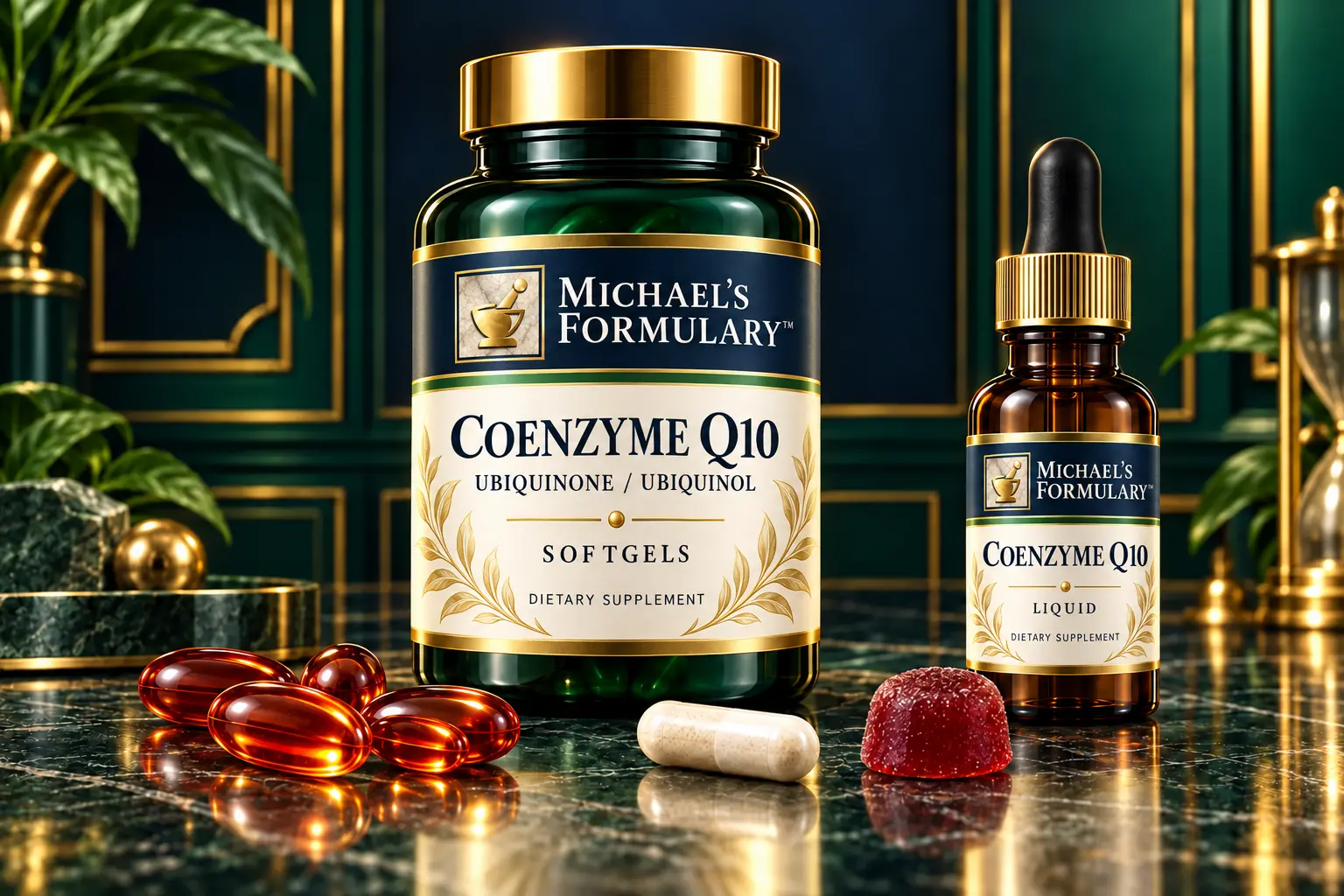
MFCP-labeled Coenzyme Q10 product family showing ubiquinone and ubiquinol softgels, a capsule, a gummy, and liquid dietary supplement
Natural Products hallmark

COENZYME Q10

Ubiquinone · Ubiquinol

Softgel · capsule · gummy · liquid

Natural Products · Item 28 · Controlled Monograph

CoQ10

CoQ10 is a naturally occurring mitochondrial electron carrier sold as a dietary supplement. Its essential biochemical role does not, by itself, prove that supplementation treats a disease.
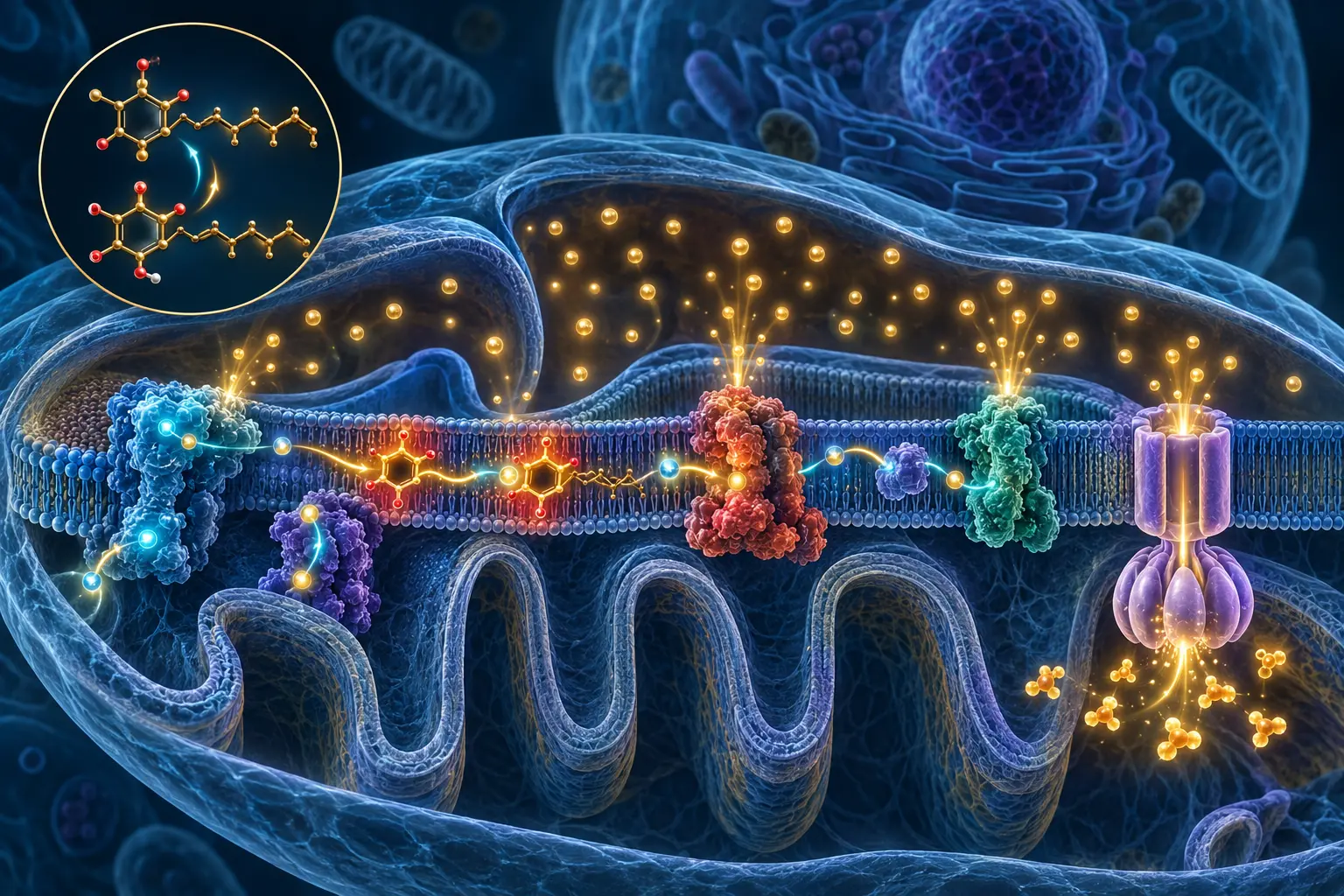
Biomedical illustration of Coenzyme Q10 carrying electrons within the inner mitochondrial membrane toward ATP productionUbiquinone ⇄ UbiquinolComplex IComplex IICoQ10 shuttleComplex IIIComplex IVATP synthase
Inner mitochondrial membrane · mobile electron shuttleBiochemical role ≠ proven clinical benefit
Form controlUbiquinone and ubiquinol are different redox forms. Compare the exact form, delivery system, and serving—not only milligrams.
Evidence restraintHeart-failure findings remain inconclusive, and overall evidence does not support CoQ10 for statin-associated muscle pain.
Interaction gateReview warfarin, insulin or diabetes therapy, and cancer treatment before supplement use.
01

Plain Talk · What CoQ10 Is and Is Not

Normal biology

Your body already makes CoQ10

CoQ10 is present in human tissues and helps move electrons inside mitochondria, where cells produce usable energy.

Supplement reality

A capsule is an added exposure

A normal biochemical role does not establish that extra CoQ10 will improve a symptom, prevent a disease, or replace standard treatment.

Evidence boundary

Results depend on the question

Evidence must be judged separately for heart failure, statin-associated pain, migraine prevention, blood pressure, cancer care, and other uses.

Product control

The front label is not enough

Verify ubiquinone or ubiquinol, milligrams per serving, dosage form, other ingredients, lot, expiration, and quality testing.

★ BOTTOM LINE: identify the formulation first, separate mechanism from outcome evidence, and use CoQ10 only as an adjunct—not a substitute for prescribed care.
02

Identity · Ubiquinone, Semiquinone and Ubiquinol

Oxidized form

Ubiquinone · Q

The quinone form accepts electrons and protons within the mitochondrial membrane.

Intermediate

Semiquinone

A short-lived one-electron intermediate participates in the Q cycle. It is not an ordinary consumer dosage-form category.

Reduced form

Ubiquinol · QH₂

The reduced form donates electrons and contributes to lipid-phase antioxidant activity.

Label termWhat it identifiesWhat it does not proveMFCP control
Coenzyme Q10Ingredient familyExact redox form or delivery systemRead Supplement Facts and other ingredients
UbiquinoneOxidized CoQ10Clinical inferiority to ubiquinolCompare the actual formulation and evidence
UbiquinolReduced CoQ10A universal absorption multiple or superior outcomeDo not transfer marketing ratios across products
“Enhanced absorption”A formulation claimA standardized effect or proven clinical benefitIdentify the delivery technology and supporting study
03

Mitochondrial Role · Mechanism Without Overreach

1Complex I and Complex II supply electrons
2CoQ10 moves within the inner membrane
3Electrons reach Complex III
4Proton movement builds a gradient
5ATP synthase uses that gradient
Electron transport

A mobile membrane carrier

CoQ10 links several electron-entry pathways to Complex III. Its lipid-soluble tail keeps it within the membrane.

Redox chemistry

Oxidation and reduction are reversible

Ubiquinone accepts reducing equivalents; ubiquinol can donate them. The cycle supports electron transport and membrane antioxidant chemistry.

Translation rule: a compelling mitochondrial mechanism is biologically important, but it cannot substitute for controlled clinical outcome evidence.
04

Formulation, Absorption and Product Equivalence

Lipid soluble

Food and formulation matter

CoQ10 dissolves poorly in water. Softgel oils, emulsions, dispersions, and other delivery systems may change absorption.

Slow assessment

Do not expect an immediate rescue effect

Supplement trials generally require repeated use and a defined observation period. CoQ10 is not an acute pain, vertigo, or cardiovascular rescue product.

Serving arithmetic

Count milligrams per serving

A serving may contain more than one capsule, softgel, gummy, or measured liquid dose.

Excipient screen

The delivery system carries its own risks

Review oils, gelatin, allergens, sweeteners, sugar alcohols, alcohol, flavorings, and combination ingredients.

Dosage formPotential advantageControl point
Oil-based softgelSupports dispersion of a lipid-soluble ingredientCheck source oils, gelatin, serving count, and exact redox form
Powder capsule or tabletSimple unit dosingDo not assume equal absorption to a solubilized product
Gummy or chewMay help swallowing acceptanceCheck sugar, sweeteners, unit count, heat/storage, and child access
LiquidAdjustable measured volumeUse the supplied device; verify concentration per milliliter
05

Evidence by Clinical Objective

Clinical objectiveCurrent evidence positionMFCP interpretation
Heart failureResearch findings remain inconclusiveDo not replace guideline-directed therapy; coordinate any adjunct trial with the treating team
Statin-associated muscle painOverall scientific evidence does not support a reliable benefitEvaluate the statin, dose, timing, interacting drugs, thyroid status, exercise, and other causes rather than assuming CoQ10 deficiency
Migraine preventionLimited preliminary evidence suggests possible reduction in frequency or durationPreventive adjunct only; not acute rescue and not a substitute for diagnosis
Blood pressureAvailable evidence suggests no meaningful effectDo not use to replace antihypertensive therapy
Parkinson diseaseHigh-dose study did not improve early disease symptomsNot an evidence-based symptom treatment
Cancer treatmentNot shown to treat cancer; compatibility varies by therapyOncology approval is required before use
Evidence is indication-specific: one favorable trial, biomarker change, or mechanistic explanation does not establish effectiveness for another disease or symptom.
06

Use, Dose Interpretation and Monitoring

No universal OTC dose

Purpose determines the plan

The product label governs ordinary supplement use. Disease-directed use requires a clinician-defined objective, formulation, dose, and duration.

Take consistently

Use the same verified product

Switching between ubiquinone, ubiquinol, softgels, powders, and liquids can change exposure and makes response harder to interpret.

Define success

Measure the intended outcome

Before starting, document the symptom, frequency or function being followed and the time window for reassessment.

Stop rule

No benefit means reassess

Do not continue indefinitely because the ingredient is “natural.” Stop and review adverse effects, cost, duplication, adherence, and the diagnosis.

CheckpointQuestionControlled action
Before useWhat exact problem is being addressed?Set a measurable target and exclude urgent symptoms
Product selectionWhich form and how many milligrams per serving?Photograph or record the full Supplement Facts panel
Follow-upDid the target outcome improve?Compare against baseline; do not rely on general “energy” impressions alone
Medication changeWas warfarin, insulin, diabetes therapy, or cancer treatment changed?Recheck compatibility and monitoring immediately
07

Safety Gate, Special Populations and Interactions

Common effects

Sleep and digestive symptoms

Mild insomnia or digestive upset may occur. New symptoms after starting or changing a product warrant reassessment.

Pregnancy and lactation

Evidence and product quality matter

Do not self-select high-dose supplemental use without obstetric or pediatric review.

Children

No invented adult-to-child conversion

Pediatric use requires a defined indication, age-appropriate product, and clinician-directed plan.

SituationWhy it mattersControlled action
WarfarinCoQ10 may alter anticoagulant responseDo not start, stop, or change the dose without an INR monitoring plan
Insulin or diabetes therapyCoQ10 may interact with diabetes treatment or complicate glucose interpretationCoordinate glucose monitoring and medication review
Cancer treatmentCompatibility may depend on the oncology regimenObtain oncology approval before use
Multiple supplementsDuplicate CoQ10 and excipients may be hidden in combination productsCount every source and total daily exposure
Planned procedureMedication and supplement changes affect perioperative reviewDisclose the exact product to the surgical team
Urgent triage: chest pain, fainting, severe shortness of breath, new focal weakness, sudden severe headache, major bleeding, severe allergic symptoms, or marked glucose disturbance belongs outside supplement self-care.
08

MFCP Natural Products Buying Standard™ and Evidence Map

1 · Identity

Form must be explicit

Confirm CoQ10, ubiquinone or ubiquinol, milligrams per unit and serving, and the complete other-ingredient list.

2 · Quality

Prefer verifiable controls

Look for lot and expiration information, intact tamper evidence, a traceable manufacturer, and credible independent quality certification when available.

3 · Evidence

Match product to studied formulation

“Clinically studied” is meaningful only when the purchased form, dose, delivery system, population, and outcome match the cited research.

Regulatory control: dietary supplements are regulated differently from conventional drug products. A Supplement Facts label and lawful marketing do not mean FDA has approved the product to treat a disease.
Readability control: patient decisions use plain language and short scanning units. Redox, mitochondrial, and formulation terms remain only where they prevent a clinically important misunderstanding.
Michael’s Formulary & Clinical Perspective™ · Natural Products · Evidence translated. Safety made visible.
Contents
  1. Plain Talk · What CoQ10 Is and Is Not
  2. Identity · Ubiquinone, Semiquinone and Ubiquinol
  3. Mitochondrial Role · Mechanism Without Overreach
  4. Formulation, Absorption and Product Equivalence
  5. Evidence by Clinical Objective
  6. Use, Dose Interpretation and Monitoring
  7. Safety Gate, Special Populations and Interactions
  8. MFCP Natural Products Buying Standard™ and Evidence Map
  9. Source links

Source links

Links already cited on this page.