
Acetylsalicylic acid (MFCP analysis)
Michael’s Formulary & Clinical Perspective™ (MFCP)America’s OTC Pharmacy™ · Professional Judgment. Delivered.™
MFCP Monograph · Domain 03 · Pain, Fever, Inflammation
Aspirin
Acetylsalicylic acid · NSAID · Pain and fever · 325 mg
A nonsteroidal anti-inflammatory drug (NSAID) for headache, minor pain and fever (Proficient Rx, 2025). It is the one OTC pain reliever with a Reye’s syndrome warning for children and teenagers (Proficient Rx, 2025).
Use
Pain and fever
Form
Tablet, 325 mg
Label age
12 years and older
Limit
10 days pain; 3 fever
Pharmacist bottom line
A pain reliever and a blood thinner in one tablet. Reye’s syndrome, bleeding and pregnancy decide whether aspirin fits.
Adults take 1 or 2 tablets every 4 hours, or 3 every 6 hours, no more than 12 in 24 hours (Proficient Rx, 2025). Never in a child or teenager with chickenpox or flu-like symptoms (Proficient Rx, 2025).
ScopeOver-the-counter (OTC) aspirin 325 mg for pain and fever. Daily low-dose aspirin for the heart is a clinician’s decision and is covered here only to say so.
MFCP MonographAspirin1 / 9
01
Pain relief and a blood thinner together

What it is and how it works
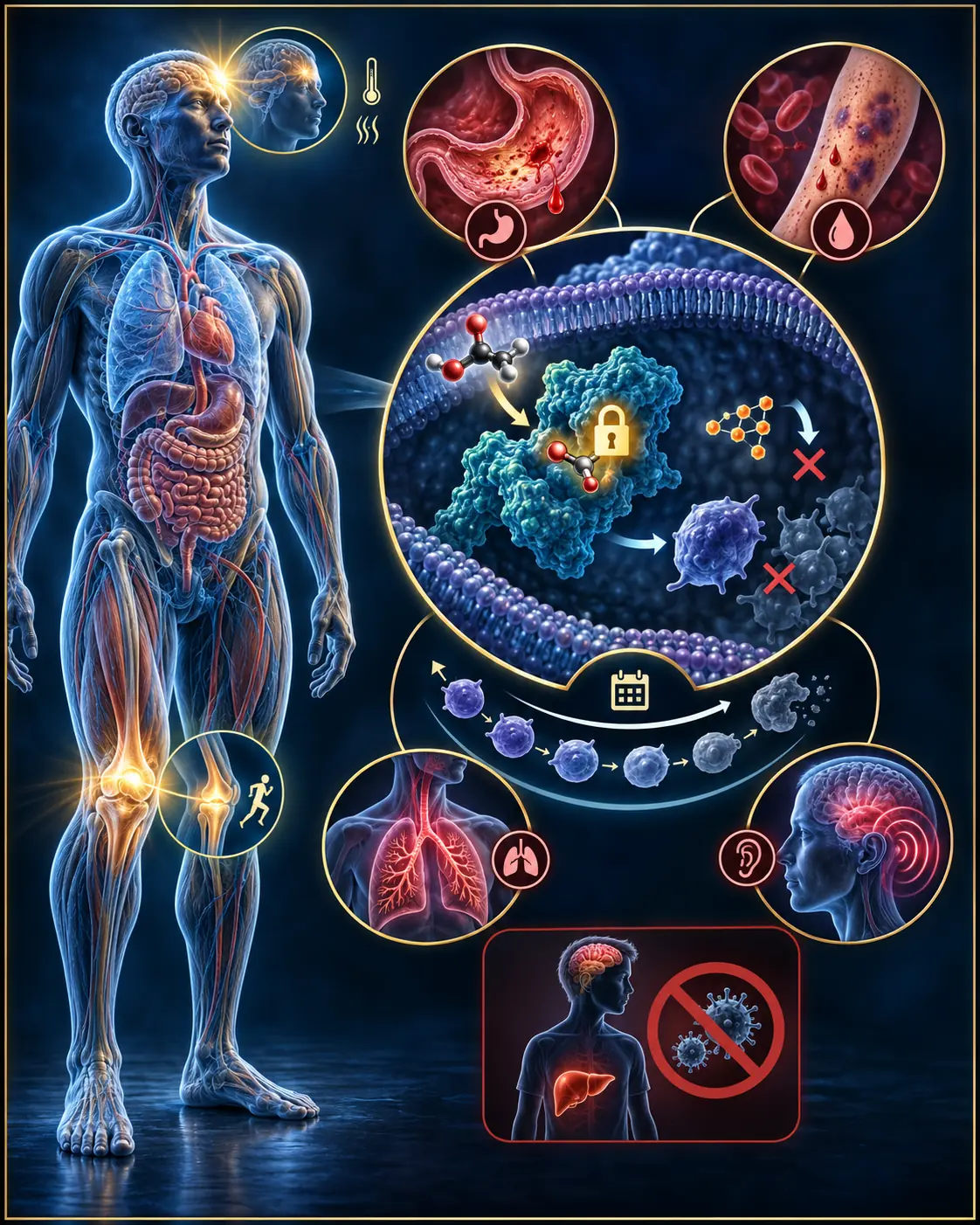
Aspirin is a pain reliever and fever reducer in the NSAID class (Proficient Rx, 2025). Unlike ibuprofen, its effect on platelets cannot be undone and lasts for days (U.S. Food and Drug Administration, 2006; MFCP analysis).
Chemical name
Class
Pain reliever and fever reducer; NSAID (Proficient Rx, 2025)
Strength
325 mg per tablet (Proficient Rx, 2025)
Uses
Headache, colds, toothache, menstrual pain, muscle pain, minor arthritis pain, fever (Proficient Rx, 2025)
What it does, and the limits that matter
Relieve
Pain and fever
Headache, toothache, cramps, muscle aches and fever (Proficient Rx, 2025).
Water
A full glass each dose
Drink a full glass of water with each dose (Proficient Rx, 2025).
Limit
10 days pain; 3 days fever
Longer means stop and ask a doctor (Proficient Rx, 2025).
LimitA possible heart attack or stroke needs 911 first; do not delay care to take aspirin (MFCP analysis).
MFCP MonographAspirin2 / 9
02
Read the label in hand
Adult dose and limits
One or 2 tablets every 4 hours, or 3 tablets every 6 hours (Proficient Rx, 2025). Never more than 12 tablets in 24 hours unless a doctor directs it (Proficient Rx, 2025).
Age
Dose
How often
Most in 24 hours
12 and older
1 or 2 tablets (325 to 650 mg)
Every 4 hours
12 tablets (3,900 mg)
12 and older
3 tablets (975 mg)
Every 6 hours
12 tablets (3,900 mg)
Under 12
Do not use unless a doctor directs it
Doctor only
Doctor only
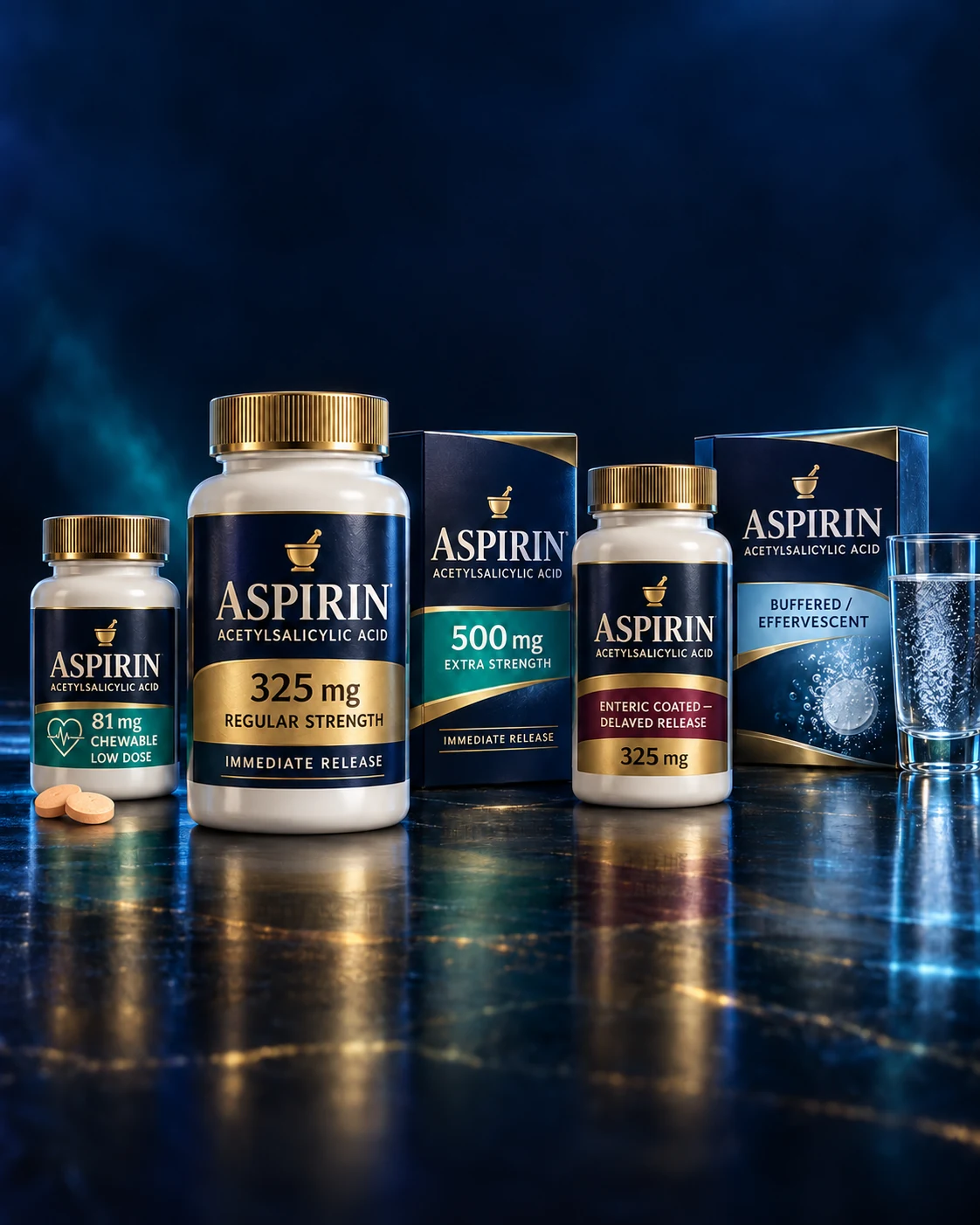
Aspirin 325 mg label (Proficient Rx, 2025). Store brands and other strengths carry their own labels: read the label in hand.
Rules on every label
1
Do not take more than directed (Proficient Rx, 2025).
2
Drink a full glass of water with each dose (Proficient Rx, 2025).
3
Use by the expiration date on the package (Proficient Rx, 2025).
4
Daily low-dose use for the heart only on a clinician’s plan (U.S. Preventive Services Task Force, 2022).
MFCP MonographAspirin3 / 9
03
Children, weeks and the breastfed baby
Reye’s syndrome and special populations
Reye’s syndrome is rare but serious (Proficient Rx, 2025). Children and teenagers with chickenpox or flu-like symptoms should not use aspirin (Proficient Rx, 2025).
12 × 325 mg = 3,900 mg a day
The adult label maximum (Proficient Rx, 2025). More needs a doctor’s direction (Proficient Rx, 2025).
Low-dose aspirin to prevent a first heart attack or stroke
Grade C
Ages 40 to 59, 10% or higher risk
Grade D
Age 60 or older
Do not stop alone
Already taking it
Grade C: an individual decision with a clinician. Grade D: do not start (U.S. Preventive Services Task Force, 2022).
Children and teens
Not with chickenpox or flu-like symptoms, or while recovering (Proficient Rx, 2025).
Nausea, vomiting and a change in behavior: call a doctor (Proficient Rx, 2025).
Pregnancy
Do not use at 20 weeks or later unless a doctor directs it (Proficient Rx, 2025).
Low-dose 81 mg aspirin prescribed in pregnancy is a separate decision (U.S. Food and Drug Administration, 2020).
Breastfeeding
Prefer another drug over steady high-dose aspirin (National Library of Medicine, 2025).
Watch the baby for bruising or bleeding (National Library of Medicine, 2025).
MFCP MonographAspirin4 / 9
04
Expected effects and the serious ones
Side effects and safety
The label carries a Reye’s syndrome warning, an allergy alert and a stomach bleeding warning (Proficient Rx, 2025). Risk rises with more or longer use than directed (Proficient Rx, 2025).
Allergy
Hives, facial swelling, wheezing or shock: stop and get help right away (Proficient Rx, 2025).
Stomach bleeding
Higher at 60 or older, or with ulcers, blood thinners, steroids, other NSAIDs or 3 or more drinks a day (Proficient Rx, 2025).
Ringing in the ears
Ringing or hearing loss: stop and ask a doctor (Proficient Rx, 2025).
Asthma
Asthma is on the ask-a-doctor list (Proficient Rx, 2025).
!
Two hard stops
Do not use if allergic to aspirin or any other pain reliever or fever reducer (Proficient Rx, 2025). Do not give to a child or teenager with chickenpox or flu-like symptoms (Proficient Rx, 2025).
Ask a doctor or pharmacist first
1
Has had stomach ulcers, bleeding problems or heartburn (Proficient Rx, 2025).
2
Has asthma, high blood pressure, heart disease, liver cirrhosis or kidney disease (Proficient Rx, 2025).
3
Takes a diuretic (water pill) (Proficient Rx, 2025).
4
Takes a prescription drug for gout, diabetes or arthritis (Proficient Rx, 2025).
MFCP MonographAspirin5 / 9
05
Most interactions add bleeding risk
Interactions
Blood thinners, steroids and other NSAIDs raise stomach bleeding risk (Proficient Rx, 2025). Ibuprofen can also blunt aspirin’s heart benefit (U.S. Food and Drug Administration, 2006).
Medicine
What happens
Action
Blood thinners or steroids
Raise stomach bleeding risk (Proficient Rx, 2025).
Ask a doctor first (Proficient Rx, 2025).
Ibuprofen with low-dose aspirin
May blunt the platelet effect (U.S. Food and Drug Administration, 2006).
Ibuprofen 30 minutes after, or 8 hours before (U.S. Food and Drug Administration, 2006).
Naproxen or other NSAIDs
Raise stomach bleeding risk (Proficient Rx, 2025).
Do not combine (MFCP analysis).
Gout, diabetes or arthritis drugs
Named on the label (Proficient Rx, 2025).
Ask a doctor or pharmacist first (Proficient Rx, 2025).
Alcohol, 3 or more drinks a day
Raises stomach bleeding risk (Proficient Rx, 2025).
Avoid while using (MFCP analysis).
Rule
Before recommending aspirin, ask about blood thinners, steroids, other pain relievers, gout and diabetes drugs, alcohol and age.
LabelThe ibuprofen timing applies to occasional use with immediate-release aspirin; data are too limited for enteric-coated aspirin (U.S. Food and Drug Administration, 2006).
MFCP MonographAspirin6 / 9
06
Right product, right job
Choose, buy and verify
Three OTC pain relievers, three different risks. Aspirin is the only one that thins the blood for days.
Aspirin 325 mg
Ibuprofen 200 mg
Naproxen sodium 220 mg
How often
Every 4 to 6 hours
Every 4 to 6 hours
Every 8 to 12 hours
Most a day
12 tablets
6 tablets
3 tablets
Unique warning
Reye’s syndrome
Blunts low-dose aspirin
Pill stuck in throat
From each product’s label and FDA guidance, as cited in the MFCP ibuprofen and naproxen monographs (Proficient Rx, 2025; U.S. Food and Drug Administration, 2006; MFCP analysis).
!
Low-dose is a different decision
Adults 60 or older should not start aspirin to prevent a first heart attack or stroke (U.S. Preventive Services Task Force, 2022). Anyone already taking it should not stop without their clinician (U.S. Preventive Services Task Force, 2022).
MFCP Buying Standard™ · check the package in hand
1
Active ingredientAspirin 325 mg (NSAID) (Proficient Rx, 2025).
2
Release typeCoated, delayed-release tablets act later; choose a regular tablet for quick pain relief (MFCP analysis).
3
Other activesCheck for antacids, caffeine or acetaminophen added to aspirin (MFCP analysis).
MFCP MonographAspirin7 / 9
07
Clinical red-line gate
When to stop and get care
Pain relief should never delay care for bleeding, a severe allergic reaction or signs of too much aspirin.
Get care now
1
Feeling faint, vomiting blood, bloody stools, or stomach pain that does not get better (Proficient Rx, 2025)
2
Hives, facial swelling, wheezing or shock (Proficient Rx, 2025)
3
Ringing in the ears or loss of hearing (Proficient Rx, 2025)
4
A child or teen with nausea, vomiting and a change in behavior (Proficient Rx, 2025)
5
Overdose: get medical help or contact a Poison Control Center right away (Proficient Rx, 2025)
Stop and ask a doctor
1
Pain gets worse or lasts more than 10 days (Proficient Rx, 2025).
2
Fever gets worse or lasts more than 3 days (Proficient Rx, 2025).
3
New symptoms, redness or swelling appear (Proficient Rx, 2025).
MFCP bottom line
Screen age and viral illness, bleeding, asthma and pregnancy; 1 or 2 tablets every 4 hours with water; no more than 12 a day; leave daily low-dose decisions to the clinician.
MFCP MonographAspirin8 / 9