
Name the purpose
Pain and fever dosing is not the same as clinician-directed low-dose cardiovascular use.

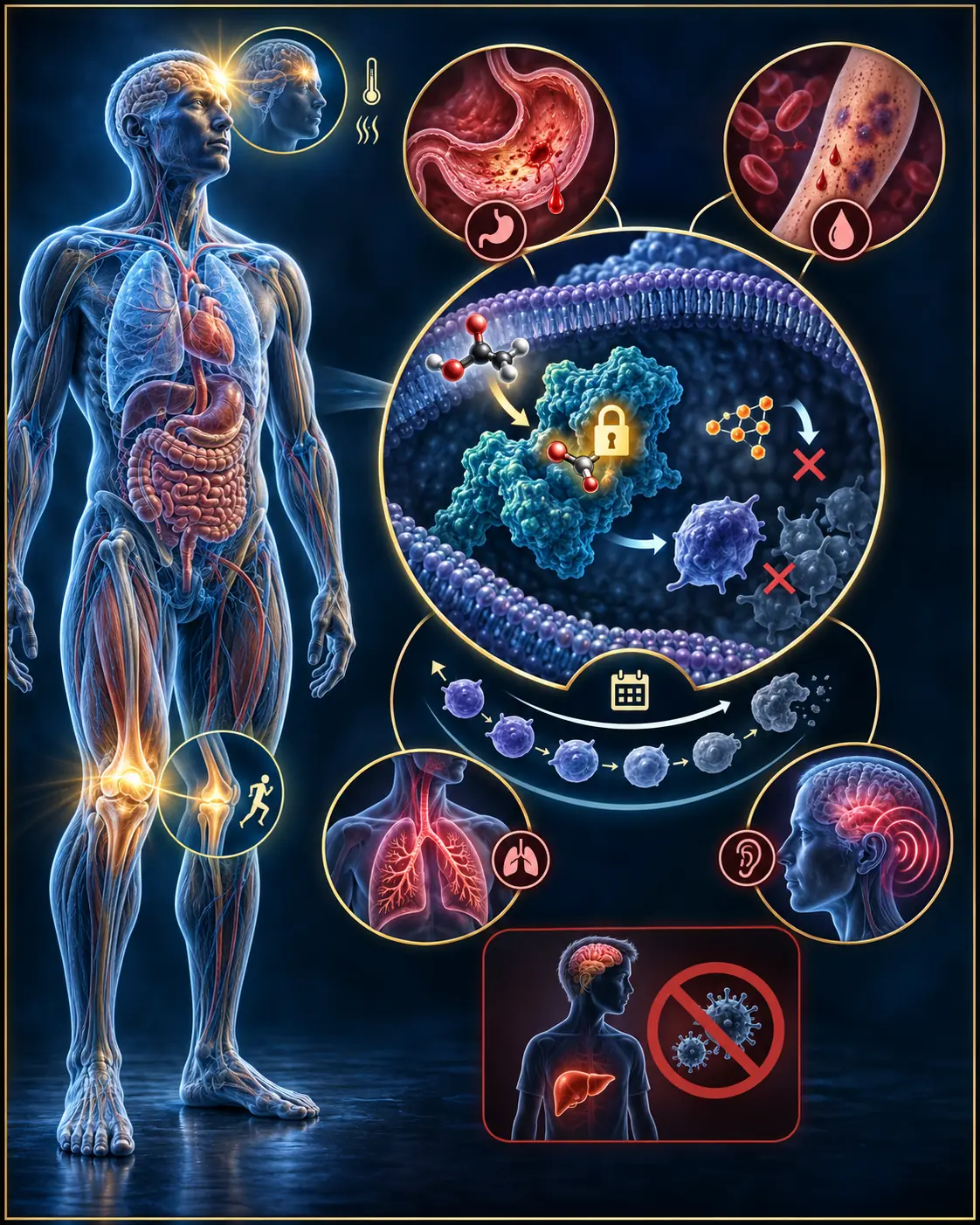
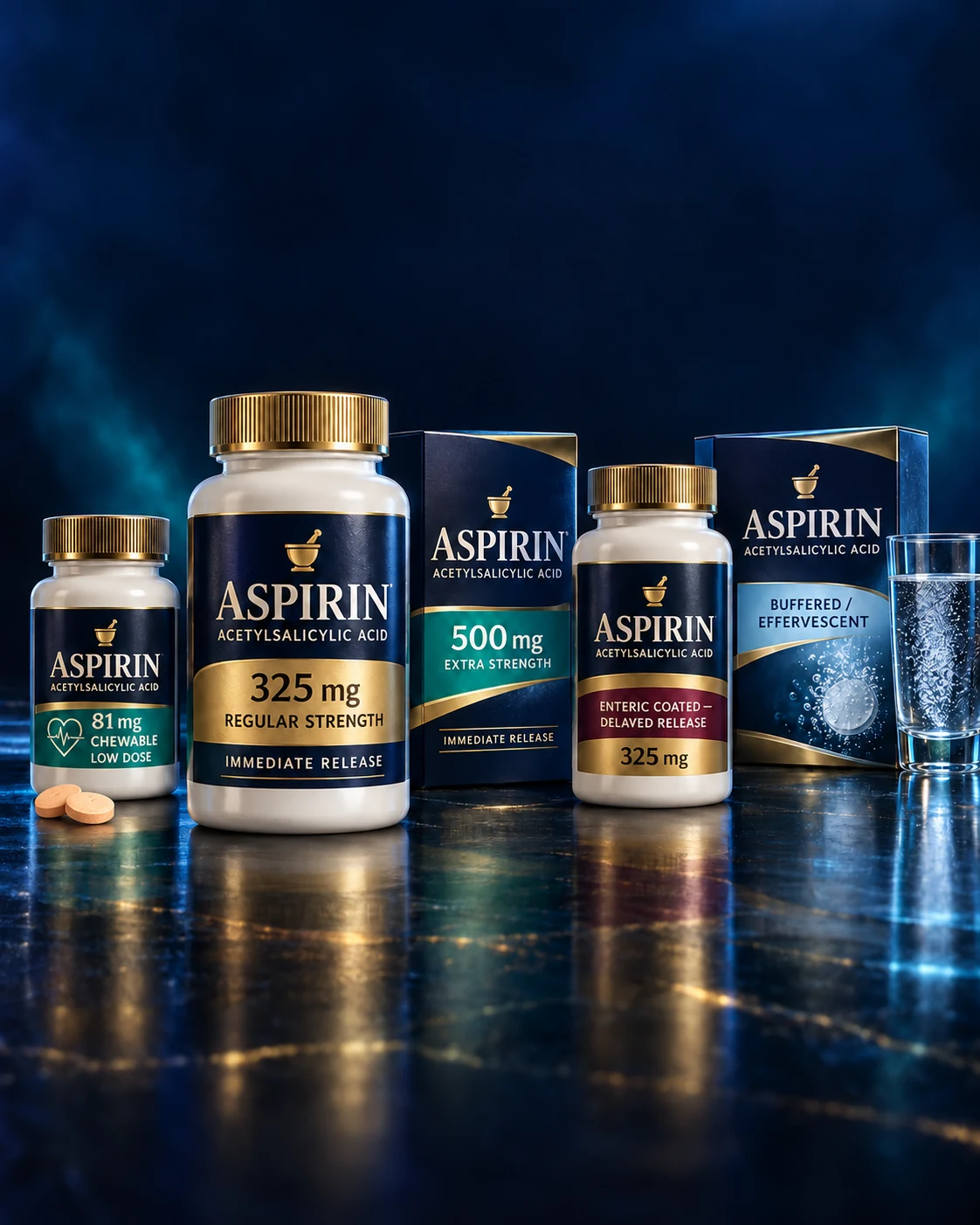
Aspirin is a useful analgesic and a unique irreversible antiplatelet drug. Its platelet effect, bleeding risk, Reye syndrome warning, formulation differences, and salicylate toxicity make casual substitution unsafe.
Confirm the purpose before selecting the strength.
Pain and fever dosing is not the same as clinician-directed low-dose cardiovascular use.
Ulcer history, anticoagulants, alcohol, age, procedures, and interacting NSAIDs matter.
Enteric coating delays absorption and is not the first choice for rapid headache relief.
Ringing in the ears, hearing loss, bleeding, wheezing, or new neurologic symptoms require action.
Eighteen modules from identity through evidence control.
Chemistry, irreversible acetylation, kinetics, and dosage forms.
Pain, fever, headache, formulation-specific directions, and duration.
Reye syndrome, bleeding, GI, asthma, pregnancy, age, and toxicity.
Comparative selection, buying standard, emergency signs, and sources.
An acetylated salicylate with a permanent platelet effect.
Also abbreviated ASA; chemical description 2-acetoxybenzoic acid.
Molecular weight approximately 180.16 g/mol.
Nonsteroidal anti-inflammatory drug and antiplatelet agent.
Unlike ibuprofen and naproxen, aspirin covalently modifies COX.
Aspirin transfers an acetyl group to cyclooxygenase.
Choose the formulation that matches the task.
Chewable low-dose aspirin is physically distinct from swallowed or enteric-coated tablets; use only for the purpose and directions on the current label or clinician plan.
Designed to dissolve beyond the stomach; onset can be delayed and variable.
Other active ingredients and sodium load can change clinical suitability.
Analgesia lasts hours; affected platelets remain inhibited much longer.
Purpose determines dose, formulation, and supervision.
Headache, toothache, muscular aches, menstrual pain, colds, fever, and minor arthritis pain.
Early dosing may help selected tension-type or migraine attacks; frequent use requires assessment.
Anti-inflammatory dosing can exceed ordinary OTC self-care and increases toxicity.
Secondary prevention and selected obstetric uses are not self-start decisions.
Do not blend 325 mg and 500 mg package limits.
| Product | Current representative directions | Daily ceiling |
|---|---|---|
| 325 mg regular strength | Adults and children 12+: 1 or 2 tablets every 4 hours, or 3 tablets every 6 hours; full glass of water | Maximum 12 tablets = 3,900 mg in 24 hours unless directed |
| 500 mg extra strength | Adults and children 12+: 1 or 2 caplets every 4–6 hours; full glass of water | Maximum 8 caplets = 4,000 mg in 24 hours |
| Under age 12 | Consult or ask a doctor; follow the exact package | No self-selected adult-tablet dose |
| Pain duration | Stop and ask a doctor if pain worsens or lasts more than 10 days | Persistent symptoms require diagnosis |
| Fever duration | Stop and ask a doctor if fever worsens or lasts more than 3 days | Seek earlier care for red flags |
The warning follows illness context, not package familiarity.
Children and teenagers who have or are recovering from chickenpox should not use aspirin.
The same warning applies during or after influenza-like illness.
Behavior change with nausea and vomiting may signal a rare but serious illness.
Coating cannot cancel prostaglandin depletion.
Local mucosal contact can contribute to dyspepsia and erosion.
Mucus, bicarbonate, and mucosal blood-flow support are reduced.
Prior ulcer or bleed, age 60+, anticoagulants, steroids, alcohol, or multiple NSAIDs raise risk.
Delayed release does not eliminate ulcer or bleeding risk.
Procedure planning belongs with the prescriber.
Tell every procedural clinician about aspirin; follow the prescriber’s stop or continue plan.
Warfarin, DOACs, heparins, and antiplatelets require professional review.
Unusual bruising, persistent bleeding, blood in urine, or recurrent nosebleeds require review.
Do not start, stop, or change clinician-directed aspirin based on an OTC pain decision.
Do not wait for severe symptoms.
Stop aspirin and obtain medical advice; these can signal salicylate toxicity.
Nausea, vomiting, sweating, dizziness, confusion, and hyperventilation may develop.
Seizure, coma, pulmonary edema, severe hyperthermia, or circulatory collapse can occur.
United States: 1-800-222-1222. Do not induce vomiting unless instructed.
Airway reactions can be severe.
Hives, facial swelling, wheezing, throat tightness, or shock requires immediate care.
Asthma, nasal polyps, and prior aspirin/NSAID respiratory reaction signal cross-reactive risk.
New rash, blistering, peeling, or mucosal lesions requires medical advice or urgent care.
Obstetric use is clinician directed.
Avoid self-directed analgesic aspirin; NSAID risk changes with gestational age.
Fetal renal dysfunction and low amniotic fluid are concerns.
Premature closure of the fetal ductus arteriosus adds risk.
Prescribed 81 mg aspirin for selected conditions is a different risk-benefit decision.
Do not start daily aspirin because it seems preventive.
Age, bleeding risk, cardiovascular risk, and current guidance require individualized review.
Older age, prior ulcers, interacting drugs, and frailty compound harm.
Renal prostaglandin inhibition can worsen kidney function, edema, and blood pressure.
Anticoagulants, antiplatelets, steroids, SSRIs/SNRIs, NSAIDs, and methotrexate matter.
Bleeding and platelet effects accumulate.
| Exposure | Primary concern | Controlled action |
|---|---|---|
| Ibuprofen with low-dose immediate-release aspirin | Ibuprofen may attenuate aspirin’s antiplatelet effect | Ask a pharmacist; FDA timing guidance for occasional ibuprofen is at least 30 minutes after aspirin or at least 8 hours before it. |
| Naproxen or another NSAID | Duplicate GI, renal, and cardiovascular toxicity | Do not combine unless specifically directed. |
| Warfarin, DOACs, heparins, clopidogrel | Additive major bleeding | Avoid self-directed aspirin; professional review required. |
| SSRIs/SNRIs or corticosteroids | Higher GI bleeding risk | Review the total risk profile. |
| Methotrexate | Protein-binding and clearance effects may increase toxicity | Prescriber or pharmacist review. |
| Gout or diabetes prescriptions | Product-specific interaction or disease effects | Ask a doctor or pharmacist before use. |
| Alcohol | Gastric injury and bleeding | Avoid during analgesic aspirin use. |
Choose by clinical need and risk—not familiarity.
| Decision factor | Aspirin | Ibuprofen | Naproxen sodium | Acetaminophen |
|---|---|---|---|---|
| COX effect | Irreversible | Reversible | Reversible | Minimal peripheral anti-inflammatory effect |
| Pain interval | Usually 4–6 hours; product specific | Usually 4–6 hours | 8–12 hours | Usually 4–6 hours; product specific |
| Platelet effect | Persists for affected platelet lifespan | Reversible | Reversible | Not an antiplatelet drug |
| GI/renal NSAID risk | Present; bleeding amplified | Present | Present | No NSAID GI/renal mechanism |
| Unique caution | Reye syndrome and salicylate toxicity | Aspirin interaction | Long exposure | Hidden duplication and liver toxicity with excess total dose |
Front-panel branding never replaces Drug Facts.
Choose an uncoated or film-coated single-ingredient product whose strength and current directions fit the pain-relief task.
Chewable form does not authorize self-starting aspirin; cardiovascular or obstetric use belongs to a clinician-directed regimen.
Do not choose delayed release for immediate headache relief.
Antacids, caffeine, acetaminophen, and sodium can change the risk profile.
Current labels outrank remembered directions.
Thunderclap onset, fever with stiff neck, confusion, weakness, vision loss, seizure, or head injury.
Vomiting blood, black stool, fainting, uncontrolled bleeding, or severe persistent abdominal pain.
Ringing ears, hearing loss, fast breathing, sweating, fever, vomiting, or confusion.
Facial swelling, wheezing, throat tightness, or shock requires immediate care.
Links already cited on this page.