
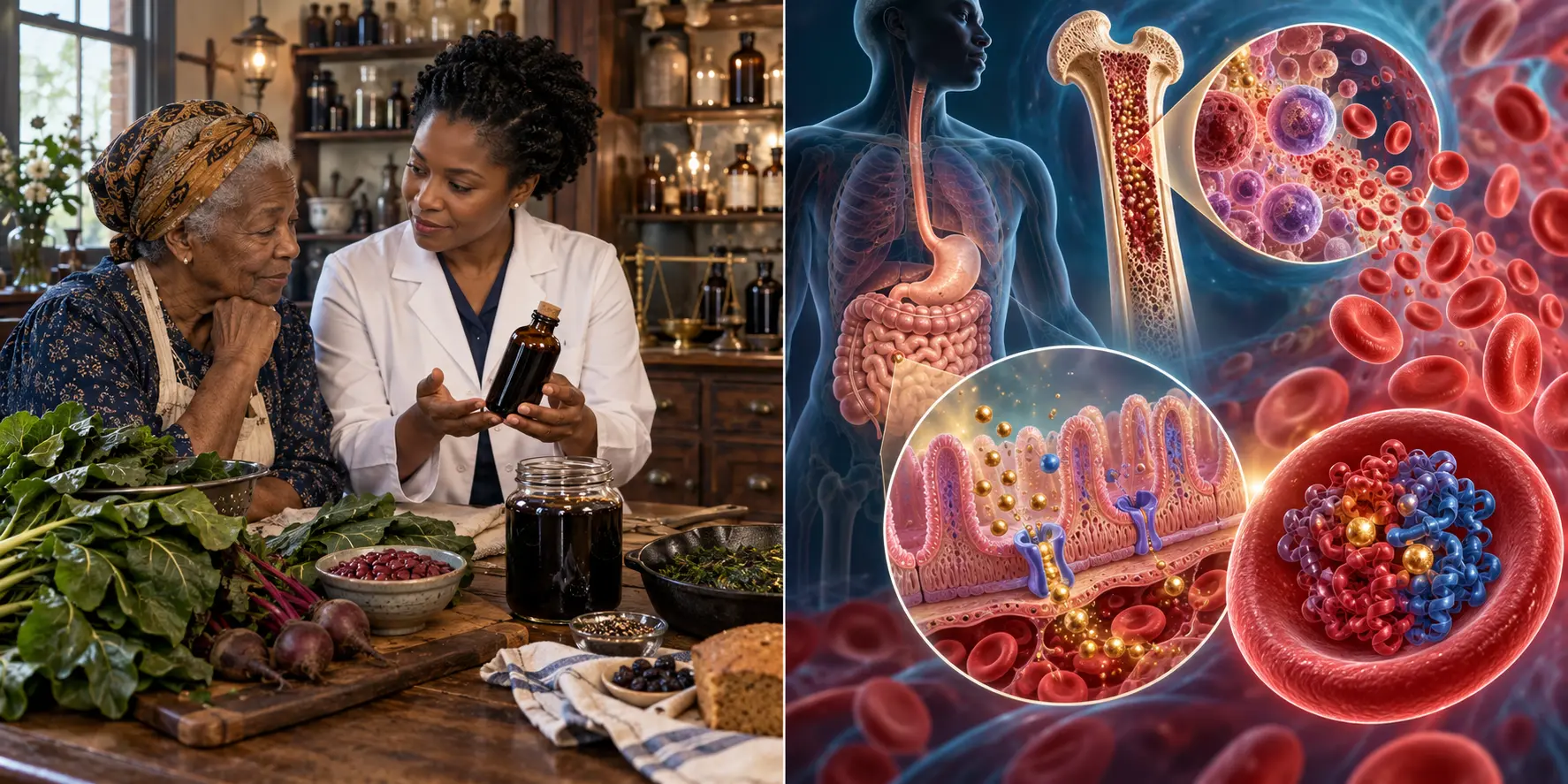
The Words People Use
| Exact phrase | Respectful ask-back | Possible meanings to explore | Do not assume |
|---|---|---|---|
| “Low blood” | “What happens when your blood gets low?” | Prior anemia, blood loss, low blood pressure, weakness, dizziness, coldness, or a family expression. | Not automatically iron deficiency. |
| “Tired blood” | “Is the tiredness new, and have you had blood work?” | Fatigue, recovery after illness, poor sleep, iron deficiency, medication effects, depression, thyroid disease, or other illness. | Not a ferritin result. |
| “Thin blood” | “Do you mean cold or weak, or do you mean easy bleeding or a blood thinner?” | Anemia language, anticoagulant use, bruising, bleeding, faintness, or cold intolerance. | Not a single clinical condition. |
| “High blood” | “Do you mean high blood pressure—or something else?” | Often hypertension; sometimes flushing, fullness, dietary excess, or “too much/thick blood.” | Never guess which meaning. |
| “Thick” or “sluggish blood” | “What symptoms make it feel thick or sluggish?” | A fatigue metaphor, dehydration concern, fear of clots, or a known hematologic condition. | Not a reason to self-start a “blood thinner.” |
What “Low Blood” Could Mean
Not enough red cells made
Iron, vitamin B12, or folate deficiency; kidney disease; inflammation; marrow disease; or medication effects.
Blood leaving the body
Heavy menstrual bleeding, gastrointestinal bleeding, surgery, frequent donation, pregnancy-related loss, or another source.
Fatigue has a broad differential
Sleep loss, infection, thyroid disease, cardiopulmonary illness, mood disorders, medication effects, and other causes can feel the same.
The Bottled Tonic Cabinet
S.S.S. Tonic
The current adult serving is 45 mL (3 tablespoons) and supplies 100 mg iron plus B vitamins. That is a high-dose iron product—not a casual tablespoon tonic.
Geritol Liquid
The current label uses 15 mL daily for ages 12+ and supplies 18 mg iron. Its ingredient list includes 12% alcohol and added sugar.
Father John’s Medicine
Its present active ingredient is dextromethorphan 10 mg/5 mL. Cod-liver oil and licorice are inactive ingredients. It is a cough suppressant—not an anemia treatment.
Hadacol
A mid-century vitamin tonic remembered as a “pep-you-up” remedy. Present it as cultural history, not a current treatment recommendation.
Beef, Wine, and Iron
A pharmacy-era nutritive tonic combining beef extract, fortified wine, and an iron salt. A remembered formula is not a present-day compounding order.
One name, different eras
Never transfer an old advertisement, family memory, or former formula onto a bottle sold today. Read the current panel in hand.
The Kitchen Counter & Pantry
Blackstrap molasses
It can contain non-heme iron, but the amount varies by brand and serving. Read the Nutrition Facts label; it is dietary support, not a standardized anemia dose.
Cast-iron cookware
Cooking acidic foods in cast iron can increase food iron. This is not equivalent to drinking water steeped with hardware.
Beans and leafy greens
They contribute non-heme iron and other nutrients. Pairing with vitamin-C-rich food can improve non-heme iron absorption.
Beets and “red foods”
Color may carry cultural meaning, but redness does not predict iron content or the ability to correct anemia.
The Hazard Boundary
Rusty nail water
Hardware is not a measured food or drug. Metal composition, contamination, corrosion, and delivered iron are uncontrolled.
Sulfur and molasses
A spring-tonic tradition does not establish a safe oral dose, product grade, or benefit. Do not turn an oral tradition into a dosing recipe.
Pokeweed / poke sallet
The entire plant is poisonous. Traditional preparation does not make pokeweed an appropriate iron remedy; ingestion can cause severe gastrointestinal illness and low blood pressure.
What It Takes to Build a Red Cell
Hemoglobin material
Absorbed iron is transported, stored, and incorporated into hemoglobin. More iron is not better when deficiency is absent.
DNA and neurologic control
Deficiency can cause megaloblastic anemia and neurologic injury. Folate can improve the blood picture while neurologic damage continues.
Cell division
Needed for rapidly dividing marrow precursors. The reason for deficiency still matters.
Supply is only one side
Blood loss, malabsorption, inflammation, kidney signaling, hemolysis, and marrow function determine whether a “builder” can help.
Bridge the Counter
- Honor the language.
“Tell me what ‘low blood’ means in your family and what you are feeling.” - Clarify the product.
Ask for the exact bottle, serving, ingredient panel, and every other iron source. - Check the evidence.
Ask about CBC, ferritin or iron studies, diagnosis, duration, and known cause. - Find the danger.
Screen for bleeding, black stool, chest pain, fainting, breathlessness, pregnancy, and severe weakness.
Evidence & Current-Label Controls
Current labels control current products. Cultural history explains why a remedy is requested; it does not replace diagnosis, laboratory evaluation, or the package in hand.