
THE AMERICAN OTC PRODUCT ATLAS™ · Respiratory, Allergy & Cough/Cold · Subcategory 09
PECTIN & HONEY · THERAPEUTIC DOMAIN, MECHANISM OF ACTION & SAFETY
02
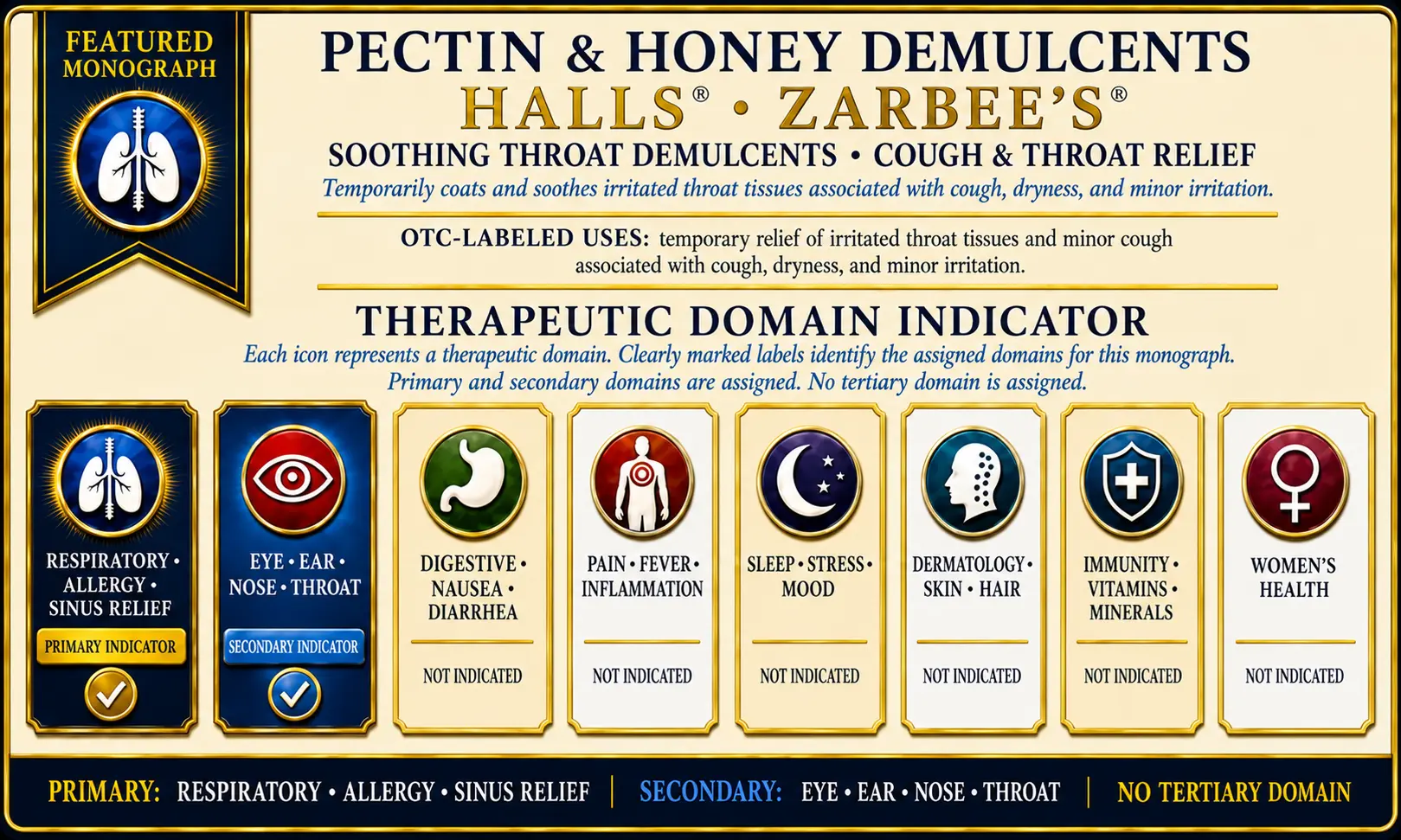
Therapeutic Domain and Indicator
03
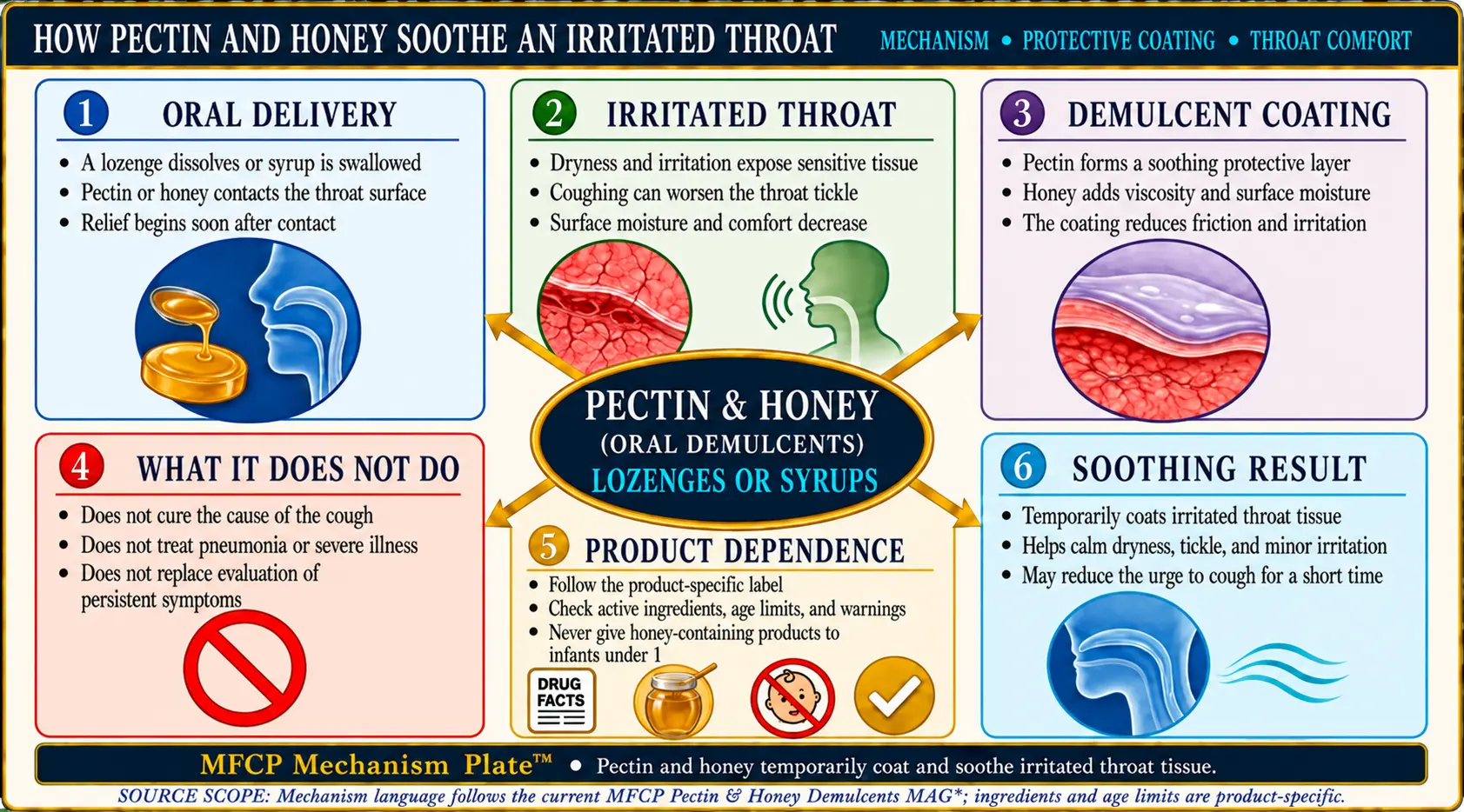
Pectin and Honey Mechanism of Action
04
Safety Control Before Use
Never honey under 1 year
Honey may contain Clostridium botulinum spores and can cause infant botulism.
Prevent choking
Use solid lozenges only when the child can safely let one dissolve without swallowing it whole.
Know when to refer
Seek care for breathing difficulty, chest pain, coughing blood, high fever, or a cough that persists or worsens.
05
Aspiration and Choking Risk
Solid lozenges require reliable swallowing control.
Do not use a lozenge when the person cannot safely hold it in the mouth and allow it to dissolve slowly. This includes young children and anyone with dysphagia, impaired alertness, or poor control of oral secretions.
Use only an age-appropriate dosage form that the person can take safely. If choking, inability to speak, or breathing difficulty occurs, treat it as an emergency.
Verify the label. Screen swallowing ability before selecting a lozenge.