
Probably effective for prevention
Adult evidence includes a small trial using 400 mg daily. Pediatric results are mixed.

Essential flavin precursor · migraine-prevention adjunct · not acute symptom rescue
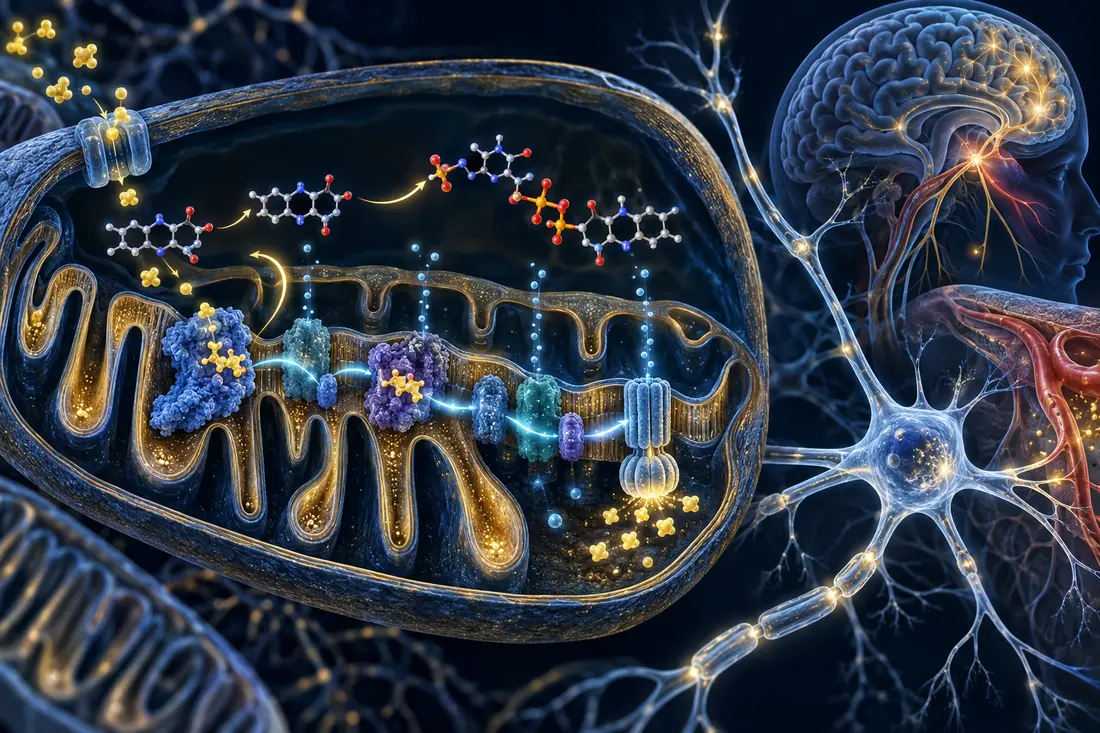
Riboflavin supplies the structural precursor for FMN and FAD, coenzymes required for energy metabolism. Mitochondrial dysfunction is one proposed contributor to some migraine disorders; this pathway supports prevention research but does not prove immediate symptom relief.
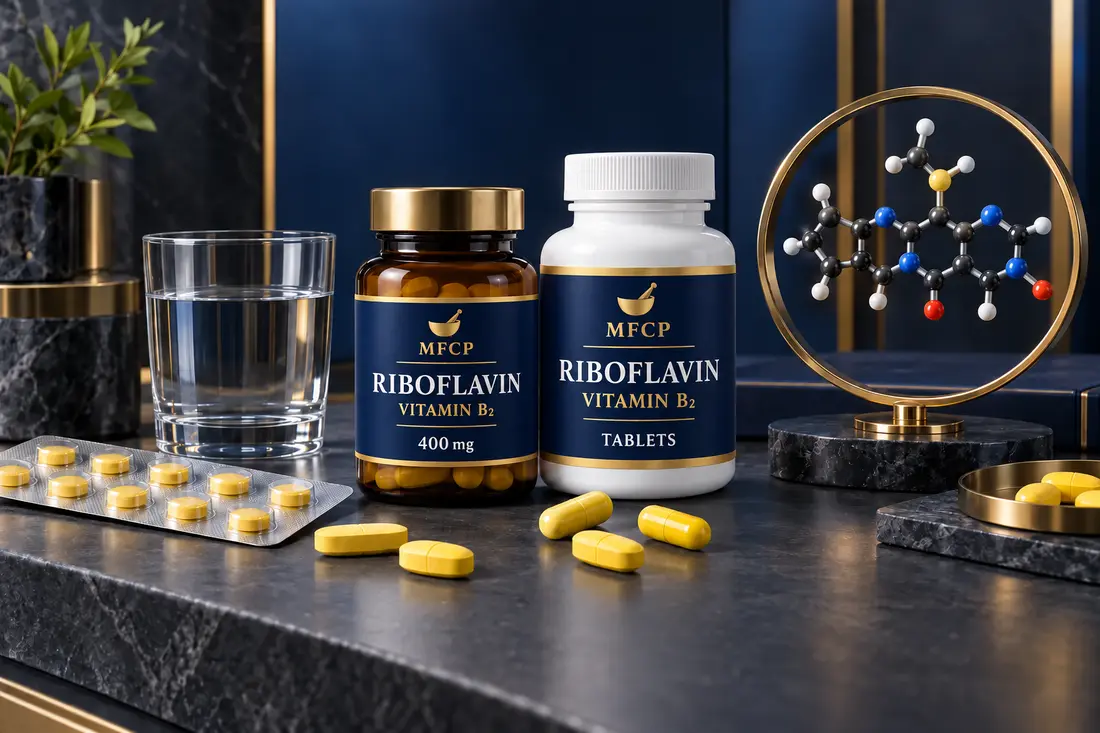
Riboflavin is a water-soluble, light-sensitive vitamin. Some—not all—small studies support high-dose use for migraine prevention. A preventive regimen must not be mistaken for treatment of an attack already underway.
Adult evidence includes a small trial using 400 mg daily. Pediatric results are mixed.
Use a clinician-directed prevention plan; verify milligrams per unit and every B-complex source.
Use consistently and reassess after an adequate 8–12 week trial unless adverse effects require earlier review.
Riboflavin is yellow and fluorescent; excess absorbed vitamin is excreted in urine.
The body absorbs little riboflavin beyond about 27 mg from one dose. Follow the selected regimen; do not improvise.
New neurologic deficits, a sudden severe headache, or a changed headache pattern requires urgent assessment.
Riboflavin is vitamin B₂. It is needed to form flavin coenzymes that support energy metabolism and many cellular reactions.
Replacing a nutritional deficiency and testing a high-dose preventive regimen are different clinical jobs with different dose controls.
Evidence addresses reduced migraine frequency over time. Riboflavin does not replace acute treatment for an attack already underway.
Single-ingredient tablets, capsules, liquids, gummies, and B-complex products can supply very different amounts per serving.
Riboflavin is a precursor of flavin mononucleotide and flavin adenine dinucleotide, which participate in oxidation-reduction reactions and energy metabolism.
Mitochondrial energy dysfunction is one proposed contributor to migraine biology. Mechanistic plausibility supports research; it does not predict an individual response.
| Product family | What may vary | What must be verified | MFCP control |
|---|---|---|---|
| Single-ingredient tablet or capsule | Milligrams per unit, serving size, excipients | Riboflavin amount per serving and units per dose | Do not infer dose from tablet color or bottle size |
| B-complex or multivitamin | Multiple vitamins at unequal strengths | Total B₂ from every product used | Count duplication before adding a stand-alone product |
| Liquid, gummy, powder | Concentration, scoop/drop size, sugars and flavoring | Units per serving and measuring device | Record the exact measured serving |
| “Activated” flavin product | Riboflavin, riboflavin-5′-phosphate, mixtures | Ingredient identity and labeled quantity | Do not assume a superior clinical outcome from the name |
NIH notes that the body absorbs little riboflavin beyond about 27 mg from a single dose. This is a pharmacokinetic control—not permission to improvise a regimen.
Keep the product in its original, closed container and follow labeled storage. Do not transfer it into an unprotected clear container.
| Clinical question | Evidence position | Controlled interpretation |
|---|---|---|
| Adult episodic migraine prevention | A small randomized trial used 400 mg/day and reported fewer attacks; additional small studies are not uniformly positive. | A reasonable preventive option for selected adults—not a response guarantee. |
| Pediatric migraine prevention | Trials are limited and results are mixed, including negative randomized studies. | Do not transfer the adult regimen to a child without pediatric guidance. |
| Acute migraine treatment | Prevention studies do not establish rapid relief during an active attack. | Do not delay an established rescue plan or urgent evaluation. |
| General energy or fatigue | Biochemical involvement in energy metabolism does not establish benefit in people without deficiency. | Assess cause; do not translate pathway language into a universal energy claim. |
| Deficiency treatment | Replacement addresses inadequate status or a defined clinical need. | Use the cause, severity, diet, and clinician plan to determine dose and duration. |
Adult prevention research commonly uses 400 mg/day. Selection should be clinician-directed and separated from ordinary dietary replacement.
Use the selected regimen consistently. If tolerability or product directions require divided use, document the plan instead of changing it ad hoc.
Set a start date and reassessment date unless adverse effects or a changed headache pattern require earlier review.
Record monthly headache days, acute-medication use, severity, disability, adherence, and adverse effects before and during the trial.
| Checkpoint | What to record | Question to answer |
|---|---|---|
| Baseline | Headache days, rescue use, triggers, sleep and function | What is the untreated pattern? |
| During trial | Exact product, dose taken, missed doses, expected and adverse effects | Was exposure consistent enough to interpret? |
| Reassessment | Change in frequency, burden, rescue use and daily function | Is benefit meaningful enough to continue? |
Riboflavin is intensely colored and fluorescent. Urine discoloration alone is expected and does not measure effectiveness.
No tolerable upper intake level has been established, but limited adverse-event data do not prove unlimited high-dose use is safe.
NIH reports no clinically relevant medication interactions known. Still review the complete regimen and avoid hidden duplication.
| Situation | Why it matters | Controlled action |
|---|---|---|
| Sudden “worst” headache, new weakness, speech or vision change | May signal a secondary neurologic emergency | Seek emergency assessment; do not substitute a supplement |
| New or substantially changed headache pattern | The prior migraine diagnosis or plan may no longer explain symptoms | Prompt clinical reassessment |
| Persistent vomiting, dehydration, rash, swelling or breathing difficulty | May prevent oral use or indicate a serious reaction | Stop and obtain appropriate medical care |
| Multiple vitamin or “energy” products | Hidden ingredient duplication can distort exposure | Reconcile every Supplement Facts panel |
Pediatric trials are limited and mixed. Product, dose, diagnosis, prevention need, and duration require pediatric supervision.
Routine dietary requirements do not authorize a high-dose migraine regimen. Coordinate with the obstetric or lactation care team.
Riboflavin may be simple, but new headaches, polypharmacy, swallowing limits, and competing diagnoses make context essential.
Major organ disease can change nutritional status and the meaning of symptoms. Use clinician review before a sustained preventive regimen.
Confirm riboflavin or riboflavin-5′-phosphate, milligrams per serving, and the number of units per serving.
Single-ingredient products simplify interpretation. Combination products create separate dose, evidence, and safety questions.
Prefer an intact seal, lot and expiration information, transparent labeling, and credible independent quality verification when available.
Match quantity to the clinician-directed trial and reassessment date. A larger bottle is not a reason to continue ineffective use.
| Source | Controls used in this monograph | Open source |
|---|---|---|
| NIH ODS · Riboflavin | Flavin identity, absorption limit, adult trial, pediatric uncertainty, safety and interactions | NIH evidence summary ↗ |
| NIH NCCIH · Headaches | Complementary-approach evidence and clinical boundaries | NCCIH overview ↗ |
| MFCP development dossier | Item 27 structural source; absolute claims narrowed to current evidence | Controlled internal source |
Links already cited on this page.