











Skip to content
MFCP mortar and pestle emblemMichael’s FormularyCLINICAL PERSPECTIVE™

Clinical library / Eye, ear, nose & throat

On this page
100%
Cover
MICHAEL’S FORMULARY & CLINICAL PERSPECTIVE™ · OPHTHALMIC ALLERGYCONTROLLED MONOGRAPH
MFCP CATEGORICAL CONTROLOPHTHALMIC ANTIHISTAMINE
+ REDNESS RELIEVER
ITCH CONTROL · REDNESS CONTROL · LABEL CONTROL
Anatomically normal side profile illustrating ocular allergy, H1-receptor blockade, conjunctival vessel control, and ophthalmic drops
MFCPPHENIRAMINE
+ NAPHAZOLINE
EYE DROPS
MICHAEL’S FORMULARY™ · PRODUCT-FAMILY CONTROLPHENIRAMINE MALEATE 0.3% + NAPHAZOLINE HCl 0.025%STERILE OPHTHALMIC SOLUTION
Michael's Formulary Trust and Reliability Nexus
Combination ophthalmic · controlled monograph

Pheniramine +
Naphazoline

0.3% + 0.025% · NAPHCON-A® AND LABEL-MATCHED EQUIVALENTS

Dual-action short-term relief of allergy itching and redness.

ROUTEOphthalmic
AGE6 years and older
DOSE1–2 drops
FREQUENCYUp to 4 times daily
DOSAGE-FORM CONTROL · VERIFIED U.S. LABEL
STERILE OPHTHALMIC SOLUTION / DROPS

Ointment and suspension are not carried forward: no presentation of either dosage form was verified for this fixed combination in the checked official labels.

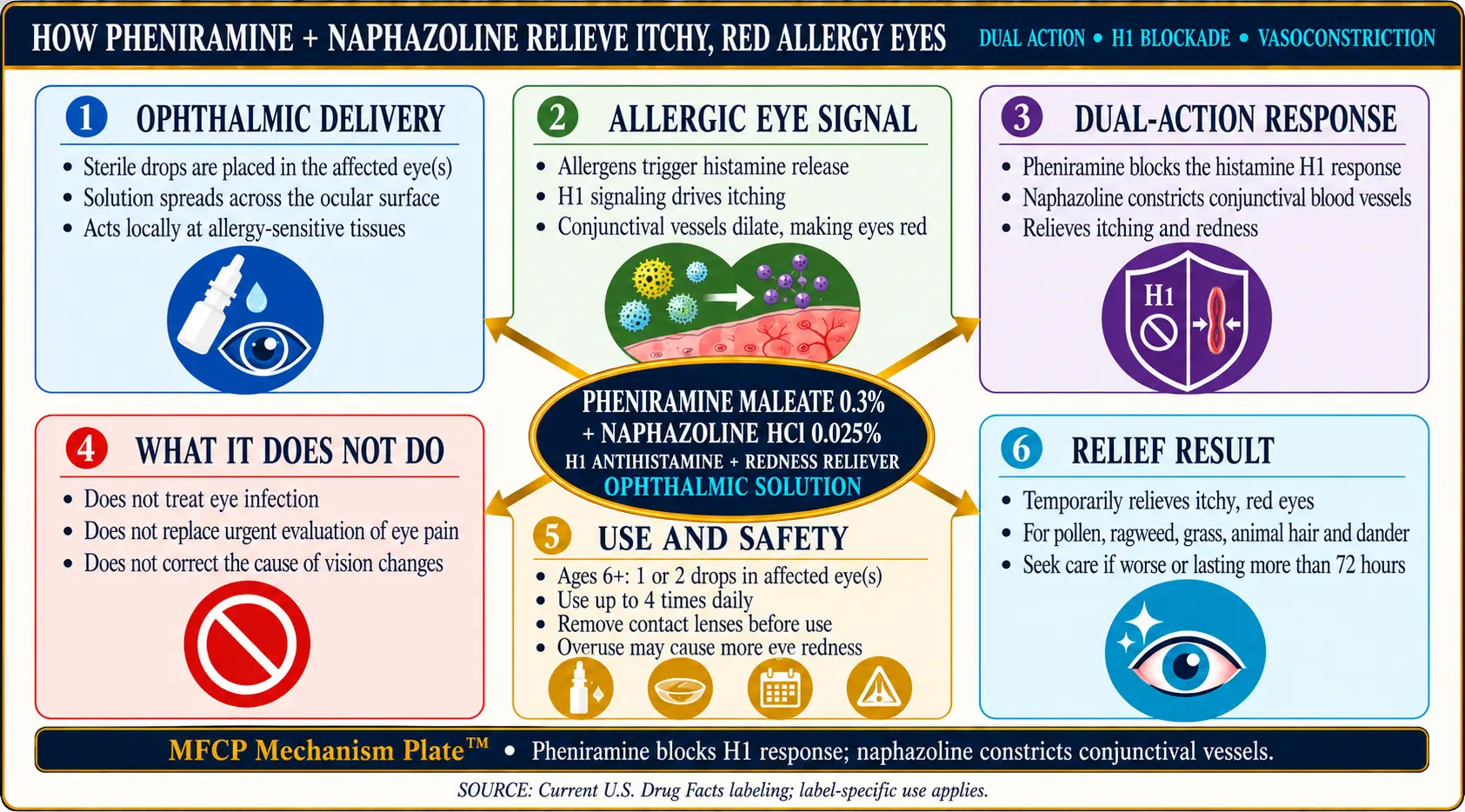
Ocular cross-section showing an ophthalmic drop, H1-receptor blockade, and conjunctival vasoconstriction
MFCP DUAL-ACTION MECHANISM PLATEPHENIRAMINE: H1 BLOCKADE · NAPHAZOLINE: CONJUNCTIVAL VASOCONSTRICTION
LABEL REVIEWED · SEPTEMBER 11, 2026
Verify both active ingredients, both strengths, and the ophthalmic route on the current physical Drug Facts label before selection.
RETURN TO CONTENTS ↑
★ BOTTOM LINE:

Pheniramine maleate 0.3% relieves allergy itching. Naphazoline HCl 0.025% constricts conjunctival vessels to reduce redness. Use this combination for short-term rescue—not daily allergy control.

DOSE
Age 6 and older: 1 or 2 drops in the affected eye(s), up to 4 times daily.
STOP
Seek care for eye pain, vision change, worsening symptoms, or redness or irritation lasting more than 72 hours.
RETURN TO CONTENTS ↑
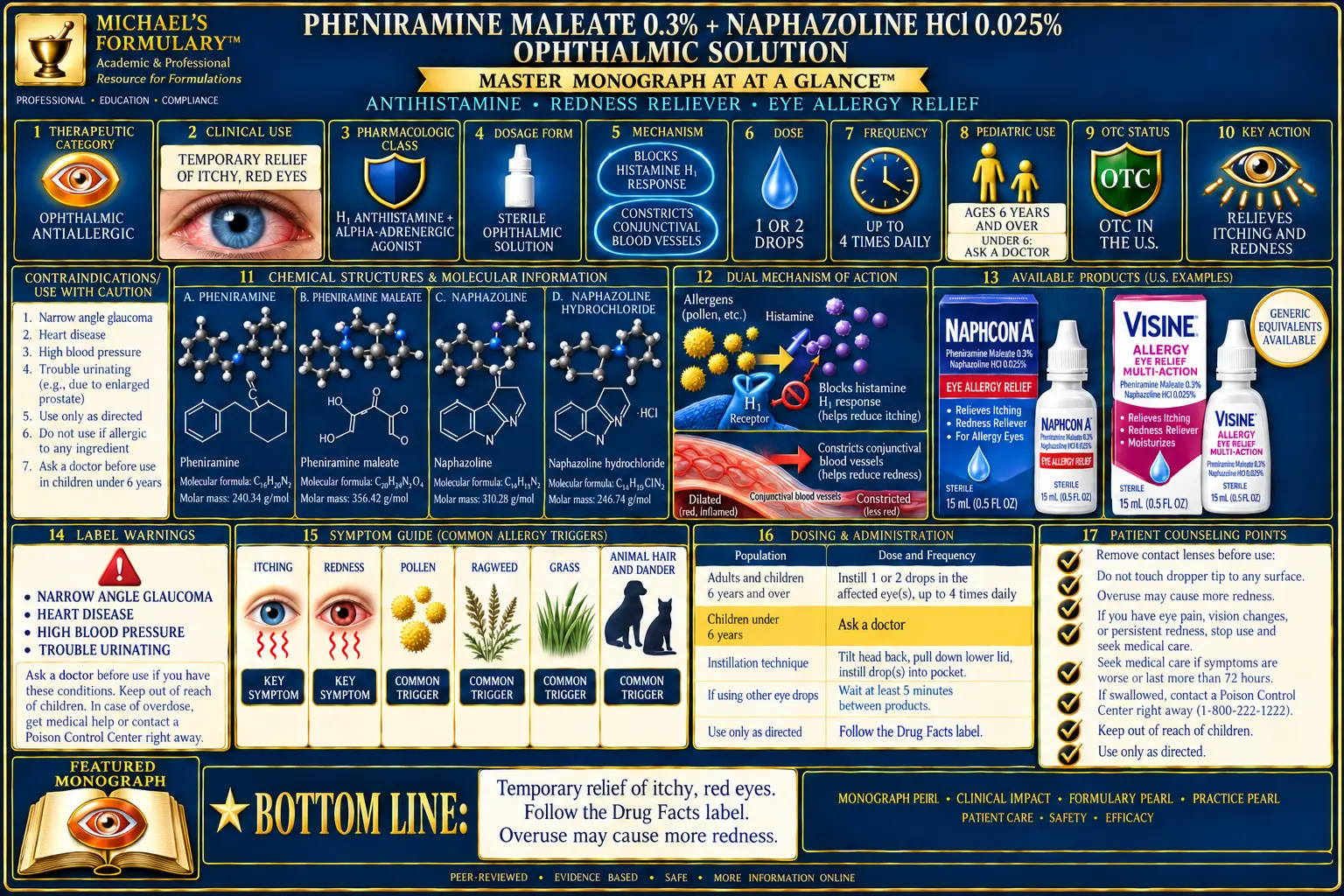
MFCP monograph-at-a-glance plate for pheniramine maleate and naphazoline hydrochloride
Controlled master plate · detailed clinical text remains available in the native sections that follow.
04
MFCP READING STOP

Where It Fits

RETURN TO CONTENTS ↑
05

Therapeutic Domain Indicator™


MFCP CONTROLLED MONOGRAPH · OPHTHALMIC ALLERGY

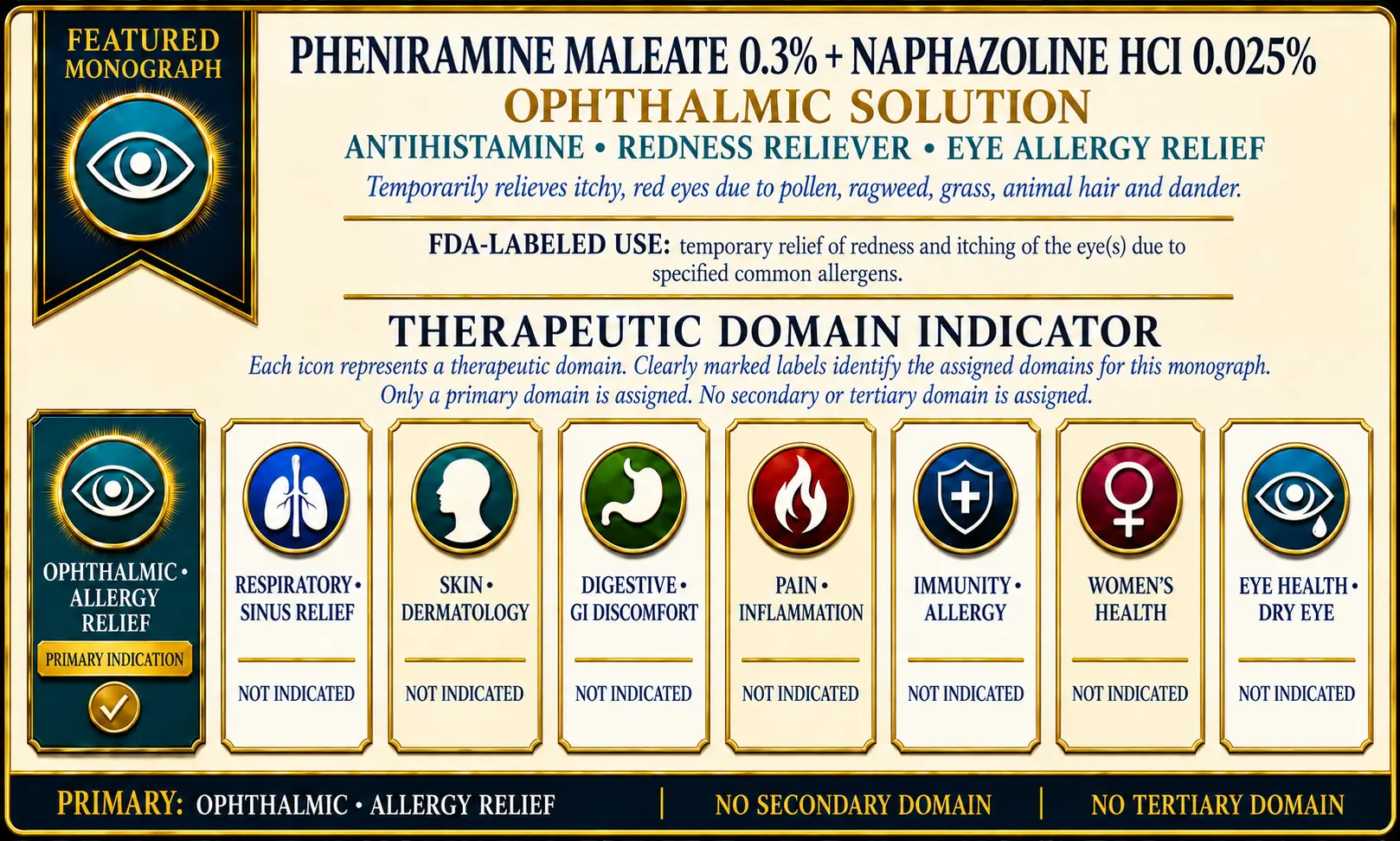
Therapeutic domain indicator showing ophthalmic allergy relief as the primary domain
Primary domain: ophthalmic allergy relief. No secondary or tertiary domain is assigned.
RETURN TO CONTENTS ↑
06

Chemical Structures & Molecular Information


MFCP CONTROLLED MONOGRAPH · OPHTHALMIC ALLERGY

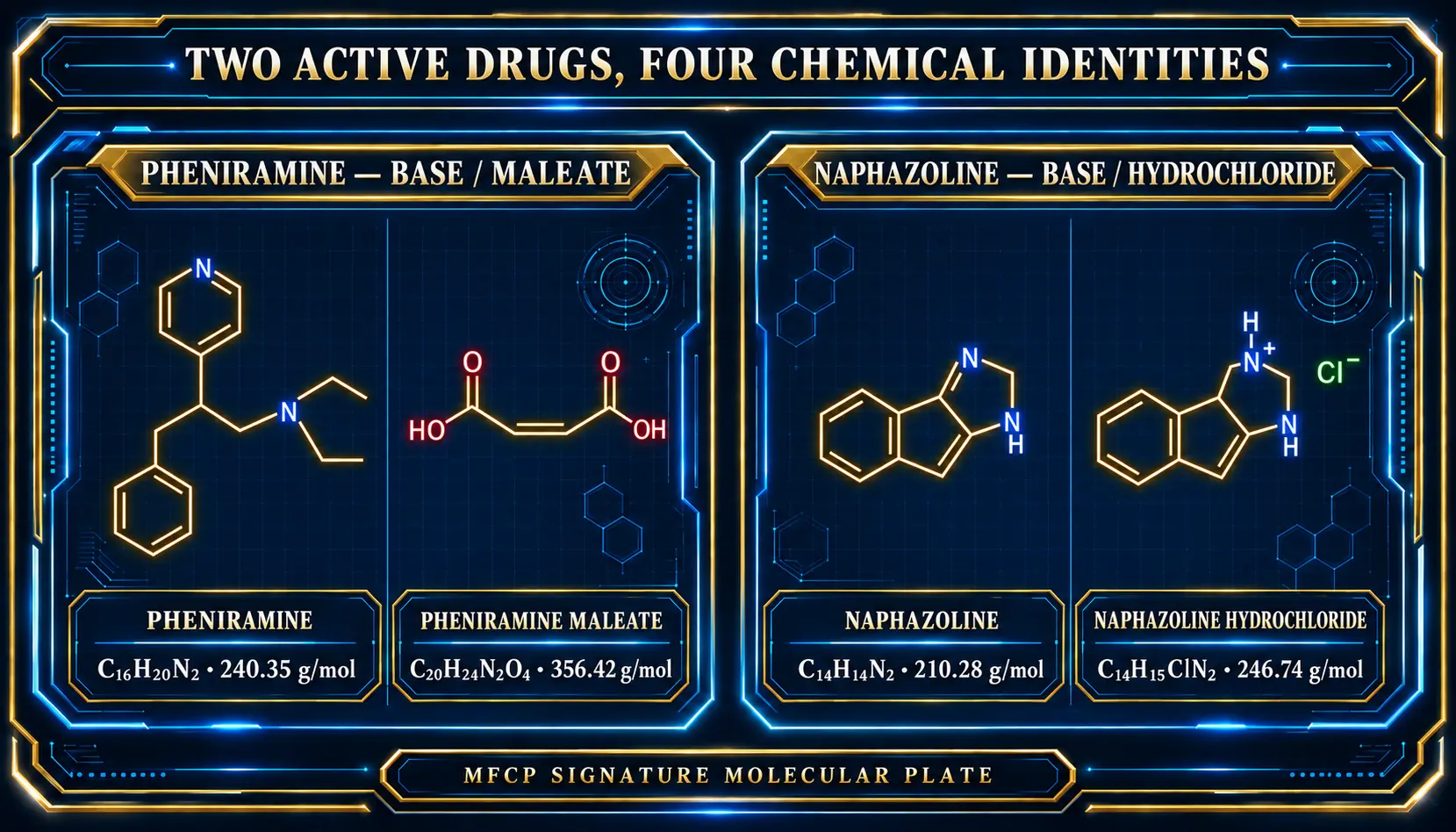
Molecular identity plate for pheniramine, pheniramine maleate, naphazoline, and naphazoline hydrochloride
Two active drugs and their labeled salt forms. The Drug Facts label controls ingredient names and strengths.
PHENIRAMINE MALEATELabeled antihistamine salt · 0.3%
NAPHAZOLINE HYDROCHLORIDELabeled vasoconstrictor salt · 0.025%
IDENTITY CONTROL
Do not substitute the base, a different salt, strength, or route for either labeled active ingredient.
RETURN TO CONTENTS ↑
07

Mechanism of Action


MFCP CONTROLLED MONOGRAPH · OPHTHALMIC ALLERGY

Mechanism plate showing pheniramine H1 blockade and naphazoline vasoconstriction
Pheniramine blocks the ocular H₁ response; naphazoline constricts conjunctival vessels.
BOUNDARY

Pheniramine does not stabilize mast cells. Naphazoline does not treat the allergic cause and may produce rebound redness when overused.

05
MFCP READING STOP

Use It Right

RETURN TO CONTENTS ↑
08

Administration—Critical Instructions


MFCP CONTROLLED MONOGRAPH · OPHTHALMIC ALLERGY

1 · REMOVE CONTACTSRemove contact lenses before use.
2 · KEEP TIP CLEANDo not touch the dropper tip.
3 · INSTILLPlace 1 or 2 drops in the affected eye(s).
4 · CLOSEReplace the cap after use.
DO NOT USE
If the solution changes color or becomes cloudy.
RETURN TO CONTENTS ↑
09

Indication Fit


MFCP CONTROLLED MONOGRAPH · OPHTHALMIC ALLERGY

PRESENTATIONFITACTIONItching + redness after allergen exposureLabel-alignedShort-term self-carePain, injury, discharge, light sensitivity, vision changeNot alignedSeek evaluationRepeated redness-only usePoor fitDo not mask a persistent cause
RETURN TO CONTENTS ↑
10

Dosage Forms and Delivery Systems


MFCP CONTROLLED MONOGRAPH · OPHTHALMIC ALLERGY

FORMIDENTIFIER CONTROLSterile ophthalmic solution / dropsVerified combination presentation; confirm both active ingredients and strengthsOphthalmic suspensionNot verified for this fixed combination; omit from selection and imageryOphthalmic ointmentNot verified for this fixed combination; omit from selection and imageryDropper bottleSeal intact; tip clean; solution clearBrand and label-matched equivalentsNaphcon-A® or an equivalent that matches pheniramine maleate 0.3% + naphazoline HCl 0.025%Storage controlStore at 20°–25°C (68°–77°F); protect from light
ROUTE
For use in the eyes only. Do not swallow.
RETURN TO CONTENTS ↑
11

Dose by Product and Age


MFCP CONTROLLED MONOGRAPH · OPHTHALMIC ALLERGY

AGEDOSEFREQUENCYAdults and children 6 years and older1 or 2 drops in affected eye(s)Up to 4 times dailyChildren under 6Ask a doctorDo not self-dose
72-HOUR CONTROL

Stop and ask a doctor if redness or irritation worsens or lasts more than 72 hours.

RETURN TO CONTENTS ↑
15

Where This Product Fits


MFCP CONTROLLED MONOGRAPH · OPHTHALMIC ALLERGY

SITUATIONROLELIMITAcute allergy itch + rednessShort-term rescueNo mast-cell stabilizationRecurrent seasonal itchingConsider dual-action alternativeAvoid routine vasoconstrictor exposurePain, discharge, injury, vision changeNo self-care rolePrompt evaluation
06
MFCP READING STOP

Stay Safe

RETURN TO CONTENTS ↑
12

Common Effects and Management


MFCP CONTROLLED MONOGRAPH · OPHTHALMIC ALLERGY

EFFECTRESPONSEBrief stinging or burningStop if severe or persistentTemporary pupil enlargementSeek care if pain or vision symptoms developIncreasing redness with frequent useSuspect overuse; discontinue and reassessBlur immediately after a dropDo not drive until clear; seek care if persistent
RETURN TO CONTENTS ↑
13

Serious Safety, Contraindications, and Interactions


MFCP CONTROLLED MONOGRAPH · OPHTHALMIC ALLERGY

ASK A DOCTOR BEFORE USE
Narrow-angle glaucoma, heart disease, high blood pressure, or trouble urinating.
WHEN USING
Pupils may enlarge temporarily. Overuse may cause more eye redness.
STOP
Eye pain, vision changes, continued redness or irritation, worsening symptoms, or symptoms beyond 72 hours.
Accidental ingestion can be dangerous, especially in children. Get medical help or contact Poison Control immediately.
RETURN TO CONTENTS ↑
14

Pregnancy, Children, and Older Adults


MFCP CONTROLLED MONOGRAPH · OPHTHALMIC ALLERGY

POPULATIONCONTROLNOTEPregnancy or breastfeedingIndividual clinician reviewThe current Drug Facts label gives no population-specific directionsChildren under 6Ask a doctorIngestion is an emergencyOlder adultsScreen carefullyReview glaucoma, cardiovascular disease, hypertension, urinary symptoms
07
MFCP READING STOP

Buy the Right Bottle

RETURN TO CONTENTS ↑
16

MFCP Buying Standard™ · Product Identifier™


MFCP CONTROLLED MONOGRAPH · OPHTHALMIC ALLERGY

VERIFY TWO ACTIVESPheniramine maleate 0.3% + naphazoline HCl 0.025%
VERIFY ROUTEOphthalmic solution
VERIFY PACKAGEDrug Facts, seal, expiration, clear solution
OMIT—DO NOT INVENT

Packaging, size, inactive ingredients, preservatives, and directions can vary. The physical label controls.

08
MFCP READING STOP

Ask and Verify

RETURN TO CONTENTS ↑
17

Red Flags and Referral


MFCP CONTROLLED MONOGRAPH · OPHTHALMIC ALLERGY

RED FLAGACTIONEye pain or vision changeUrgent evaluationTrauma, chemical exposure, foreign body, severe light sensitivityImmediate assessmentThick discharge or severe one-sided symptomsEvaluate another causeWorse or beyond 72 hoursStop and seek careSwallowed productPoison Control / emergency help
Readability and literacy
RETURN TO CONTENTS ↑
18

Glossary


MFCP CONTROLLED MONOGRAPH · OPHTHALMIC ALLERGY

TERMMEANINGAntihistamineBlocks a histamine signal involved in itchingAdrenergic agonistStimulates receptors that constrict blood vesselsConjunctival hyperemiaRedness from widened surface vesselsRebound rednessRedness that returns or worsens after repeated useNarrow-angle glaucomaAn eye condition in which pupil enlargement can trigger dangerous pressure
RETURN TO CONTENTS ↑
19

Evidence and References


MFCP CONTROLLED MONOGRAPH · OPHTHALMIC ALLERGY

1. U.S. Food and Drug Administration. Naphcon-A® approved labeling.

2. DailyMed. Naphazoline HCl 0.025% and pheniramine maleate 0.3% ophthalmic Drug Facts labeling. Label updated March 27, 2024.

3. Current physical Drug Facts label; package-specific directions control.

EVIDENCE RULE
The controlling label governs use. Mechanistic context does not replace the label or individual evaluation.
RETURN TO CONTENTS ↑
20

Health Literacy and Readability


MFCP CONTROLLED MONOGRAPH · OPHTHALMIC ALLERGY

MICHAEL’S FORMULARY™HEALTH LITERACY & READABILITY CONTROLPHENIRAMINE + NAPHAZOLINE MONOGRAPH
MFCP HEALTH LITERACY CAMPAIGNPatient-first by design.
EXACT MEASUREMENT SCOPE

Seventeen locked patient-action sentences from Sections 1–17.

METHODS & CONTROLS

Flesch–Kincaid Grade Level and SMOG were calculated from the same 141-word patient-action corpus. Drug names, strengths, headings, citations, and technical discussion were excluded.

MEETS NIH / MFCP TARGET

The measured patient-action text is below the Grade 8-or-lower target.

NIH / MFCP TARGETGRADE 8 OR LOWER
WHAT THIS MEANS FOR YOU

Short action lines support quick reading.

Common words and short sentences reduce barriers.

Each action line tells the reader what to do.

READABILITY DISCLOSUREHow we measured. What we measured.
FLESCH–KINCAID
GRADE LEVEL
4.1
SMOG
GRADE LEVEL
7.3
MEASURED
CORPUS
141WORDS
AVERAGE SENTENCE
LENGTH
8.3WORDS
READABILITY SCALE · GRADE LEVEL
EASIER TO READMODERATEHARDER TO READ
024681018+
4.1
VERIFIED

✓ MEETS NIH / MFCP TARGETMeasured patient-action text is Grade 8 or lower.

◎ EXACT MEASUREMENT SCOPE17 sentences · 141 words · 197 syllables · 9 polysyllabic words.

⚖ TECHNICAL CLINICAL / LEGAL LAYERBrand names, ingredient names, strengths, warnings, citations, and technical terms remain intact and separately disclosed.

HEALTH LITERACY STANDARDClinical accuracy · plain language · clear navigation · generous spacing · actionable next stepsProfessional Judgment. Delivered.™