1 · IdentityRead the species and flower source
Confirm German chamomile, Roman chamomile, or a disclosed blend. Reject products that rely only on “chamomile” imagery or a calming brand name.
2 · FormulationCapture strength, serving, route, extract details, and solvent
Record grams or milligrams, unit count, liquid concentration, extract ratio, marker claims, alcohol, and every active co-ingredient.
3 · QualityLabel accuracy cannot be assumed
Prefer transparent manufacturers, intact tamper evidence, lot and expiration information, storage directions, and credible independent certification when available.
4 · Allergy controlSpecies purity is a safety specification
Inspect allergen statements and avoid poorly characterized loose products when species contamination or cross-contact would materially increase risk.
| Source | Controls used in this monograph | Open source |
|---|
| NIH NCCIH · Chamomile | German-versus-Roman distinction, evidence limits, insomnia finding, allergy, medication interactions, and reproductive uncertainty | NIH evidence summary ↗ |
| EMA · Matricaria recutita flower | German-chamomile flower identity, preparation-specific traditional-use framework, routes, and product controls | EMA monograph ↗ |
| FDA · Dietary Supplement Labeling Guide | Supplement Facts, ingredient identity, serving, and claims framework | FDA labeling guide ↗ |
| MFCP development dossier | 07.25.2026 structural source; universal dosing, standardization, pediatric, efficacy, interaction, and safety absolutes narrowed to current evidence | Controlled internal source |
Brand-name rule: formulations change. Re-read the current package every time; never infer the species, dose, route, allergy risk, or co-ingredients from a familiar color, flower image, flavor, or prior purchase.
Readability control: patient-facing decisions use plain language and short scanning units. Botanical, mechanistic, regulatory, and formulation terms remain only where precision requires them.

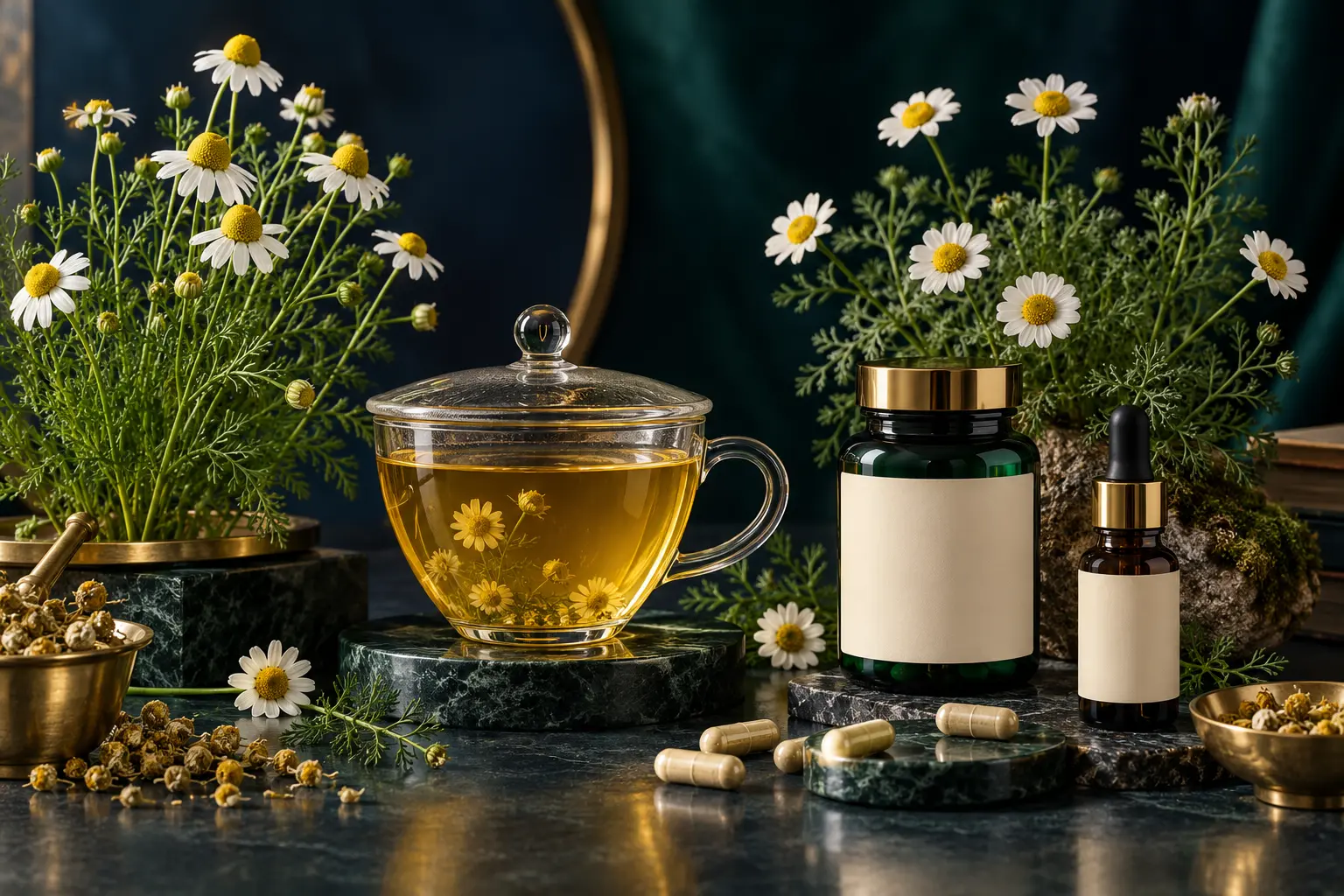 German chamomileCovered infusionRoman chamomileCapsuleLiquid extract

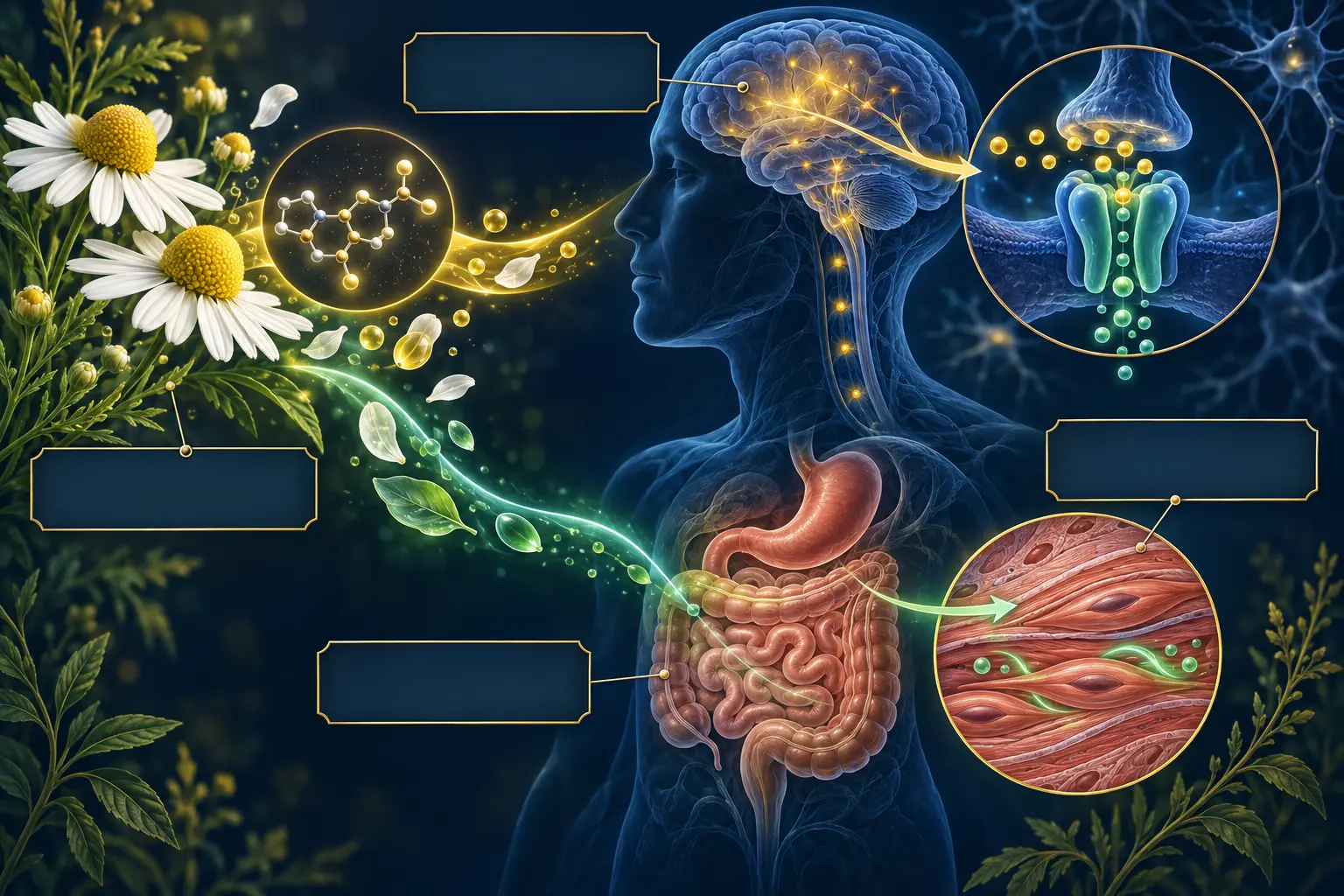 Chamomile flowerApigenin motifProposed CNS pathwayGABA-A receptorGI smooth muscle