

Immediate release
Release begins without an engineered delay or prolonged-release system.
What to checkIR describes the formulation. It does not promise instant symptom relief.
Michael's Formulary & Clinical Perspective™ · visual clinical guide
What IR, DR, and ER actually mean—and how a tablet, liquid, patch, or depot can control delivery.
Illustrations show mechanisms, not the appearance of a marketed product. Read the exact package or prescribing information before using or substituting any medicine.
 Recognize the release system. Verify the label.
A delayed start is different from prolonged release. One product can combine an early-release portion and a later-release portion. The code alone cannot tell you the dose interval, onset of benefit, or whether it may be crushed.
Release-form atlas
The letters describe when or how a dose is released. They do not identify the exact tablet architecture or dosing interval.
Release begins without an engineered delay or prolonged-release system.

A barrier postpones release until a later location or condition. Enteric coating is one common way to make a DR product.
The formulation spreads release over a longer period. A bilayer is one example; ER tablets can use very different mechanisms.
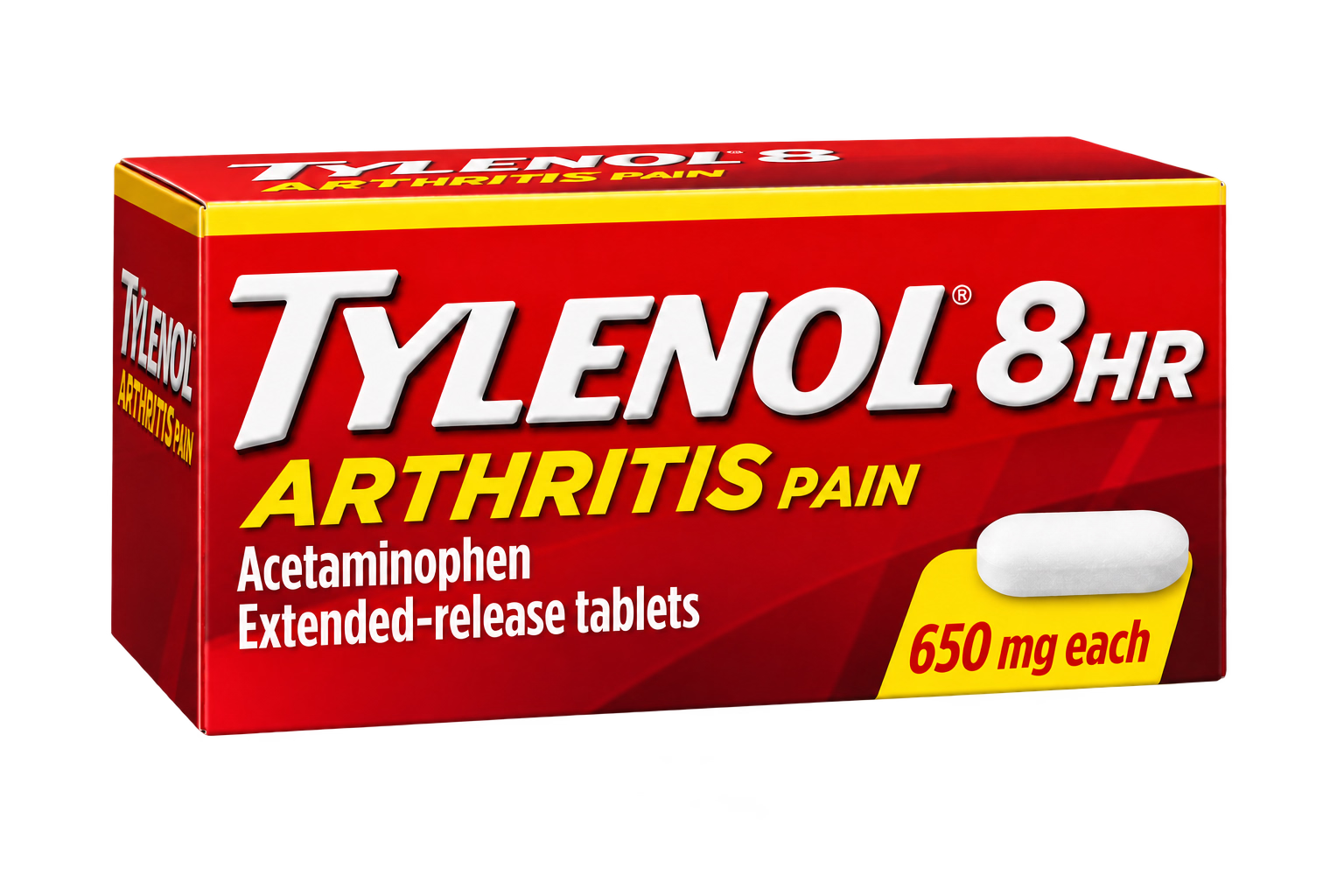
 Illustrative ER cutaway
Sponsor concept · not a paid placement
Acetaminophen 650 mg per caplet. Its bi-layer design pairs an earlier-release portion with longer release.
Label control Swallow whole. Do not crush, chew, split, or dissolve.
Ingredient and form: Acetaminophen 650 mg extended-release caplet.
Release: Bi-layer, with an earlier and a later release portion.
Label control: Swallow whole; check every other medicine for acetaminophen. Follow the exact Drug Facts age and dose directions.

Release-form atlas
These illustrations show different ways an oral product can extend release. The outer shape alone cannot identify the mechanism.

Fluid hydrates a polymer; medicine diffuses through its swollen layer while the tablet may erode.

Water entering the system builds pressure that moves drug through an engineered orifice.

Some capsules mix beads with different release profiles, including early and later release.

A drug-resin complex can extend release even though the dose is a liquid.
Release-form atlas
The route and the intended target matter. A transdermal system reaches circulation; a topical product may act mainly at the application site.
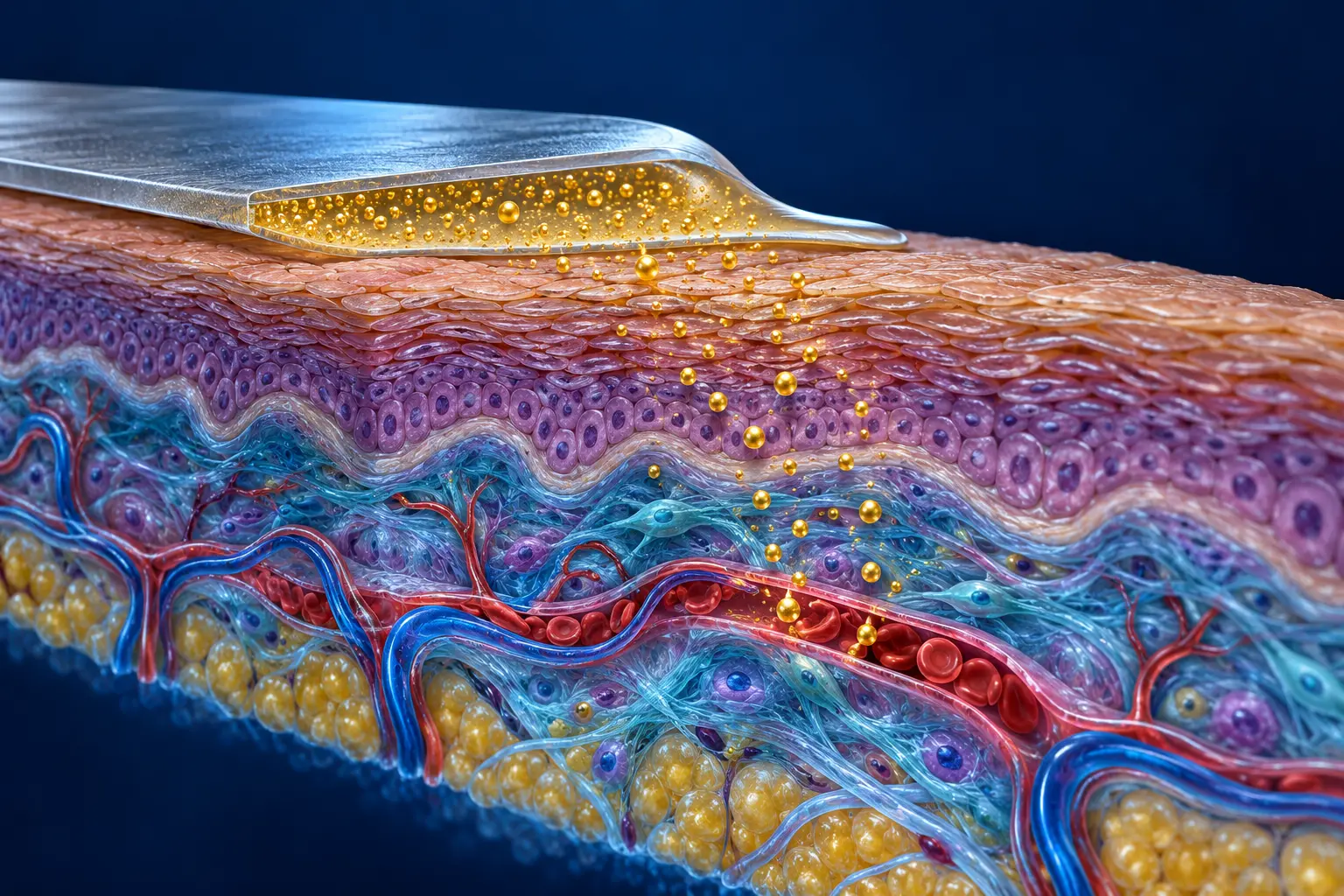
The medication is distributed in the adhesive or matrix. Skin is also a barrier governing delivery.
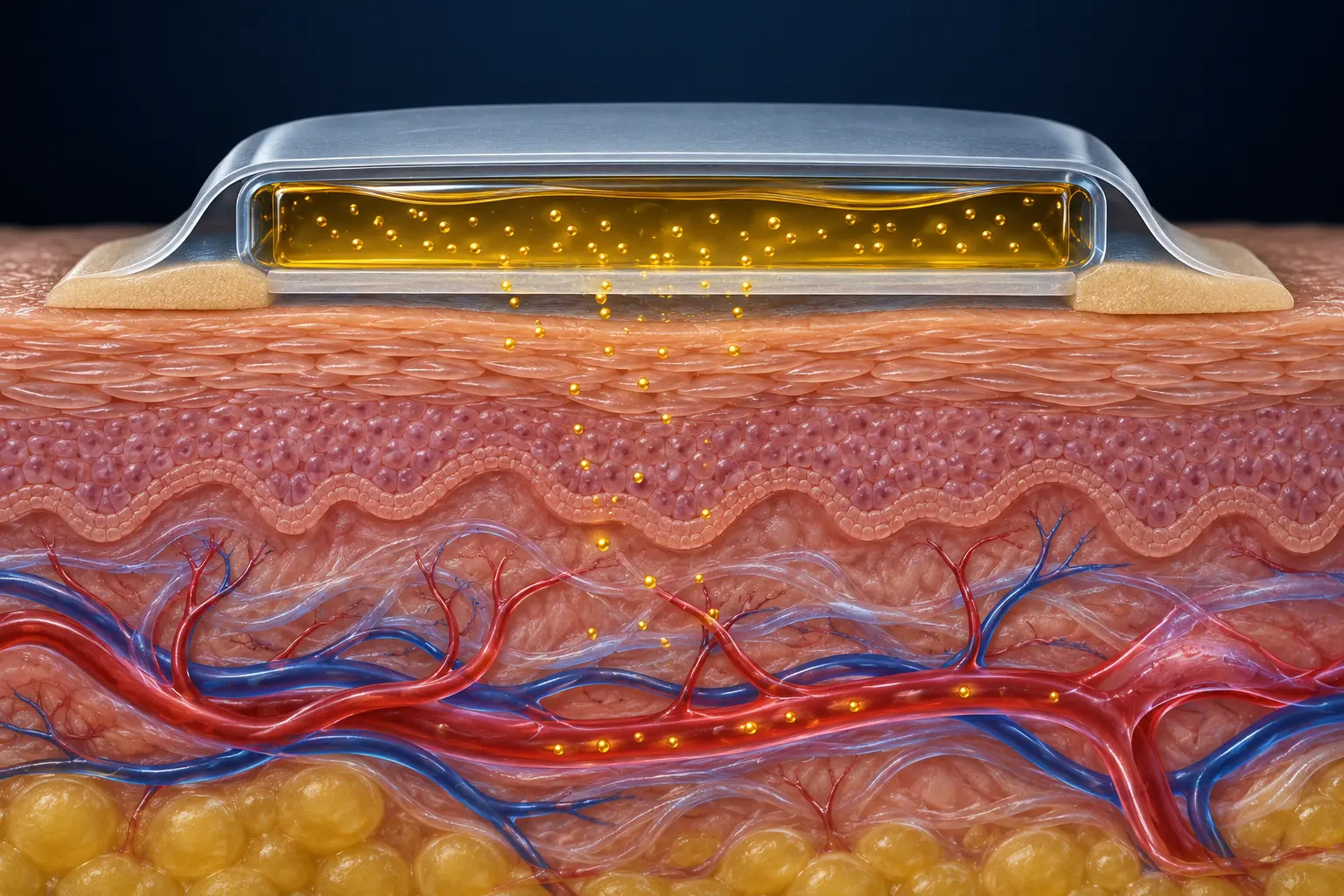
A drug reservoir and a rate-controlling membrane are distinct layers.

A depot may release over an extended period after a professional injection.

Encapsulation changes how the drug is delivered at the pulmonary site.

An insert can remain at the eye and dissolve gradually instead of being washed away like an ordinary drop.
IR means immediate release. It does not mean the medicine works instantly.
DR means delayed release; EC usually denotes an enteric coating. Neither necessarily means all-day delivery.
ER / XR / XL commonly signal extended release. SR / CR / LA / CD are product naming conventions, not a universal clock or a guarantee of interchangeable design.
Route matters. Transdermal medicine passes through skin to systemic circulation. Topical medicine is intended mainly for local action. A patch is not automatically transdermal.
Check the exact active ingredient, strength, dosage form, route, directions, and whether the product may be split, crushed, chewed, opened, or exposed to heat. Enteric-coated aspirin still carries systemic bleeding risk.
Mechanisms and representative product labels checked September 29, 2026. Product examples illustrate architecture; formulations and directions can change. Current labeling controls.