Skip to content
MFCP mortar and pestle emblemMichael’s FormularyCLINICAL PERSPECTIVE™

Clinical library / Eye, ear, nose & throat

On this page
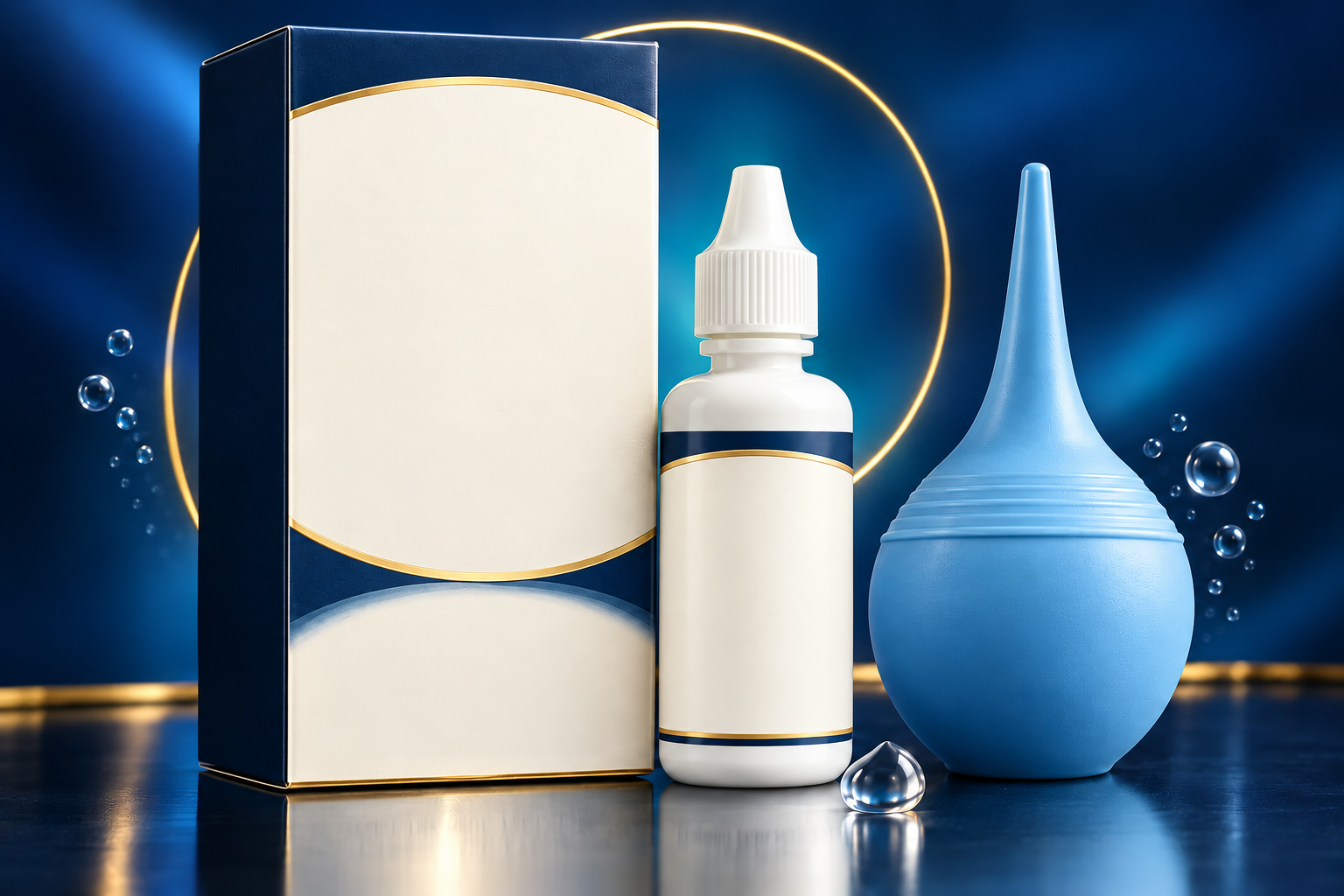
Unbranded illustrative ear-drop carton, dropper bottle, and soft bulb syringe; this is not a marketed product
Michael's Formulary mark

CARBAMIDE PEROXIDE 6.5%

Otic drops · soft bulb when supplied

For use in the ear only · maximum four days

ESVI Top 40 · Item 07 · Controlled Monograph

Carbamide Peroxide

The drops soften and loosen the wax. Warm-water flushing removes what remains.
External ear canal only · gentle outward drainageIntact eardrum required · warm water only
OTC identityCarbamide peroxide 6.5%
Label useOccasional excessive earwax · follow label age limits
Primary controlEardrum · warm water · four-day ceiling

Part of the guide: Top 20 OTC Medicines for Ear and Balance Self-Care →

01

Plain Talk · What It Does

Best fit

Occasional excessive earwax

Carbamide peroxide softens and loosens wax so it can move out or be removed gently.

What you may hear

Foaming and crackling can be normal

Oxygen bubbles form when the drops contact moisture and wax. That sound is not proof the canal is clear.

What completes the job

Warm-water flushing removes what remains

The drops soften. If the exact label permits it, a soft rubber bulb and warm water complete gentle removal.

Wrong lane

Not an infection or pain treatment

Drainage, pain, rash, dizziness, sudden hearing change, trauma, or a foreign object require another pathway.

Before one drop: do not use with a known or suspected eardrum hole, ear tube, recent ear surgery, drainage, pain, irritation, rash, or dizziness unless a clinician directs it.
02

Drug Identity & Formulation

Active

Carbamide peroxide 6.5%

An otic cerumen-softening preparation. Verify the Drug Facts panel.

Chemistry

Urea–hydrogen peroxide adduct

A 1:1 complex that releases peroxide in contact with moisture.

Vehicle

Anhydrous glycerin

The viscous vehicle helps the drops remain in contact with wax.

Package elementMeaningControlled action
Carbamide peroxide 6.5%65 mg per mLDo not substitute stronger peroxide
For use in the ear onlyOtic routeKeep the applicator tip outside the canal
Earwax-removal aidSoftens and loosens cerumenDo not infer infection treatment
Soft bulb syringeOptional removal after softeningWarm water and gentle pressure only
03

Mechanism Made Visible

1Drops coat wax
2Moisture releases peroxide
3Oxygen bubbles agitate
4Wax softens and loosens
5Warm water carries it outward
Mechanical truth

Softening is not extraction

A dense plug may still require careful irrigation or clinician removal.

Anatomic truth

The eardrum is the boundary

Irrigation is reserved for an intact membrane and an uncomplicated canal.

Do not chase the fizz: more drops, more days, or higher pressure can create irritation, retained moisture, pain, or injury.
04

Dose, Timing & Exact Technique

UserDoseFrequencyDurationControl
Adults and children over 125–10 dropsTwice dailyUp to 4 daysFollow exact Drug Facts label
Children under 12Not self-selected——Consult a doctor
Persistent wax after 4 daysStop—No extensionClinical evaluation
1 · Prepare

Warm bottle in your hands

Comfortable drops reduce temperature-triggered dizziness. Do not heat.

2 · Position

Treated ear upward

Place 5–10 drops without inserting the tip into the canal.

3 · Dwell

Keep in for several minutes

Follow the exact product label for dwell time.

4 · Repeat

Twice daily; four days maximum

Stop sooner for pain, drainage, rash, irritation, or dizziness.

5 · Flush

Warm water, soft bulb

Only after the eardrum screen clears. Use gentle pressure.

6 · Finish

Drain and dry outer ear

Do not probe. Persistent blockage belongs with a clinician.

Temperature control: cold or hot water can provoke vertigo, nausea, or pain. Never use a forceful jet, oral irrigator, or shower nozzle.
05

Safety Gate Before Use

FindingWhy it mattersControlled action
Drainage or dischargeInfection or non-intact eardrumDo not use; seek evaluation
Pain, rash, or irritationNot routine uncomplicated waxStop and ask a clinician
DizzinessVestibular disease or temperature injuryDo not irrigate
Perforation, tubes, or ear surgeryMiddle-ear exposure riskClinician-directed care only
Sudden hearing loss, bleeding, traumaUrgent examination may be neededDo not delay care
Wax after four daysImpaction or another diagnosisStop and arrange evaluation
No cotton swabs, ear candles, hairpins, or curettes: they can push wax deeper, abrade the canal, perforate the eardrum, or start a fire.
06

Special Cases & Professional Control

Hearing aids

Occlusion changes wax migration

Remove the device before drops. Recurrent impaction deserves an ear and device check.

Diabetes or immune compromise

Lower threshold for referral

Canal injury or retained moisture may carry greater infection risk.

Prescribed ear drops

Do not improvise sequence

Use both only with a clinician's instructions.

Pregnancy

Use for a clear need

Ask a professional if the eardrum or diagnosis is uncertain.

Recurrent blockage

Find the pattern

Narrow canals, skin disease, devices, and over-cleaning can promote recurrence.

After treatment

Hearing should recover

Persistent one-sided change needs examination, not repeated peroxide cycles.

07

The MFCP Buying Standard

Green flag

6.5% is explicit

Drug Facts states earwax-removal aid, age, drops, frequency, and duration.

Green flag

Complete soft-bulb kit

The package supports soften first, then gentle warm-water removal.

Green flag

Controlled applicator

A clean tip delivers drops without entering the canal.

Red flag

Household peroxide

Other concentrations are not substitutes for a labeled otic product.

Red flag

High-pressure device

Force does not improve safety.

Integrity

Lot, expiry, seal, readable label

Reject opened, leaking, relabeled, or decanted products.

★ BOTTOM LINE: Carbamide peroxide 6.5% softens occasional excessive wax; an intact eardrum, gentle warm-water irrigation, and a strict four-day ceiling control the decision.
08

Evidence Map & Source Notes

Guideline

AAO-HNS · Cerumen Impaction

Modifying factors, interventions, and outcome assessment.

Open guideline ↗

Interpretive rule: the current label controls the product; the guideline controls patient factors and removal strategy; anatomy controls whether the ear is safe to treat.
Evidence translated. Safety made visible. Professional Judgment. Delivered.™
Michael's Formulary & Clinical Perspective™ · ESVI Top 40 Item 07 · Educational use only.
Contents
  1. Plain Talk · What It Does
  2. Drug Identity & Formulation
  3. Mechanism Made Visible
  4. Dose, Timing & Exact Technique
  5. Safety Gate Before Use
  6. Special Cases & Professional Control
  7. The MFCP Buying Standard
  8. Evidence Map & Source Notes
  9. Source links

Source links

Links already cited on this page.